Meaning at a glance
Pair an emerald cut engagement ring with a wedding band that complements its linear step-cut lines: choose a straight or softly contoured band for minimal gap, match or thoughtfully contrast metal for durability and aesthetics, consider setting styles that preserve the emerald cut’s table and depth, and rely on hallmarks, written disclosures, and gemological reports to verify materials and treatments.
What 'emerald cut wedding band pairing' means in practice
Searchers looking for 'emerald cut wedding band pairing' are usually deciding among three practical variables: the band’s edge shape (straight, contoured, or notched), the size of the gap between rings when worn together, and the metal choice for aesthetics and wear. These choices affect daily comfort, the ring set’s visual cohesion, and long-term maintenance.
This article focuses on concrete decision criteria: how band shape interacts with the emerald cut’s geometry, the trade-offs between a small visible gap and a flush fit, and how metal properties influence wear, appearance, and future resizing or repair.
What the approved evidence shows about modern demand and why it matters
Contemporary market data and trade commentary emphasize preferences that shape pairing choices today. Imaginaire Digital’s 2026 UK search data identifies strong ongoing consumer interest in engagement rings and particular ring shapes, which indicates that buyers are actively searching for ring-pairing solutions and visual inspiration.
Jewelers Mutual’s 2026 trends note a market leaning toward fluid forms, modern stacking, colored gemstones, craftsmanship, versatility and gender-neutral styling. Those trends explain why many shoppers now prefer band combinations that either sit flush for a minimalist look or stack deliberately for a layered, modern aesthetic. Use these trend signals to identify options that will feel current without compromising comfort or durability.
Historical evidence and documented meanings
Within the approved sources, there is no detailed historical record attributing a specific symbolic meaning or long-standing cultural role uniquely to the emerald cut shape. The sources provided discuss contemporary trends, consumer protection, and gem treatment standards rather than historical symbolism for individual cut forms.
Because there is limited historical evidence in these materials, any claims about the emerald cut’s historical symbolism should be treated as modern interpretation unless supported by primary historical research. This guide therefore separates documented, contemporary facts from personal or cultural interpretations that are not covered by the supplied evidence.
Documented historical meanings versus modern personal interpretations
Documented meanings refer to claims you can verify in primary historical sources or established industry references. The sources provided for this piece supply contemporary market data, industry trends, and guidance about gemstone treatments and consumer protections—but not historical symbolism specific to the emerald cut. That absence is itself a documented point: the approved evidence does not record a long-running cultural symbolism attached to the emerald cut.
Modern personal meanings are the interpretations individuals or jewelers assign today. For example, some people describe the emerald cut as 'elegant' or 'architectural' because of its linear facets; those are aesthetic impressions rather than historically documented symbolic definitions. Treat such personal meanings as subjective choices suitable for gifting conversations but not as objective, universal facts.
How the emerald cut and its motifs appear in wedding jewelry
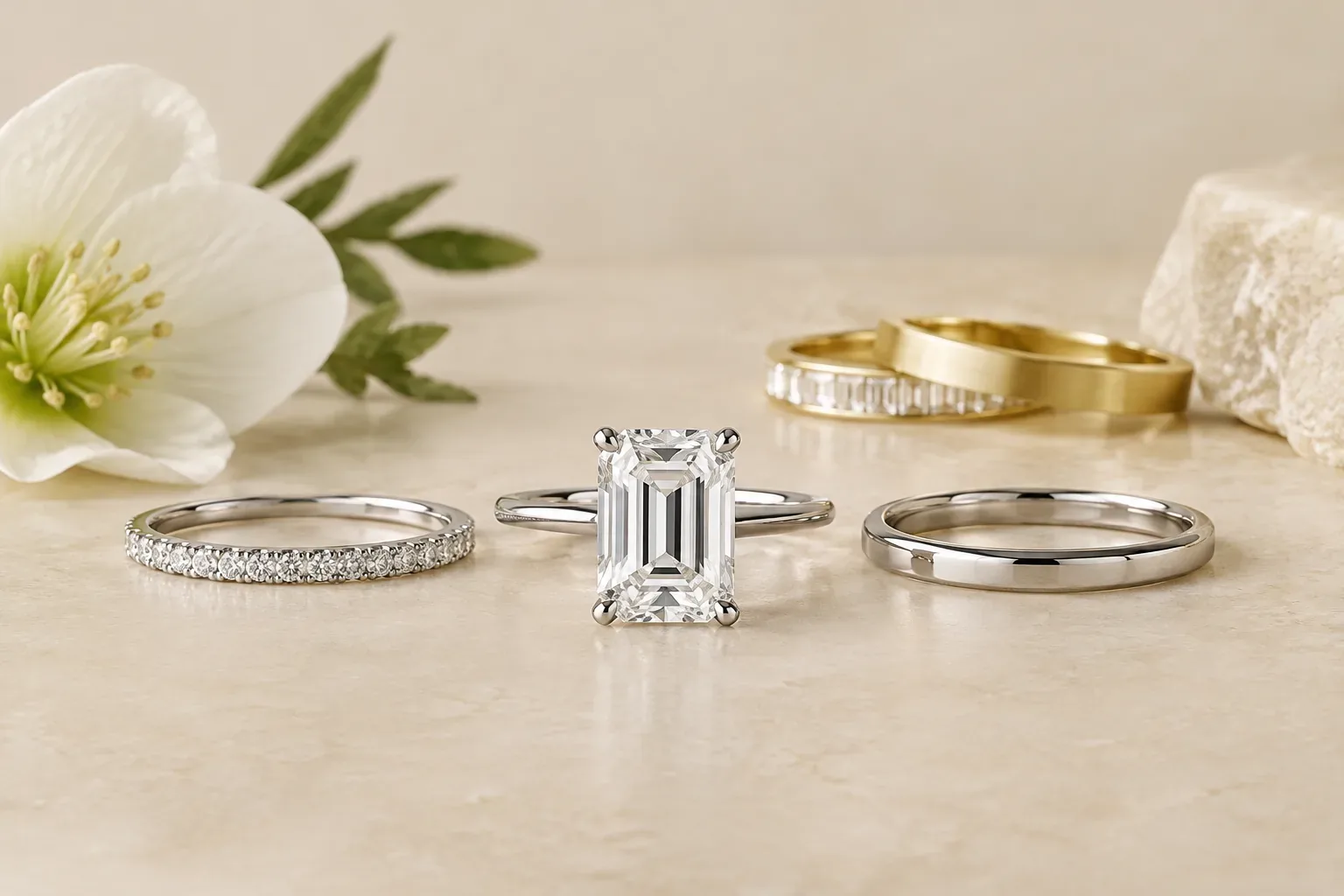
The emerald cut is characterized by broad, flat table facets and parallel step cuts that emphasize clarity and a hall-of-mirrors effect. In wedding sets the emerald cut engagement stone often sits in a setting that highlights the stone’s rectangular plane, which influences how a wedding band meets the engagement ring at the finger.
Because emerald cuts have longer lines and a larger table than many brilliant cuts, band profiles that echo those straight lines—such as channel-set baguettes or plain straight bands—preserve visual harmony. Conversely, very rounded or heavily ornate bands can create visible stylistic friction that some wearers prefer as contrast and others prefer to avoid.
Design choices: shape, gap, and settings
Shape: Straight bands pair naturally with emerald cut rings because they follow the engagement ring’s linear silhouette. A contoured band with a gentle dip can reduce a gap without the complexity of a full notch. Notched or grooved bands that are custom-cut to fit the engagement setting produce the cleanest junction but often add cost and may complicate future resizing.
Gap: A small visible gap offers slight breathing room for cleaning and resizing and reduces risk of stones rubbing. A flush or notched fit eliminates the gap for a continuous look but can trap dirt more easily and complicate repair. Consider how often you will remove the rings and whether you want an uninterrupted face when making this choice.
Settings: If your emerald cut is in a low bezel or channel setting, a thin straight band often slides close with minimal gap. If the ring has prominent prongs or a raised cathedral style, a notched or contoured band may be necessary to sit flush. For step-cut side stones, matching the band’s setting style (for example, channel or bar-set baguettes) produces a cohesive aesthetic.
Metal choices: matching, contrasting, and practical trade-offs
Matching the engagement ring’s metal preserves a seamless appearance and minimizes differences in how metals age. For example, platinum and white gold can look very similar initially, but white gold is often plated with rhodium and will require replating over time to maintain color, a point consumers should verify in seller disclosures.
Contrasting metals, such as pairing a yellow gold band with a white metal engagement ring, create intentional contrast favored in contemporary stacking. That contrast can highlight the emerald cut’s geometry but will present different wear patterns: harder metals resist scratching and thin, soft metals may nick faster. Consider the wearer’s lifestyle when choosing metal.
Durability trade-offs include the ease of resizing: some metals and heavily set bands are harder to resize without disturbing gemstones or settings. Ask the seller whether the proposed band can be resized and whether any settings will complicate future adjustments.
Care, treatments, and what you can verify before purchase
Gemological Institute of America guidance underscores that treatments and their disclosure affect durability and consumer care requirements. Always ask for written disclosure of any treatments applied to gemstones and for guidance on safe cleaning routines tailored to those treatments.
The Federal Trade Commission advises consumers to obtain written details distinguishing natural, lab-created, treated, and imitation materials. Before purchase, you can verify hallmarks on the metal, request itemized invoices that list metal type and gemstone descriptions, and ask for gemological reports for significant diamonds or colored stones. Things you cannot reliably verify yourself include internal treatments, clarity enhancements, or precise origin; those require a qualified jeweler’s examination or a gemological laboratory report.
Practical selection and gifting guidance
If you are buying as a surprise, choose a band shape that errs on the conservative side: a straight or gently contoured band is most likely to pair well with a range of emerald cut settings. If you know the wearer’s taste and want a matched set, select a band with setting details that echo the engagement ring, such as shared metal, matching stones, or the same finish.
When gifting, request written policies on returns, resizing, and warranties. For higher-value purchases, insist on a gemological report and written treatment disclosures. Use seller-provided visuals of the rings worn together—photos or mock-ups—to check for unwanted gaps before purchase. Consider commissioning a custom fit if the engagement setting is unusually raised or ornate and the budget permits.
Final checklist before you buy or commission a pairing
Confirm the engagement ring’s metal type, check for hallmarks, and request written disclosure of any gem treatments. Verify whether the band can be resized and whether the setting will complicate future adjustments. Choose a band shape that balances your preferences for gap, comfort, and visual continuity, and ask the seller to show the rings together before finalizing the purchase.
If you need authoritative verification of gem identity, treatments, or origin, plan to obtain a gemological laboratory report or independent appraisal because visual inspection and seller statements alone are not a substitute for laboratory testing.
Frequently asked questions
Will a straight wedding band always fit an emerald cut engagement ring?
A straight band often pairs well with many emerald cut settings, but not always. If the engagement ring has a raised setting, prominent prongs, or side stones that overhang the band area, a straight band may leave a visible gap. For a flush look with such settings, a contoured or notched band or a custom-fitted band may be necessary.
Should I match metals for a timeless look?
Matching metals gives a seamless, timeless appearance and simplifies maintenance expectations. However, mixing metals is a current trend that offers deliberate contrast and personalization. When choosing, consider the wearer’s lifestyle, willingness to maintain plated finishes (for example, white gold rhodium plating), and the ease of future repairs or resizing.
How can I verify whether the center stone has been treated or is lab-created?
Ask the seller for written disclosures and any available gemological reports. The Federal Trade Commission recommends obtaining written distinctions among natural, lab-created, treated and imitation materials. For high-value stones or if you need authoritative confirmation, commission a report from an accredited gemological laboratory.
Will a notched or flush band be harder to resize later?
Notched or flush-fit bands that are tailored to a specific engagement setting can be harder to resize without altering the fit, especially if they contain side stones or precise grooves. Ask the jeweler about resizing options and potential limits before committing to a custom or tightly-fitted design.
How should I clean an emerald cut set?
Care depends on the stone and any treatments it has received. The Gemological Institute of America advises following care instructions specific to the gemstone and its treatments. Obtain written cleaning recommendations from the seller and avoid ultrasonic cleaners or harsh chemicals unless the gem and its treatment are expressly rated safe for such methods.
Sources and further reading
- Imaginaire Digital — Imaginaire Digital
- Jewelers Mutual — Jewelers Mutual
- Gemological Institute of America — Gemological Institute of America
- Federal Trade Commission — Federal Trade Commission