Meaning at a glance
Emerald cut engagement ring durability depends mainly on the stone chosen, the setting that protects edges and corners, and the care and maintenance routine; shoppers must balance appearance against protection, ask for written disclosure and certification, buy insurance or maintenance plans, and understand that only a qualified jeweler or gemological laboratory can verify treatments, origins, and hidden structural weaknesses.
What the available evidence shows and what it does not
The approved evidence set for this article does not include primary historical records about the emerald cut's origin or ancient cultural meanings for the shape, so this piece avoids asserting provenance or historic symbolic claims that the sources do not support. Market data cited in the modern sources show strong demand for engagement rings and contemporary interest in shape and versatility, which frames current consumer concerns about durability and wear.
Imaginaire Digital's 2026 search analysis documents strong demand in the UK for engagement rings and related ring shapes, indicating that durability concerns are commercially relevant to many shoppers. Jewelers Mutual's 2026 trends note that consumers are prioritizing craftsmanship, versatility and wearability, which supports emphasizing practical protection and maintenance when choosing a ring. The Gemological Institute of America (GIA) highlights that treatments, disclosures and detectability affect a gemstone's care and durability, and the U.S. Federal Trade Commission (FTC) requires clear consumer disclosure so buyers can distinguish natural, lab-created, treated or imitated materials.
Documented historical meanings vs modern personal interpretation
None of the approved sources presents a documented historic or cultural symbolism specific to the emerald cut itself. Because the approved evidence does not support cultural or period-specific meanings for this cut, any claim that the emerald cut universally symbolized a particular cultural idea in the past would be unsupported here.
Personal meaning is valid and separate from documented history: modern wearers often attach sentimental or stylistic significance to a cut or ring style for private reasons. Those contemporary interpretations are meaningful to the giver and recipient, but they are personal, not a substitute for evidence-based historical claims.
How the emerald cut appears in jewelry and why that matters for durability
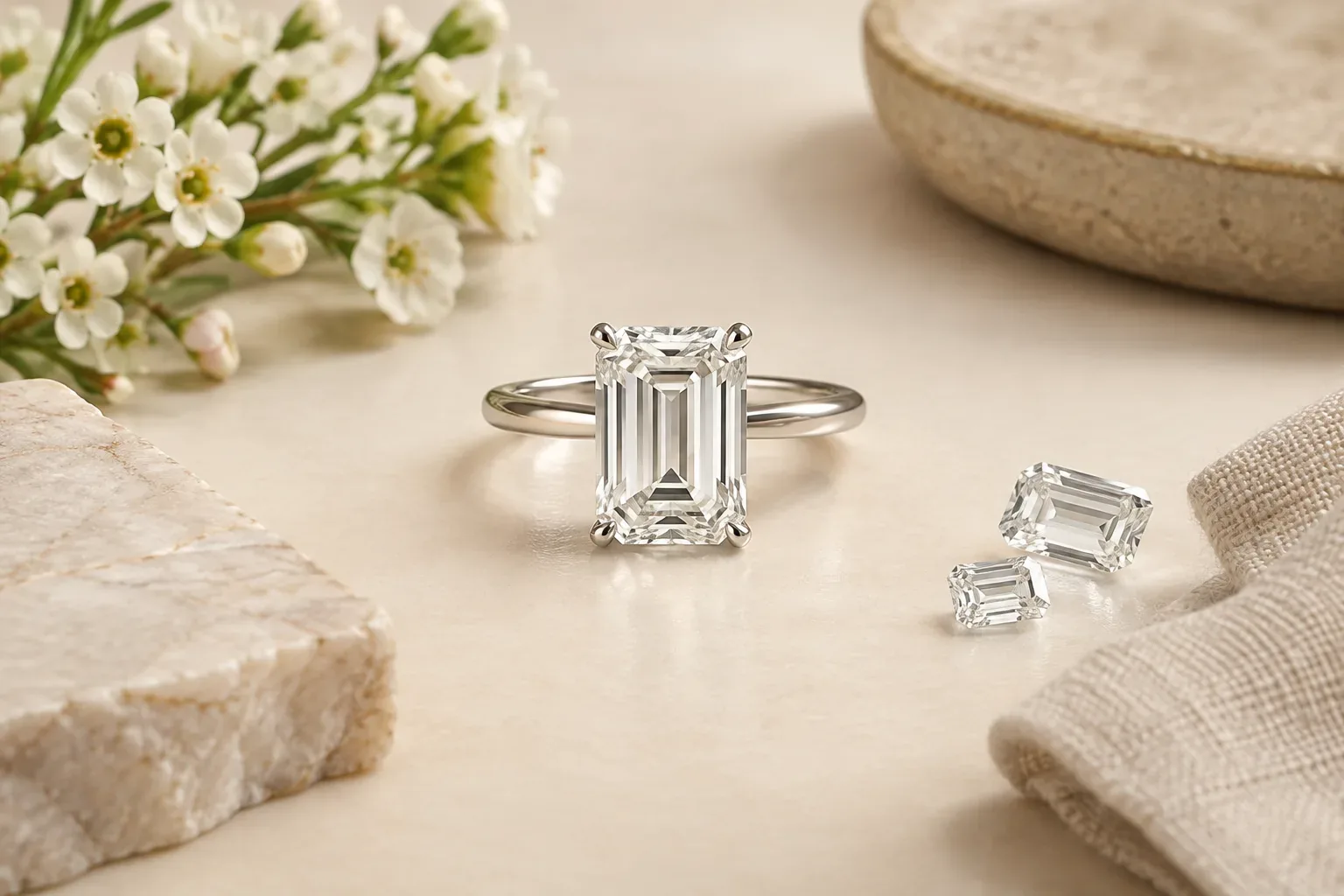
In practical terms for shoppers, a cut's durability in everyday use is influenced by how much of the stone's edges and corners are exposed, the type of mounting, and the hardness and toughness of the gemstone material. Because design choices affect both aesthetics and protection, selecting a ring involves trade-offs between the look you want and the level of mechanical protection you need.
Contemporary trade and consumer guidance emphasize versatility and wearability, so many modern settings aim to balance visual openness with protection. Where a setting leaves corners or edges exposed, there is greater potential for snagging on fabrics and for mechanical impacts to reach vulnerable points. Conversely, settings that wrap or bezel the stone offer more protection but create a different visual effect and may change how light enters the stone.
Practical decision criteria and trade-offs to evaluate
Decide how and how often the ring will be worn. If the wearer has an active daily routine that involves manual tasks or frequent glove use, prioritize protective settings or plan to reserve the ring for lower-risk occasions. If the ring is primarily for regular, everyday wear in low-impact environments, a more open setting may be acceptable.
Ask the seller for written disclosures and any laboratory reports available. The FTC emphasizes that consumers should receive clear information distinguishing natural, lab-created and treated materials. The GIA notes that treatments can change how a gem should be cared for and sometimes affect durability; therefore, understanding treatments helps you anticipate special care needs.
Balance visual preferences against protection. Settings that expose edges or corners tend to show more of the stone and can deliver the look many buyers want, but they come with higher snag and impact risk. Protective settings lower those risks but change the ring's appearance and may affect resale or personal aesthetic value.
Plan for maintenance and protection costs. Regular inspections, tightening prongs, professional cleaning and occasional repair are realistic ongoing costs for an engagement ring. Jewelers Mutual's industry perspective on trends and consumer expectations supports factoring maintenance and insurance into the total cost of ownership.
Safe care guidance and routines
Remove the ring during heavy manual labor, contact sports, gardening, and when working with chemicals, abrasives or cosmetics that could dull metals or damage treated stones. Gentle daily hygiene and a habit of removing the ring during high-risk activities are simple preventive steps.
Arrange regular professional inspections from a qualified jeweler to check prongs, settings and any signs of wear or damage. A visual inspection by a layperson can miss looseness in the setting or small hairline damage in the metal or stone that a trained jeweler will spot. The seller or a local jeweler can recommend an inspection frequency based on the setting and wearer habits.
Follow any stone-specific instructions if treatments have been disclosed. The GIA explains that treatments, their detectability and their effects on long-term durability vary, and treated stones sometimes need specialized care. If a laboratory report documents treatment, follow recommended cleaning and handling guidance for that treatment type.
What you cannot verify without a qualified jeweler or laboratory
Only a gemological laboratory can reliably verify claims about whether a stone is natural, lab-grown, or subject to specific treatments that affect durability and care. The FTC requires sellers to disclose this information, but independent lab reports provide stronger verification. The GIA notes that treatability and detectability are technical matters labs are designed to address.
A visual inspection by a salesperson alone cannot reliably determine the internal condition of a gemstone or whether microscopic inclusions or cleavage planes pose a higher breakage risk. Similarly, only a skilled jeweler can thoroughly assess the setting's long-term integrity and identify metal fatigue or micro-cracks that increase repair risk.
Selection and gifting guidance — practical and respectful
When buying or gifting, prioritize documented disclosure and a return policy. Ask the seller for written confirmation of material type, any treatments, and any laboratory reports. If you cannot obtain clear documentation, delay the purchase until you can.
Match the ring design to the recipient's lifestyle and preferences. If the recipient enjoys outdoor activities, manual work, or frequent travel, choose a setting that offers extra protection or plan a companion wedding band strategy to protect the engagement ring during high-risk times. If the recipient values a particular look above all, discuss maintenance and insurance as part of the gift so protection does not become a surprise burden.
Consider insurance or a maintenance plan. Industry resources and insurers like Jewelers Mutual identify maintenance, craftsmanship and long-term care as central consumer concerns; an insurance policy or retailer maintenance plan can cover loss, theft, or repair and is a sensible part of responsible gifting.
Use professional services for adjustments and repairs. Avoid DIY fixes. If the ring needs resizing or a loose stone requires tightening, have a trained jeweler perform the work to avoid further damage.
Summary and clear limits for shoppers
Emerald cut engagement ring durability is a function of stone material, cut exposure, setting choice, and wearer habits. Buyers can manage many durability risks by selecting protective settings, insisting on full written disclosure, securing independent laboratory reports when available, arranging routine professional inspections, and buying insurance or maintenance coverage.
However, buyers should understand the limits of what can be established by sight or a sales-floor appraisal. Only qualified jewelers and gemological laboratories can verify treatment histories, internal structural conditions and in some cases the exact cause of a vulnerability. When durability is a primary concern, plan purchases around verifiable documentation and professional inspection rather than visual impression alone.
Frequently asked questions
Are emerald cut engagement rings more likely to snag than other cuts?
Whether an emerald cut engagement ring snags more than another cut depends on how exposed the stone's edges and corners are and on the setting used. Settings that leave edges unprotected increase the chance of catching on fabric or skin. A qualified jeweler can evaluate a specific setting for snag risk and recommend protective options.
Can treatments affect an emerald cut stone’s durability?
Yes. Treatments can change a gemstone’s appearance and sometimes its care needs or resistance to damage. The Gemological Institute of America emphasizes that treatments, their detectability and their implications for durability vary, so you should request full written disclosure and laboratory reports when available.
What should I ask the seller before buying for durability reasons?
Ask for written disclosure of whether the stone is natural, lab-created or treated; request any available laboratory reports; ask about the setting metal and whether the seller offers routine maintenance or inspection; and confirm the return policy and insurance or protection plans. The FTC requires clear distinctions among material types and written disclosures.
How often should a ring be professionally inspected?
Inspection frequency depends on the ring’s design and how it is worn. Many industry professionals recommend periodic checks to ensure prongs and settings are secure. Discuss a schedule with a qualified jeweler who can tailor recommendations to the specific ring and wearer habits.
Can I tell if a gemstone is treated just by looking?
No. Some treatments are not apparent to the naked eye. Only a qualified gemological laboratory can reliably detect many kinds of treatments and provide a definitive report, which is why independent lab certification is important for durability and care decisions.
Should I insure an engagement ring because of durability concerns?
Insuring a ring is a practical way to manage the financial risk of loss, theft or costly repairs. Industry resources and insurers suggest adding insurance or a retailer maintenance plan to cover unexpected damage and to provide access to authorized repairs.
Sources and further reading
- Imaginaire Digital — Imaginaire Digital
- Jewelers Mutual — Jewelers Mutual
- Gemological Institute of America — Gemological Institute of America
- Federal Trade Commission — Federal Trade Commission