Meaning at a glance
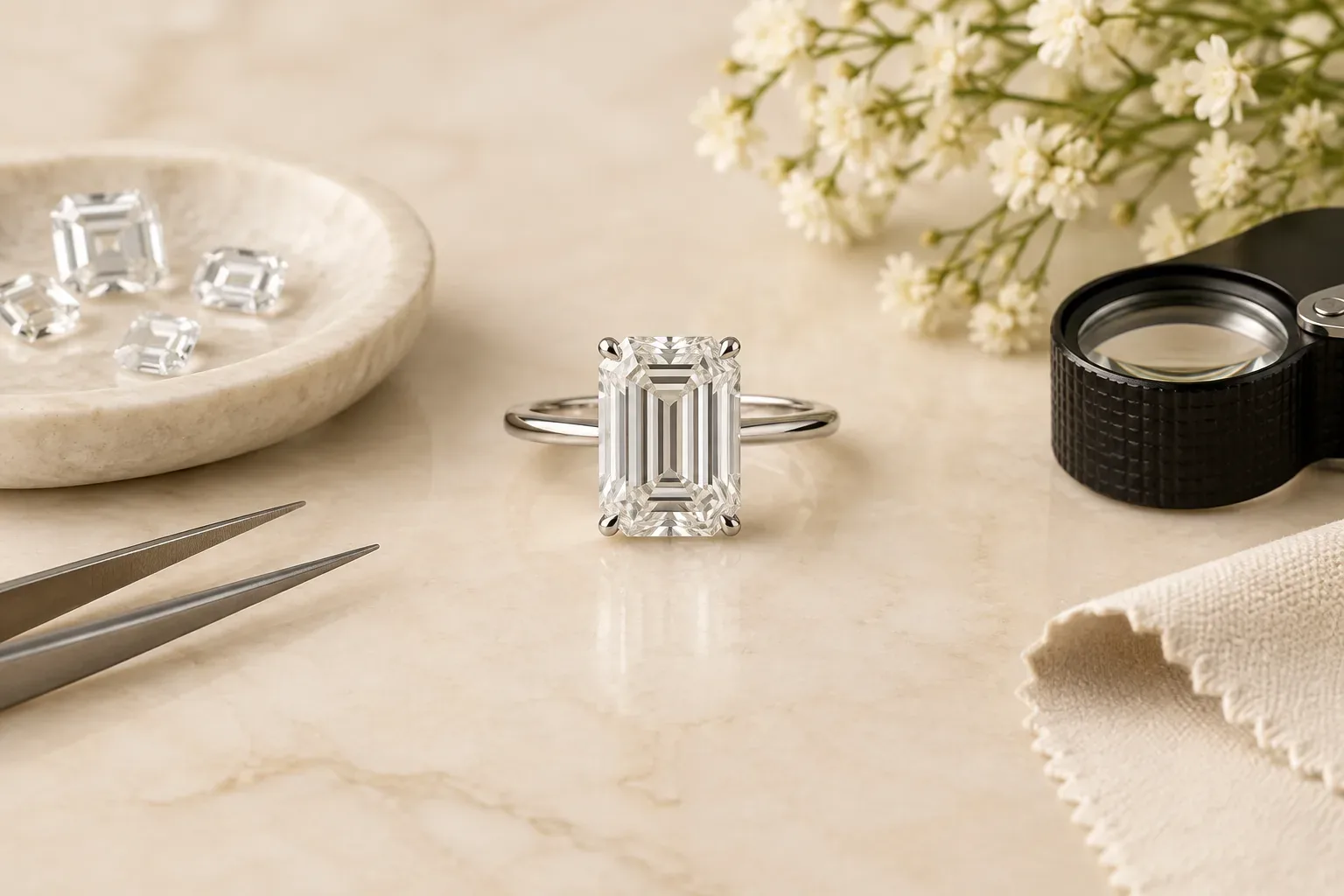
An emerald cut engagement ring uses a rectangular 'step' cut with truncated corners that emphasizes clarity and polished planes rather than scintillation; shoppers should weigh clarity and color over extreme sparkle, request written disclosure about treatments and origin, seek a qualified grading report for diamonds, match the cut to the wearer’s style and lifestyle, and insure and appraise the finished ring.
What is an emerald cut and how it appears in jewelry
The term “emerald cut” refers to a step-cut shape with rectangular facets arranged in parallel rows and truncated corners. The largest flat facet, the table, sits on top and creates broad flashes of light instead of the small, brilliant sparkles seen in brilliant cuts. In jewelry the emerald cut is most commonly used as the central stone of solitaire rings, three-stone rings, and halo settings, where the long facets emphasize the stone’s clarity and create a sleek, architectural silhouette. Settings that protect the truncated corners—such as bezel, four-prong, or corner-protecting prongs—are often chosen to balance the cut’s elongated shape and to reduce the risk of corner damage.
Historical evidence and documented meanings
Among the approved sources for this guide there is no detailed historical chronology of the emerald cut itself. The sources used for practical, consumer-facing guidance focus on trends, treatments, and disclosure rather than cut origins. Because the approved references do not document distinct historical meanings tied to the emerald cut across specific cultures or periods, this article separates what is historically documented in the available sources from modern interpretations.
Documented historical meanings for specific cuts and motifs require specialist historical scholarship that is outside the scope of the approved evidence set. If you need authoritative historical attribution for the emerald cut in a particular culture or era, consult dedicated jewelry history references or institutional archives; the present guidance stays within the consumer and trade evidence provided by the listed sources.
Modern interpretations versus documented facts
Modern personal interpretations of emerald cut engagement rings vary: many buyers today see the cut as refined, elegant, or vintage-inspired, and designers often use it to signal minimalist or gender-neutral aesthetics. Those interpretations are contemporary consumer trends rather than historical facts and should not be treated as universal symbolism.
Documented facts from the approved sources address consumer demand and disclosure. Imaginaire Digital’s 2026 search data shows strong ongoing demand for engagement rings as a category. Jewelers Mutual’s 2026 trends reporting identifies consumer interest in fluid forms, modern stacking, colored gemstones, craftsmanship, versatility and gender-neutral styling, which helps explain why emerald cuts remain popular for buyers seeking a clean, adaptable look rather than maximal sparkle.
Decision criteria: what to prioritize when choosing an emerald cut
Clarity matters more for emerald cuts than for brilliant cuts because the step facets reveal inclusions more readily. If you choose a natural diamond, prioritize higher clarity grades or consider a slightly lower carat weight to find better clarity within budget. For colored gemstones, understand that step facets show color zoning and inclusions differently than brilliant cuts, so examine the stone under good light.
Color is also more visible in emerald cuts. Choose a higher color grade if you want a colorless appearance for a diamond, or intentionally select warm tones if you prefer a warmer look. Carat weight and face-up size will translate differently in elongated shapes; a long emerald cut can appear larger per carat because of its spread, but proportions and depth affect face-up appearance—ask to see the actual stone from multiple angles.
Setting choice affects both look and durability. Solitaires emphasize the cut’s geometry, halos add perceived size and contrast that can mask minor inclusions, and bezel or protective prong settings protect the corners. Consider the wearer’s lifestyle: active wearers often benefit from protective settings and lower-profile mounts.
Trade-offs and practical pros and cons
Pros: Emerald cuts present an elegant, luminous look that emphasizes stone clarity and color, can appear larger per carat due to spread, and pairs well with tapered or straight bands for a streamlined aesthetic. The cut’s architectural lines suit vintage, modern, and gender-neutral designs.
Cons: Step cuts return less scintillation than brilliant cuts, so they display fewer fire-like flashes and more broad flashes of light. Inclusions and color are easier to see, meaning that to achieve a clean appearance you may pay more for clarity and color. Very long shapes can be prone to showing finger proportions differently, and corners require protection to avoid chipping.
Treatments, disclosure and what you must verify
Federal Trade Commission guidance emphasizes that consumers need clear written distinctions among natural, lab-created, treated and imitation materials and that disclosures are required. Ask the seller for written disclosure that states whether the stone is natural, lab-grown, treated, filled, or otherwise enhanced. For gemstones and diamonds, the Gemological Institute of America explains that treatments and their detectability affect durability and care and that consumers should seek disclosure about treatments.
For diamonds, obtain an independent grading report from a recognized laboratory that certifies carat, color, clarity, cut type, and any treatments or enhancements. Only a qualified gemological laboratory can reliably verify origin, treatments not visible to the naked eye, and nuanced grading. Without laboratory analysis you can confirm face-up appearance, basic measurements, and that a seller has provided any paperwork, but you cannot definitively verify origin or detect many treatments yourself.
Practical selection and gifting guidance
Match the ring to the wearer’s style and lifestyle first. If they favor minimal, tailored lines, an emerald cut likely suits them. If they prefer high sparkle or dramatic fire, discuss alternatives such as brilliant or radiant cuts. Consider the wearer’s hands and ring-finger proportions: shorter fingers often benefit from slightly elongated shapes, while very long fingers may prefer a squarer cut.
When gifting, be respectful about size and return policies. Always request full written disclosure and, if possible, buy from a jeweler who will provide a grading report and a clear return or resizing policy. If you wish to be discreet, verify sizing and preferences in advance through conversations or consultation with a trusted friend or family member rather than surprising with a poorly fitting ring.
Budget guidance: Because clarity and color are more visible in step cuts, allocating more budget to those attributes may yield a visually cleaner stone than spending the same amount on carat weight. Consider a halo setting to maximize perceived size if you want larger face-up appearance without moving up many clarity or color grades.
Care, maintenance and insurance
Basic everyday care for emerald cut stones is similar to other fine jewelry but factor in the cut’s large table and visible inclusions. Clean regularly with a mild detergent, warm water and a soft brush or use professional ultrasonic cleaners if the stone is known to be untreated and the seller confirms safe cleaning methods. The Gemological Institute of America notes that treatments and durability create distinct care needs, so always ask whether the stone has been filled, fracture-filled, heat-treated, or otherwise altered before using aggressive cleaning methods.
Protect the corners with appropriate settings, avoid sharp impacts, and remove the ring for heavy manual work. Jewelers Mutual recommends insuring valuable jewelry and keeping documentation such as the grading report and receipts for an appraisal or insurance claim. Obtain a post-purchase professional appraisal for insurance replacement value.
Limits on what you can verify without experts
You can verify visual appearance, basic measurements, weight (carat quoted by seller), and that the seller provides paperwork and disclosure. However, you cannot independently confirm many critical facts without expert tools: origin (natural vs lab-grown origin testing), microscopic identification of certain treatments, precise grading nuances, and long-term durability produced by undisclosed enhancements are all verifiable only by a qualified jeweler with appropriate instruments or an accredited gemological laboratory.
For consumer protection the Federal Trade Commission advises getting written disclosures and asking about lab reports. If the price seems inconsistent with what a reputable lab report indicates, seek a second opinion before purchase.
Final checklist for buyers
Before you buy, confirm in writing whether the stone is natural, lab-grown, or treated. Obtain an independent grading report for a diamond or a reputable identification report for colored gemstones. Inspect the stone for inclusions and color under good daylight or similar lighting, compare settings for corner protection, request an appraisal for insurance, and understand the seller’s return, resizing and warranty policies.
Follow care guidance from the seller and relevant authorities to avoid damaging any treated stones, and insure the ring promptly after purchase. If in doubt about specifics you require conclusive verification of, engage a qualified jeweler or a recognized gemological laboratory for testing.
Frequently asked questions
Is an emerald cut a good choice for an engagement ring?
An emerald cut is a good choice when the wearer prefers elegant lines and visible clarity rather than maximal scintillation; prioritize clarity and color grades, choose a protective setting for the corners, and ensure the overall style suits the wearer’s preferences and lifestyle.
How does an emerald cut compare to a brilliant cut in terms of sparkle?
Emerald cuts display broad flashes of light and emphasize luster and clarity rather than the small, intense fire and scintillation of brilliant cuts; if dazzling sparkle is a top priority, a brilliant cut or radiant cut may be a better fit.
Can I verify treatments or origin myself?
No. You should request written disclosure and an independent laboratory report to verify origin, treatments, or whether a stone is natural or lab-grown; many treatments and origins require laboratory instruments and expert analysis to detect reliably.
What setting protects an emerald cut’s corners best?
Bezel settings, corners with protective prongs, and settings designed to cover the truncated corners offer better protection against chipping than minimal prongs; consider the wearer’s daily activities when selecting protection.
Should I insure an emerald cut engagement ring?
Yes. Obtain a post-purchase professional appraisal for insurance replacement value and insure the ring promptly; Jewelers Mutual recommends insuring valuable jewelry and keeping documentation such as grading reports and receipts.
How should I clean an emerald cut ring?
Use mild detergent, warm water and a soft brush for routine cleaning and follow the seller’s guidance about ultrasonic or steam cleaning—especially if the stone has been treated—since the Gemological Institute of America notes certain treatments affect cleaning safety.
Sources and further reading
- Imaginaire Digital — Imaginaire Digital
- Jewelers Mutual — Jewelers Mutual
- Gemological Institute of America — Gemological Institute of America
- Federal Trade Commission — Federal Trade Commission