Meaning at a glance
Cushion cut engagement ring durability depends less on the cut itself and more on the gemstone, setting type, and workmanship; diamonds and well-set stones are highly durable for daily wear, while softer gems, shallow or high settings, and thin prongs increase snag and repair risk. Verify treatments, material identity and structural integrity only through a qualified jeweler or gemological laboratory.
Quick answer
The cushion cut is a popular faceting style; its day-to-day durability depends largely on three evidence-led factors: the identity and hardness of the gemstone, how the stone is set (prongs, bezel, halo, low vs high profile), and the quality of the mounting. A diamond cushion set low with substantial prongs or a bezel is highly suitable for daily wear. A softer colored stone in a high, delicate setting will be at noticeably greater risk of snagging and damage. For questions about treatments, exact material identity, or internal durability (e.g., cleavage, filled fractures), only a qualified jeweler or a gemological laboratory can provide definitive verification.
What the sources tell us about contemporary demand and customer concerns
Recent market and professional-trade reporting shows strong consumer interest in engagement rings and a clear demand for versatility, craftsmanship and gender-neutral styling. Imaginaire Digital’s search analysis for 2026 highlights continued strong consumer searches for engagement rings alongside related categories, indicating active shopping and a competitive market for ring styles. Jewelers Mutual’s 2026 trends reporting emphasizes craftsmanship, versatility and modern stacking approaches, which affect how people choose settings that balance aesthetics and real-world wear.
Historical evidence and documented meanings: what is—and isn’t—recorded in these sources
The approved evidence set for this article does not include specialized historical monographs on gem cuts or comprehensive archives that would attribute symbolic meanings to the cushion cut in specific cultures or historical periods. The sources here focus on contemporary consumer issues, treatment disclosure, and trade trends rather than the cultural origin story of a particular faceting style.
Because of that gap in the available sources, this article treats historical ‘‘meanings’’ of a cushion cut cautiously: there is no explicit, verifiable record in the provided sources assigning a single historical cultural meaning for the cushion cut. Where consumers and sellers today attach symbolic meanings to cushion-cut engagement rings, those are modern personal interpretations rather than documented cultural history. For regulatory and consumer-protection issues around materials and treatments, the Gemological Institute of America and the Federal Trade Commission are the appropriate authorities cited below.
Documented technical issues: treatments, disclosure and detectability
The Gemological Institute of America notes that gemstone treatments, their detectability and the implications for durability and care are distinct consumer concerns. Treatments can affect color stability and fracture behavior in ways that matter to durability and repairability. The Federal Trade Commission likewise stresses the importance of clear distinction among natural, lab-created, treated and imitation materials, and recommends written seller disclosures. When durability depends on whether a gem has been treated, a seller’s disclosure and a gemological report materially affect the buyer’s ability to make an informed durability assessment.
How cushion cut appears in engagement jewelry and why setting matters
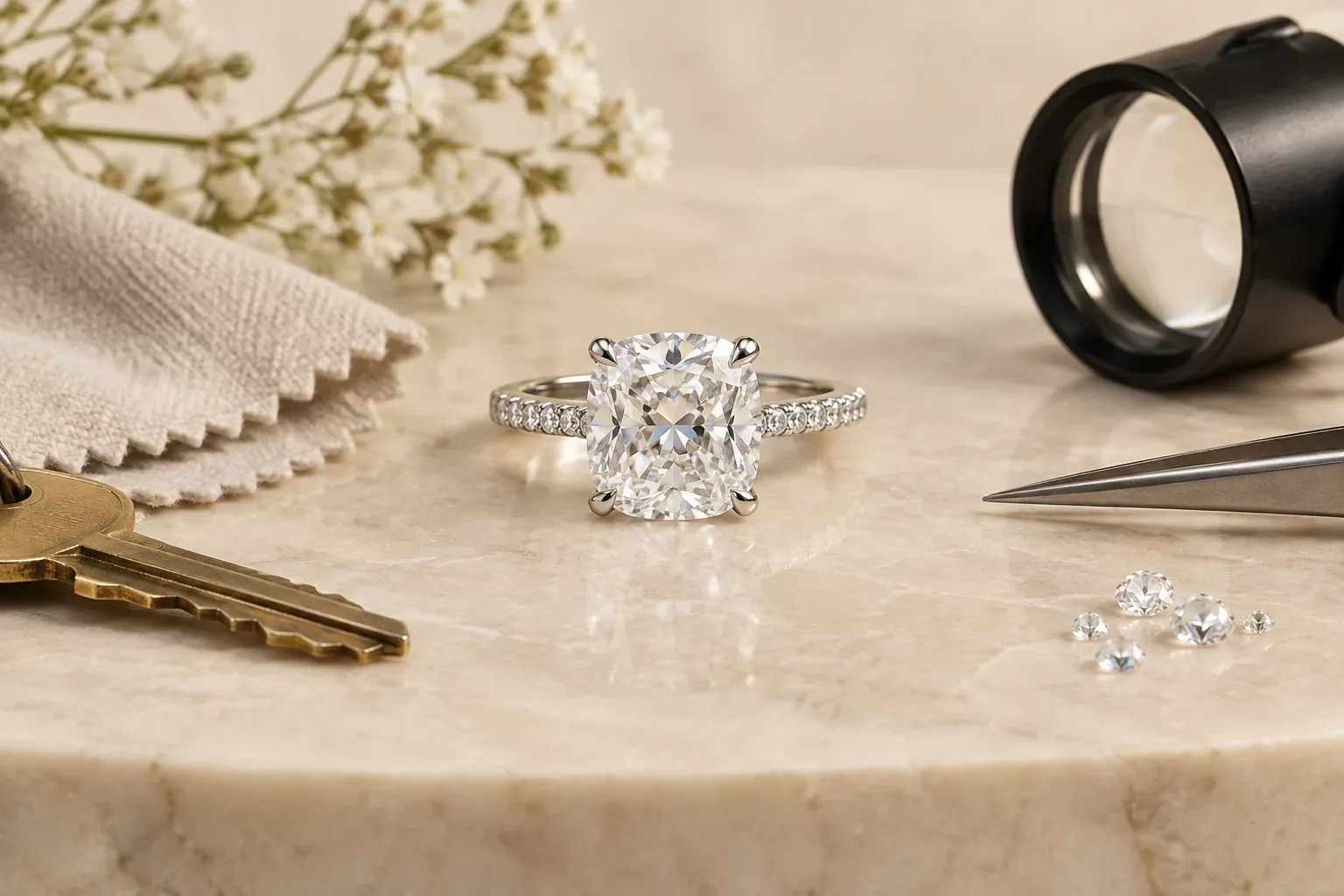
Cushion cut describes a rectangular to square outline with rounded corners and large facets that combine brilliance and a soft outline. Jewelers commonly set cushion-cut stones in solitaire, halo, three-stone and vintage-inspired mountings. The same cushion cut can present very differently in a low-profile bezel compared with a high-prong cathedral setting; that change in mounting alters snagging risk and the ring’s vulnerability to impact.
Because the cushion cut often has larger table and crown facets, its pavilion and girdle geometry interact with prong placement and halo bezels. A halo or bezel can protect the stone’s girdle and reduce the chance of edge chips, while exposed prongs and high settings increase the chance of catching on fabric or striking hard surfaces.
Durability factors to evaluate when considering a cushion cut engagement ring
Material hardness and toughness: The Mohs hardness of the gemstone is a primary determinant of scratch resistance; diamond is at the top of the scale and is highly scratch resistant, while sapphires and rubies are less so but still durable for daily wear. Other gemstones commonly cut into cushion shapes (for example, some colored sapphires, emeralds or lower-hardness stones) have different scratch and cleavage properties that affect long-term durability.
Setting design and metal strength: The number, thickness and symmetry of prongs matter. Thin prongs wear faster and are more likely to bend or detach, increasing loss risk. Bezels or protective halos add durability but change the look. Metal choice influences wear—softer metals like 9K/10K gold or some platinum alloys will behave differently under impact or abrasion.
Proportion and pavilion depth: A well-cut stone that is neither too shallow nor excessively deep sits more securely and distributes force more predictably. Extremely shallow or deep cuts can create leverage that stresses prongs during knocks.
Workmanship and maintenance: High-quality setting work, precise prong tips, and routine maintenance (practical inspections by a trusted jeweler) reduce repair frequency. Jewelers Mutual highlights that craftsmanship and proper finishing are key parts of how consumers experience long-term durability.
Common snagging and damage scenarios
Snagging typically occurs when prongs or the stone’s edges catch fabric, particularly when a ring has exposed prongs or an elevated profile. Snags can lead to bent prongs, loosened stones, or torn fabric. Impact to the girdle or culet can produce chips or fractures in the stone, especially in stones that have internal inclusions or have been fracture-filled.
Soft metals can deform and thin over time where a ring consistently catches or rubs. Repeated abrasive contact can open gaps between the stone and setting, creating a progressive repair need rather than a single acute failure.
Repair risk and practical trade-offs
Common repairs include prong re-tipping, tightening or resetting a stone, fixing a split shank, polishing scratches, and, in severe cases, replacing a damaged stone. Prong repair is a relatively routine jeweler service, but more invasive repairs—re-cutting a stone or replacing a fracture-filled stone—are costly and may change appearance.
There is a trade-off between aesthetics and protection: intricate vintage settings and thin bands look delicate but can raise repair frequency. Protective settings like bezels and lower profiles reduce repair risk but change the ring’s visual effect. Consumers should weigh these trade-offs in light of how often they plan to wear the ring during physical tasks or sports.
Selection and gifting guidance
Match the gemstone and setting to the wearer’s lifestyle and tolerance for maintenance. If the wearer leads a physically active life or works with their hands, prioritize low-profile settings, secure prongs, or bezel options and consider a harder gemstone. If the aesthetic of a delicate, high-profile cushion cut is important, accept that more frequent inspections and occasional repairs are part of ownership.
Ask the vendor for written disclosure about whether the stone is natural, lab-created, treated, or an imitation, as advised by the Federal Trade Commission. Request any available gemological reports, and when possible, select a reputable retailer or independent bench jeweler who documents the mounting work.
If the ring is a surprise gift and you want to reduce durability risk, choose a protective setting and include the option of an exchange for fit or repair after gifting. Jewelers Mutual’s trend guidance suggests craftsmanship and versatility matter to buyers; prioritizing solid workmanship over minimal cost helps long-term satisfaction.
Safe care guidance for daily wear
Routine inspection: Have prongs and settings inspected by a trusted jeweler every 6–12 months, or sooner if the ring receives knocks. Early prong re-tipping prevents stone loss and keeps repair costs lower.
Everyday habits: Remove rings for heavy manual tasks, gardening, or sports where hits and abrasion are likely. Avoid exposing treated stones to harsh chemicals or ultrasonic cleaners without confirmation that the treatment is stable—GIA notes that treatments can influence how a gemstone should be cleaned.
Professional cleaning and documentation: Use a professional cleaning and documentation service periodically. Keep copies of any seller disclosures and lab reports. The FTC advises keeping written proof of what was represented at purchase to resolve disputes or insurance claims.
What only a jeweler or gemological laboratory can confirm
A qualified jeweler or a gemological laboratory can definitively identify the material (natural vs lab-grown vs imitation), detect and describe treatments, test for structural weakness, and issue a formal report on inclusions or fracture patterns that affect durability. The Gemological Institute of America highlights that detectability of treatments and their durability implications are technical matters best assessed by specialists.
Buyers should understand the limits of visual inspection alone. Surface wear, microscopic fractures, or internally filled fractures may not be visible without magnification and instruments. For high-value purchases, insist on a lab report from a recognized gemological laboratory and on written seller disclosure as outlined by the Federal Trade Commission.
Frequently asked questions
Is a cushion cut engagement ring durable enough for everyday wear?
Yes—if the stone is a hard material such as a diamond and is set in a protective, well-crafted mount. Durability depends more on the gemstone’s hardness, the setting type and workmanship than on the cushion cut itself.
Do cushion cut rings snag more than other cuts?
Snag risk is primarily a function of profile height and exposed prongs rather than facet shape. High-profile settings and thin or worn prongs increase snagging; halos or bezels lower the risk.
What repairs are most commonly needed for cushion cut engagement rings?
The most common repairs are prong re-tipping, tightening or resetting the stone, shank repairs and polishing scratches. More invasive repairs, like replacing a damaged stone, are less common but more costly.
How can I verify whether a cushion cut stone is treated, lab-grown, or natural?
Only a qualified jeweler or a recognized gemological laboratory can reliably identify treatments or whether a stone is natural or lab-grown. The Federal Trade Commission recommends requesting written seller disclosures and lab reports when available.
How often should I have a cushion cut engagement ring inspected?
Have the setting inspected by a trusted jeweler every 6–12 months, and sooner if the ring suffers a hard knock, visible prong deformation, or you notice the stone shifting.
Sources and further reading
- Imaginaire Digital — Imaginaire Digital
- Jewelers Mutual — Jewelers Mutual
- Gemological Institute of America — Gemological Institute of America
- Federal Trade Commission — Federal Trade Commission