Meaning at a glance
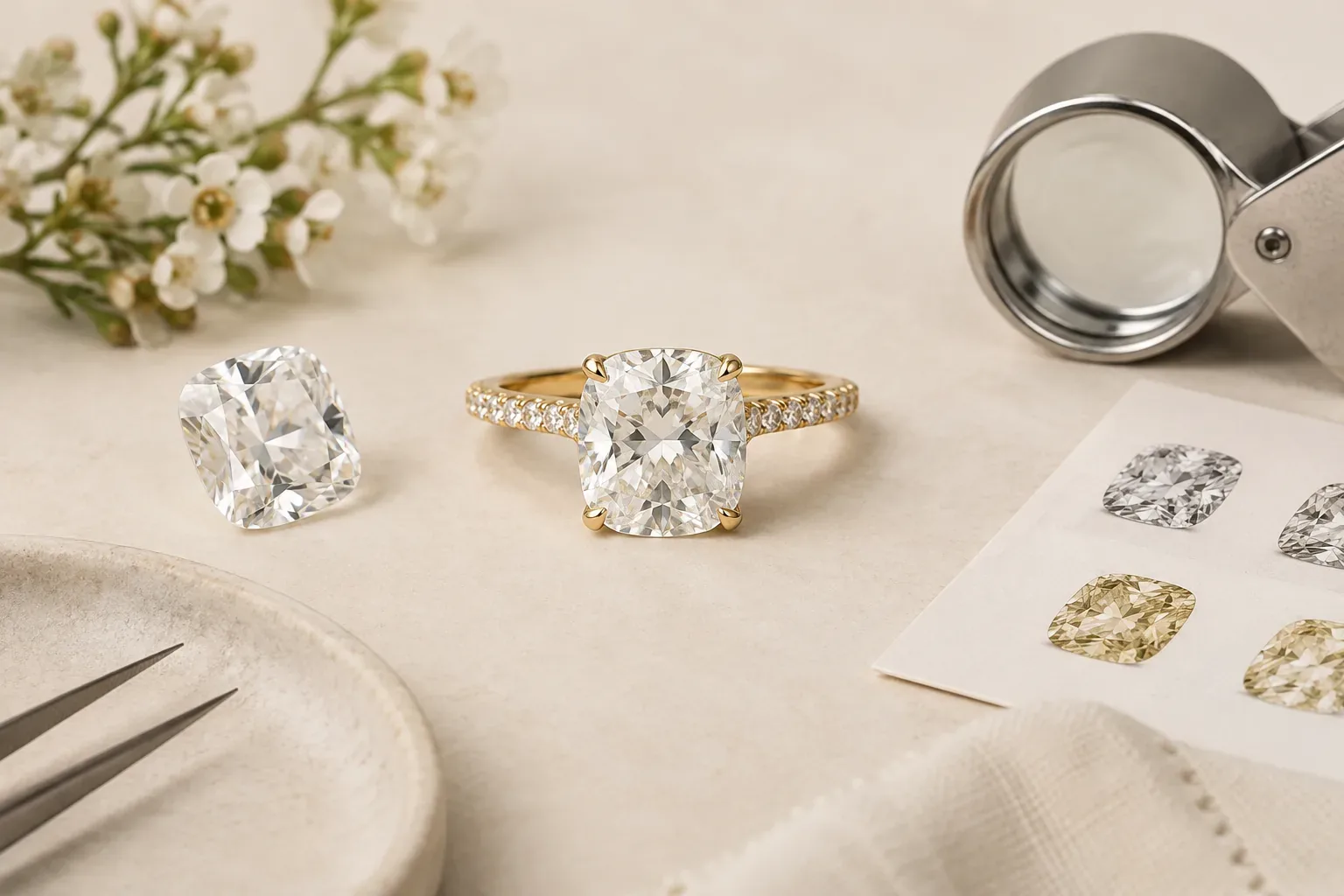
A cushion cut engagement ring pairs a soft square outline with rounded corners and larger facets to emphasize a vintage, warm sparkle; choose it if you want an elegant, often vintage-leaning look, but verify cut proportions, treatment and origin with a qualified jeweler or gemological laboratory and request written disclosures from the seller.
What people mean by 'cushion cut' and how it appears in jewelry
In common trade usage, a cushion cut describes a gem cut with a generally square or rectangular outline and softened, rounded corners. The facet patterns vary from larger, blockier facets that emphasize a softer, 'chunkier' sparkle to more modern facet arrangements that try to increase brightness and fire. Jewelers set cushion cuts in solitaire, halo, and three-stone engagement settings, and the cut is also popular for colored gemstones where the cushion shape preserves color saturation while presenting a classic silhouette.
In jewelry design the cushion cut is often paired with settings that highlight its vintage appeal. A halo setting gives the stone a larger apparent size and additional brilliance, while low-profile bezels or knife-edge bands emphasize understated elegance. Because facet structure influences how a cushion stone reflects light, jewelers sometimes recommend different settings for antique-style cushions versus modern cushion brilliants to balance sparkle and perceived size.
Documented historical evidence and what the approved sources say
Among the approved references for this guide, there is limited published detail specific to the historical origins of the cushion cut. Professional trade and gemological organizations acknowledge that diamond and gemstone cutting styles have evolved over centuries, but the specific documentary history of a single cut—its first maker or exact date of invention—is typically treated in specialist gem-historical works that are not part of the sources approved for this article.
Because our evidence set focuses on consumer guidance, trends and treatment disclosure rather than deep historical provenance, shoppers who need an exhaustively sourced history of the cushion cut should consult dedicated gemological histories or institutional archives. The Gemological Institute of America provides authoritative material on gem treatments, disclosure, and how cutting and finishing affect a stone's appearance, which are essential for contemporary purchasing decisions even if they do not serve as a detailed history of the cut itself.
Separating documented meanings from modern personal interpretations
Documented meanings for cuts or styles are rarely universal. The approved sources emphasize consumer trends and industry practices rather than symbolic meanings tied to a cut. Jewelers Mutual reports on current trends such as fluid forms, modern stacking and gender-neutral styling; these observations speak to contemporary taste and how the cushion cut is being worn today, not to a timeless cultural symbolism.
Modern buyers often attach personal meaning to a cushion cut—vintage romance, heirloom style, or individuality—but these are subjective interpretations rather than documented historical meanings. If you want a ring that carries a particular symbolic weight, frame that intention as a personal or family meaning and communicate it clearly when customizing or selecting a setting.
Pros: Why shoppers choose a cushion cut
Many buyers pick cushion cuts for their classic, romantic profile and the way the cut can emphasize color in gemstones. The rounded corners offer a softer look on the hand compared with a sharp-cornered square or emerald cut, and facet patterns can create a distinctive, warm sparkle that suits vintage or heirloom-style settings.
Cushion cuts are also versatile. They appear in diamond engagement rings and colored-gemstone rings alike, and they work with a wide range of settings from halo to bezel. For people who want a stone that reads as both substantial and elegant, a well-proportioned cushion can balance face-up size and character without the sometimes severe geometry of other square cuts.
Cons and trade-offs to understand
A cushion cut does not generally deliver the same level of scintillation or brightness per carat as a well-cut round brilliant. The larger facets and historical facet arrangements can produce a more blocky or 'pillow-like' flash rather than continuous brilliance, so if you prioritize maximum sparkle for a given budget you should compare actual stones in person.
Because facet patterns and proportions vary widely among cushion cuts, the same nominal carat weight or shape can look quite different from stone to stone. Color and clarity can also be more visible in some cushion facet structures, meaning that buyers may need to trade off color and clarity grades against cut quality and setting choices to achieve their preferred appearance and budget.
Practical selection criteria and steps
Start by deciding what matters most: overall sparkle, vintage character, face-up size, or color saturation when choosing a colored gemstone. View actual stones rather than relying only on photographs because facet pattern and light return are experienced in person. If you can, compare multiple cushion cuts close together to see how facet pattern and proportions affect appearance.
Ask sellers for exact measurements, depth and table percentages, and any available cut analysis. For diamonds, request a certificate from a reputable laboratory and check whether the report includes cut grading and proportion diagrams. For colored gemstones, request written disclosure of treatments, origin when available, and any laboratory reports. The Federal Trade Commission requires clear disclosure about natural versus lab-created and treated stones, so obtain those statements in writing before purchase.
What only a qualified jeweler or gemological laboratory can verify
Some attributes cannot be reliably confirmed by a typical buyer without professional equipment. A qualified jeweler or laboratory is needed to verify or grade cut proportions precisely, detect and identify treatments, determine whether a stone is natural or lab-created beyond visual inspection, and provide an authoritative color and clarity grade for diamonds or a gem identification report for colored stones.
If provenance or ethical sourcing is important, only a documented chain-of-custody or specialized certification can substantiate claims about origin or conflict-free status. For peace of mind, budget for a pre-purchase certificate from a recognized lab or a post-purchase independent appraisal that includes microscopic images and analysis.
Care guidance and long-term maintenance
Follow standard care practices recommended by gemological experts. Cushion cut stones, like other faceted gems, benefit from periodic professional cleaning and inspection: check prongs and settings at least once a year to prevent loss and address wear. Avoid household chemicals that can damage some gemstone treatments, and consult the Gemological Institute of America guidance on treatments and durability when in doubt.
Insure your ring and retain purchase documents and laboratory reports. For daily wearers, choose a setting that protects the stone's corners and edges; although cushion corners are rounded, prongs should still be robust enough for active lifestyles. Jewelers Mutual notes that modern styling preferences include versatility and durability, so consider how the ring will be worn, paired, and maintained over time.
Respectful selection and gifting guidance
If you plan a surprise proposal, balance the element of surprise with certainty about size and style. Consider proposing with a temporary or placeholder ring if you are unsure about specific preferences, or involve your partner privately in choosing the final cushion cut and setting. When gifting, ask about resizing policies and insist on written disclosure of any treatments, whether the stone is lab-created or natural, and the seller's return policy so the recipient can verify comfort and appearance.
When discussing ethics and sourcing, request written statements and lab reports rather than accepting verbal assurances. The Federal Trade Commission highlights the importance of clear disclosure for the categories of natural, lab-created, treated, cultured and imitation materials. If gender-neutral styling or modern trends matter, Jewelers Mutual reports that current demand centers on fluid forms and versatility, so discuss alternative settings that satisfy both style and practicality.
Final thoughts
A cushion cut engagement ring is a distinct aesthetic choice that blends classic silhouette with variable facet expressions. Decide first what visual character you value, then confirm proportions, disclosures and lab documentation before purchase. Reserve questions about treatments, precise grading or provenance for qualified jewelers and gem labs, and plan for regular maintenance and insurance to protect your investment.
Frequently asked questions
Is a cushion cut more or less brilliant than a round brilliant?
Cushion cuts typically show a different kind of sparkle than round brilliants. They often emphasize larger flashes or 'pillow-like' light return rather than the continuous scintillation of a well-cut round. If maximum brilliance per carat is your priority, compare stones in person and consider both cut style and proportions.
Do cushion cuts hide diamond color or inclusions well?
Some cushion facet arrangements and settings can mask color or inclusions better than others, but visibility varies by stone. Buyers who want to minimize color may choose a higher color grade or a setting that reduces the perception of warmth. For clarity, examine stones under magnification or rely on a laboratory report because appearance depends on cut and facet pattern.
Should I insist on a lab certificate for a cushion cut diamond?
Yes. For diamonds, a report from a recognized gemological laboratory provides authoritative statements on weight, measurements, color and clarity grades, and often cut analysis. A certificate also helps with insurance and resale. For colored gems, request identification and treatment reports when available.
Can a jeweler verify treatments or lab-grown origin at point of sale?
A qualified jeweler can perform many standard tests and may use equipment to detect common treatments and lab-grown characteristics, but definitive verification often requires a gemological laboratory analysis. The Federal Trade Commission requires sellers to disclose treatments and lab-grown status in writing, so get those disclosures before buying.
What setting is best for protecting a cushion cut?
Choose settings that protect the stone's girdle and hold corners securely. Although cushion cuts have rounded corners, prong settings with sturdy prongs or bezel options can help protect the gem during everyday wear. Match the setting to the wearer's lifestyle and activity level.
How should I care for a cushion cut engagement ring?
Have prongs and settings professionally inspected yearly, clean the ring gently with appropriate solutions, and avoid harsh household chemicals that can damage some gemstones or treatments. Consult guidance from the Gemological Institute of America regarding the care of treated stones and specific gem types.
Is a cushion cut a good choice for a colored gemstone engagement ring?
Yes. The cushion shape often preserves color saturation and presents color evenly, making it a popular choice for sapphires, emeralds and other colored gems. Ask for written disclosure of treatments, since many colored stones are heat-treated or otherwise enhanced.
Sources and further reading
- Imaginaire Digital — Imaginaire Digital
- Jewelers Mutual — Jewelers Mutual
- Gemological Institute of America — Gemological Institute of America
- Federal Trade Commission — Federal Trade Commission