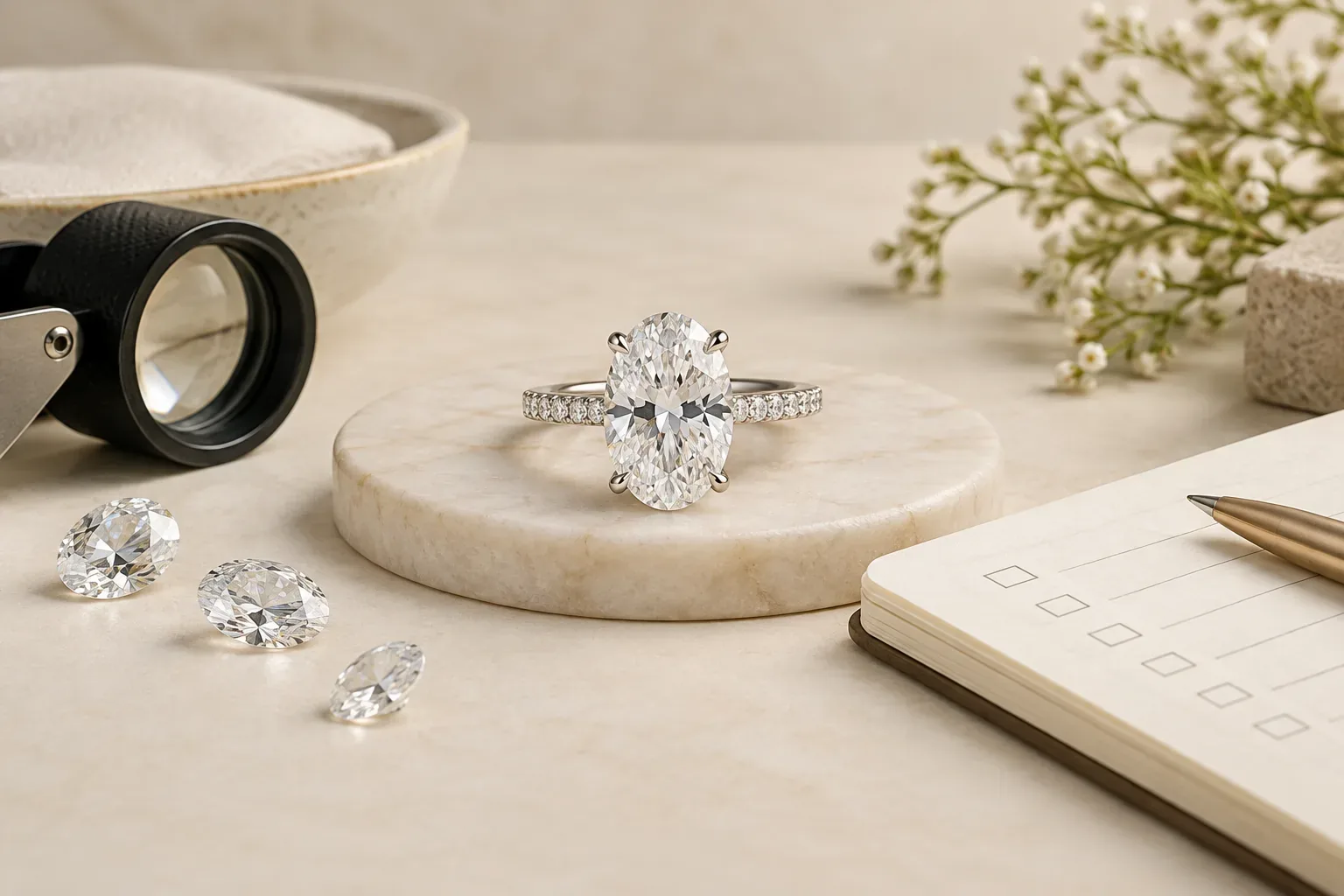
Meaning at a glance
This checklist defines what shoppers mean by “oval cut engagement ring,” lists decision criteria and practical trade-offs (shape, setting, certification, treatments, metal, lifestyle), explains what you can and cannot verify without a qualified jeweler or gemological laboratory, gives safe-care guidance, and separates documented historical evidence from modern personal interpretations.
Direct answer — what this checklist delivers
If you are searching for an "oval cut engagement ring checklist," this article gives a focused list of the questions to ask and the trade-offs to weigh before buying: what the center stone is and how it was made, whether you have reliable certification or written disclosure, cut and setting choices that affect appearance and durability, practical sizing and lifestyle considerations, safe cleaning and care, and the clear limits on what a buyer can verify without a qualified jeweler or a gemological laboratory.
Read these items as decision tools rather than universal rules: history and symbolism for the oval cut are largely modern and personal, while factual questions about treatments, disclosure, and certification are governed by industry practice and consumer-protection guidance.
What people mean by "oval cut" and key definitions
In contemporary jewelry buying, an "oval cut" refers to a faceted, elongated round shape cut into a gemstone (commonly a diamond) to produce a specific light performance and silhouette. The term covers the stone's shape and facet arrangement rather than the ring setting that holds it.
You will encounter related terms when shopping: whether the center stone is natural, lab-created, treated, or an imitation; whether a reputable laboratory has graded the stone; the ring's length-to-width ratio and how that affects the stone's look; and the setting type (solitaire, halo, three-stone, bezel, etc.), which changes both appearance and practicality.
Historical evidence and what is documented
None of the approved evidence for this article ties a specific, well-documented cultural or historical symbolism to the oval cut as a named motif in ancient or medieval sources. Modern market data shows the oval cut as a sought-after contemporary choice rather than a historically documented symbol tied to a particular culture.
Market and trend research from Imaginaire Digital documents strong consumer search demand for engagement rings, including oval engagement rings, in contemporary UK searches, indicating present-day popularity rather than historical meaning. Jewelers Mutual reports 2026 trends that center on fluid forms, modern stacking, colored gemstones, craftsmanship, versatility and gender-neutral styling — all modern design and consumer preferences rather than claims about historical symbolism.
Documented historical meanings versus modern personal interpretation
Documented historical meanings for specific modern cuts are limited in the sources available here. When people attribute symbolism to a cut today, those meanings tend to be personal or cultural interpretations formed in recent decades rather than established historical facts.
Treat modern symbolic readings (for example, ‘oval represents elongation and elegance’) as personal or stylistic meanings a giver or wearer attaches to the ring. These interpretations are valid for gift-giving and personal expression, but they are not the same as documented, culture-wide historical meanings supported by the industry and consumer-protection sources used here.
How the oval motif and gemstones appear in jewelry
The oval shape appears as a center stone in many modern engagement ring styles. Common settings include solitaire mounts that spotlight the stone, halo settings that add perceived size and sparkle, three-stone rings that use the oval as a focal point, and bezel or low-profile settings chosen for durability and everyday wear.
Beyond diamonds, jewelers increasingly pair oval cuts with colored gemstones. Jewelers Mutual's 2026 trend reporting notes consumer interest in colored gemstones and versatility, so you may find oval sapphires, emeralds, and other stones used either as center stones or accent stones in contemporary designs.
Design details such as split shanks, pavé shoulders, and east–west orientations (stone set horizontally) influence how the oval sits on the finger and how it pairs with wedding bands and stacking pieces. These are matters of taste and lifestyle rather than symbolic fact.
Practical checklist: questions to ask a seller before buying
What exactly is the center stone? Ask whether the center is natural, lab-created, treated, or an imitation, and request written disclosure. The Federal Trade Commission emphasizes that consumers need clear distinctions and written disclosures for natural, lab-created, treated, cultured, and imitation materials.
Is there a grading report or certificate, and from which laboratory? Ask to see any independent laboratory report for diamonds or colored stones. Reliable reports describe grading details and any noted treatments. Certification helps you verify claims about color, clarity, and carat weight but does not, by itself, eliminate all risks.
Has the stone been treated, and is the treatment permanent? The Gemological Institute of America (GIA) explains that treatments and their disclosure affect durability and care. Ask which treatments were performed, whether they are stable under normal wear, and whether special care is required.
How does the cut and length-to-width ratio affect appearance? Rather than trusting a single marketing term, request photographs and examine how the oval's proportions look on a similar finger size if possible. The cut and proportions influence perceived size, brightness, and the 'bow-tie' effect some ovals show; what matters most is whether you and your partner like the look.
What is the ring setting and how does it protect the stone? Ask whether the setting exposes the stone to knocks, whether prongs are substantial, whether the design suits daily activity, and whether the ring will need periodic maintenance for prong tightening or re-tipping.
What metal is used and how durable is it? Platinum, gold alloys, and alternative metals offer different hardness and maintenance profiles. Discuss plating (e.g., white gold rhodium plating), how it wears, and any re-plating costs.
What are the seller’s return, resizing, and warranty policies? Confirm return windows, resizing terms and fees, and specifics of any manufacturer or seller warranty. Make sure you have time to verify the stone and consult a local jeweler if you wish.
Can I have the stone independently appraised or tested? A final pre-purchase step can be an independent appraisal or lab testing. The FTC and GIA note that some verifications—treatment detection, origin, and definitive identification—require a gemological laboratory or qualified gemologist.
Trade-offs shoppers should understand
Size versus sparkle: An elongated oval can appear larger for its carat weight than a round stone, but cut quality and depth affect brightness. Decide whether visual spread or maximum fire is your priority and adjust carat, cut, and budget accordingly.
Durability versus design: Low-profile and bezel settings protect the stone better but may change the look. High-set halos or prong settings show off the stone but expose it to more wear and potential snagging. Match setting choice to daily activities.
Natural versus lab-created or treated stones: Lab-created stones typically cost less than comparable natural stones, while treatments can improve color or clarity but may require special care. The FTC requires clear disclosure on these distinctions. Factor disclosure and long-term value into your decision.
Safe care and maintenance guidance
Follow care instructions tied to the stone and treatment. The GIA explains that treatments, detectability, and durability create distinct consumer questions, so cleaning methods that are safe for an untreated diamond could be harmful to a treated or porous gemstone. Ask the seller for recommended cleaning frequency and methods.
Routine maintenance helps prevent loss: have prongs checked and tightened periodically by a reputable jeweler, and consider insurance or a warranty that covers accidental damage and loss. Jewelers Mutual’s trend coverage highlights the contemporary importance of craftsmanship and durability, which bear on long-term care.
For everyday cleaning, many engaged shoppers use mild soap and water with a soft brush for diamonds, but confirm with the seller before applying any cleaner if the stone has reported treatments or is a colored or porous gemstone.
Limits on what you can verify without a professional lab
You can visually inspect a ring, confirm documentation, and ask direct questions, but certain claims can only be definitively verified by a qualified jeweler or a gemological laboratory. Tests for origin, specific treatments, and precise grading often require specialized equipment and trained examiners.
The FTC makes clear that buyers should rely on written seller disclosures and independent laboratory reports for claims about material type and treatments. If a seller cannot produce reliable documentation, a professional appraisal or laboratory report is the next practical step before purchase.
Selection and gifting guidance—practical and respectful
Choose style with your partner’s tastes and lifestyle in mind. If you plan a surprise, discreetly check current jewelry, ask friends or family for input, or choose an exchangeable or adjustable approach that allows a later change if needed.
Discuss ethical or sourcing concerns up front if they matter to you or your partner. Ask sellers for sourcing information and written policies. When in doubt about claims of ethical sourcing, request documentation or seek sellers with transparent traceability practices.
Wrap up: verify paperwork, confirm return and resizing policies, insure the ring promptly, and retain receipts and certificates. These steps turn a beautiful purchase into a secure one.
Frequently asked questions
What documents should I insist on when buying an oval cut engagement ring?
Ask for written disclosure of whether the center stone is natural, lab-created, treated, or an imitation, and request any available independent grading reports or certificates. The Federal Trade Commission advises consumers to require clear written distinctions for material type; laboratory reports help verify claims about grading and treatments.
Can I tell if an oval diamond is lab-created or treated just by looking at it?
You cannot reliably determine lab-creation or specific treatments by eye alone. The Gemological Institute of America explains that treatments and detectability may require specialized testing. For definitive identification, obtain documentation from a reputable laboratory or a qualified gemologist.
How should I care for an oval cut ring after purchase?
Care depends on the stone type and any treatments. The GIA notes that treatments affect durability and cleaning recommendations, so follow seller guidance. Routine steps include periodic prong checks, gentle cleaning with approved methods, and prompt professional servicing if you notice loose settings.
Is the oval cut a historically symbolic choice?
Approved market and industry sources used here do not document a culture-wide historical symbolism specifically tied to the oval cut. Modern symbolic meanings are typically personal or stylistic rather than historically documented.
Do I need a GIA report specifically?
A GIA report is one widely recognized option for diamonds, but the key is a reputable, independent laboratory report that describes grading and any treatments. Use the report to compare seller claims and to inform insurance and appraisals.
Sources and further reading
- Imaginaire Digital — Imaginaire Digital
- Jewelers Mutual — Jewelers Mutual
- Gemological Institute of America — Gemological Institute of America
- Federal Trade Commission — Federal Trade Commission