Meaning at a glance
Pairing a round-cut engagement ring and a wedding band is a decision about shape compatibility, the gap or contour between rings, metal choice, and trade-offs in durability and appearance; shoppers should follow clear selection criteria, use safe care practices, and understand which gem and metal claims need a jeweler or lab to verify.
What we mean by 'round cut wedding band pairing'
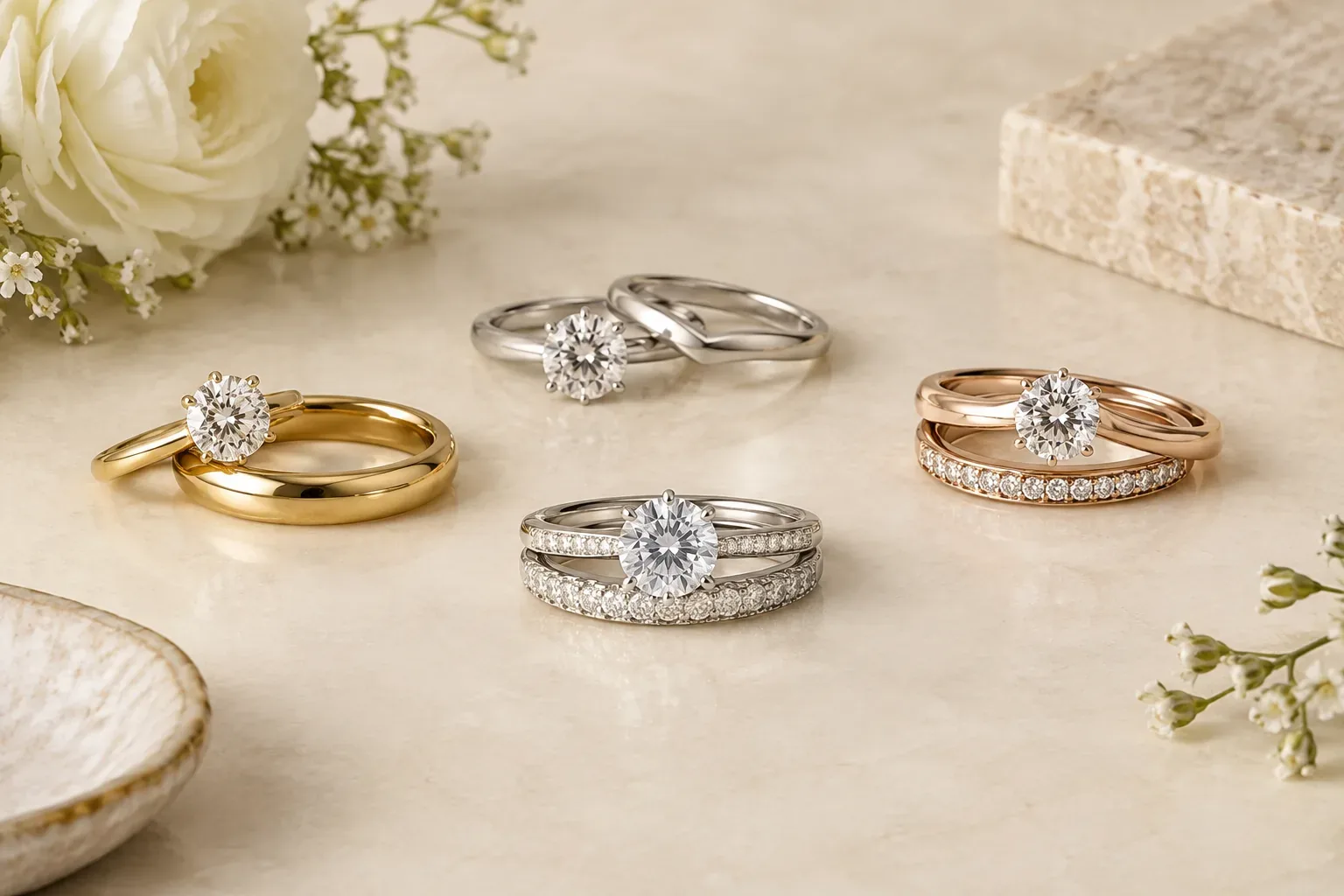
The phrase addresses five distinct decisions a shopper typically needs to make: the round brilliant (or other round-style) center stone's interaction with a band; whether the band is straight, contoured, or notched to close any gap; band width and profile relative to the engagement ring; metal selection and finish; and whether the band will be plain metal, set with accent stones, or feature motifs. These are practical, design-led criteria rather than universal symbolic rules.
Historical evidence and how precise cultures or periods are documented
Our approved sources do not provide detailed primary histories for the modern practice of pairing round-cut engagement rings with wedding bands. Contemporary industry and trend reporting (for example, 2026 searches and market observations) focus on current consumer demand and styling rather than historical origin. The 2026 UK search estimates cited by Imaginaire Digital emphasize strong demand for engagement rings and specific ring shapes, but do not trace historical practices to named cultures or periods. Similarly, professional bodies like Jewelers Mutual report on modern trends—fluid forms, stacking and gender-neutral styling—rather than premodern cultural customs.
Documented historical meaning versus modern personal interpretation
Because the approved sources are contemporary market and consumer guidance, they do not provide verified historical symbolic meanings tied to particular cultures or eras for 'round cut wedding band pairing.' Where cultural or historical claims appear in popular writing, treat them as modern interpretations unless a specific archaeological or archival source is cited. Modern meanings—such as using a matching metal to symbolize unity, or layering multiple bands to represent life stages—are personal and stylistic choices supported by recent trend data rather than documented historic ritual.
How motifs, gemstones, and traditions appear in contemporary jewelry
In today’s market motifs and gemstone choices appear as part of design and wearability decisions. Jewelers Mutual notes 2026 demand centers on fluid forms, modern stacking, colored gemstones, craftsmanship and gender-neutral styling, which explains many pairing choices such as thin stacking bands, curved contour bands, or mixed-metal stacks. Imaginaire Digital’s 2026 search data underlines strong shopper interest in engagement rings and particular shapes, which filters into complementary band styles offered by retailers. The presence of accent stones, milgrain, engraving, or specific motifs is primarily decorative and personal rather than carrying universally documented symbolic meaning in these sources.
Shape and gap: practical considerations
Start by testing how the engagement ring and candidate band sit together on the finger. A flat, straight band will leave a visible gap against a high-set round center or a halo setting; a contoured or notched band follows the engagement ring’s profile and closes that gap. Thin bands emphasize the center stone and stack easily but are more prone to bending; wider bands distribute wear and hide small misfits but may obscure the center stone or feel bulky. The visual goal—seamless look versus contrasted stack—should be weighed against daily comfort and the likelihood of impacts.
Metal choices and trade-offs
Matching metals give the cleanest, most cohesive appearance and avoid differential wear where plating or finish differs. Choosing the same karat gold or the same platinum grade reduces surprises in color and maintenance. Mixed-metal stacks are fashionable and supported by current trends, but they introduce trade-offs: different hardness and wear rates, and potential color change if alloys are different or if plated finishes wear off. Jewelers Mutual’s 2026 trend guidance implies many shoppers now accept mixed-metal combinations as a deliberate style choice, but the FTC advises consumers to seek clear disclosure about materials, including whether metals are plated, filled or solid, because those manufacturing details affect durability and care.
Gemstone settings, treatments, and what you can verify yourself
Whether accent stones are channel-set, pavé, bezel, or bead-set affects how tightly the band will sit with a round-cut engagement ring and how easily stones can loosen. The Gemological Institute of America (GIA) emphasizes that treatments, disclosure, detectability, durability and special care create distinct consumer questions for gemstones. Shoppers can verify visible things themselves—stone shape, apparent color, whether a setting sits flush—but cannot reliably verify treatments, origin, or precise grading without a qualified jeweler or a gemological laboratory. The Federal Trade Commission requires clear seller disclosure on natural versus lab-created, treated, cultured and imitation materials; insist on written descriptions if these factors matter to you.
Practical selection and gifting guidance
When buying for yourself, try combinations on your hand and simulate daily wear—open doors, type, wash hands—to ensure comfort. When buying as a gift, get the engagement ring’s profile, width and metal identified by the seller in writing and choose a return-friendly retailer or a band that can be resized. If you are unsure of finger size, buy with a modestly flexible return or resizing policy. Ask for written disclosures about metal content and whether accent stones are natural, lab-grown or treated; the FTC’s guidance requires this information to be disclosed by sellers. For couples who want symbolism, agree on whether matching metals or complementary stacks will carry the intended meaning, and put that intention into words rather than assuming a universal symbolism.
Care guidance and maintenance
Follow specific care instructions for the metals and gemstones you choose. The GIA notes that treatments and certain gemstones demand special care—some stones are softer and scratch more easily, some treatments may be sensitive to heat or chemicals. Regular inspection by a jeweler is recommended for any settings with small stones to check for looseness. Keep written documentation of any disclosures or certificates from the seller; these help a professional identify materials and recommend suitable cleaning or repair procedures.
What requires a professional or laboratory to verify
Visual inspection can confirm apparent shape, whether two rings sit flush, and whether plating or heavy wear is present. However, only a qualified jeweler with tools or a gemological laboratory can confirm metal purity, whether a stone is natural or lab-grown, specific treatments, or an authoritative grade for a diamond or gemstone. If provenance, treatment status, or exact grading matter to you, request lab reports from recognized labs and written seller disclosures before purchasing; the FTC underscores that these distinctions should be clearly disclosed to consumers.
Putting the guidance into a decision process
Decide your priority first: seamless appearance, maximum comfort, easiest long-term maintenance, or a trendy mixed-metal stack. Measure how the engagement ring and candidate band sit together, consider a contoured or notched band for a close fit, match metals for consistent wear or intentionally contrast them for style, and choose band width based on whether you want the band to be a subtle partner or a visible stacker. Always confirm seller disclosures, keep documentation, and remember that precise material or treatment verification requires qualified testing.
Frequently asked questions
How do I choose between a straight band and a contoured band for a round-cut engagement ring?
Test the pair on your finger. A straight band sits well with low-profile settings but will leave a gap against high-set or halo settings. A contoured or notched band follows the engagement ring’s profile to close that gap. Consider whether you prioritize a seamless look or the flexibility to wear other rings with the band.
Can I mix metals when pairing a wedding band with a round-cut engagement ring?
Yes—mixed-metal stacks are a current trend and can be an intentional style choice. Be aware of trade-offs: different metals wear at different rates and plated finishes can fade. If durability or exact color matching matters, choose the same metal or request written material disclosures from the seller.
What can I verify myself and what needs expert testing?
You can verify visible fit, band width, apparent color and whether a finish is plated or heavily worn. You cannot reliably verify treatments, whether a stone is natural versus lab-grown, precise grading, or metal purity without a qualified jeweler or a gemological laboratory.
How should I care for a paired set with accent stones?
Follow care instructions for the most delicate component: avoid harsh chemicals, inspect regularly for loose stones, and have a jeweler check prongs or pavé settings periodically. The GIA notes that treated or softer gemstones often need gentler care than durable stones like diamonds.
What should I ask a seller before buying a band to pair with an engagement ring?
Request written details about metal content, plating, stone origin or treatment, resizing policy, and return terms. The FTC expects sellers to disclose distinctions among natural, lab-created, treated and imitation materials; insist on written documentation if any of these factors influence your purchase.
Sources and further reading
- Imaginaire Digital — Imaginaire Digital
- Jewelers Mutual — Jewelers Mutual
- Gemological Institute of America — Gemological Institute of America
- Federal Trade Commission — Federal Trade Commission