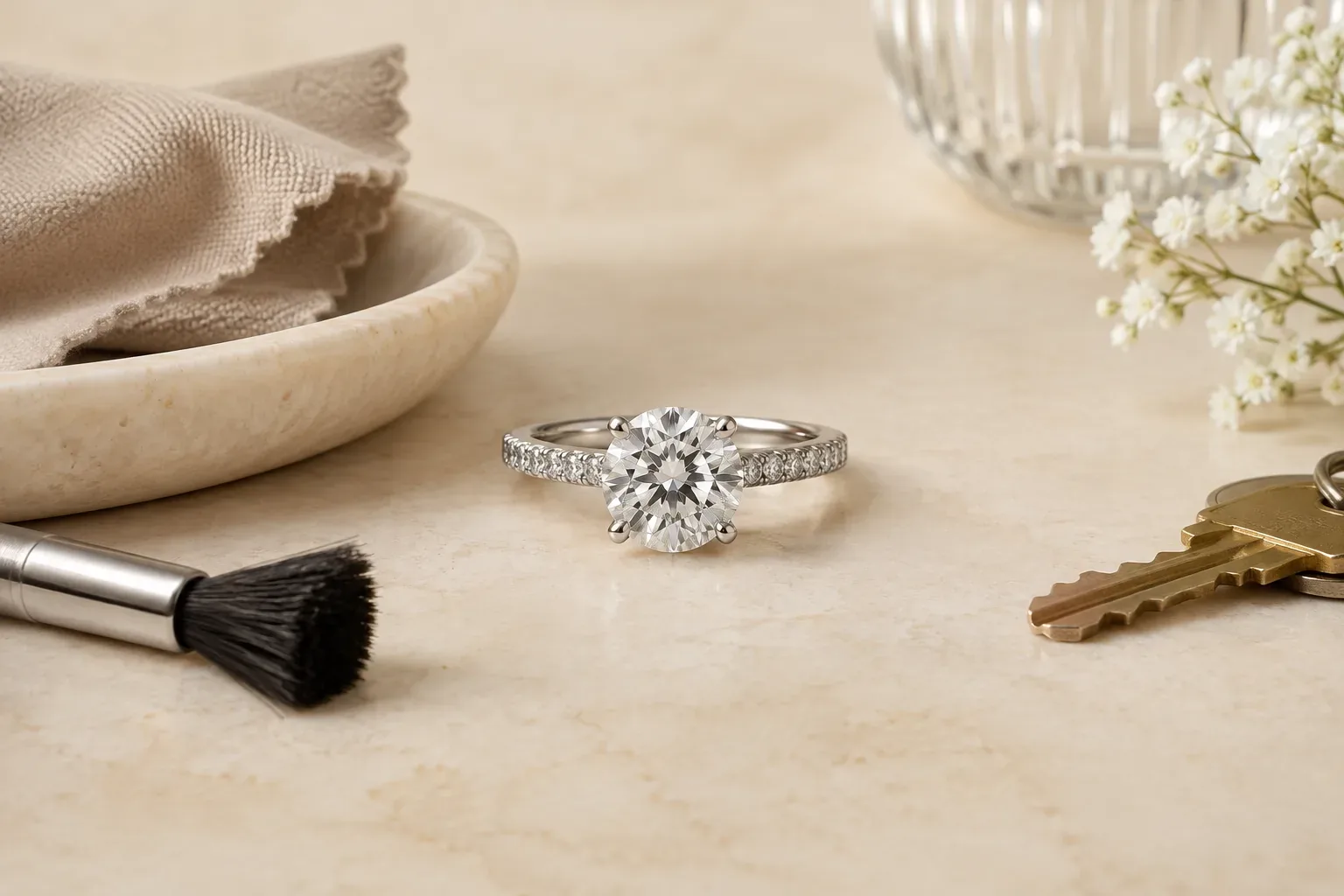
Meaning at a glance
Round cut engagement ring durability depends less on the cut itself and more on the stone material, the mounting style, and care: diamonds and other hard gems resist surface wear, but prong settings and exposed crowns increase snagging and repair risk; buyers should weigh visual trade-offs, request seller disclosures, and plan regular professional inspections.
What the available evidence documents
The sources approved for this article focus on modern consumer, gemological, and market information rather than long cultural histories. The Gemological Institute of America (GIA) explains how treatments, disclosure, detectability and special care affect gemstone durability and consumer expectations. The Federal Trade Commission (FTC) highlights the consumer right to clear distinctions among natural, lab-created, treated, and imitation materials and emphasizes the need for written seller disclosures. Jewelers Mutual documents contemporary trend influences — such as preferences for versatility and craftsmanship — that affect ring design choices, which in turn change durability and repair profiles. Imaginaire Digital’s 2026 search data shows strong consumer demand for traditional engagement styles, which helps explain why round cuts remain a prevalent choice in the market.
Historical evidence and cultural context — what the approved sources show (and don't show)
None of the approved sources provide detailed, culture-specific historical records about the use or symbolic meanings of round-cut stones across past societies. Instead, they document modern market and consumer issues: GIA on gem treatments and care, FTC on disclosure and consumer rights, Jewelers Mutual on contemporary styling trends, and Imaginaire Digital on search demand patterns. That means there is little to no culture-by-culture historical durability record for the round cut within these sources; for cultural histories you would need specialist historical or archaeological scholarship beyond the approved material used here.
Documented historical meanings versus modern personal interpretation
Because the reviewed sources are modern and consumer-focused, they do not ascribe longstanding cultural meanings specifically to the round cut. Any historical symbolism claimed for round stones or circular forms should be treated as a modern interpretation unless supported by independent historical research. Modern wearers and gift-givers commonly attach personal meanings — unity, eternity, or aesthetic preference — to a round cut, but those are contemporary personal meanings rather than documented cultural facts in the provided sources.
How the round cut appears in jewelry and why that matters for durability
In contemporary design the term 'round cut' typically refers to a circular outline stone, most commonly a round brilliant diamond in engagement rings. Imaginaire Digital’s market data shows continued strong consumer interest in classic engagement shapes, which keeps the round cut common in a wide variety of settings. The choice of setting — prongs, bezel, halo, flush, or low-profile mount — determines how exposed the girdle and crown are. Exposed crowns and taller prongs maximize light return and fire but increase the chance of snagging and prong wear. Lower-profile bezels or flush settings protect edges and reduce snagging, but change the ring’s visual character and may slightly affect apparent brilliance.
The metal used for the band and setting also affects long-term wear. Softer alloys scratch and dent more easily than harder alloys or platinum, requiring more frequent maintenance to keep a neat appearance. Jewelers Mutual’s trend reporting notes that modern buyers often balance traditional silhouettes with designs oriented toward everyday versatility, which drives interest in more protective or low-profile mounts for those who plan heavy daily wear.
Daily wear: common risks and realistic expectations
Diamond’s position at the top of the Mohs hardness scale makes it highly resistant to scratching from ordinary materials, but hardness does not eliminate all risk. Impact to a facet junction or cleavage plane — rare for diamonds but more relevant for other gemstones — and chipping to an exposed culet or girdle can occur when a stone is struck. GIA’s guidance on treatment and care shows that treated gems sometimes require special handling, and that detectability of treatments is a key consumer concern, because some treatments can affect durability.
Snagging is mainly a function of mounting style. Rings with high prongs, open galleries, or tall settings catch on fabrics, hair, and rough surfaces. A halo or pavé can increase the number of small settings vulnerable to stone loss or re-setting over time. Expect routine prong re-tipping, occasional stone tightening, and possible re-plating for plated metals if the ring is worn daily.
Repair risk: what tends to need attention and when to seek help
Typical repair needs for engagement rings include prong re-tipping, stone tightening or replacement, retipping or reshaping bent shanks, and re-plating of surface finishes such as rhodium on white gold. The likelihood and frequency of these repairs increases with how exposed the stone is and how rough the wearer’s daily activities are. Jewelers Mutual’s consumer guidance underscores that modern styling and gender-neutral trends can change how rings are designed for daily use; designs prioritizing protection reduce repair frequency but alter appearance.
Only a qualified jeweler can assess whether a particular stone has suffered internal damage or whether a treatment has compromised durability, and only a gemological laboratory can provide authoritative identification of natural versus treated or synthetic material. The FTC requires sellers to provide written disclosures about such characteristics, and buyers should request them.
Selection and gifting guidance — practical and respectful advice
Match the ring style to how the recipient lives and works. If the wearer uses their hands heavily for work or hobbies, favor lower-profile or protective settings (bezel, flush, or low halo) and harder metals such as platinum or a durable gold alloy. If the aesthetic priority is maximum brilliance and sparkle, prong-set round brilliants provide the most light return but accept higher snag and maintenance risk. Discuss preferences openly and respectfully; many modern buyers combine visual preference with practical needs, as Jewelers Mutual’s reporting on versatility indicates.
Request written seller disclosures for origin (natural or lab-grown), any treatments, and return or warranty terms. The FTC emphasizes that clear written disclosure is the consumer’s right. Ask the retailer for recommended care, and confirm whether they offer or recommend regular inspection and maintenance plans. For surprise gifting, consider arranging a later invoice review or certificate handover that includes these disclosures and the option for a professional sizing and inspection appointment.
What you can verify yourself and what requires experts
Shoppers can verify non-technical information directly: request the seller’s written disclosure about whether the stone is natural, lab-created, treated, or an imitation, and obtain receipts, warranty documents, and any gemological reports that accompany the purchase. Visual checks can show whether a setting appears loose, whether prongs are bent, or whether the metal finish is wearing, but those observations are not definitive on internal integrity or treatment status.
Only a qualified jeweler should evaluate structural concerns such as prong thickness, metal fatigue, or the need for re-tipping. Only an accredited gemological laboratory can confirm gem identity, treatments, or laboratory origin with authoritative testing. GIA describes the limits and rationale for such testing; the FTC requires disclosure of material status, but verification beyond paperwork needs lab equipment and expertise.
Care routine and preservation to reduce repair risk
For everyday wear: remove the ring during heavy manual tasks, rough sports, or when using harsh chemicals. Clean gently with appropriate solutions recommended by the seller or gemological authorities, and avoid ultrasonic cleaning if your stone has known treatments or inclusions that might be compromised. Schedule a professional inspection at least once a year, more often if the ring is worn daily or if the design includes many small stones. Insure the ring under a homeowners policy endorsement or jewelry insurance to protect against theft, loss or accidental damage; Jewelers Mutual documents contemporary interest in protecting craftsmanship and long-term ownership.
If you notice snagging, looseness, or visible damage, seek a professional jeweler promptly. Small problems left unchecked can lead to stone loss or more costly repairs.
Summary and practical trade-offs
Round cut engagement ring durability is not a single binary quality. The round cut itself—especially when executed as a round brilliant—delivers consistent optical performance, which is why it remains popular. Durability in daily wear comes from the interaction of gemstone hardness and treatment status, setting protection and metal choice, and ongoing care. Expect routine maintenance for exposed settings; reduce snag risk by choosing protective mounts; and rely on seller disclosures plus professional lab work to confirm anything beyond visible condition. The balance you choose will depend on aesthetic priorities, lifestyle, and how comfortable you are with periodic maintenance.
Frequently asked questions
Is a round cut diamond durable enough for everyday wear?
Yes — if the stone is diamond, its exceptional hardness resists surface scratching. However, durability for daily wear also depends on the setting and metal: exposed crowns and high prongs increase the risk of snagging and chipping, and softer metals will show wear sooner. Request seller care guidance and plan regular inspections.
How can I reduce the chance my round engagement ring will snag on clothing?
Choose a lower-profile or protective setting such as a bezel, flush or low halo, and avoid tall prong mounts. Consider a sturdier metal like platinum or a durable gold alloy, and ask a jeweler about shank designs that sit close to the finger to minimize catching.
Can treatments or lab-grown origin affect durability?
Certain treatments can affect how a gem should be cared for, and GIA notes that detectability and care vary by treatment. Lab-grown stones may have similar hardness to natural stones, but the FTC requires sellers to disclose origin and treatments in writing. For any concerns about long-term durability related to treatments, seek lab reports or a jeweler’s evaluation.
What repairs should I expect over the life of a round cut engagement ring?
Common repairs include prong re-tipping, stone tightening, reshaping or sizing the shank, and re-plating finishes such as rhodium on white gold. Frequency depends on setting exposure and daily wear. A protective setting reduces repair frequency but changes the look.
What can I verify myself versus what needs a jeweler or laboratory?
You can verify written seller disclosures, receipts, warranties, and visible condition yourself. Only a qualified jeweler can assess structural issues and whether a setting needs repair, and only an accredited gemological laboratory can authoritatively identify treatments or confirm natural versus lab-grown origin.
How often should I have my engagement ring professionally inspected?
Have the ring inspected at least once a year, and sooner if you notice catch points, loose stones, or visible damage. More frequent checks are sensible for rings worn daily or with many small stones.
Sources and further reading
- Imaginaire Digital — Imaginaire Digital
- Jewelers Mutual — Jewelers Mutual
- Gemological Institute of America — Gemological Institute of America
- Federal Trade Commission — Federal Trade Commission