Meaning at a glance
A round cut engagement ring buying guide should define the round cut and its trade-offs, set decision criteria (cut quality, carat, budget, setting), explain what a buyer can and cannot verify without a jeweler or laboratory, and give practical selection and care advice rooted in seller disclosures and consumer-protection best practice.
What people mean by "round cut" and how it appears in jewellery
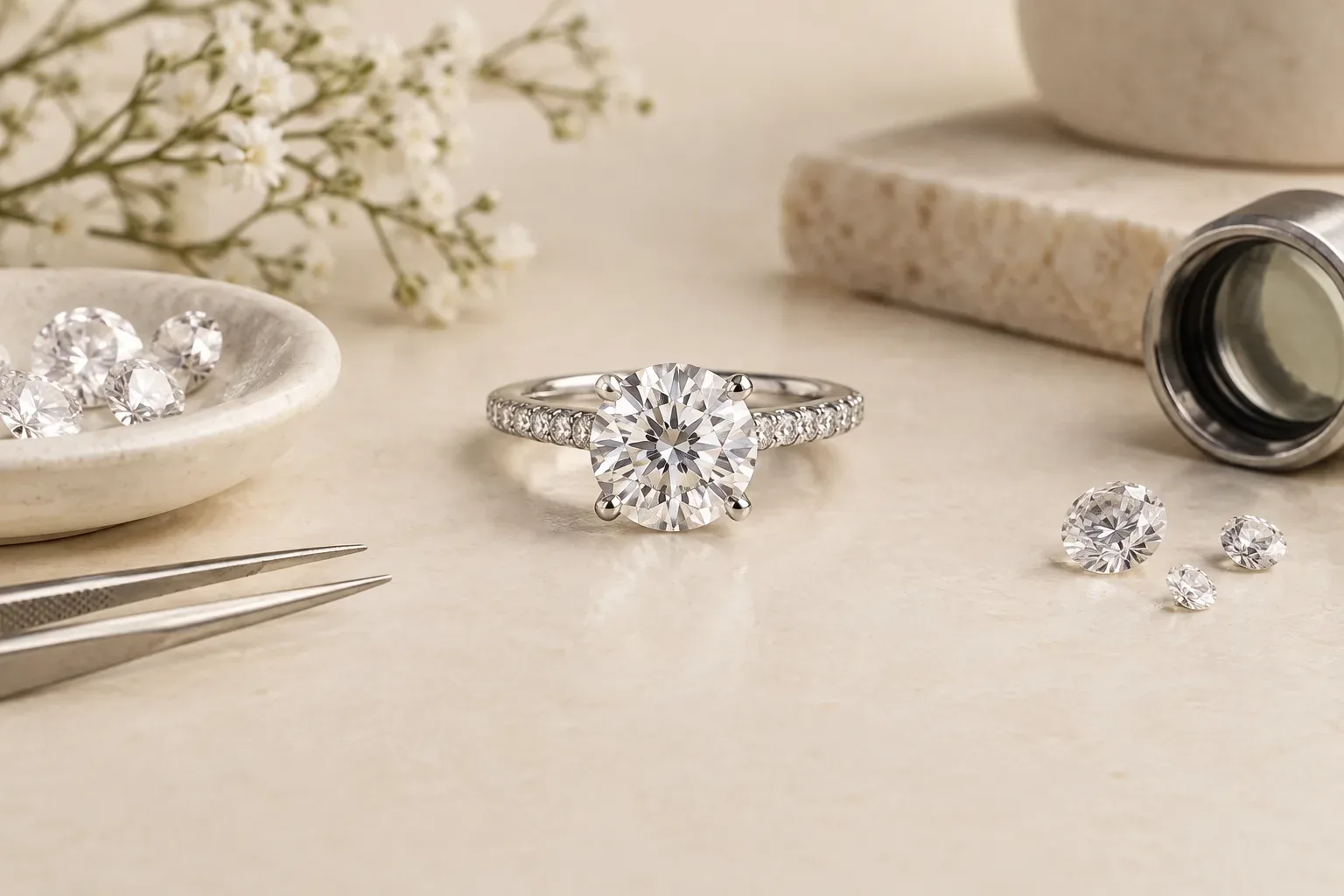
In common jewellery language a "round cut" refers to a gemstone shaped and faceted in a circular outline so its fire and brilliance are maximised when properly cut. In engagement rings the round cut is most frequently seen in diamonds, set as solitaires, halo rings, pavé bands, and three-stone designs. The round outline is also used for other gemstones, where cutters adapt facet patterns to the material's optical properties to prioritise brilliance, colour or durability.
Historical evidence and modern market context
There is limited direct historical documentation that ties a specific symbolic meaning uniquely to the modern round cut. Contemporary industry and market research provide the clearest picture of how round cuts function today. Trend and search analyses note strong consumer demand for classic engagement styles; for example, Imaginaire Digital's 2026 visibility research shows persistent demand for engagement rings alongside other categories, reflecting continued market interest in familiar cuts and shapes. Jewelers Mutual's 2026 trends reporting describes current consumer priorities such as craftsmanship, versatility, and gender-neutral styling, which helps explain why the round cut remains a dominant, flexible choice in rings that must suit daily wear and varied personal styles.
Documented meanings versus personal interpretation
Documented historical meanings tied to a particular cut are scarce; museums and gemology references do record how circular and ring-shaped objects have been used in many cultures as symbols of continuity, unity or status, but those references do not single out the modern faceted round cut as carrying a universal symbolic meaning. Modern personal interpretations—such as viewing a round cut as a symbol of classic romance, simplicity, or endlessness—are valid for the giver and wearer but should be described as individual meanings rather than proven historical facts.
Decision criteria: what to prioritise when buying
Decide your priorities first: is maximum sparkle the goal, or is carat size, budget, or ethical sourcing most important? For round diamonds, cut quality and proportions strongly influence brilliance; if you value sparkle, allocate more budget to cut grade rather than chasing carat alone. If you prioritise size for visual impact, consider a slightly higher carat but balance it with a good-cut grade and an appropriate setting.
Certification and written disclosures matter. The Federal Trade Commission emphasises that consumers need clear distinctions among natural, lab-created, treated, cultured and imitation materials and that sellers should provide written disclosures. Always ask for a reputable lab report when purchasing a diamond so you can verify what the seller claims about origin, treatments and measurements.
Understand treatments and detectability. The Gemological Institute of America notes that treatments, disclosure, detectability, durability and special care create distinct consumer questions for gemstones. Some treatments improve colour or clarity; others can affect durability or require special care. If a seller states a stone is untreated or natural, ask for lab confirmation.
Practical trade-offs: sparkle, size, setting and budget
Round cuts typically reflect light efficiently, which makes them appear very lively compared with many fancy shapes. That said, achieving optimal brilliance can require a higher cut grade, which often increases cost per carat. A buyer on a fixed budget will need to choose between a larger stone with a lower cut grade and a slightly smaller stone with superior cut quality.
Setting style changes how a round cut reads on the finger. A solitaire setting showcases the stone and provides classic protection and ease of maintenance, while a halo adds apparent size and emphasises brilliance. Pavé bands increase overall sparkle but require more careful cleaning and periodic inspection because small stones and settings are more vulnerable to wear.
What you can and cannot verify without a lab or qualified jeweller
You can verify visible aspects such as the stone's measured diameter and how it looks in different lights, whether the setting is solidly made, and whether the seller provides a reputable laboratory report. The FTC specifically advises that consumers need written seller disclosures to distinguish between natural, lab-created and treated materials.
You cannot reliably confirm origin (natural versus lab-grown), the presence of some treatments, or an objective cut grade without a qualified gemological laboratory or an accredited grader. The Gemological Institute of America explains that treatments and detectability can be technical and require specialised testing. If you need definitive information on origin or treatments, insist on a current lab report from a well-known laboratory.
Care, maintenance and longevity
Routine care keeps a round cut engagement ring performing well. Clean gently with warm water, mild detergent and a soft brush, and avoid ultrasonic cleaners for stones with unspecified treatments until you confirm they are safe. The GIA warns that certain treatments and materials require special care, so check any lab report or seller disclosure for care guidance.
Have prongs and settings inspected regularly by a professional to prevent loss of stones, and consider insurance or an extended service plan. Jewelers Mutual's focus on contemporary jewellery trends highlights the importance of durability and service options as buyer concerns; an insurer or jeweller can advise on the right coverage for daily wear.
Selection and gifting guidance (practical and respectful)
When buying for someone else, start by finding out style cues—what metals they wear, whether they prefer bold or understated jewellery, and whether they already wear rings on the same hand. If you cannot ask directly, look at their existing jewellery for hints about metal colour and proportion.
Respect personal and cultural preferences: some wearers prefer gender-neutral or minimalist styles, while others value tradition. Jewelers Mutual's trend research highlights increasing interest in versatility and gender-neutral styling, so consider settings that can be resized or adapted. Always include clear return or resizing terms and written documentation about the stone's origin and care.
Prioritise a reliable paperwork trail. Ask for a current lab report for the main stone, written disclosure of treatments, a clear return policy, a warranty for workmanship, and recommendations for insurance. If the ring is a surprise purchase, make sure the receipt or certificate can be exchanged or resized without penalty.
Final checklist before you buy
Confirm the stone's certificate and that the lab is recognised. Review the cut grade or equivalent data, and compare sample stones in person to judge sparkle for yourself. Verify written disclosures about whether the stone is natural or lab-grown, and ask about any treatments. Confirm ring sizing and the seller's resizing and return policies. Schedule a professional inspection shortly after purchase and consider insurance or a service plan.
Frequently asked questions
What is a round cut and why choose it for an engagement ring?
A round cut is a circular faceted stone designed to maximise brilliance; it is chosen for engagement rings when buyers want classic, versatile sparkle and a shape that suits many settings and styles.
How should I prioritise the 4Cs for a round cut diamond?
For round cuts, prioritise cut quality first because it most affects brilliance, then decide on carat size and balance colour and clarity to meet your visual and budget goals; ask for a lab report to confirm grades.
Can I tell if a diamond is lab-grown or treated without a lab report?
No. The FTC advises consumers to demand written disclosure; many treatments and the lab-grown origin require specialised testing and a reputable laboratory report to confirm.
What setting styles suit a round cut?
Solitaire settings showcase the round stone, halo settings add apparent size and sparkle, and pavé or channel bands increase overall brilliance but may need more maintenance; choose based on lifestyle and care willingness.
How do I care for a round cut engagement ring?
Clean gently with warm water, mild soap and a soft brush, avoid harsh chemicals and check prongs periodically; follow any specific care notes on the stone's lab report, since treatments can change cleaning recommendations.
What should I check on the certificate or paperwork?
Confirm the issuing laboratory, cut grade or equivalent measurements, whether the stone is natural or lab-grown, any disclosed treatments, and the stone's measurements and weight; ensure the seller provides a clear return policy and warranty.
Sources and further reading
- Imaginaire Digital — Imaginaire Digital
- Jewelers Mutual — Jewelers Mutual
- Gemological Institute of America — Gemological Institute of America
- Federal Trade Commission — Federal Trade Commission