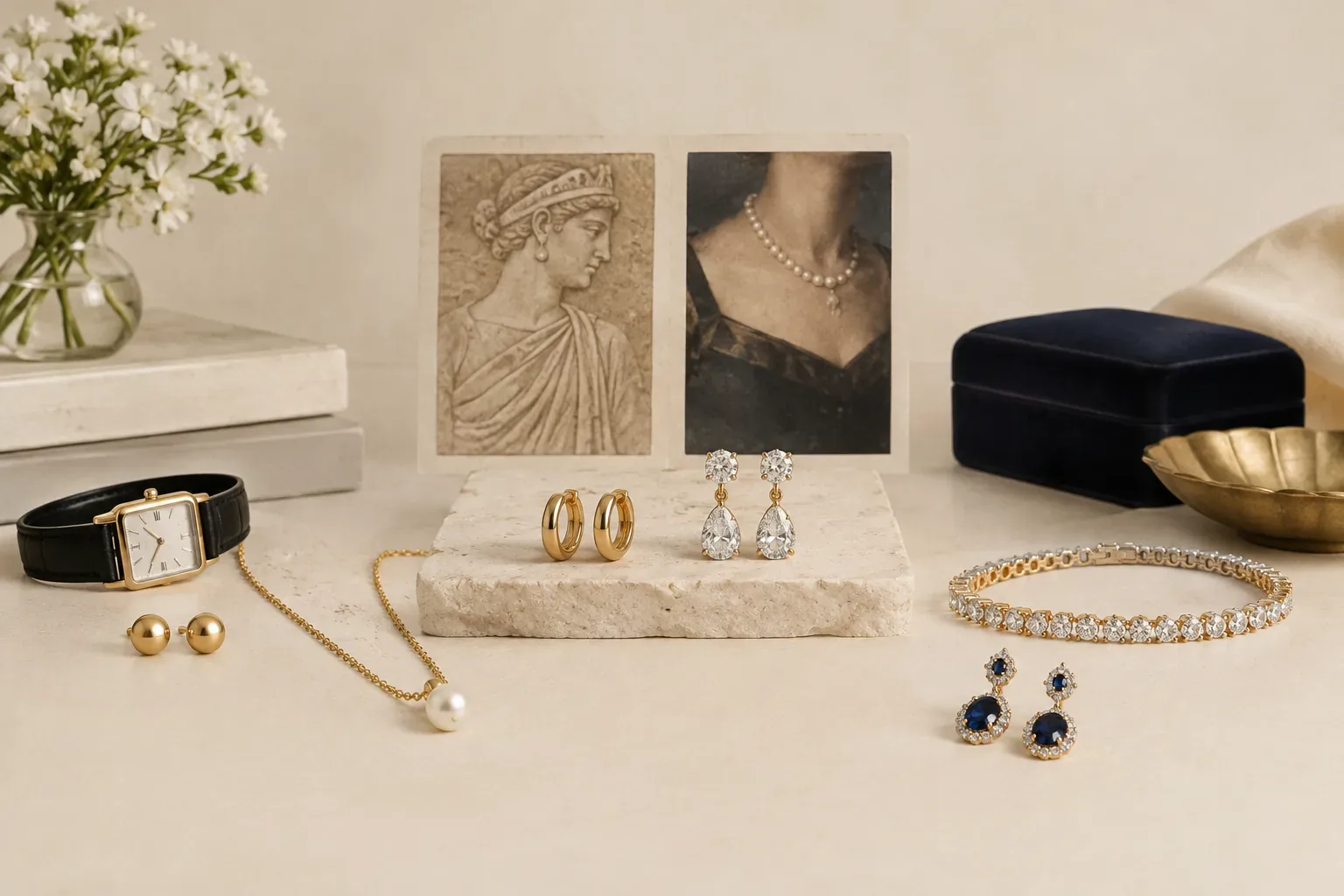
Meaning at a glance
Use a restrained, historically informed base piece for daytime wear and make simple swaps—earrings, necklace length, a cuff or brooch, and a brighter stone or pendant—so your outfit shifts seamlessly while respecting cultural meanings and material care.
What the historical record shows (and which cultures and periods it comes from)
The way people wore and adapted jewelry for daily life and special occasions is a long-running theme in museum documentation. The Victoria and Albert Museum describes a continuous arc from ancient practices through medieval, Renaissance, and later European trends, where jewelry signaled status, identity, and changing fashions; these shifts are central to the museum’s overview of jewelry history. The V&A’s survey of gemstones likewise documents how particular stones and materials were valued and worked across different periods, from antiquity to the modern era. These sources show that jewelry served both practical uses and social signals in many cultures, but the specific forms, meanings, and rules varied by place and time.
Separate documented historical meanings from modern personal interpretation
Museum documentation records particular historical uses and meanings—such as lockets used for keepsakes, signet rings for identity and official seals, or certain gemstones prized at particular times—but it does not claim those meanings were universal. The V&A’s materials explain how contexts changed: a motif used in Renaissance Europe might later be reinterpreted or revived with different associations. Modern wearers often give personal meanings to motifs or gemstones that are not the same as those recorded historically. Be explicit about which layer you are drawing on when you choose jewelry: if you value a motif because of a museum-documented history, name that source; if you choose a piece for personal reasons—color, family connection, or workplace identity—describe it as a contemporary interpretation. This keeps historical evidence and modern sentiment distinct and respectful of the cultures and periods involved.
How motifs, gemstones, and traditions appear in everyday and evening jewelry
Motifs and gemstones historically appear in forms that remain familiar today: pendants and lockets, rings (including signet and band rings), brooches, drop and stud earrings, and necklaces of varying lengths. The V&A’s overview of gemstones explains how particular gems have been cut, set, and polished in different eras, and how their appearance—color, size, and faceting—affects use. In contemporary jewelry designed for the office, you’ll typically find smaller versions of these forms: modest stud earrings, short chains with simple pendants, plain signet-style rings, and thin bracelets. For evening, designers often scale up those same elements—longer necklaces, more elaborate drops, larger or more brightly colored stones, and additional layering—so the essential vocabulary of jewelry is the same, but the scale and ornamentation change.
Practical selection guidance for office-to-evening jewelry
Begin with a base piece that is tasteful, comfortable, and aligned with your workplace culture; for many people this means small studs or hoops, a short pendant necklace, a simple ring, and a slim bracelet or watch. When selecting gemstones or metals, consult museum guidance on materials to understand historical context and consult consumer-protection guidance about modern materials and treatments. The Federal Trade Commission advises buyers to ask sellers about treatments, imitations, and the disclosures that should accompany gemstones, diamonds, and pearls; this is practical when you choose a piece intended for frequent wear. Consider durability: choose harder stones or protective settings for rings and bracelets that will see daily use, and reserve delicate pieces for evening wear. Also consider comfort and office rules—some workplaces have safety or uniform policies that limit dangling earrings or large rings.
Respectful gifting advice
When gifting jewelry meant to be worn at work and later at evening events, be mindful of symbolism, workplace culture, and personal boundaries. If the piece includes a recognizable cultural or religious motif, ask whether the recipient welcomes that symbolism; museum sources show that meanings can be specific to time and place, so avoid assuming universal significance. Choose neutral metals (gold, silver, or mixed metals) and classic shapes if you are unsure of style preferences, and include clear information about materials, treatments, and returns; the FTC recommends transparency from sellers about gemstone treatments and imitations. For an added personal but removable touch, consider engraving a message on the inside of a band or choosing a locket that can hold a small photo—both are historically documented forms of sentimental jewelry that translate well to modern gifting when presented respectfully. For workplace gifting, prioritize small, unobtrusive pieces and allow the recipient to decide when and where to wear them.
Simple day-to-night styling moves that work
Keep the daytime look minimal: a short chain with a modest pendant, small studs or hoops, a simple ring, and a slim bracelet. To transition to evening, make two or three small changes rather than a full wardrobe overhaul. Swap studs for dressier drop earrings, exchange a fine chain for a longer pendant, add a statement cuff over a slim bracelet, or layer a second necklace of complementary length and texture. Another quick change is to swap a neutral stone pendant for one with more color or sparkle, or to add a brooch to a blazer lapel for visual interest. These small adjustments preserve the basic silhouette of your outfit while shifting the emphasis from reserved to expressive.
Care and authenticity: what to check before you wear or give jewelry
Follow guidance from the V&A on gemstone identification and historical uses when you want context about a material or motif, and follow the FTC’s consumer guidance when buying or gifting contemporary gemstones. Ask for written information about treatments and imitation materials, check return policies, and, for significant purchases, request a professional appraisal or lab report. For everyday wear, select secure settings to protect stones and choose metals and finishes that tolerate frequent contact and cleaning. Keeping receipts and care instructions with a gifted piece shows respect for the recipient’s right to know what they own and helps preserve the jewelry’s condition.
Styling with respect for cultural and historical meanings
If a piece incorporates a motif associated with a particular culture or religious practice, research its documented history and be cautious about adopting it as a fashion statement without understanding context. Use reliable museum resources—such as the Victoria and Albert Museum’s surveys—to learn how motifs and gemstones were used historically in specific cultures, and then reflect on whether wearing that symbol is appropriate in your workplace. When in doubt, choose designs inspired by historical forms but presented in a clearly contemporary or neutral way, or ask the wearer whether they accept jewelry with cultural or religious associations. This approach respects documented meanings while allowing for personal expression.
Conclusion
Day-to-night jewelry styling for the office is most successful when it combines a historically informed understanding of form and material with modern practicality. Start with understated, workplace-appropriate pieces grounded in the long history of jewelry use and make a few deliberate swaps or additions to amplify your look for evening. Rely on museum documentation to understand historical meaning, and on consumer-protection advice when buying or gifting finished pieces—this keeps historical context, modern interpretation, and material authenticity clearly separated and respected.
Frequently asked questions
What are the easiest jewelry changes to make from day to night?
The simplest moves are to change earrings from studs to drops, add a longer necklace or layer a second chain, swap a slim bracelet for a cuff, or add a decorative brooch; two to three small swaps usually create the desired effect without over-accessorizing.
How should I choose gemstones for daily wear?
Choose harder stones and protective settings for pieces you will wear every day, and ask sellers about treatments and imitations before buying; the Victoria and Albert Museum explains historical uses of stones, and the Federal Trade Commission advises asking for disclosures about treatments and labelling.
Is it appropriate to wear culturally specific motifs in the office?
Research the motif’s documented history using reliable sources such as museum publications, and consider workplace culture and the wearer’s background; if you are unsure, choose a neutral or clearly contemporary design or ask the intended wearer if the motif is welcome.
What should I look for when gifting office-appropriate jewelry?
Favor understated, comfortable pieces that respect workplace norms, provide clear material and care information, include a return option, and avoid assuming historical meanings—let the recipient decide whether and when to wear culturally or sentimentally specific items.
How many pieces should I wear to the office?
There’s no universal rule; many people opt for a balanced look of one statement item and one or two supporting pieces—such as earrings plus a simple necklace or ring—but tailor the number to your workplace norms and comfort.
Should I get a professional report for a gemstone purchase?
For significant purchases, request a lab report or appraisal and written information on treatments or imitations; the FTC recommends buyers seek transparency from sellers to confirm authenticity and treatment history.
Sources and further reading
- Bedazzled: A History of Jewellery — Victoria and Albert Museum
- An A-Z of Gemstones — Victoria and Albert Museum
- Buying Gemstones, Diamonds, and Pearls — Federal Trade Commission