Meaning at a glance
Choose jewelry for casual everyday outfits by matching the piece's scale to your clothing, using color to coordinate or contrast thoughtfully, and deciding whether a subtle motif or a single focal piece fits your routine; understand historical uses from museum evidence and distinguish those documented meanings from personal modern interpretations.
What museum history tells us about everyday jewelry
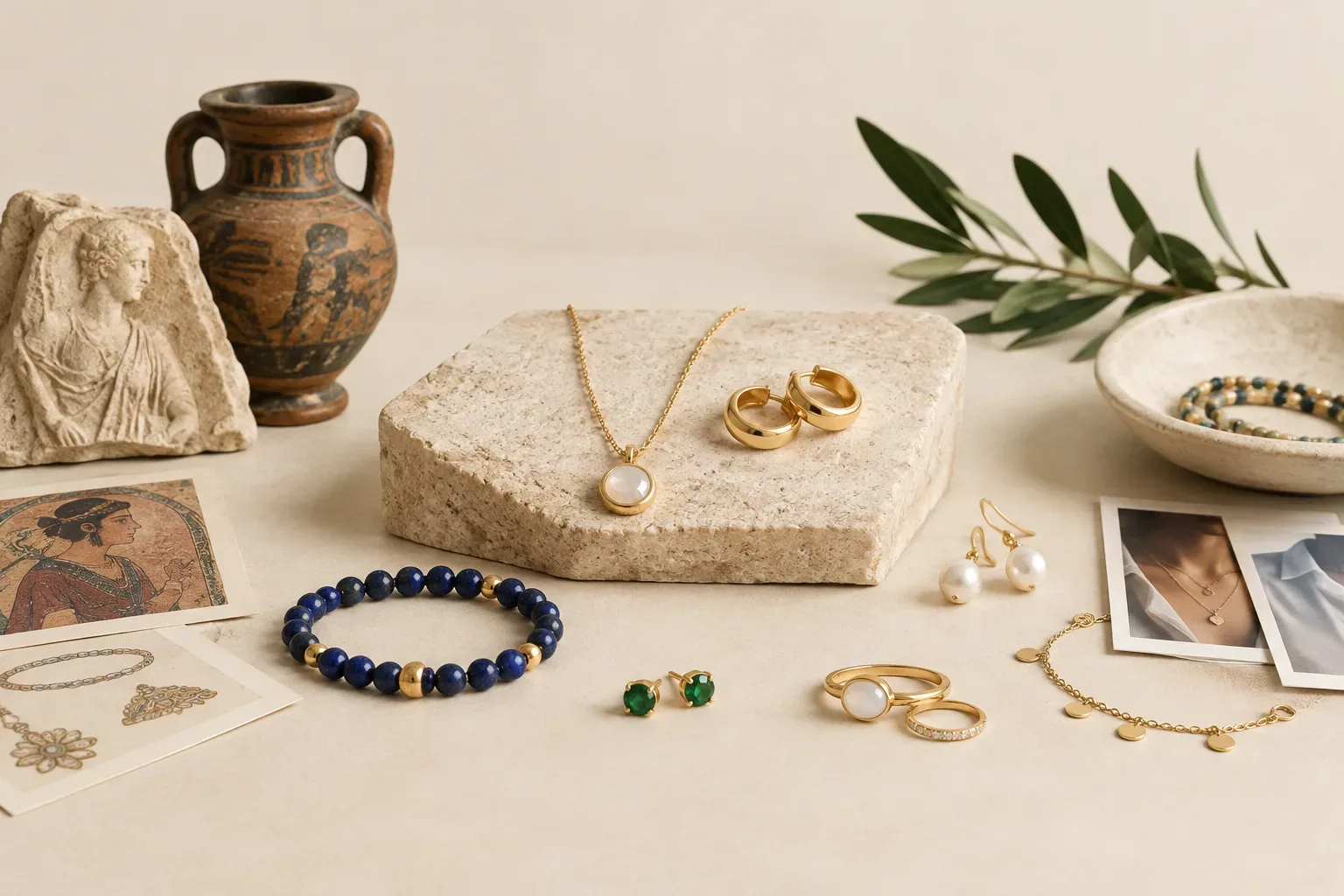
The Victoria and Albert Museum locates jewelry as a social and material practice that changes with fashion, technology, and social context. In its overview 'Bedazzled: A History of Jewellery', the museum shows that pieces now seen as everyday—simple chains, small brooches, modest rings—were at times markers of status, identity, or profession and at other times personal adornments worn daily for comfort or memory.
The V&A's 'An A–Z of Gemstones' explains that different stones have moved in and out of everyday use as cutting, setting, and trade networks evolved. For example, gems that were once rare and used only for significant ceremonial jewelry later became more accessible as sources and techniques spread. The historical record in museum collections therefore demonstrates shifting boundaries between 'special occasion' and 'everyday' jewelry across cultures and periods.
Documented historical meanings vs modern personal interpretations
Documented meanings about jewelry vary by time and place and are best cited to specific cultures and artifacts rather than assumed universal truths. The Victoria and Albert Museum's displays and catalogues document instances where jewelry signaled marital status, guild membership, rank, or religious affiliation in particular societies. These attributions derive from archival records, makers' marks, and contextual evidence rather than later popular summaries.
Modern wearers and the contemporary accessory market often layer new personal interpretations over older forms. A motif that historically indicated a trade or a devotional meaning can be worn today as a fashion motif, a personal emblem, or a sentimental token. These modern interpretations are legitimate personal meanings but should be distinguished from historically documented uses: the former are subjective and contemporary, the latter are based on material evidence, provenance, and recorded context as described by museum research.
How motifs, gemstones, and traditions appear in everyday jewelry
Motifs appear in everyday jewelry as small charms, engraved pendants, stamped patterns on bands, or simplified symbols set into affordable metals. Historically ornate motifs were simplified to suit daily wear, and the V&A collections show examples of popular motifs recurring in mass-produced or hand-finished pieces as tastes changed.
Gemstones appear in everyday jewelry either as small accent stones or as cabochons and beads where their color and texture are the primary appeal. The V&A's gemstone overview explains how particular gems became associated with identifiable colors and appearances; in modern casual pieces, the most common strategy is to use smaller, more affordable cuts or simulated stones to evoke the look of more precious items while keeping the piece suitable for regular wear.
Traditions like wearing a locket, a signet-style ring, or a simple religious symbol are transmitted into casual jewelry by simplifying form and prioritizing durability. Museum records show that forms originally crafted for special commemoration were adapted over time into smaller, simpler versions worn daily when materials and techniques made them more accessible.
Choosing by proportion: size, scale, and the silhouette of clothing
Proportion means matching the visual weight of a jewel to the frames created by your clothing. For low, open necklines a slightly larger pendant or a layered necklace will read as balanced; for high necklines or collars a short chain or studs keep the look clean. Sleeveless or short sleeves make bracelets and arm jewelry more visible; long sleeves call for slimmer bracelets or a single watch to avoid crowding the wrist.
Consider the scale of patterns and textures in your outfit. Large graphic prints and bulky knitwear can swallow delicate chains; conversely, large statement pieces can look discordant with very fine, minimalist garments. Choose a scale that keeps the jewelry legible from arm's length so it reads as part of the outfit rather than an indistinct shimmer.
Choosing by color: harmonize, match, or contrast
Color choices in casual jewelry can unify an outfit or create a deliberate focal point. To harmonize, select metal tones and gemstone hues that appear elsewhere in your outfit, such as warm metals with earth tones or cool metals with blues and greys. To match, pick a single accent color and echo it in a stone, enamel, or cord to create a coordinated look. To contrast, use a complementary color as a small but strong focal point, for example a red stone against a navy sweater.
Remember that gemstones and metal finishes age differently; if longevity of exact color is important, choose materials and treatments you understand. The Federal Trade Commission advises buyers to be aware of treatment and imitation disclosures for gemstones, diamonds, and pearls, so ask sellers and check labels if color authenticity matters to you.
Choosing by focus: single focal piece or cohesive layering
Decide whether you want a single focal item or a composed group of smaller pieces. A single focal pendant, bold ring, or watch can anchor a casual outfit with minimal effort. Layering multiple delicate pieces creates a cohesive, thoughtfully curated look but requires attention to proportion and rhythm: vary chain lengths, keep metal finishes compatible, and avoid repeating strong focal elements that compete for attention.
When mixing motifs or symbols, be mindful of potential cultural or religious meanings. If a motif has a documented cultural or ceremonial significance, respect that history and consider context when wearing or gifting such items. Personal reinterpretations are common, but sensitivity to origin and meaning makes choices more respectful.
Practical selection and gifting guidance
For daily wear, prioritize comfort, durability, and ease of maintenance. Choose secure clasps and settings, and prefer metals and finishes that tolerate frequent contact and washing. If you expect the piece to be worn constantly, select alloys and coatings known for resistance to tarnish and wear, and ask retailers about care instructions.
When gifting, start by observing the recipient's existing jewelry language: do they favor small, minimalist pieces or bold, graphic items? Consider scale relative to their wardrobe and whether they typically choose silver, gold, or mixed metals. If you are unsure about symbolic meaning, ask gently or choose a non-committal form such as a small pendant or a versatile pair of studs that can be worn in many contexts.
Respect cultural and religious symbols when selecting a gift. If a design element has a specific traditional significance recorded in museum research or known community practice, avoid treating it as mere decoration unless you are confident it is appropriate. When in doubt, choose a neutral motif or consult the recipient.
Care, materials, and disclosure
Understand material disclosure and common treatments before you buy. The Federal Trade Commission provides consumer guidance about buying gemstones, diamonds, and pearls and notes that treatments and imitations should be disclosed by sellers. For everyday jewelry that must withstand washing and daily activity, ask about plating thickness, solder quality, and gemstone setting security so you know what maintenance will be needed.
Routine care—such as removing jewelry for heavy manual tasks, avoiding prolonged contact with chemicals, and cleaning according to material—extends the life of pieces meant for daily wear. For heirloom or sentimental items, consider periodic inspection by a qualified jeweler to check settings and clasps.
Putting the guidance into practice
A simple practical example: with a cotton T-shirt and jeans, wear a short chain with a small pendant or a stack of thin rings and a single bracelet; this maintains proportion with casual lines and keeps jewelry readable. With a linen shirt or a casual dress, choose a pendant that sits just above or at the neckline and add one complementary pair of studs rather than multiple attention-grabbing elements.
Use color sparingly to create intention. If your outfit is neutral, a colored stone or enamel pendant can act as a pinprick of personality. If your casual outfit already includes multiple colors, let your jewelry play a harmonizing role by selecting metals and stones that echo one predominant hue.
Closing: respect history, personalize taste
Museum research shows that the forms and materials of everyday jewelry have changed over time as technologies, economies, and tastes evolved. If you draw on historical forms or cultural motifs, do so with an awareness of documented meanings and a respect for living traditions. In everyday styling, prioritizing proportion, color, and a clear focal choice yields jewelry that feels intentional, comfortable, and reflective of personal style.
Frequently asked questions
How do I pick jewelry that won’t overwhelm a casual outfit?
Match the scale of the jewelry to the garment’s silhouette: small pendants and studs for high necklines, slightly larger pendants or layered chains for low necklines, and slimmer bracelets for long sleeves. Keep to one clear focal piece or a coordinated set of small pieces to avoid visual competition.
Are there gemstones that are better for everyday wear?
Choose stones known for durability and secure settings for daily wear. The Victoria and Albert Museum explains how different gems have practical and aesthetic histories; consult sellers about treatments and the Federal Trade Commission guidance on disclosure for information about durability and authenticity.
How should I handle jewelry with cultural or religious motifs?
Distinguish documented cultural meanings—recorded in museum research and community sources—from contemporary personal interpretations. If a motif has clear cultural or religious significance, approach wearing or gifting it with respect and, when uncertain, choose a neutral design or ask the recipient.
What should I ask a jeweler about before buying everyday pieces?
Ask about metal composition, plating thickness, clasp and setting security, gemstone treatments or imitations, and recommended care. The Federal Trade Commission recommends that sellers disclose treatments and imitations for gemstones, diamonds, and pearls.
Can I mix metal finishes in a casual look?
Yes, mixing metals can be effective when it’s done intentionally. Keep the overall proportion and textures balanced, and repeat one metal in at least two elements to create visual cohesion.
How do I choose a jewelry gift for someone with an everyday style?
Observe the recipient’s current jewelry: note scale, preferred metals, and whether they favor minimal or bold pieces. Choose a versatile item such as studs, a small pendant, or a simple band, and avoid culturally specific symbols unless you are confident they are appropriate.
Sources and further reading
- Bedazzled: A History of Jewellery — Victoria and Albert Museum
- An A-Z of Gemstones — Victoria and Albert Museum
- Buying Gemstones, Diamonds, and Pearls — Federal Trade Commission