Meaning at a glance
Layering necklaces for office outfits works best when you choose a clear length hierarchy, keep visual weight balanced, and select materials and fastenings that resist tangling; historical uses of pendants and gemstones inform but do not mandate modern choices.
What the historical record tells us
The history of wearing multiple necklaces and meaningful pendants is long and varied. The Victoria and Albert Museum presents jewelry as an object shaped by changing social contexts, noting that different periods and cultures used necklaces for display, status, religious expression, and personal sentiment. Museum treatments of jewellery history examine examples from ancient and classical societies through the medieval period and into Victorian Britain, showing that layered ornament and pendants have recurred in many eras and places (Victoria and Albert Museum).
Gemstones and specific motifs carried different meanings in particular times and cultures. The V&A's overview of gemstones describes how materials such as pearls, emeralds, and carved stones were prized for aesthetic qualities and sometimes for symbolic associations within particular societies. Those associations evolved as trade, technology, and taste changed (Victoria and Albert Museum).
Documented historical meanings versus modern interpretations
Documented meanings are those the historical record shows were recognized within a specific culture or period. For example, portrait lockets in nineteenth-century Britain functioned as personal keepsakes tied to mourning and memory; religious pendants clearly served devotional roles in the cultures that produced them. The V&A records these uses as part of the social history of jewellery (Victoria and Albert Museum).
Modern, personal, or popular interpretations are different. Today people may choose motifs like hearts, feathers, or “birthstone” gems for sentimental, aesthetic, or marketing reasons that may not map directly onto historic meanings. Wearing a cross as a layered pendant in an office might be a private faith statement for one person, a fashion element for another, and a historical reference for a third. It is important not to assume a single, universal meaning for any motif or stone; documented historical meaning applies to specific times and places, while modern meanings are often personal and plural.
How motifs, gemstones, and traditions appear in necklaces
Motifs such as lockets, cameos, religious pendants, and identity or initial charms appear across periods and are often designed to sit as focal points on a chain. Historically these pendants could be heavy and ornate or small and finely worked depending on their function and era. The V&A’s materials show both the ornamental and the utilitarian ends of these objects' roles in dress and social signaling (Victoria and Albert Museum).
Gemstones appear as faceted stones, cabochons, beads, or inlay depending on the technique and fashion of a given time. Gem usage in historical pieces reflects availability, cutting and polishing technology, and cultural preference. Modern reproductions and contemporary pieces may use smaller or lighter settings so that a gemstone pendant can be layered without overwhelming an outfit. For practical buying considerations—such as disclosure of treatments or imitation materials—refer to guidance from the Federal Trade Commission on how gemstones, diamonds and pearls are marketed and labeled today (Federal Trade Commission).
Practical guidance for layering necklaces in an office
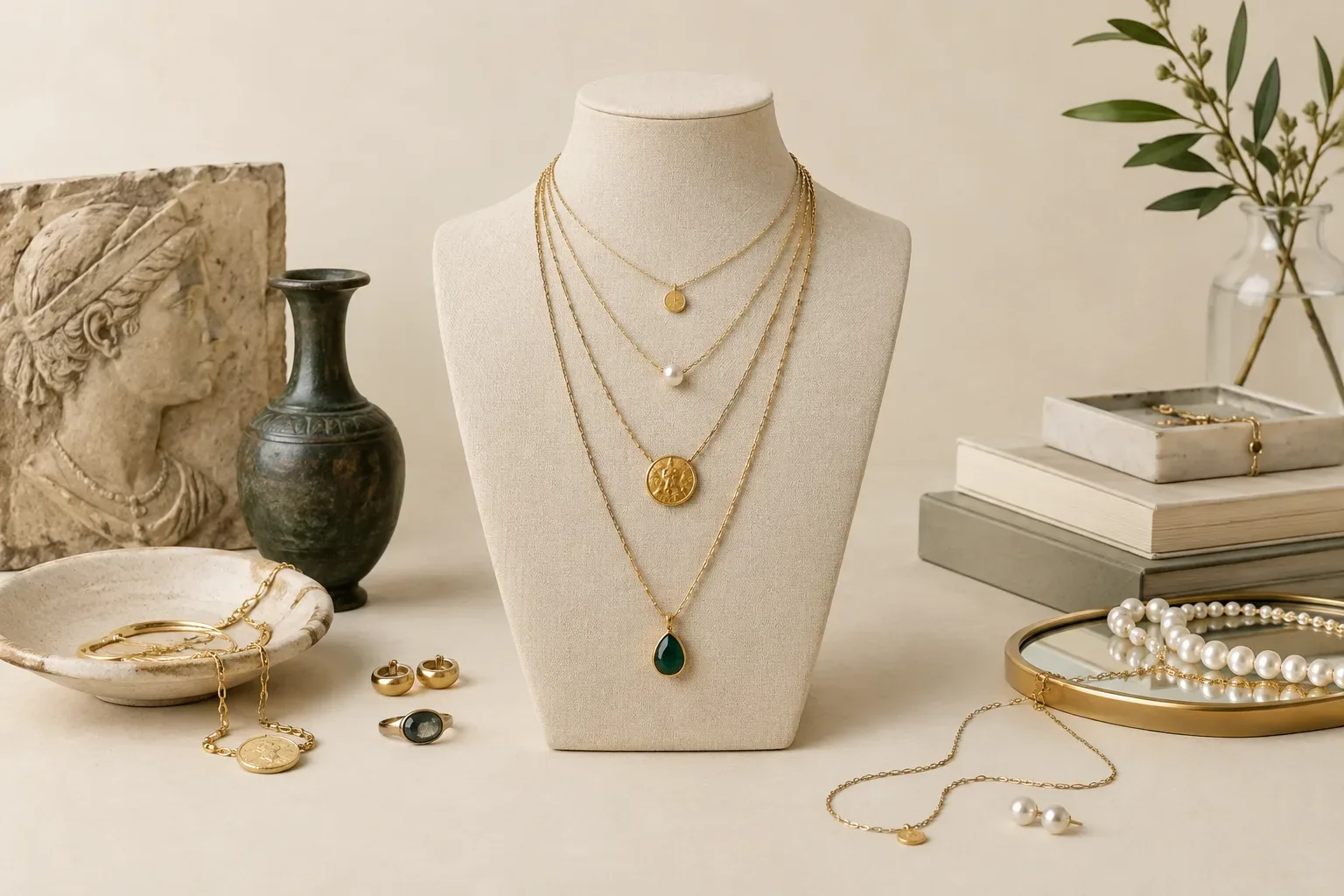
Choose three lengths to form a clear vertical hierarchy: a short piece that sits near the collarbone, a mid-length that falls at or just above the bust, and a long piece that drops lower. Distinct lengths create visual separation so that each necklace reads clearly instead of forming a single tangled mass.
Pay attention to scale and weight. If one piece carries a pendant or a gemstone focal point, keep the other chains simple and lighter. A heavy, ornate pendant stacked with two other heavy pieces can look crowded and may pull uncomfortably at the neckline, while a single bold pendant layered with delicate chains reads as intentional and professional.
Match chain types for function rather than exact appearance. Smooth, flat-link or cable chains slide past one another more easily than twisted rope chains, which tend to catch. When selecting necklaces intended for repeated layering, prefer plain links, small flat curb, or thin box chains to minimize friction and tangles.
Consider clasp quality and chain finish. Sturdy, well-made spring rings or lobster clasps reduce the risk of accidental opening. Chains with a consistent finish—polished, matte, or plated—look more cohesive when layered. If you plan to wear layers daily, choose metals and plating with known durability or select solid metal options for long-term wear.
Mind the neckline of your clothing. High necklines usually call for shorter stacks so pendants remain visible; low or V-necks give room for longer pieces. Use necklace length to echo or contrast the neckline intentionally so the ensemble appears coordinated rather than cluttered.
Respect workplace culture and diversity. Conservative offices may favor subtle layering—two minimalist chains or a single pendant—whereas creative workplaces might welcome bolder stacks. When uncertain, observe prevailing norms among senior staff or choose a restrained option that you can adjust for different settings.
Prevent tangles with one of several strategies. Use a multi-strand clasp that anchors chains separately, fasten the longest chain first and drape shorter ones on top, or invest in a travel roll or jewelry mat to keep strands separate when not worn. If you make layered necklace sets yourself, test them on a mannequin or clothes hanger before wearing them to work to ensure they sit as intended.
Selection and gifting guidance — practical and respectful
When selecting or gifting layered necklaces for office wear, think about the recipient’s style, workplace, and cultural background. A meaningful pendant like a locket or an initial can be thoughtful, but check whether a religious or culturally specific symbol might be interpreted publicly in ways the wearer may not intend. Choose neutral motifs—geometric shapes, small gemstones, or initials—if you are unsure.
Consider material and disclosure. If you are buying gemstones, consult seller information about whether the gem is natural, treated, or synthetic. The Federal Trade Commission provides guidance on disclosures sellers should make about gemstones, diamonds and pearls, which helps you avoid gifting an item that is misrepresented (Federal Trade Commission).
Budget and longevity matter. For a piece intended for daily office wear, prioritize good construction over novelty. Solid metals or well-applied plating, secure settings for gemstones, and reinforced jump rings extend the usable life of layered sets. If the gift is symbolic—commemorating a promotion or milestone—include a short note explaining your intent to avoid misinterpretation.
Respect personal boundaries. Some people prefer not to receive jewelry for professional milestones; others welcome it. When in doubt, ask a close friend or family member of the recipient about their preferences or offer a gift receipt so the recipient can exchange items if necessary.
Care, disclosure, and where to learn more
Caring for layered necklaces requires gentle handling. Clean metals according to their type and avoid harsh chemicals near plated finishes. Store layered sets flat or fasten chains before storing to reduce knotting. For specific information about gemstone treatments, imitations, and consumer protections, the Federal Trade Commission provides practical advice on buying gemstones, diamonds and pearls that is relevant to both buyers and gifters (Federal Trade Commission).
If you want to read deeper about how jewelry meanings and styles changed across time, the Victoria and Albert Museum has accessible discussions and exhibits that explain how materials, technology, and social norms shaped jewellery design in different eras (Victoria and Albert Museum). For related practical pieces on choosing meaningful jewelry, see our guides and the history of lockets linked below.
Frequently asked questions
What necklace lengths should I use when layering for the office?
A clear three-length system works well: a short chain that sits near the collarbone, a mid-length that reaches the top of the bust, and a long piece that drops below. Distinct lengths prevent overlap and make each piece readable. Adjust lengths to your neckline and workplace conservatism.
How can I prevent necklaces from tangling when layered?
Choose smooth, plain chain types such as small cable or flat curb links, fasten the longest chain first and shorter ones on top, use a multi-strand clasp or necklace anchor, and store sets flat or clipped together when not worn.
Are certain motifs inappropriate for the workplace?
Context matters. Religious, political, or culturally specific symbols may be meaningful to the wearer but could be interpreted publicly. When gifting or wearing motifs in a professional setting, consider the workplace culture and the wearer’s preferences rather than assuming universal acceptability.
What should I check when buying gemstone pendants as gifts?
Ask the seller for information about whether the gemstone is natural, treated, or synthetic and whether any plating or base metals are involved. The Federal Trade Commission provides consumer guidance on required disclosures for gemstones, diamonds and pearls that can help you ask the right questions.
Can I mix metals when layering necklaces in an office?
Yes, mixing metals can be tasteful if done intentionally and with balance. Limit the palette to two metals at most and keep the overall tone consistent with the outfit to avoid a cluttered appearance. Prioritize good craftsmanship and matching chain styles for less tangling.
Sources and further reading
- Bedazzled: A History of Jewellery — Victoria and Albert Museum
- An A-Z of Gemstones — Victoria and Albert Museum
- Buying Gemstones, Diamonds, and Pearls — Federal Trade Commission