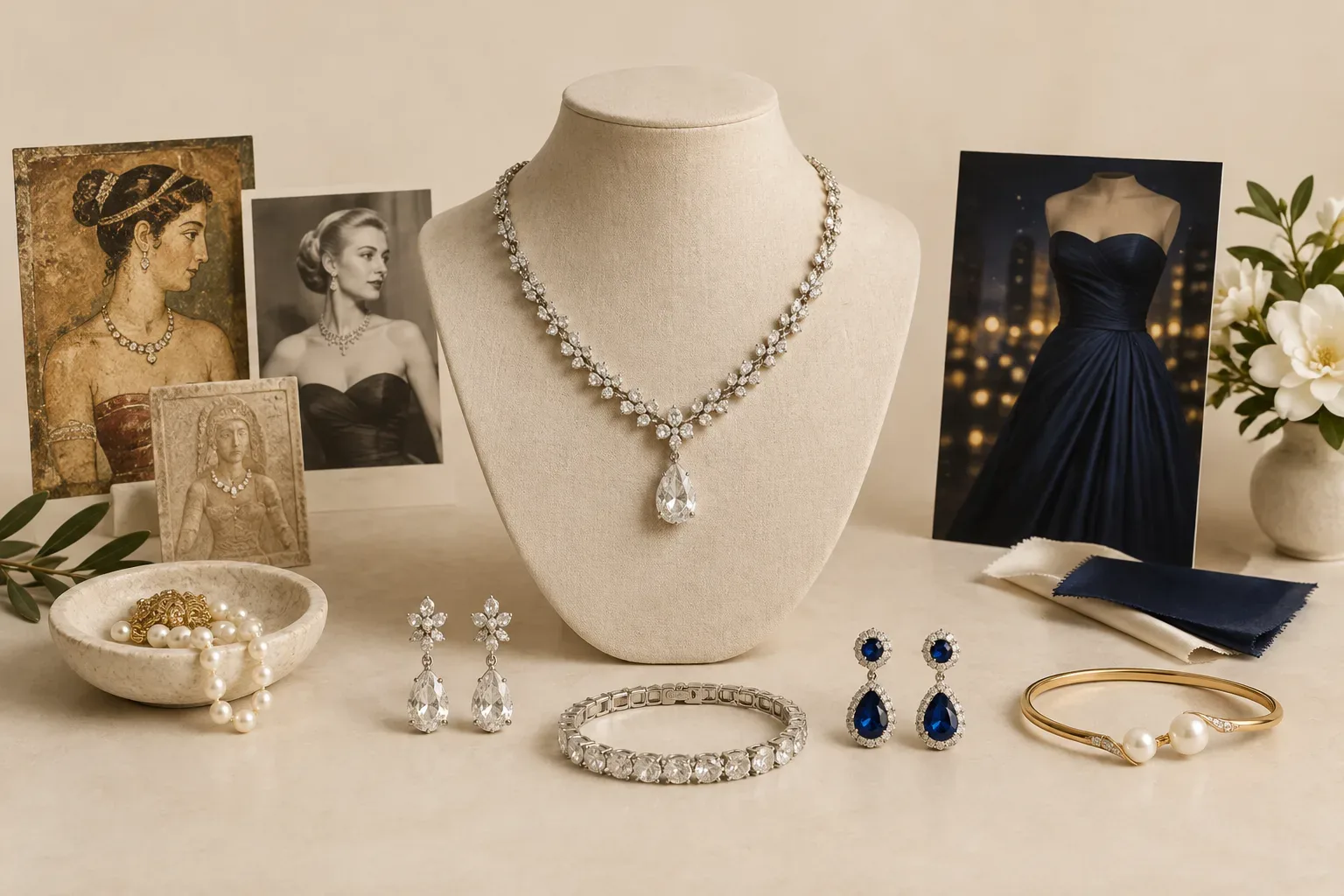
Meaning at a glance
Start with clean, proportionate jewelry in the daytime—subtle necklace or short choker and small earrings—and switch one or two pieces for evening: add a bolder necklace, statement earrings, or a cuff and consider refined finishes; treat historical references as context rather than rules.
Quick answer
For jewelry for strapless dresses day to night jewelry styling: begin with understated pieces that balance bare shoulders at daytime—think a short pendant or slim choker and modest studs—then change one or two elements for evening, such as swapping the pendant for a statement necklace, adding drop earrings, or putting on a polished cuff; these simple swaps keep proportions flattering and let you respect the dress’s neckline while adapting formality. This approach follows historical practices of matching scale and occasion while allowing modern personal taste.
What the historical record tells us
Museums and curated histories make clear that jewelry choices have long responded to dress lines, social occasion, and visible skin. The Victoria and Albert Museum’s exhibition material and essays on jewellery trace how pieces were designed, worn, and valued in different cultures and periods, from ancient societies through European court fashion and 20th-century style shifts, showing that jewellery’s function changed with social context rather than remaining fixed. Attribution to specific cultures and periods appears in those materials: for example, the V&A documents the prominence of collar-like necklaces in ancient Egypt, the use of portrait lockets in early modern and Georgian Europe, and the streamlined necklaces and geometric forms of the Art Deco era, each tied to contemporaneous dress and social rituals.
Those historical facts establish pattern: jewellery scale and placement were chosen to complement necklines and social settings. Use of short collars and chokers in certain periods made sense because the clothing left the neck and shoulders exposed, while long pendants and bolder statement necklaces became popular when gowns or bodices allowed a longer vertical line. The V&A’s surveys of jewellery history and its A–Z of gemstones supply the museum-based evidence for these patterns and for how gemstones, metalwork, and silhouette shifted across cultures and eras.
Documented meanings versus modern personal interpretation
It is important to separate what is documented in museum and archival records from later or private meanings applied to particular items. The V&A’s historical resources report how jewellery functioned in courtship, status display, commemoration, and ornamentation in specific contexts; these are documented social uses rather than universal symbolic truths. For example, a cameo or locket may be recorded historically as a memorial or portrait object in Georgian and Victorian Britain, but wearing a locket today can also be a highly personal act that holds family photos or a sentimental token without the original social implications.
Modern interpretations—such as seeing a strapless-neckline pairing as inherently “sensual” or assuming a particular gemstone always signals a single emotion—are contemporary readings layered onto historical practice. Those readings can be meaningful for the wearer but are not the same as documented cultural usage. In short, history provides patterns and provenance; personal meaning remains individual and culturally contingent.
How common motifs, gemstones and traditions appear in jewellery for strapless dresses
Motifs that visually echo the neck and shoulder line often appear in jewellery designed for bare-neck styles. Collar and choker forms are direct echoes of a neckline and appear as rigid metal bands, soft chains, or rows of gemstones. Pendant necklaces create a vertical line that works with the open chest of a strapless dress. These forms are longstanding: the collar and choker shapes appear repeatedly in periods recorded by the V&A, while pendants and longer chains recur when gowns encourage a lengthened silhouette.
Gemstones appear both for aesthetic match and for historical resonance. The V&A’s A–Z of Gemstones describes how different gems were prized for color, rarity and craftsmanship across periods. Pearls have been used historically to highlight necklines because they sit close to the skin and reflect light; diamonds and rock crystals have been used to catch evening light and add formality. The practical effect on a strapless dress is consistent: smaller stones and single-row settings read as daytime appropriate, whereas clustered gems and larger stones provide the sparkle and presence suited to evening.
Practical day-to-night styling techniques that work
Start with proportion and balance in daylight. A strapless dress exposes shoulder and neck lines, so daytime jewelry should not compete with the outfit. Choose a short necklace, a delicate choker, or a small pendant, and keep earring length modest. A single fine bracelet or a thin bangle will complete the look without overwhelming it. This allows the dress’s tailoring to read clearly while offering a polished daytime silhouette.
To transition to evening, change one or two pieces rather than all of them. Swap the daytime pendant for a chunkier necklace that sits lower on the neck or adds more visual weight. If you began with studs, switch to drop or chandelier earrings to add vertical movement and light. Alternatively, keep your necklace and add a statement cuff or cocktail ring; adding a reflective surface—polished metal, a faceted gemstone, or pearls—helps the outfit read evening-appropriate under artificial light. These substitutions respect the strapless shape by maintaining clear lines while increasing formality or sparkle.
Practical considerations about materials and disclosure
When selecting or gifting jewellery, be aware of material treatments and the need for disclosure. The Federal Trade Commission provides consumer guidance about gemstones, diamonds, and pearls and emphasizes transparency regarding treatments, imitations, and the nature of materials. Ask sellers about gemstone treatments, whether diamonds are laboratory-grown or natural, and whether pearls are natural, cultured, or simulated. Honest information helps a buyer choose pieces that will perform as expected—whether that means resisting scratches, tolerating daily wear, or shining reliably under evening lights.
Care choices also matter: delicate chains and soft gem settings suit gentle daytime wear but may require removal before active evening activities such as dancing or outdoor receptions. Conversely, sturdier settings and closed-back stones are better for pieces intended to travel from day into active evening use.
Selection and respectful gifting guidance
When choosing or gifting jewelry to wear with a strapless dress, prioritize fit, comfort, and cultural awareness. Fit means proportion: measure how a choker or short necklace will sit at the intended wearer’s neck and ensure earrings are not too heavy for prolonged wear. Comfort matters because strapless outfits often require the wearer to rely on shapewear or structural garments; avoid necklaces with sharp edges or heavy pendants that will press awkwardly against the collarbone.
Respect cultural and personal boundaries in gifting. Some motifs or gemstones can carry specific cultural, religious, or family meanings; if you know an item carries significance, either choose it intentionally with that meaning in mind or avoid it if uncertain. When in doubt, select timeless forms—pearls, simple diamond or white‑metal settings, and classic chains—or choose a gift that includes an opportunity for personalization, such as a locket or a piece with an inscription. Present the piece with care information and, when possible, receipts and documentation about materials so the recipient can verify and care for the item.
Putting it together: a few scenario guides
For a daytime wedding guest look, choose a narrow choker or a short pendant with small studs and a thin bracelet. To move into evening, replace the studs with slightly longer drop earrings and add a polished cuff or a second layered necklace. For office-to-evening cocktail transitions, start with a refined metal collar or short chain and swap the chain for a statement necklace with larger faceted stones for the evening event; if you prefer to keep the necklace, change to more dramatic earrings and a ring for added presence.
If you are being gifted a piece to wear with strapless styles, consider comfort and versatility first, then sentiment. A modest choker or a convertible necklace that can be shortened or lengthened gives the wearer flexibility. Include documentation about gemstone treatments, and choose sellers who will help with sizing and aftercare. This practical approach respects both historical precedent—matching scale to occasion as museums document—and modern personal preference.
Final notes on meaning and modern use
Historical practice, as documented by the Victoria and Albert Museum and summarized in its resources, gives useful patterns for working with exposed necklines: match scale to neckline, increase visual weight for evening, and select materials appropriate to care needs. These are practical, historically informed guidelines rather than prescriptive rules. Modern wearers bring personal taste, cultural background, and occasion-specific needs to the choices, and those factors are the legitimate final arbiters of what works.
In short, jewelry for strapless dresses day to night jewelry styling is best managed by starting simple, changing one or two focal pieces for evening, and choosing materials and motifs with transparent provenance and respectful attention to meaning. That combination honors documented history while supporting contemporary, personal expression.
Frequently asked questions
Can I wear a necklace with a strapless dress during the day?
Yes. For daytime wear choose a short, delicate necklace, a slim choker, or a small pendant that complements the open neckline without overwhelming it; keep earring choices modest and avoid heavy pieces that may be uncomfortable for extended wear.
What’s the simplest way to transition a strapless dress from day to night?
Change one or two elements: swap a small pendant for a chunkier necklace, switch studs to drop earrings, or add a statement cuff or cocktail ring. Increasing sparkle or visual weight in limited places refreshes the look without a full outfit change.
Are chokers appropriate with strapless dresses for evening events?
Yes, when proportion and material suit the wearer. A refined choker in a polished metal or with small stones can read formal and elegant for evening, but ensure it fits comfortably and does not conflict with the dress’s structure.
What should I ask about when buying gemstones to wear with strapless outfits?
Ask the seller about treatments, imitations, and whether the stone is natural or lab-grown; request documentation if available. The Federal Trade Commission advises transparency about treatments and material origin to ensure you know how the piece will perform and how to care for it.
How can I gift jewelry respectfully for someone who wears strapless dresses?
Choose pieces that prioritize comfort and versatility, such as adjustable chains, lightweight earrings, or classic pearls; avoid culturally specific symbols unless you know they are appropriate, and include care information and material disclosure so the recipient can make informed use of the gift.
Sources and further reading
- Bedazzled: A History of Jewellery — Victoria and Albert Museum
- An A-Z of Gemstones — Victoria and Albert Museum
- Buying Gemstones, Diamonds, and Pearls — Federal Trade Commission