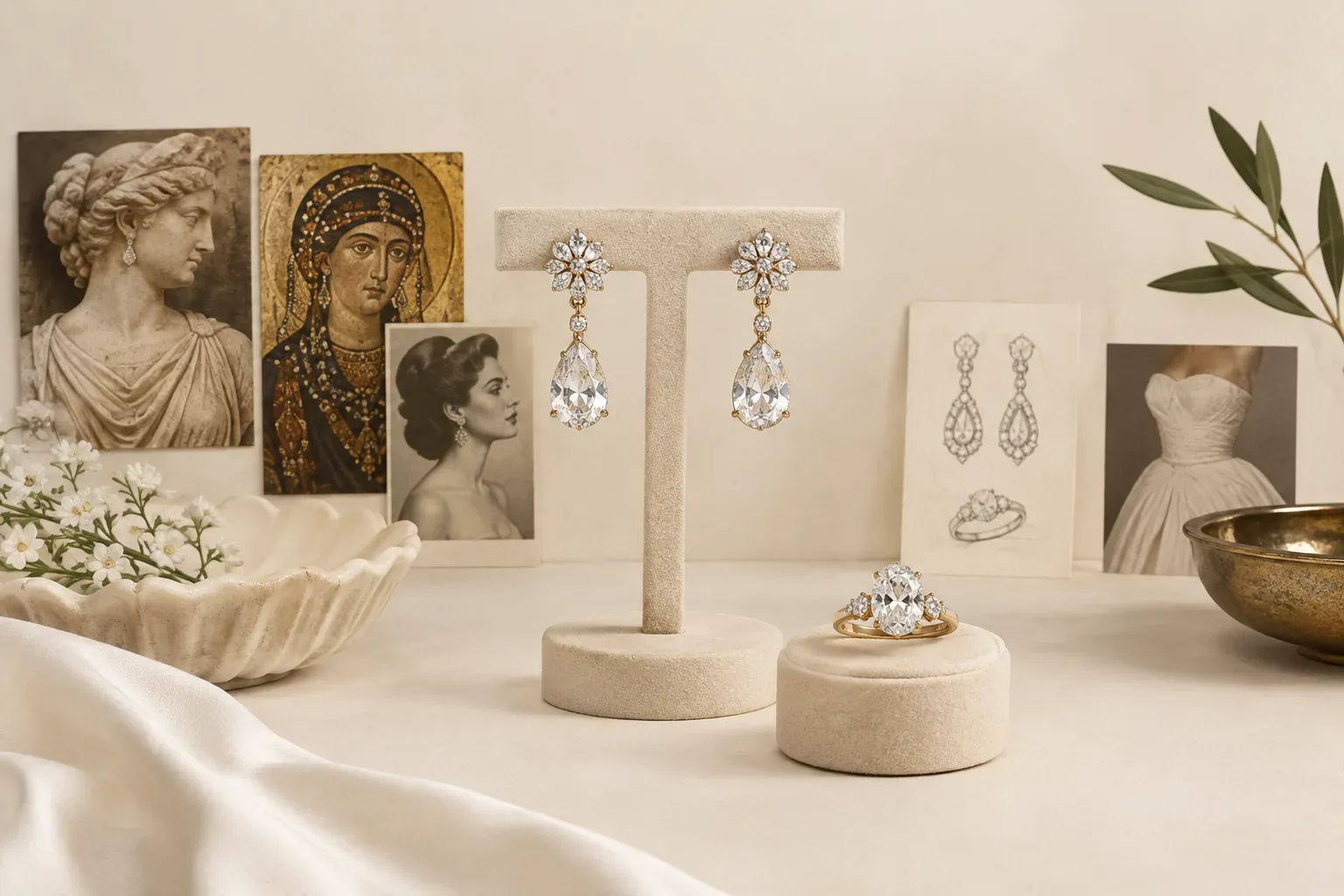
Meaning at a glance
Choose earrings and rings for strapless dresses by balancing visual scale with the bare neckline, prioritizing wearable comfort, and selecting gemstones and motifs with awareness of historical provenance and modern interpretations.
What the historical evidence says (and which sources it comes from)
Museum scholarship shows that jewelry has changed in response to fashion, social norms, and technology rather than following a single, continuous symbolic meaning. The Victoria and Albert Museum’s exhibition material and essays explain how jewellery’s forms, scale, and social functions have shifted across periods and cultures, from small personal tokens to large showpieces worn for public display. Use historical sources to understand how scale and placement of ornaments related to contemporary dress and social contexts rather than assuming a single traditional rule.
The Victoria and Albert Museum’s 'An A–Z of Gemstones' places specific gemstones within long histories of use, trade, and changing taste. That work documents which gems were prized in different places and periods and how gem cutting and setting evolved. For practical consumer protections and clarity about treatments, the Federal Trade Commission publishes guidance on buying gemstones, diamonds, and pearls and on disclosure of lab treatments, imitations, and other material facts that affect value and care.
Documented historical meanings versus modern personal interpretation
Historical meanings recorded in museum collections and scholarship are usually tied to specific contexts: mourning jewellery, portrait lockets, marriage tokens, or status display had documented social functions in particular places and times. The V&A’s historical work shows that many items we call 'sentimental' or 'symbolic' served legal, social, or economic roles as well as emotional ones. Where a motif carried a clearly documented function or meaning, that evidence is precise to a culture or period rather than universal.
Modern wearers often assign personal meanings to traditional motifs or reuse historical forms for purely aesthetic reasons. Contemporary styling for a strapless dress commonly blends personal taste, current fashion, and historical reference without reproducing the original cultural or ritual context. Distinguish carefully between a documented cultural meaning reported by museum scholarship and a modern, personal, or commercial interpretation you may prefer when choosing or gifting jewelry.
How motifs, gemstones, and traditions appear in modern earring and ring styling
Motifs and gemstones appear in modern jewelry both as literal reproductions of historical types and as abstracted references. For earrings, historical drop- and pendant-forms have become contemporary chandeliers, threads, and articulated drops that use the same principle—length and movement to frame the face and respond to necklines. Rings incorporate traditional motifs such as solitaires, clusters, and signet-style faces but often adapt scale and profile for modern wearability.
Gemstones named and catalogued by the V&A appear across these forms: pearls remain a classic for neck- and ear-focused looks when a bare shoulder is on display; diamonds and faceted colored stones appear in both delicate studs and bolder cocktail rings. The V&A’s 'An A–Z of Gemstones' is a useful reference for historical associations, cutting styles, and typical settings that you will see echoed in contemporary pieces.
Because modern practice blends aesthetic and symbolic references, think of motifs and gems both as visual tools to balance a strapless silhouette and as carriers of possible personal meaning. If you select a historically charged motif, learn the documented context first and then decide whether your modern use is aesthetic, commemorative, or cultural.
Scale, shape, and balance: practical styling rules
Scale: A strapless neckline leaves the neck and upper chest as visual real estate. Earrings that are too small can leave the face visually disconnected from the outfit, while very large pieces may overpower the wearer’s profile or clash with evening activities. Medium-length drop earrings often strike a natural balance for many faces; studs or small clusters can work well if hair is worn up and you want a subtler effect.
Shape: Choose earring shapes that complement the wearer’s face shape and dress silhouette. Angular silhouettes pair well with soft curves in jewelry, while elongated faces often suit rounder, wider earrings that add horizontal balance. Rings should be considered relative to hand size and finger length: narrow bands and low-profile settings are more comfortable for active use, and larger stones or cocktail rings read as intentional statement pieces for formal events.
Balance: When a strapless dress leaves shoulders and neck exposed, avoid competing focal points. If you choose dramatic earrings, keep rings simpler; conversely, if you want a standout ring, opt for restrained earrings. Consider how movement, photos, and dancing will alter the visual relationship between earrings and rings throughout an event.
Comfort and wearability considerations
Comfort is essential. For earrings, check weight, back security, and whether the ear sustains the design for long periods. Heavier pieces can pull on the lobe and become uncomfortable during long events. For rings, consider width, profile, and whether the wearer’s typical activities—dancing, hugging, eating—make a low-profile comfort fit preferable.
Materials matter for comfort as well as ethics. If someone has sensitive skin, choose hypoallergenic metals or ensure proper plating and disclosure. The Federal Trade Commission’s guidance on buying gemstones, diamonds, and pearls stresses the importance of asking sellers to disclose treatments, plating processes, and imitations; these disclosures affect both care instructions and the wearer’s potential allergic responses.
Selection and gifting guidance (practical and respectful)
Gifting jewelry to wear with strapless dresses calls for attention to personal style, scale, and cultural sensitivity. Match the recipient’s typical dress silhouettes and activities rather than assuming they will wear your imagined look. If you plan a surprise, select versatile pieces: medium-length drops, elegant studs, or a refined ring profile that can transition between formal and less formal settings.
If you choose motifs with religious or cultural associations, inform yourself about the documented context before gifting. Museum scholarship demonstrates that motifs may have precise meanings in particular times and societies; using them without understanding can unintentionally appropriate or misrepresent those meanings. When in doubt, choose neutral or clearly decorative motifs or discuss preferences with the recipient.
Request clear disclosures from sellers about materials and treatments, as recommended by the Federal Trade Commission. For higher-value purchases, ask for receipts and written statements about gem treatments and metal content so the recipient can care for and insure the piece appropriately.
Care, authenticity, and consumer protection
When buying gemstones and pearls for strapless-dress jewelry, ask whether stones are natural, treated, or lab-grown, and whether pearls are cultured or imitations, because these factors affect cleaning and long-term care. The Federal Trade Commission advises consumers to seek seller disclosure about treatments and imitations and to read care instructions for the specific materials involved.
For historically inspired pieces, consult museum references, like the Victoria and Albert Museum’s catalogues and articles, to understand the origins of forms and to avoid misattributing meanings. Use reputable suppliers and request written documentation when purchasing high-value or distinctive pieces.
Final considerations
Styling jewelry for a strapless dress is a matter of visual balance, wearer comfort, and informed choice. Use historical sources to understand how form and function evolved, but rely on practical measures—scale, weight, secure settings, and material disclosure—to make choices that suit the individual wearer. When gifting, prioritize the recipient’s style and comfort and verify materials and treatments with the seller.
Frequently asked questions
Are long chandelier earrings better than studs with a strapless dress?
Neither is inherently better; choose based on your face shape, hair style, and comfort. Medium-to-long drops add movement and help frame the face against a bare neckline. Studs or small clusters can work well when hair is up or you prefer a quieter look. Prioritize weight and secure backs so earrings remain comfortable for the duration of the event.
How should I choose a ring to wear with a strapless gown for a formal event?
Select a ring whose scale and profile match your hand and planned activity. Low-profile bands and moderately sized stones are practical for dancing and socializing. If you want a statement ring, balance it with understated earrings. Also consider comfort: wider bands may feel tighter over time, and large elevations can catch on fabric.
Do certain gemstones suit strapless dresses better?
No gemstone is universally 'better,' but some visual conventions help. Pearls and diamonds are classic for neck- and ear-focused looks; colored gemstones can provide contrast and echo dress tones. Use the Victoria and Albert Museum’s gemstone references to learn historical associations and cut styles, and consult sellers about treatments as recommended by the Federal Trade Commission.
Should I avoid culturally specific motifs when styling or gifting?
If a motif has documented cultural or religious meaning, learn that context before using or gifting it. Museum scholarship shows such motifs often have precise meanings in their original setting. If you cannot confirm the context, prefer neutral designs or ask the potential wearer about their preferences to avoid unintended appropriation.
How can I verify the authenticity or treatment history of gemstones in a piece I like?
Ask the seller for written disclosure about whether stones are natural, treated, or lab-grown, and whether pearls are cultured or imitations. The Federal Trade Commission advises buyers to request clear information on treatments and imitations because these factors affect care, value, and insurance.
Sources and further reading
- Bedazzled: A History of Jewellery — Victoria and Albert Museum
- An A-Z of Gemstones — Victoria and Albert Museum
- Buying Gemstones, Diamonds, and Pearls — Federal Trade Commission