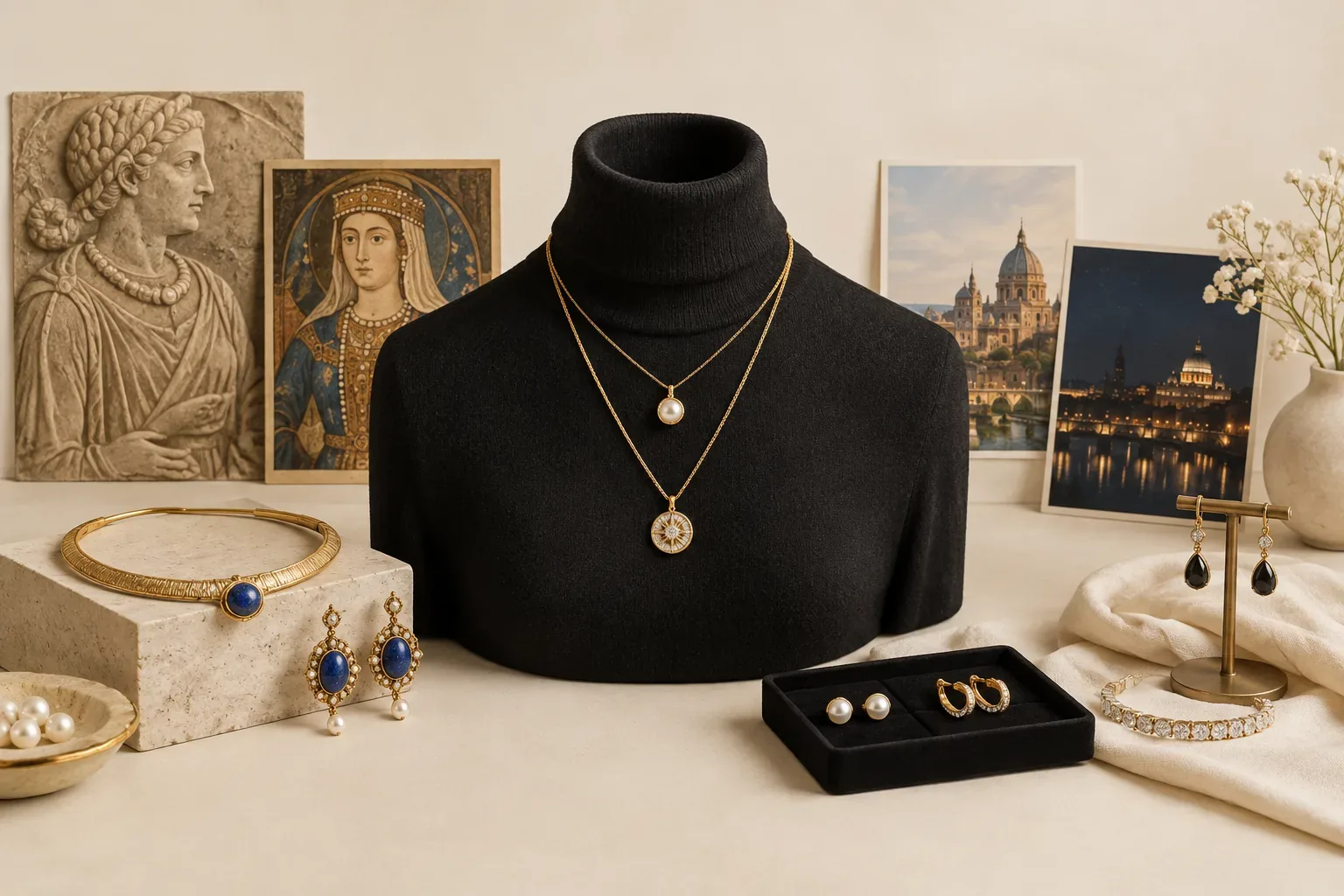
Meaning at a glance
Layer simple, neckline‑appropriate pieces such as a short chain or choker beneath a turtleneck and add or swap a longer pendant, statement earrings, or a brooch over the fabric for the evening; choose metals, motifs, and gemstones with attention to documented history, cultural sensitivity, and clear disclosure of treatments or imitations.
Historical evidence and changing contexts
Scholars and museum curators emphasize that jewelry has always been worn in relation to clothing and social context rather than as an isolated object. The Victoria and Albert Museum describes jewellery’s long history of adapting to fashion and social uses, noting that changes in silhouette, collar height, and public ceremony have repeatedly affected the forms and positions of brooches, chains, lockets and pendants.
That museum perspective is useful when thinking about turtlenecks because high necklines have repeatedly encouraged certain solutions: short, close-to-the-neck pieces to sit comfortably against fabric, and longer pendants or decorative pins designed to be displayed on the exterior of clothing. The V&A’s work shows how these functional relationships—how jewelry meets a garment—have varied by period and social setting rather than being timeless prescriptions.
Documented historical meanings versus modern personal interpretations
When assessing symbolism, separate what historical records document from what contemporary wearers may choose to mean. Museums and historical records can show that a motif or form carried particular social or commemorative meanings in some times and places, but they do not make those meanings universal. The V&A’s research highlights documented functions of pieces—mourning lockets, portrait miniatures, or status-signalling gems—within their specific historical contexts.
By contrast, many modern meanings are personal or fashion-driven. A pendant that historically served as a mourning token can be repurposed by a modern wearer as a personal talisman, a gift of affection, or as a purely aesthetic choice. Respectful styling and gifting therefore acknowledge both documented histories and contemporary, individualized readings without conflating the two.
How motifs, gemstones and traditions appear in jewelry for high necklines
Motifs and gemstones appear in modern jewellery for turtlenecks in predictable technical ways. Designers place thin, flexible chains and small pendants beneath the top of a turtleneck so that the pendant sits on the fabric or just below the collar line. Chokers or short collars are worn over the knit if the fabric is fine; heavier knits usually require a lighter, wider choker to avoid distortion or snagging.
Longer pendants and statement pieces are commonly worn on top of a turtleneck. A pendant on a 24–30 inch chain reads visually as a centerpiece against a solid high neckline. Brooches and pins are also designed to fasten through or onto knitwear; some modern pins have flat backs or wider posts to spread pressure and reduce puckering. Earrings, often overlooked, are a primary way to change a turtleneck outfit from day to night because they require no interaction with the garment and can dramatically alter the balance of a look.
Regarding gemstones and animal motifs, keep a factual perspective. Scientific sources such as NOAA Fisheries explain the biological realities of marine animals and caution against attributing biological traits to symbolic meaning without evidence. When marine motifs (whales, dolphins) or natural materials (pearls, coral) are used in jewellery, their symbolic readings are modern interpretations layered on top of the materials’ physical origins.
Simple day-to-night swaps that work with turtlenecks
Start daywear with a clean, lightweight combination: a narrow chain or thin choker beneath the turtleneck and small studs or simple hoops. For evening, change one or two elements: swap studs for drop or chandelier earrings, add a longer pendant over the knit, or pin a decorative brooch to the shoulder or collarbone area of the turtleneck. These targeted swaps create a distinct visual shift without requiring a full outfit change.
If you wear multiple layers of jewelry during the day, remove a few pieces for evening to let a statement item read more clearly. Conversely, if your daytime jewelry is minimal, adding one bold piece—either a sizable pendant on top of the fabric or larger earrings—will create evening impact while preserving the cozy simplicity of a turtleneck.
Practical material and construction considerations
Pay attention to weight and attachment when choosing pieces for turtlenecks. Heavy pendants can stretch or distort knits, and sharp prongs, clasps or posts can snag. Choose pendants with low-profile settings, smooth edges, and secure bails. Look for brooches that distribute pressure or have a locking clasp to prevent accidental tearing of the knit.
Metals and finishes matter for comfort and longevity. Hypoallergenic metals such as sterling silver, titanium, or gold alloys that the wearer tolerates are safer choices for pieces that sit close to the skin. For items that will be placed directly on thicker knits, consider light vermeil or plated pieces with durable base metals. When buying, ask for information about treatments, synthetic or lab-grown gemstones, and imitations because these affect care, value and appearance; consumer guidance from the Federal Trade Commission recommends clarity about treatments, enhancements and imitations.
Respectful selection and gifting guidance
When selecting or gifting jewelry that carries motifs or cultural associations, research the symbol’s origins and consider the recipient’s background and preferences. Use reliable, contextual sources and avoid assuming that a symbol carries the same meaning for everyone. If a motif is clearly religious, ceremonial, or tied to a living culture, prioritize culturally respectful choices and consider buying from makers within that culture or supporting ethical sources.
For natural-material pieces such as pearls or coral, understand both biological and ethical aspects. NOAA Fisheries provides factual information about marine animals and conservation that can inform choices about sourcing. Ask sellers whether pearls are natural, cultured, or imitation and whether coral is harvested responsibly. The FTC recommends that sellers disclose treatments and whether gemstones are lab-grown or imitations; as a buyer or gifter, ask for that information so you can make an informed, respectful purchase.
Also consider practical fit. Measure the recipient’s turtleneck height and preferred jewellery length where possible, or choose adjustable chains and brooches that allow small positional changes. If in doubt, a gift certificate to a trusted jeweller or an adjustable-design piece gives the recipient control while showing thoughtfulness.
Care, repair and longevity
Knitwear contact places unique stresses on jewelry. Regularly inspect pins and clasps for looseness, and keep delicate pieces in protective pouches to avoid tangles that could pull knits when worn. For heavier gemstones or settings, ask a jeweller about reinforcement options if you intend to wear a piece frequently over knitwear.
For long-term preservation, clean metals and gemstones according to the care recommendations for their materials and finishes. If you are unsure about whether a piece is plated or contains treated gemstones, request a written description from the seller or a professional appraisal to guide appropriate care.
Final notes
Turtlenecks are forgiving canvases for jewelry, and small, intentional swaps create a reliable day-to-night transition. Combine historical awareness, factual material knowledge, and respect for cultural meanings to choose pieces that look good and feel appropriate, whether you keep the focus subtle or shift to a bolder evening statement.
For further practical guidance on researching symbols, choosing meaningful gifts and the history of specific forms such as lockets, consult our related guides and the resources listed below.
Frequently asked questions
Can I wear a long pendant over a chunky turtleneck?
Yes, long pendants are a classic choice over chunky turtlenecks, but choose a pendant that is relatively lightweight and has a low-profile setting so it does not stretch or snag the knit. Consider a wider chain or cord to distribute weight and a short bail to prevent the pendant from turning.
Are brooches safe to pin on knitwear?
Brooches can be worn on knitwear but select pins designed to spread pressure or those with a locking mechanism. Avoid very narrow, sharp posts on delicate knits and consider placing a small scrap of fabric behind the knit when pinning to reduce stress on the fibres.
How should I ask a seller about gemstone treatments?
Ask the seller explicitly whether a gemstone is natural, treated, lab-grown or an imitation and request written disclosure. The Federal Trade Commission advises that sellers should disclose treatments and substitutions; if a seller cannot provide clear information, seek a different vendor or a professional appraisal.
Is it appropriate to gift jewelry with cultural or religious motifs?
Gifting jewelry with cultural or religious motifs requires sensitivity. Research the symbol’s meanings using reputable sources and, when possible, choose makers from within that culture or consult the recipient discreetly about preferences. Respectful gifting prioritizes context, consent and provenance.
What is the easiest way to transform a turtleneck look for evening?
The easiest transformation is to change one or two accessories: swap simple studs for statement earrings, add a long pendant or a bold brooch over the knit, or layer a brighter metallic choker on top of a lighter turtleneck fabric. Small changes create a noticeable evening impact without a full outfit swap.
Sources and further reading
- Bedazzled: A History of Jewellery — Victoria and Albert Museum
- 11 Cool Facts About Whales, Dolphins, and Porpoises — NOAA Fisheries
- Buying Gemstones, Diamonds, and Pearls — Federal Trade Commission