Meaning at a glance
This guide explains how historical practice and modern meaning shape approaches to rings cleaning and storage, separates documented cultural evidence from later popular interpretations, explains how motifs and gemstones influence care, and gives practical, respectful guidance on choosing, cleaning, and storing rings safely while avoiding common mistakes.
What the historical record shows
Museum research shows that jewellery care and meaning have changed repeatedly across places and periods. The Victoria and Albert Museum's account of jewellery history explains that rings and other pieces have been used for status display, sentimental exchange, and practical use at different moments in time, and that those shifting social roles affected how objects were maintained and treasured.
Evidence from museum collections demonstrates that precious metals and stones were repaired, reset, and adapted across generations rather than kept in fixed, pristine condition. Those treatments and repairs tell us that historic owners treated jewellery as durable, often wearable objects rather than artifacts to be stored untouched. The V&A framing emphasizes changing social contexts rather than a single universal practice.
Separate documented history from modern interpretation
Documented history, as presented by museum scholarship, records that jewellery practices—how rings were worn, repaired, and passed on—shifted with fashion, technology, and social meaning. The V&A materials are explicit about these changes and do not support any single, universal ritual of rings cleaning or storage.
Modern personal interpretations—such as treating an heirloom ring as a ritual object or assigning a contemporary symbolic meaning to a cleaning ritual—are valid choices for wearers today, but they are modern layers of meaning. Be careful not to conflate a present-day superstition or trend with an historical norm: the fact that people today assign spiritual value to cleaning a ring does not mean that the same practice had identical meaning in every culture or era.
How motifs, gemstones, and traditions appear in rings and affect care
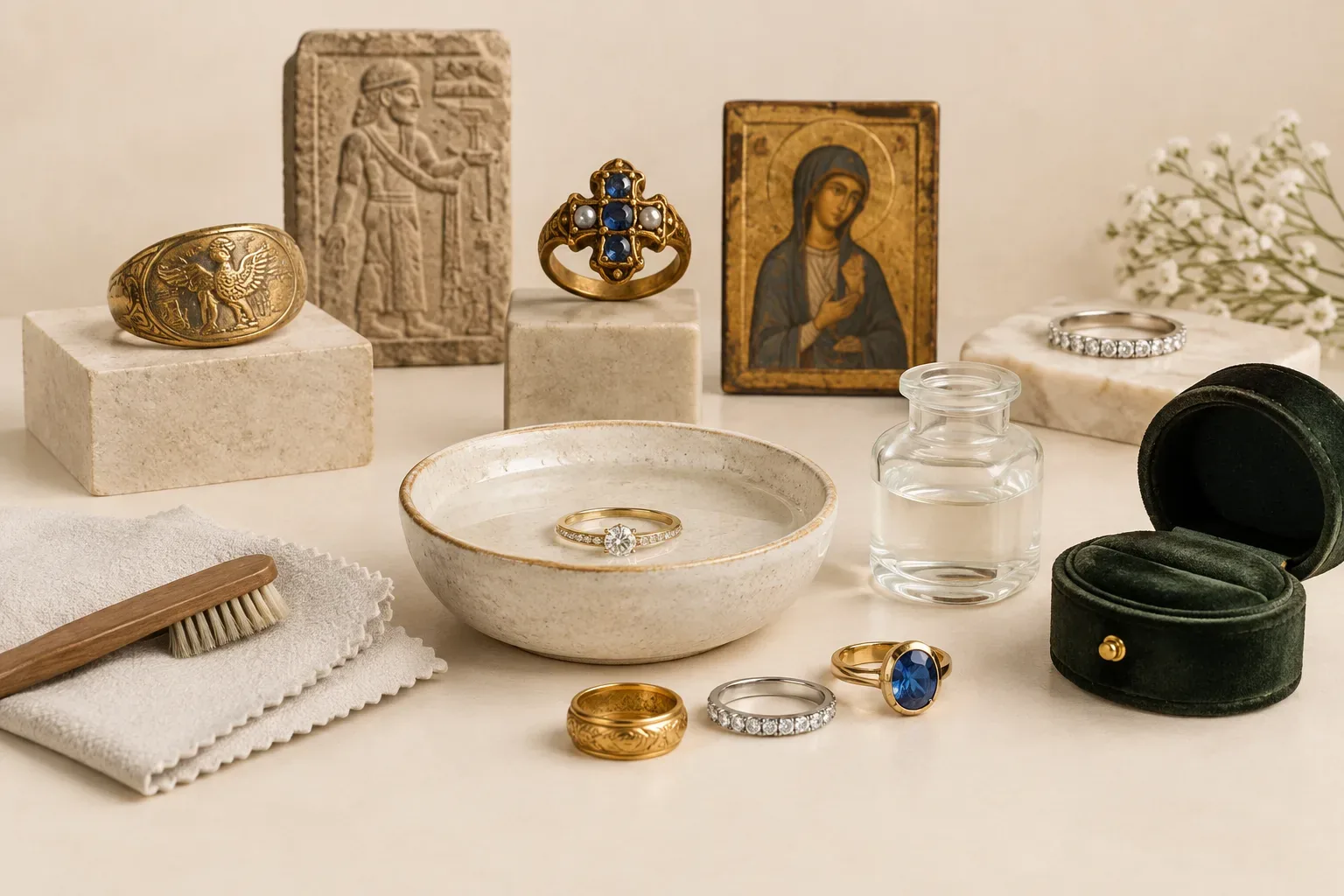
Motifs—floral carving, signet faces, engraving, and enamel—affect both cleaning and storage because surface detail can trap dirt and be sensitive to abrasion or solvents. Rings with delicate engraving or enamelling should be handled gently and kept from knocks and chemical exposure.
Gemstone type matters for cleaning choice and storage. The V&A's overview of gemstones provides historical context for how different stones have been valued and used, and it highlights that materials behave differently. Hard, durable stones such as diamonds tolerate more vigorous cleaning than softer or porous stones such as pearls, opals, or certain turquoise varieties. Settings and treatments also change how a stone responds to cleaners: adhesives, surface coatings, and historical repairs mean a gentle approach is safer when the object's history or treatment status is unknown.
The Federal Trade Commission's consumer guidance focuses on disclosure: sellers must disclose treatments, imitations, or significant alterations. That information affects care because a treated or coated gem may need different handling than an untreated natural stone. When you do not know whether a stone is treated, err on the side of gentleness and seek professional advice before using strong methods.
Practical, respectful selection and gifting guidance
When choosing a ring as a gift, consider the recipient's lifestyle and willingness to care for it. A highly detailed or historically restored signet or a ring with soft gemstones suits someone who values occasional wear and careful maintenance, while simpler, sturdier designs are better for daily wearers with active hands.
Respect the object's story. If you plan to gift an inherited ring, document what you know about its materials and any previous repairs or treatments. If the seller provides disclosures about treatments or imitation materials, note them and pass that information to the recipient. Transparency about a ring's condition and care needs helps the new wearer preserve its meaning and material integrity.
If cultural or religious traditions attach particular handling rules to a ring, ask respectfully about those practices before giving or cleaning the piece. Many meaningful practices are personal; treating them with curiosity and deference preserves both the object and its social context.
Safe cleaning methods and common mistakes to avoid
Start with a gentle baseline: for many modern metal settings and hard gems, a mild soap and lukewarm water with a soft cloth or a soft-bristled brush is effective for removing surface oils and grime without mechanical or chemical risk. Work gently and avoid forceful scrubbing that could dislodge small stones or damage delicate enamel.
Avoid universal claims about a single 'best' cleaner. Because rings differ in metal, finish, gemstone type, and any treatments, no single strong solvent or household product is right for every ring. Do not use harsh chemicals, bleach, or abrasive polishes on unknown materials. If a ring has porous stones, glued settings, or surface coatings, those methods can cause irreparable damage.
Common mistakes include storing mixed jewellery together where pieces can scratch one another, applying ordinary household cleaners without checking for coatings or delicate stones, and assuming a professional-looking finish means the piece is robust. When in doubt, pause and consult a trusted jeweller, particularly if the ring has high sentimental or financial value or if you cannot verify its materials and treatments.
Storage: practical guidance and respectful handling
Store rings individually in soft, breathable pouches or lined compartments to prevent scratches and tangles. Keep them away from direct sunlight and extreme temperature swings that can stress certain materials and adhesives. For pieces with delicate stones or historic repairs, a padded box that keeps movement to a minimum helps preserve settings.
Label storage with basic material notes and any treatment disclosures you have. If you maintain heirlooms for future generations, a short written or digital record of what you know about the piece—materials, provenance, and any repairs—adds practical value and respectful context for descendants.
Avoid airtight storage for organic materials such as pearls and some natural fibers; they benefit from a small degree of humidity. Conversely, oxidisable metals may need occasional airing and polishing to remove corrosive residues from the environment. Tailor storage to the object's known needs whenever possible.
When to seek professional help
If a ring has loose stones, visible cracks, uncertain adhesives, or an unknown history of treatment, consult a qualified jeweller before attempting aggressive cleaning. Professional assessment can identify adhesives, coatings, or structural problems and advise on safe conservation or repair.
Professional services can also document a piece for insurance or heritage reasons. Museums and conserved collections follow careful documentation and specialist cleaning protocols; for privately held heirlooms with significant sentimental or historic value, professional conservation is the most cautious route.
Final practical checklist
Treat each ring individually: know or document its metal, stone, and any treatments. Clean gently with mild soap and a soft cloth for everyday maintenance, avoid harsh chemicals and abrasives, store items separately in soft-lined compartments, and seek pro advice for uncertain or damaged pieces. Remember that historical evidence shows diverse practices; modern care should balance material safety with respect for personal and cultural meanings.
Frequently asked questions
How often should I clean my rings?
Frequency depends on wear and materials; many people do light cleaning for daily-worn rings every few weeks and a more thorough check annually, but treat each piece according to its gemstones and finish and consult a professional if you are unsure.
Are there any household cleaners I should never use on rings?
Avoid harsh chemicals and abrasive cleaners on unknown pieces. Household bleach, strong acids, and abrasive polishes can damage metals, stones, and coatings; if a ring's material or treatment history is unknown, use gentle soap and water or seek professional advice.
Can I store different rings together in one box?
Storing rings together risks scratches and entanglement; keep rings separated in soft compartments or pouches. Delicate stones, detailed motifs, and soft metals especially benefit from individual storage.
How do I know if a gemstone is treated and needs special care?
Sellers should disclose treatments, according to consumer guidance. If you lack disclosure, ask for a written description or a professional appraisal; when in doubt, treat the stone as though it may be coated or porous and use gentle cleaning.
Is it safe to use an ultrasonic cleaner?
Ultrasonic cleaning can dislodge stones and damage certain materials and historic repairs. Because ultrasonic devices affect adhesives and fragile settings, consult a jeweller before using one on an item of uncertain composition or significant value.
What should I do with an heirloom ring that needs repair?
Document what you know about its provenance and any previous repairs, then take it to a qualified jeweller or conservator for assessment. Professional repair preserves both the object's material condition and its value as an heirloom.
Sources and further reading
- Bedazzled: A History of Jewellery — Victoria and Albert Museum
- An A-Z of Gemstones — Victoria and Albert Museum
- Buying Gemstones, Diamonds, and Pearls — Federal Trade Commission