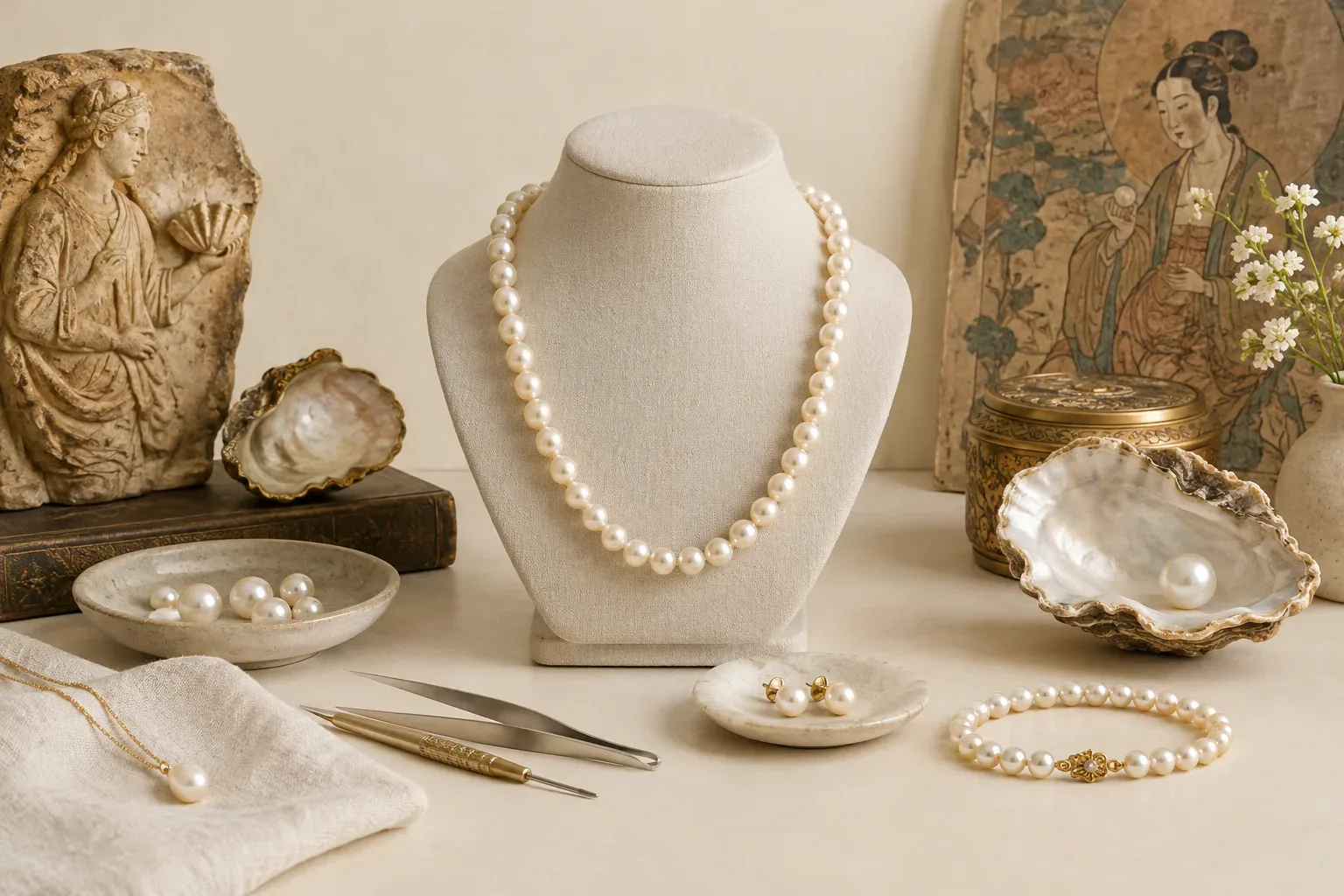
Meaning at a glance
This guide explains the documented history and evolving contexts of pearls in jewelry, separates historical cultural evidence from later popular meanings, and gives clear, practical steps for repair, routine maintenance, and choosing or gifting pearl pieces today.
Short answer
Pearl jewelry repair and maintenance require both historical understanding and practical care: pearls have documented historical roles and changing social meanings, and they demand gentle routine maintenance plus professional intervention for structural damage, worn drill holes, or antique conservation. This article explains those documented histories and contexts, distinguishes recorded cultural evidence from later popular interpretations, and offers concrete guidance for choosing, wearing, caring for, and seeking repair for pearl pieces.
Documented historical evidence and cultural contexts
The historical record shows pearls were prized in many societies for centuries and their social context changed over time. The Victoria and Albert Museum describes jewellery as an object type whose materials and meanings have shifted with fashion, status, and technology, and pearls appear repeatedly in that changing story. Museum scholarship records pearl use across different periods and cultures—from antiquity through the medieval and early modern periods to 19th- and 20th-century taste revolutions—without implying a single, universal meaning.
When discussing specific cultures, avoid treating a modern stereotype as a historical fact. Museum accounts note that pearls often signalled wealth and access to luxury in societies where they were scarce, while in other times and places they were integrated into religious or courtly ornament. The physical qualities of pearls and their rarity shaped how different social groups used them; the Victoria and Albert Museum's general histories of jewellery and its A–Z of gemstones place pearls in that technical and social context rather than reducing them to a single symbolic explanation.
Separating documented meanings from modern interpretations
Museum documentation supports statements about who wore pearls and when, and about changing fashions and techniques. From those records it is documented that pearls were valued for beauty and material rarity and that they often reflected social rank. Beyond these documented facts, later popular culture and individual wearers have layered additional meanings—purity, bridal symbolism, or emotional sentiment—that are modern personal or commercial interpretations rather than singular historical truths.
When you read a modern label that ascribes one fixed meaning to pearls across all cultures and eras, treat it as interpretation rather than documentary evidence. The Victoria and Albert Museum materials help distinguish the documented uses and contexts from these later sentimental layers. As a buyer or caregiver, it is useful to recognize both strands: the historical record informs authenticity and construction, while modern meanings inform how a piece will be received as a gift or worn today.
How pearls and the pearl motif appear in jewellery
Pearls appear as single gems set in studs and pendants, as matched elements on drops and earrings, and as strung necklaces where uniformity and spacing are part of the craft. They are also used as accents in more complex settings, integrated into metalwork or combined with other gemstones to create period-specific looks. The physical form of a pearl—round, baroque, drop—determines how it is mounted and how vulnerable it will be to abrasion or impact.
Construction choices affect maintenance: loose-strung pearls are typically knotted to reduce friction and loss if the string breaks, while set pearls rely on soldered cups or collets to remain secure. The Victoria and Albert Museum’s resources on gemstones and jewellery history explain these forms as part of evolving techniques and tastes, and knowing the construction will help you decide what maintenance each piece needs.
Common warning signs that a pearl piece needs repair
Look for surface dulling or loss of nacre sheen, visible scratches, chips at the drill hole, frayed or stretched stringing, loosened knots, clasps that no longer secure, and loose or missing settings. Drilling wear around the hole or white powder at the drill site indicates material loss and a risk the pearl may crack or fall out. For strung pieces, a sagging line, uneven spacing, or threads visible at the knot are signs the string should be replaced.
Antique or heirloom pieces may show subtle signs professional conservators should assess, such as changing metal corrosion affecting mounts or historical attachments that should not be altered without specialist advice. When a piece is sentimental or unusually valuable, err on the side of consulting a qualified professional rather than attempting DIY fixes.
Routine maintenance you can do at home
Wear pearls after applying cosmetics, perfume, and hairspray because chemicals can damage nacre and surface luster. After wearing, wipe pearls gently with a soft, slightly damp cloth to remove skin oils and residues; allow them to dry flat before storing. Avoid ultrasonic cleaners, steam cleaning, or harsh detergents—pearls respond poorly to aggressive cleaning and to acids or alkalines.
Store pearls separately in a soft pouch or a lined compartment to prevent their hard counterparts from scratching them. For strung pieces, avoid hanging them for long periods because gravity will stretch the string; instead store necklaces flat in a drawer or box. The frequency of replacement depends on wear: many jewelers advise re-stringing pearl necklaces every one to three years depending on how often they are worn and how they are stored.
When to seek professional help and what to ask
Seek professional help if pearls show deep scratches or chips, if drill holes are visibly enlarged or powdery, if knots are failing or if clasps and mounts have loosened. A trained jeweller or conservator can re-string correctly (often with silk or a suitable synthetic alternative), re-knot between pearls to prevent abrasion, and replace or reinforce settings without damaging the pearl. For antique pieces, a conservator with experience of historic jewellery is preferable because they will prioritize preservation and minimal intervention.
When you consult a professional, ask about materials and methods they will use, whether they will match pearls when replacements are needed, and how they will document any changes. Because treatment and imitation disclosures are regulated in the United States, you can also ask the professional whether any replaced pearls or materials will be noted on an invoice in line with guidance from the Federal Trade Commission regarding disclosure of treatments, imitations, or substitutions.
Choosing and gifting pearls with maintenance in mind
Choose pearl jewellery consistent with the recipient’s lifestyle and maintenance tolerance. Stud earrings or pendant-mounted pearls generally require less routine intervention than long, loose-strung necklaces, which need regular re-stringing and careful storage. For everyday wearers, consider a pair of bezel-set pearls or studs with secure metal settings; for someone who values traditional elegance, a knotted strand may be the right choice but make sure they understand re-stringing needs.
Respect cultural context when gifting. Because pearls have appeared in many cultural traditions—where they sometimes carried specific social or ceremonial associations—do a little research before selecting a piece for a person whose cultural background you may not fully share. The Victoria and Albert Museum’s materials on jewellery history are a good starting point for understanding how pearls were used in different traditions. When in doubt, frame the gift as personal and aesthetic rather than as carrying a single fixed symbolic meaning.
Practical steps to find the right professional and preserve provenance
For repair or conservation of valuable or antique pearl pieces, seek a jeweller with documented experience or a conservator affiliated with a recognized body. Ask for references, examples of past work, and for a written estimate that includes whether replacement pearls will be matched or described as new. If the piece has provenance or historical value, request that any intervention be reversible where possible and that documentation of the work be provided for future caretakers.
If authenticity, treatments, or imitation questions arise, the Federal Trade Commission’s consumer guidance explains disclosure expectations for gemstones, diamonds, and pearls; this information can help you evaluate claims about treatments, cultured versus natural formation, and imitation materials when choosing services or purchasing replacements.
Final thoughts
Pearl jewellery repair and maintenance sit at the intersection of historical knowledge and everyday care. Use documented museum resources to understand how pearls were used and valued in various periods and cultures, separate those records from later sentimental meanings, and apply practical maintenance routines now to protect both beauty and value. When in doubt, especially with antique, valuable, or sentimental pieces, consult a knowledgeable professional who will respect both material integrity and historical context.
Frequently asked questions
How often should I re-string a pearl necklace?
Re-stringing frequency depends on use and storage, but many jewellers recommend every one to three years for pieces worn regularly. If you notice sagging, frayed thread, or loose knots, have it re-strung promptly.
Can scratched or chipped pearls be repaired?
Superficial scratches can sometimes be reduced by a professional polisher, but chips and deep nacre loss are often irreversible; a professional can advise on conservation, mounting changes, or tasteful replacement options.
Are there safe home cleaners for pearls?
Use a soft cloth dampened with plain water and mild soap if necessary, and avoid ultrasonic cleaners, steam, or chemical jewellery cleaners that can damage nacre. Always dry pearls flat before storing.
How do I know if a pearl is real or an imitation?
There are a range of tests professionals use; the Federal Trade Commission advises consumers to ask sellers about treatments, whether pearls are cultured or natural, and any imitations. If authenticity matters, have a qualified jeweller or gemmologist examine the piece.
Can pearls be worn in the shower or pool?
Avoid exposing pearls to chlorine, salt water, or prolonged immersion; these can harm nacre and the stringing material. Brief contact with clean water during wear is less risky than chemical exposure, but drying and proper storage afterward are important.
Sources and further reading
- Bedazzled: A History of Jewellery — Victoria and Albert Museum
- An A-Z of Gemstones — Victoria and Albert Museum
- Buying Gemstones, Diamonds, and Pearls — Federal Trade Commission