Meaning at a glance
Use gentle, non-abrasive care, keep pearls separate from hard gems and chemicals, confirm material treatments with sellers, and consider historical and cultural contexts when choosing or gifting pearls.
Documented historical evidence and specific cultures or periods
Pearls appear repeatedly in the visual and material record across many places and eras. The Victoria and Albert Museum describes how pearls figure in jewelry from antiquity through the modern period and how their social meanings shifted as technologies and tastes changed. Museum records and exhibitions trace pearls in Roman jewelry and in later medieval and Renaissance European court dress, in imperial Indian collections, and in East Asian ornament, among other contexts.
When discussing cultural or period associations, attribute the provenance precisely: for example, pearls worn as imperial regalia in European courts appear in museum collections and catalogues; the V&A places pearls within broader histories of dress and status in its surveys of jewelry. The V&A's coverage emphasizes changing social contexts rather than asserting a single, continuous meaning for pearls across time and place.
Separating documented historical meanings from modern personal interpretations
Documented meanings come from inventories, portraits, court records, and museum labels that show how pearls were used and valued in particular times and places. The Victoria and Albert Museum's historical account records these changing contexts and helps identify when pearls signaled rank, wealth, or specific ceremonial roles.
Modern personal interpretations—such as sayings that link pearls with purity, weddings, or particular personality traits—are later cultural overlays that spread through literature, advertising, and popular culture. These modern meanings may be meaningful to an individual or group, but they are not universal or necessarily rooted in older documentary evidence. Distinguish the two by asking whether a claim is supported by period documents and museum scholarship or whether it is a later cultural convention.
How pearls and the pearl tradition appear in jewelry
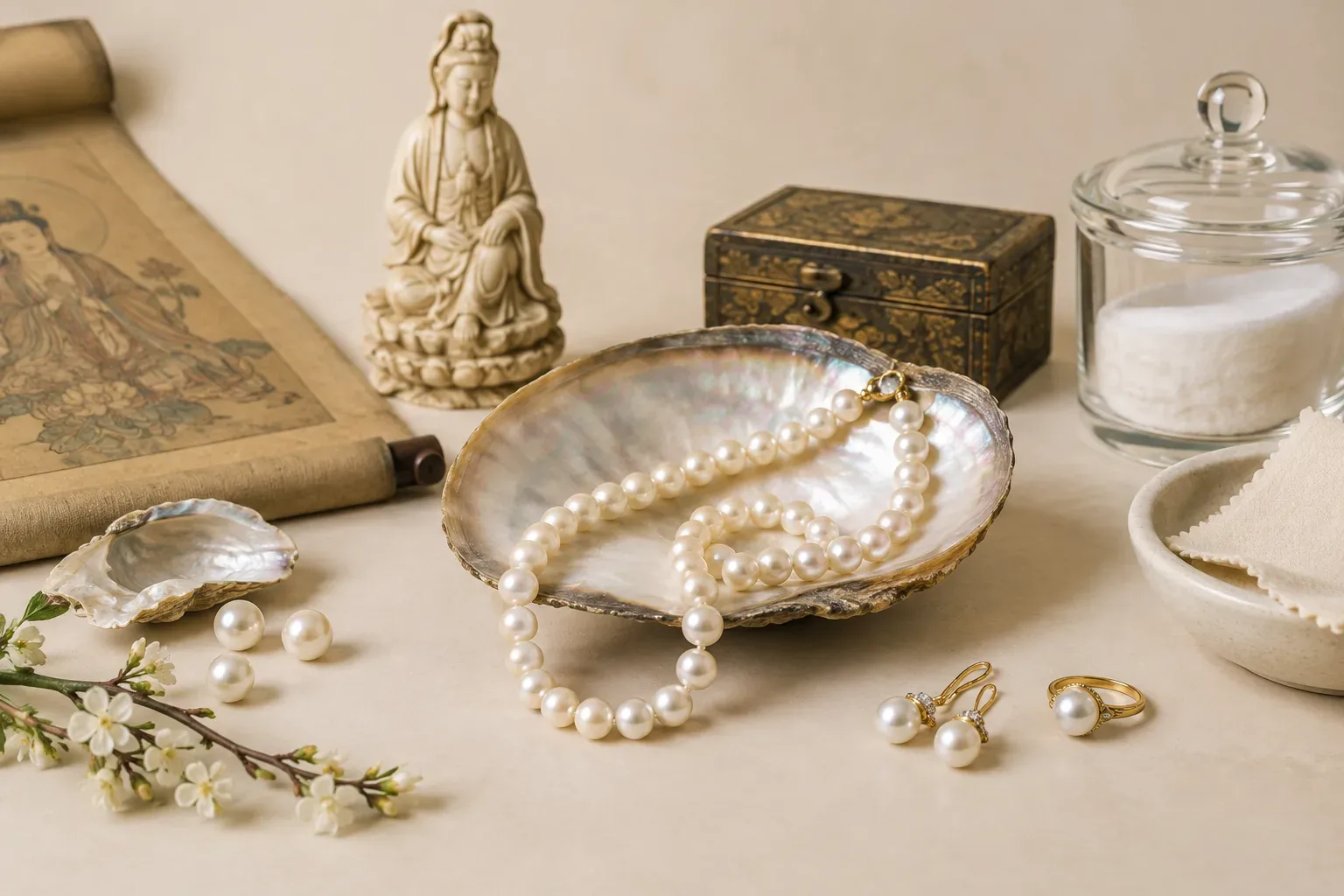
Pearls are used in many forms of jewelry: single pearls set as ring or earring focal points, strings of pearls in necklaces, clustered or fringe arrangements on bodice and head ornaments, and incorporated as accents on metalwork. Historically, pearls were frequently mounted singly in signet and devotional objects and strung as long ropes or short chokers depending on fashion.
The visible way pearls appear—loose pendants versus closely knotted strands, natural irregular pearls versus matched round cultured pearls, or pearls used alongside other gemstones—communicates different social and aesthetic choices. Museums such as the V&A catalogue these differences to show how form and technique changed across periods and cultures.
Practical cleaning and storage: safe methods guided by conservatorial caution
Treat pearls conservatively. Because pearls are organic and historically regarded as delicate in museum conservation literature, adopt low-impact care: after wearing pearl jewelry, gently wipe each pearl with a soft, clean cloth to remove surface oils and residues. Doing this reduces buildup that can dull luster over time.
When more than a light wipe is needed, use the mildest approach compatible with pearls and their settings. Avoid abrasive scrubs or household cleaners with acids or alkalies. If a damp clean is necessary, a cloth lightly moistened with plain water or a very mild, neutral soap solution applied sparingly and followed by immediate drying is the cautious route favored by conservators and museums.
For storage, keep pearls separate from harder gemstones and metal components that can scratch nacre. Soft-lined boxes or individual fabric pouches prevent abrasion from other pieces. Store strands uncompressed and not crushed beneath heavier objects. Museums recommend stable, moderate environmental conditions rather than extremes of heat or humidity; abrupt changes can stress organic materials over time.
Common mistakes to avoid
Do not assume all pearls are identical: cultured, treated, or imitation pearls require different considerations and disclosure. The Federal Trade Commission advises buyers to obtain clear information about treatments and whether pearls are natural, cultured, dyed, or imitation. Always ask for written details when they matter to value or care.
Avoid exposing pearls to cosmetics, perfumes, hairspray, and household chemicals; these substances can affect the surface sheen and, over long periods, the material itself. Do not store pearls in direct sunlight or with heat sources for extended periods, and avoid packing them in airtight containers for very long stretches without occasional airing, since pearls are organic and benefit from moderate, non-extreme conditions.
Do not assume aggressive cleaning will restore luster. Over-cleaning or using abrasive materials can remove layers of nacre and permanently alter appearance. When in doubt about valuable or historically important pieces, consult a professional conservator or a reputable jeweler with experience in pearls rather than attempting risky treatments at home.
Choosing and gifting pearl jewelry: practical and respectful guidance
When selecting pearls as a gift, consider the recipient’s taste and the cultural contexts that might matter to them. Some people value traditional, matched round pearls in classical settings; others prefer baroque or irregular pearls for a more contemporary aesthetic. The V&A’s surveys of jewelry history illustrate how different shapes and settings have been fashionable in different eras, which can inform a stylistically appropriate choice.
Ask sellers about origin, whether pearls are natural or cultured, and any treatments applied. The Federal Trade Commission recommends that sellers disclose material treatments and imitations; requesting this information protects both buyer and recipient by clarifying care needs and resale value.
Frame the gift with care instructions and provenance when known. Including a simple note about how to care for the pearls and what makes the particular pearl special is both practical and respectful of the object’s material needs and any cultural significance attached by the wearer.
Final notes
Pearl jewelry cleaning and storage is fundamentally about restraint and respect for a delicate material and for its cultural histories. Museum documentation, such as that collected and interpreted by the Victoria and Albert Museum, shows that practices and meanings around pearls have shifted widely across time and place, so aim for conservatism in care and specificity in cultural claims.
For purchases and valuations, follow the Federal Trade Commission’s guidance on disclosure of treatments and imitations: obtain clear written information and keep receipts and documentation. For heirlooms or historically significant pieces, consult a conservator or museum-trained professional before undertaking any invasive cleaning or repair.
Frequently asked questions
How often should I clean my pearl necklace?
Wipe pearls with a soft cloth after each wear to remove oils and residues. For deeper cleaning, use the mildest possible method sparingly and consult a professional for valuable or antique pieces.
Can I use household jewelry cleaner on pearls?
Most commercial jewelry cleaners are formulated for hard gemstones or metals and can be too harsh for pearls. Avoid abrasive or strongly chemical cleaners and opt for conservatory-recommended, gentle approaches.
How should I store pearls to prevent damage?
Store pearls separately in soft pouches or a lined jewelry box to avoid scratches from harder gems and metals. Keep them in a stable, moderate environment and avoid prolonged exposure to extreme heat or direct sunlight.
Do I need to know whether pearls are treated or cultured?
Yes. The Federal Trade Commission advises buyers to ask sellers about treatments, origin, and whether pearls are natural, cultured, dyed, or imitation, because this information affects care needs and value.
Is it safe to restring an old pearl strand myself?
Restringing requires skill to knot correctly and to preserve the strand’s integrity; for valuable or historic pieces, have a trained jeweler or conservator do the work to avoid accidental damage.
Sources and further reading
- Bedazzled: A History of Jewellery — Victoria and Albert Museum
- An A-Z of Gemstones — Victoria and Albert Museum
- Buying Gemstones, Diamonds, and Pearls — Federal Trade Commission