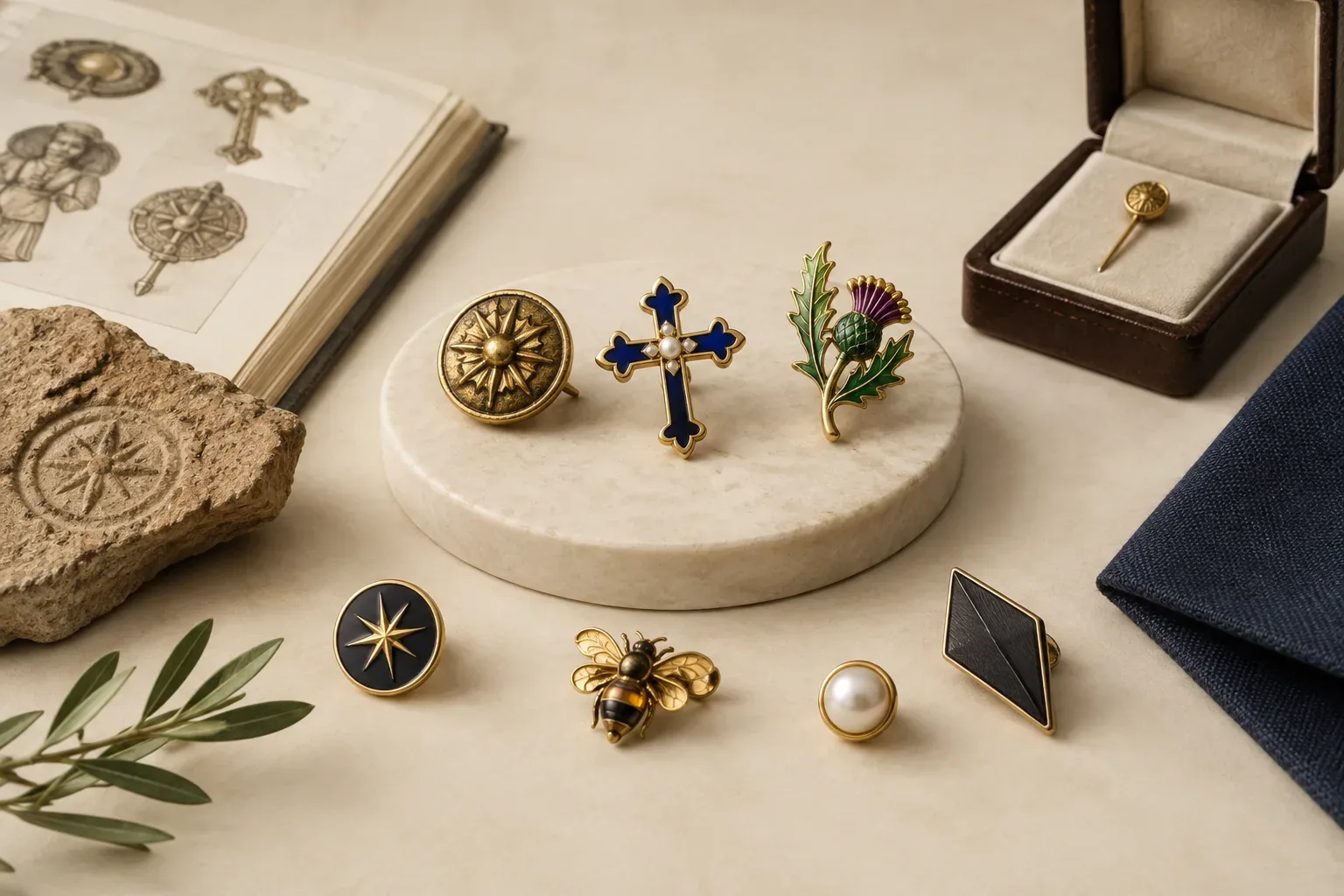
Meaning at a glance
This lapel pin buying guide explains documented historical uses and changing contexts for pin-like jewelry, separates verifiable meanings from modern personal symbolism, describes common materials and gemstone considerations, and gives practical advice on quality checks, price factors, and respectful selection or gifting.
Quick answer
A good lapel pin buying guide organizes three things: documented history and changing contexts for pins, reliable quality and material checks, and clear answers about price drivers so you can pick or gift a pin that matches taste and occasion. Follow evidence about how pins have been used in different eras, insist on transparent disclosure about materials and gemstone treatments, and choose construction and symbolism appropriate to the recipient and setting.
Documented historical evidence and precise contexts
Pin-like jewelry—brooches, stickpins, and later lapel pins—has been used across many cultures as both ornament and signal. Museums note that jewelry’s functions and meanings change with time and social context rather than remaining fixed. The Victoria and Albert Museum emphasizes that jewelry historically expressed status, memory, and identity in different periods and places; understanding that variability is key when you ascribe a meaning to a particular pin.
In European collections, for example, the 19th and early 20th centuries saw stickpins and small brooches worn by both men and women as markers of fashion, affiliation, or sentiment. The same museum resource documents the way gem materials and techniques were adapted over time to meet changing tastes. Elsewhere and in earlier periods, fasteners and pins served practical and symbolic roles—from fastening garments to indicating rank—so a single motif or style can carry very different meanings in different cultures or periods, and those meanings should be identified precisely rather than assumed universal.
Documented historical meanings versus modern personal interpretation
Where sources document a particular historical meaning for a pin or motif—such as mourning jewelry in certain Victorian contexts or badges denoting membership—those interpretations are supported by material culture and contemporary records. The Victoria and Albert Museum highlights examples in museum collections where function and meaning are recorded or inferred from provenance and design.
By contrast, modern wearers often attach personal, stylistic, or subcultural meanings to lapel pins that have little to do with historical intent. A floral pin bought today may be worn solely as a color accent, or a political motif may be adopted as a vintage aesthetic without historical knowledge. Distinguish what is documented in museum or archival sources from what is a contemporary personal or community interpretation, and note that meanings can shift when motifs move between cultures or decades.
How motifs, gemstones, and traditions appear in lapel pins
Motifs used on lapel pins range from geometric emblems and heraldic devices to floral and animal designs. The same motifs recur across different jewelry forms—lockets, brooches, cufflinks—because makers adapt popular designs to available techniques and markets. When assessing a pin’s motif, consider both its historic associations and the context in which it was made or reissued.
Gemstones and simulated stones are common in decorative pins. The Victoria and Albert Museum’s guidance on gemstones reminds buyers that materials have long histories of use and that the choice of stone affects visual effect, durability, and value. Some lapel pins contain genuine gems, others use small cabochons, cut glass, or modern simulants and crystals. Enamel—both soft and hard—has also been a frequent decorative technique, allowing colorful motifs to be applied to metal surfaces and widely used in both historical and contemporary pins.
Materials, construction, and quality markers to check
Begin by confirming what the maker or seller states about materials. For metals, sellers should state the base metal and any plating. For gemstones, ask whether the stones are natural, synthetic, or simulants and whether they have been treated. The Federal Trade Commission’s consumer guidance stresses that sellers should disclose treatments, imitations, and relevant material information; it is reasonable to expect clear answers before you buy.
Examine how the pin is made: look for secure joints where the pin attaches to the backing, a straight and sturdy pin shaft, and a reliable clasp or locking mechanism. Enamel work should be even and free of large pits; die-struck or cast detail should be crisp for the style and period claimed. If the item is described as precious metal, ask for a specification or hallmark and documentation where available. Photos of both front and reverse and a written description of condition are useful for online purchases.
Price considerations: what drives cost and how to evaluate value
Price reflects several factors: the intrinsic value of materials, the presence and quality of any gemstones, the maker’s reputation, the complexity of workmanship, rarity, provenance, and condition. A modern mass-produced pin with plating and simulated stones will generally cost much less than a handcrafted piece in substantial precious metal with natural gemstones or a documented vintage maker’s mark.
When gemstones are involved, whether they are natural or treated affects value. The Federal Trade Commission advises consumers that treatments and imitations must be disclosed, and such disclosures will affect appraisal and resale expectations. For vintage pins, documented provenance or a maker’s mark can substantially increase price. Balance what matters most to you—material authenticity, historical interest, designer attribution, or purely aesthetic appeal—against your budget.
Selecting and gifting lapel pins: practical and respectful guidance
Match the pin to the recipient’s style, daily environment, and cultural context. For a conservative workplace, choose discreet metals, small size, and neutral motifs. For a creative friend, you can prioritize distinctive colors, larger motifs, or whimsical subject matter. Consider the wearer’s likely outfits and whether the pin’s fastening is compatible with the target fabric; thin fabrics need smaller pins or a clutch backing to avoid damage.
Be mindful of symbols with specific cultural, religious, or political meanings. If you are unsure about a motif’s significance, research its sources or ask the recipient/insider before gifting. When in doubt, choose an aesthetically pleasing, non-contentious design or include a short note explaining why you chose that particular pin. For vintage or higher-value pieces, provide care instructions and any available documentation about materials or provenance so the recipient can appreciate and maintain the piece.
Practical steps before you buy
Ask the seller straightforward questions about materials, whether gemstones are natural or treated, country of manufacture, and return policy. Request close-up photos or, for high-value items, a condition report and any certificates. If a seller declines to disclose treatments or materials for an item described as having gemstones, treat the description with caution; the Federal Trade Commission’s guidance supports transparent disclosure.
For online marketplaces, check seller ratings, reviews, and whether the seller has a documented history of selling similar items. Consider whether repairability is important—pins with simpler mechanical designs are often easier to maintain. When buying vintage pieces, look for consistent wear patterns indicative of age rather than contrived distressing, and ask about provenance if that is part of the value proposition.
Caring for and storing lapel pins
Store pins separately or in a compartmentalized box to prevent scratching and enamel chipping. Keep pins with organic materials or softer gemstones away from heat, humidity, and direct sunlight. Clean base metals and plated items gently with a soft cloth; avoid aggressive polishing that could remove plating. For pins with pearls, opals, or other delicate gems, follow specific care recommendations for those materials as outlined by authoritative gemstone guides.
Final takeaway
A useful lapel pin buying guide helps you separate documented historical meanings from contemporary or personal interpretations, verifies materials and disclosures, and balances aesthetics with construction quality and cultural respect. Use museum resources to ground historical claims, rely on consumer-protection guidance for materials disclosure, and choose or gift pins with both the wearer’s tastes and the context in mind.
Frequently asked questions
How can I tell if a gemstone in a lapel pin is natural or treated?
Ask the seller to state whether stones are natural, synthetic, or simulants and whether they have been treated; the Federal Trade Commission advises that such treatments and imitations should be disclosed. For higher-value purchases, request a lab report or certificate from a recognized testing laboratory.
What are reliable signs of good construction for a lapel pin?
Look for a straight, sturdy pin shaft; a secure attachment point; a functioning clasp or locking mechanism; even enamel or clean cast detail; and clear seller photos of the front and reverse. Sellers should provide condition notes for vintage pieces.
Are lapel pins appropriate in professional settings?
Many lapel pins are suitable for professional settings when they are small, subtle, and non-controversial in symbolism. Consider workplace dress codes and choose neutral metals and modest motifs if you need to err on the side of conservatism.
Should I buy vintage or new when shopping for a lapel pin?
Choose vintage if you value history and provenance, and expect potential conservation or wear issues. Choose new if you prioritize pristine condition, contemporary designs, or known materials. In either case, request clear information about materials, condition, and seller return policies.
What affects the price of a lapel pin the most?
Primary price drivers are the materials (precious metals and natural gemstones increase cost), craftsmanship, maker reputation, rarity or provenance, and condition. Simulants and plated metals reduce intrinsic material cost but can still command design or brand premiums.
Sources and further reading
- Bedazzled: A History of Jewellery — Victoria and Albert Museum
- An A-Z of Gemstones — Victoria and Albert Museum
- Buying Gemstones, Diamonds, and Pearls — Federal Trade Commission