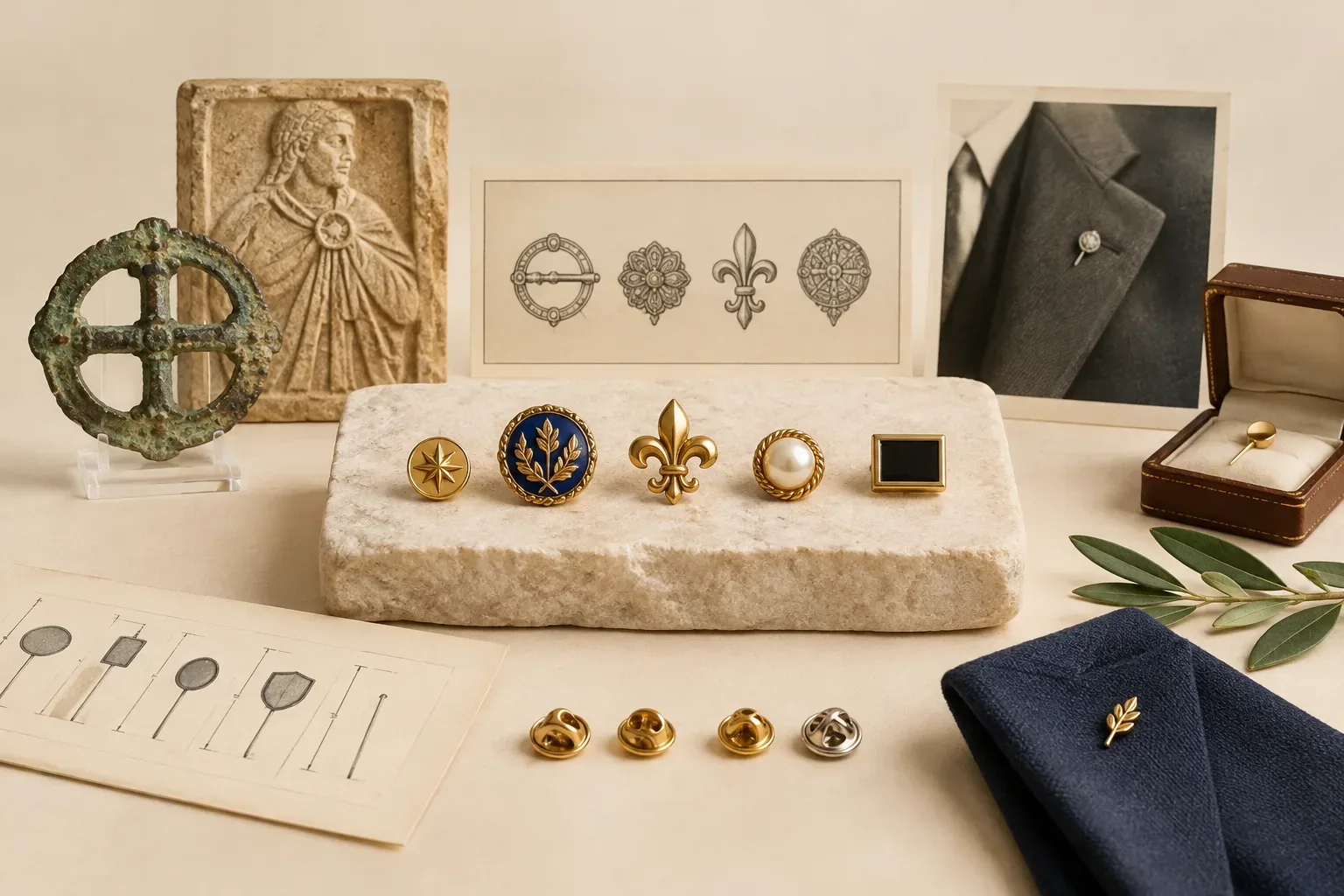
Meaning at a glance
Measure the lapel width and the garment fabric, choose a pin whose visible face is in visual proportion to the lapel, and match attachment style, weight and backing to the cloth; historical uses and gemstone choices affect meaning but are distinct from modern personal interpretation.
Direct answer — what matters most
For a lapel pin to fit well you need three pieces of information: the visible face size relative to the lapel, how the pin attaches and balances through the fabric, and the pin’s weight and backing. Choose a pin whose visible surface is visually smaller than the lapel so it reads as an accent rather than overwhelms the garment, match the fastening and post length to the thickness of the jacket, and keep heavier or taller pins to stiffer fabrics or inner-lapel placement to avoid sagging or damage.
What the historical record shows (and how it affects size and fit)
Museums and curators who study jewellery emphasise that how people wore small decorative objects has changed with fashion, tailoring, and social custom. The Victoria and Albert Museum (V&A) documents jewellery as a shifting social language: brooches, badges and small decorative pins have been adapted repeatedly to suit changing silhouette and dress construction, and their size and method of wear were constrained by the cuts and fabrics available to people at the time.
Historically, the visible scale of decorative pins matched available garments. For example, when narrow lapels or high collars were fashionable, brooches and badges were smaller or positioned differently; when broad lapels or open coats were in use, larger ornaments could be accommodated. The V&A’s interpretation of jewellery history highlights the relationship between clothing construction and jewellery scale rather than a single universal size or rule.
Across cultures and periods the same object shape could carry different social meanings. The V&A records that forms such as rosettes, roundels, and geometric metalwork recur in many contexts but that their significance—status, allegiance, decorative—depends on period and place. These documented precedents show why attention to scale and attachment remains a practical concern: pins that suit one historical or regional style may not sit or read properly on contemporary tailoring.
Documented meanings versus modern personal interpretations
When historians and museums report a lapel ornament’s meaning they base that claim on documented use: who wore it, where, and in what context. The V&A’s approach to jewellery history is to connect object, wearer and recorded context rather than to assume a single symbolic meaning. Practical historical meanings often relate to rank, membership, mourning, or fashion—each anchored to evidence about wearer and occasion.
Modern wearers and gift-givers layer new, personal meanings onto these objects. A pin that was once used as an organizational badge may now be worn purely as an aesthetic accent or as an expression of identity. Those contemporary interpretations are valid but are not the same as the documented, culture-specific meanings shown in historical records. Keep this distinction in mind when choosing a pin with cultural, political or religious imagery: documented historical meanings come from provenance and recorded use, while personal meaning is created by the wearer and recipient.
How motifs, gemstones and traditions translate into lapel-pin design
Motifs commonly used on lapel pins—floral rosettes, heraldic devices, geometric badges and enamel portraits—appear in jewellery across many cultures. The V&A’s exhibitions and articles explain that motifs are often translated between media: a painted or enameled motif on a brooch can reappear as an enamelled lapel pin or a cast metal insignia when tailoring and popular taste change.
Gemstones and colored glass have long been used to introduce color and material value into small jewellery forms. The V&A’s A–Z of Gemstones explains varieties of gem materials and their historical use in small ornaments. In modern lapel pins, gem materials may appear as single set stones, clusters or simulated gems to achieve sparkle and color within a compact face. When gemstones are involved, the Federal Trade Commission’s consumer guidance on buying gemstones, diamonds and pearls is relevant: makers should disclose treatments, imitations, and the nature of the materials used so recipients understand whether a stone is natural, treated, or simulated.
Traditions such as craft techniques—enamel, cloisonné, filigree or die-struck metalwork—affect how a pin is constructed and therefore how it fits. Enamel surfaces are typically flatter and lighter; cast or sculpted metal badges may be thicker and heavier. Understanding the technique helps you match the fastening and backing to the pin’s construction and the thickness of the wearer’s garments.
Measurements and fit considerations that matter (practical guidance without one-size-fits-all numbers)
Start by assessing the garment: how wide is the lapel where you want the pin to sit, how heavy or delicate is the fabric, and whether the jacket has lining or a lapel gimp that can help anchor the pin. A pin that looks balanced on a chunky tweed blazer may dominate a lightweight summer suit; conversely, a very small pin can be lost on a broad, structured lapel.
Visual proportion is more important than an absolute millimetre measurement. Aim for the pin’s visible face to be noticeably smaller than the lapel’s visible width so the pin reads as an accent. For narrow lapels choose a lower-profile or more modest face; for wider or double-breasted jackets a larger or sculpted pin can work as a statement.
Attachment is the second essential consideration. Posts, long pins, safety-pin style backings, stick pins and magnetic backs behave very differently. Match post length and backing to fabric thickness and garment construction: longer posts or secure locking clutches are better for heavy or layered jackets, while short posts and light clutches work on thinner fabrics. If the pin is heavy, choose a backing that distributes weight or consider using an inner-lapel anchor or reinforce the fabric to prevent sagging.
Think about pin depth and how much of the ornament projects from the lapel. High-relief elements and protruding stones can catch on shirt collars or pocket edges; a lower-profile design avoids snags and is kinder to delicate fabrics. If you plan to stack pins or wear multiple at once, consider the combined projection and use smaller pieces to avoid bunching.
Consider comfort and damage prevention. Pins with long sharp posts can create holes in lightweight fabrics or create permanent marks in finely woven suiting. A small stabiliser bar or a felt pad behind the pin can help spread stress and protect the textile. For heirloom or delicate garments, place the pin on a sturdier area such as the outer edge of the lapel or the chest just above the pocket.
Selecting and gifting—practical and respectful guidance
When choosing a pin as a gift, start with the recipient’s wardrobe: note the common lapel widths, the fabrics they wear, and whether they prefer discreet accents or bolder statements. Match the pin’s scale and technique to those habits so the piece will be wearable and appreciated.
Be culturally and contextually respectful. If a design uses religious, national, or organizational iconography, confirm that the recipient welcomes such symbolism. Historical or ceremonial motifs can carry specific meanings for communities; choose alternatives or seek permission if you are unsure. Remember that documented historical meanings are distinct from contemporary personal interpretations: the presence of a symbol does not automatically grant permission to repurpose it without sensitivity to its cultural significance.
Ask about materials when appropriate. If a pin contains gemstone elements or claims of precious metal, encourage transparent disclosure. The Federal Trade Commission advises sellers to disclose treatments and imitations for gemstones and to be accurate about metal content. If you are purchasing from a maker, request written details about materials and care so the recipient can maintain the piece correctly.
Include care and wearing notes with the gift. Explain where on the lapel you expect the pin will sit, recommend backing choices if the recipient will reattach it to various garments, and offer a small stabiliser or travel box for heavier pins to prevent accidental loss or damage.
Care, maintenance and practical tweaks
Keep cleaning and care appropriate to material. Enamel and glass fare differently from silver or gold; gemstones may need professional cleaning depending on treatment. When gemstones or simulants are present, check the maker’s disclosure—some treatments require gentler cleaning. The FTC guidance on buying gemstones highlights the importance of understanding treatment and imitation status for appropriate care and valuation.
If a pin droops or tears fabric, consider adding a stabiliser behind the lapel or moving to an inner-lapel perch where the cloth has more substance. Replace worn clutches and check posts for straightness before each wear. For precious or antique pins, consult a conservator for repairs rather than attempting amateur fixes that can harm the object.
Final practical checklist
Before you buy or gift, inspect three things: the visible face in proportion to typical lapel widths you observed, the attachment type versus garment thickness, and material disclosures for gemstones and metals. Respect historical meanings when the design uses cultural or ceremonial motifs, and prioritise comfort and garment care so the pin is both meaningful and wearable.
Frequently asked questions
How should I measure a lapel to choose a proportional pin?
Measure the visible width of the lapel where you plan to place the pin, and choose a pin whose visible face is noticeably smaller so it reads as an accent. Rather than relying on fixed millimetre rules, compare the pin visually against the lapel: the pin should sit comfortably within the central half or two-thirds of the lapel’s visible area so it does not compete with the garment’s shape.
Which backing types work best with thicker or thinner fabrics?
Match backing type to fabric thickness and pin weight: locking clutches, screw backs or long posts with secure nuts provide stability on heavy, layered or textured jackets, while short posts and light clutches suit thin summer suiting or shirts. If in doubt, choose a secure clutch or use an inner-lapel anchor to spread the load.
Are there cultural sensitivities to consider when gifting a lapel pin?
Yes. Symbols that are religious, national, or organizational can carry specific meanings for communities. Confirm that the recipient welcomes the symbol and understand that historical uses documented by museums are distinct from how modern wearers may interpret an object. When unsure, choose non-ceremonial motifs or ask discreetly before gifting.
How do gemstone treatments affect lapel-pin care and value?
Gemstone treatments and imitations change both care needs and value. The Federal Trade Commission recommends clear disclosure of treatments and simulants. Treated stones may need gentler cleaning and have different durability; simulated stones may be less valuable but more durable. Ask the seller for details and follow their care advice.
What should I do if a pin sags or damages fabric?
Use a stabiliser pad or inner-lapel anchor to distribute weight, switch to a more secure backing, or relocate the pin to a sturdier part of the garment. For delicate or antique fabrics, avoid heavy or sharp-post pins and consult a conservator if the pin has historical value.
Sources and further reading
- Bedazzled: A History of Jewellery — Victoria and Albert Museum
- An A-Z of Gemstones — Victoria and Albert Museum
- Buying Gemstones, Diamonds, and Pearls — Federal Trade Commission