Meaning at a glance
This bangle buying guide explains the documented histories and changing contexts of bangles across cultures, separates historical meaning from modern personal interpretation, describes common materials and gemstone uses, and offers practical quality, sizing, and gifting advice backed by museum and consumer-protection sources.
What we mean by ‘bangle’ and how this guide approaches them
In this guide a bangle refers to a rigid bracelet—usually circular or cuff-like—worn around the wrist, made in a single unit rather than a flexible chain. Bangles may be solid metal, hollow, carved from organic materials, or assembled from glass, lac, or composite materials. The practical advice below applies whether you are buying a single statement bangle, a set of stacking bangles, or a culturally specific form such as glass or lacquer bangles used in particular communities.
Documented history: evidence and cultural contexts
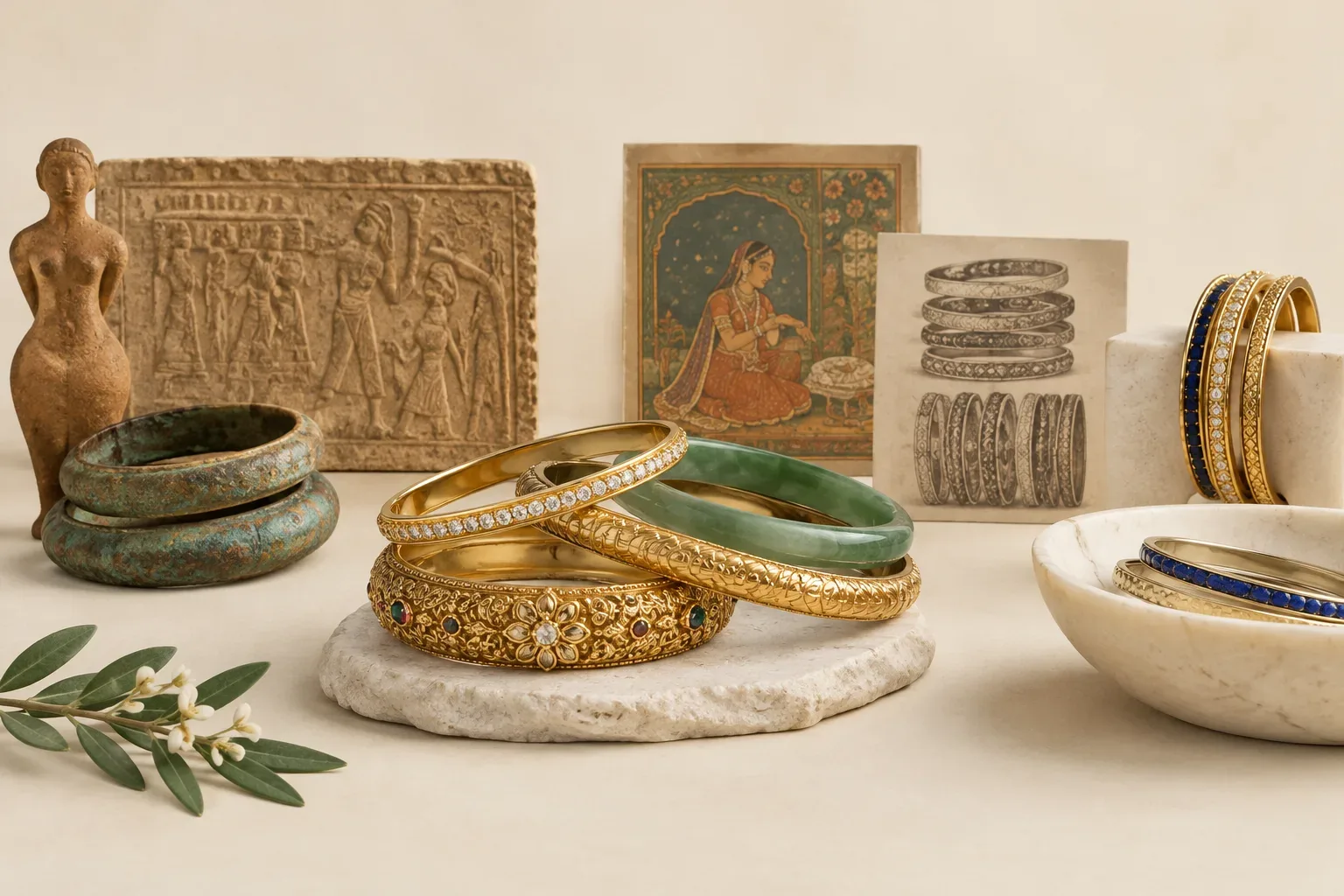
Museums and curators trace the social and stylistic history of bracelets and bangles across many cultures rather than attributing a single universal meaning to them. According to the Victoria and Albert Museum’s 'Bedazzled' exhibition, jewelry—including rigid bracelets—has changed social functions and meanings across time and place, from status and identity to decoration and memory.
For example, the V&A documents how metalworking and gem-setting techniques moved and evolved between regions, producing distinct forms of wrist adornment in South Asia, Europe, and the Mediterranean. South Asian cultures have long histories of wearing bangles in glass, lac, and metal as everyday and ceremonial dress, while in other regions metal bracelets served as indicators of status or were used in funerary contexts. The V&A materials emphasize change over time and local practice rather than a single, consistent symbolism.
Separating documented historical meanings from modern personal interpretations
Documented historical meanings appear in museum records and object histories: a bracelet might be cataloged as funerary, devotional, marital, or status-related based on archaeological context, provenance, and contemporaneous writings. The V&A’s exhibition work demonstrates how objects are interpreted using their archaeological and archival contexts.
Modern popular interpretations—such as assigning one specific symbolic meaning to a bangle across all cultures—are contemporary layers of meaning. Today, people often wear bangles as fashion, personal memory, or heritage statements. These personal interpretations are valid for the wearer but are different in nature from the documented meanings derived from historical evidence and primary contexts.
Materials, motifs, and gemstones: how they appear in bangles
Bangles are made in many materials that influence appearance, durability, and price. Traditional materials include gold, silver, copper alloys, glass, lacquer (lac), horn and bone, and modern composites. Metal bangles may be solid gold or gold-plated, cast or hammered, and can be hollow or filled—each construction affects weight and cost.
Gemstones and decorative motifs appear in bangles as cabochons, faceted stones, inlays, enamels, filigree work, and pave or channel settings. The Victoria and Albert Museum’s 'An A–Z of Gemstones' describes common uses of stones in historical and modern jewelry and helps identify how particular gems were valued and employed by makers. Gemstone choices—from common quartz varieties and glass imitations to sapphires and diamonds—affect not only style but price and required care.
Motifs such as floral engraving, geometric patterns, or religious symbols are rendered by chasing, engraving, enameling, or applied settings. Historically these motifs could indicate regional styles, workshop traditions, or the patron’s identity; in contemporary design the same motifs are often used for aesthetic or personal reasons rather than to communicate a fixed social status.
How to judge quality: hallmarks, construction, and finish
Start with metal identification. Look for hallmarks or stamps that indicate metal type and purity where applicable; reputable sellers will disclose karat or plating thickness. The V&A’s exhibition materials highlight that technique and finish are central to an object’s identity, and the presence of a clear hallmark or maker’s mark can be important for provenance and value.
Inspect construction and finish for durability: joints should be smooth, settings secure, and surfaces free of uneven solder marks. For hollow metal or filled pieces, check seams and weight. For glass or lac bangles, check for surface cracks or chips. If gemstones are present, ask whether they are natural, lab-grown, or imitations and whether they have been treated; the Federal Trade Commission advises sellers to disclose treatments, enhancements, and imitations when selling gemstones, diamonds, and pearls.
Price questions: what affects cost
Material weight, metal purity, gemstone quality, craftsmanship, maker reputation, and rarity all influence price. Solid gold bangles are priced primarily by metal weight and karat, while branded or antique pieces add premiums for provenance and condition. Intricate handwork such as filigree, enamel, or hand-set stones increases labor cost.
Treatments, imitations, and synthetic stones can greatly lower price compared with natural, untreated stones. Always ask for disclosure and, when possible, a gemological report for high-value purchases. The FTC guides buyers to request clear information about any treatments or imitations; this is especially important if a listed price appears significantly lower than market norms.
Sizing, fit, and wearability
A bangle’s fit matters more than many buyers expect. Rigid bangles that slide over the hand must be large enough to pass the widest part of the hand without forcing; cuff-style bangles may open slightly but should still fit the wrist without pinching. Measure both the hand and wrist and, where possible, try bangles on with any rings or stacked bracelets the wearer commonly uses.
Consider daily wear versus occasional use: heavier bangles or those with protruding settings may snag on clothing and will be less comfortable for everyday wear. Lightweight, smooth interior surfaces are more comfortable for prolonged use.
Care and maintenance
Care depends on materials. Solid precious metals are durable but still scratch; lacquer and painted surfaces need protection from chemicals and abrasion. Gemstones vary in toughness—some commonly used stones are softer and need more careful handling. The V&A’s gemstone guidance helps identify different stones and the care each requires. For long-term preservation, store bangles separately to avoid abrasion and remove them for strenuous work, swimming, or cleaning with harsh chemicals.
Respectful selection and gifting guidance
Be culturally sensitive when buying or gifting bangles that have specific ceremonial or community meanings. Ask about the recipient’s background and preferences rather than assuming a symbolic meaning. The V&A emphasizes local context and historical change; what is a rite-of-passage object in one place may be everyday jewelry in another.
When gifting across cultural lines, choose neutral designs that honor aesthetic preference without appropriating sacred symbols or misrepresenting provenance. If you intend to gift a culturally significant form—such as traditional sets used in wedding rites—consult the recipient or a knowledgeable person beforehand. Practical considerations matter too: choose an appropriate fit, include clear documentation of materials and care instructions, and, for higher-value pieces, provide or secure a certificate of authenticity or appraisal.
Final considerations
A responsible bangle purchase combines curiosity about historical contexts, careful evaluation of materials and maker disclosures, and respectful attention to the recipient’s identity and use. Use museum resources like the Victoria and Albert Museum to learn about historic styles and the Federal Trade Commission guidance to protect yourself from undisclosed treatments or imitations. That combination of evidence and practical checks will help you buy a bangle that is beautiful, well-made, and respectfully selected.
Frequently asked questions
How do I measure for a bangle?
Measure at the widest part of the hand for slip-on bangles: have the recipient make a loose fist and measure the circumference across the knuckles, or try the bangle on to ensure it passes over the hand without force. For cuff-style bangles, measure wrist circumference and consider how much opening the cuff provides; a jeweler can usually advise on small adjustments.
How can I tell if a bangle is real gold or gold-plated?
Look for hallmarks or karat stamps; solid gold is usually stamped with a karat mark (for example, 9K, 14K, 18K) while plated items may be marked 'GP,' 'GEP,' or 'plated.' Ask the seller for documentation and, for higher-value items, obtain a professional test or assay. Reputable sellers should disclose plating thickness and base metal if the item is not solid gold.
Should I worry about gemstone treatments or imitations?
Yes. The Federal Trade Commission requires sellers to disclose common treatments, enhancements, and imitations. Ask whether stones are natural, lab-grown, or imitations and whether they have been heat-treated, coated, or otherwise enhanced. For expensive purchases, request a gemological report or certificate.
Are there cultural rules about gifting bangles?
Cultural practices vary. Some communities use specific bangle types in marriage or coming-of-age rituals, so gifting such items without understanding the context can be insensitive. Ask about the recipient’s traditions and preferences and choose a neutral, well-made design if you are unsure.
How do I care for a bangle with enamel or lacquer?
Avoid exposure to harsh chemicals, prolonged water immersion, and abrasive surfaces. Store enamel and lacquered bangles separately to prevent scuffs, and clean gently with a soft, dry or slightly damp cloth. If the bangle is an heirloom, consult a conservator for specialist care advice.
Sources and further reading
- Bedazzled: A History of Jewellery — Victoria and Albert Museum
- An A-Z of Gemstones — Victoria and Albert Museum
- Buying Gemstones, Diamonds, and Pearls — Federal Trade Commission