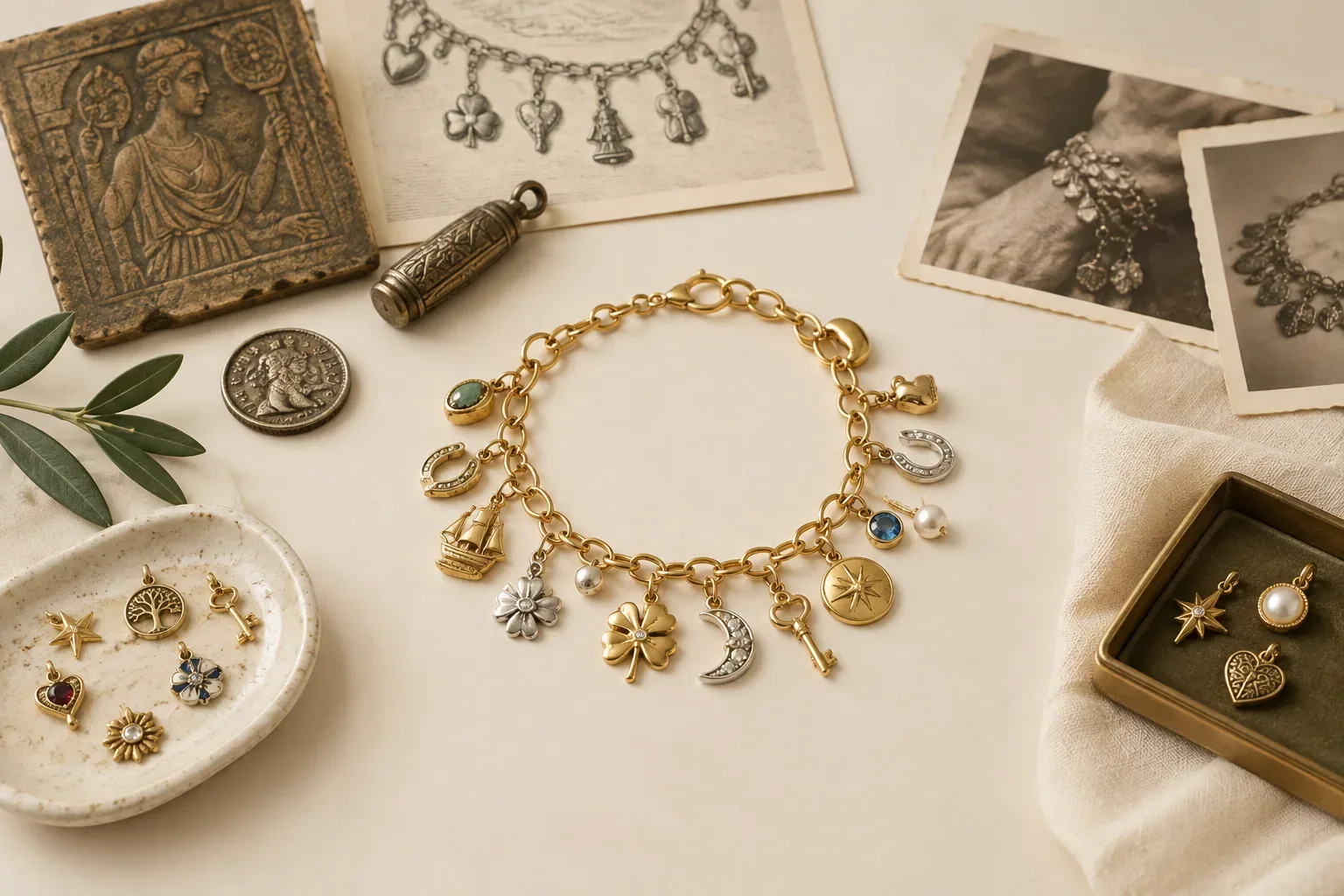
Meaning at a glance
This guide explains the documented history and changing contexts of charm bracelets as reported by museums, separates historical meanings from modern personal interpretations, describes how motifs and gemstones appear in jewelry, and gives practical tips for online photos, seller policies, and red flags when buying or gifting a charm bracelet.
What the historical evidence shows
Museums such as the Victoria and Albert Museum document that small amulets, pendants, and symbolic ornaments have been used as personal adornment and talismans across many cultures and periods, and that their social roles have changed over time. Curators describe how jewelry functions as both decoration and a marker of memory, status, identity, or belief in different historical contexts.
The V&A’s broad coverage of jewelry history highlights shifts in function and meaning rather than a single origin story: objects that we now call charms were at times protective amulets, at other times markers of mourning or social connections, and later became fashionable personal keepsakes. It is useful to read these documented contexts precisely because a motif’s historical use is often specific to a place and period rather than universal.
Documented historical meanings versus modern personal interpretations
Documented historical meanings are the roles that museums and primary sources identify with particular objects in their original contexts. For example, the V&A notes that many historic pendants and symbolic ornaments were used for memory, mourning, or protection, or as status symbols. These are contextual interpretations based on provenance, maker marks, archaeological context, and contemporary records.
Modern personal interpretations, by contrast, are the meanings wearers assign today. A charm that historically signified a particular social role might now be chosen because it matches a hobby, a birth month, or a sentimental story between friends. Both layers matter: historical documentation helps you understand cultural specificity and provenance, while contemporary meanings guide personal selection and gifting.
How motifs, gemstones, and traditions appear in charm jewelry
Charm motifs appear in many physical forms: small cast or stamped metal pendants attached to a chain, miniature lockets that open to hold a photograph or inscription, carved stones or cameos set into frames, and enamelled or painted miniatures. The overall construction of a charm bracelet — the type of chain, the spacing of jump rings, and the clasp design — affects durability and how charms move and display.
Gemstones are used in charms both as focal motifs and as small insets. The Victoria and Albert Museum’s A–Z of Gemstones explains the range of materials traditionally and currently used in jewelry, from common semiprecious stones to diamonds and cultured pearls, and notes how techniques such as cabochon cutting, faceting, inlay, and setting have shaped how gems appear on small-scale charms.
Techniques such as enamelling, goldsmithing, and stone carving determine texture and color, while materials like base metals with gold plating, sterling silver, and solid gold change weight and longevity. Understanding these technical choices helps when assessing photos and descriptions online: for example, plated surfaces show wear differently than solid metals, and small gem settings require secure prongs or bezels to resist loss.
Photos and documentation: what to ask for and why they matter
High-quality photos are your primary evidence when you cannot inspect a bracelet in person. Request multiple images: a full-length shot of the bracelet on a neutral background, close-ups of each charm (front and back), clear pictures of clasps and chain links, macro photos of any hallmarks or maker’s marks, and any damage or repair areas. Ask the seller to photograph the item next to a ruler or coin to confirm scale.
Documentation beyond photos matters as well. Request a written materials statement (metal type, gemstone IDs, any treatments such as heat or dye), provenance if available, and receipts or previous appraisals. For gemstones or precious metals, the Federal Trade Commission advises that sellers disclose treatments and whether gems are natural, lab-grown, or simulants, and provide appropriate terminology rather than ambiguous marketing language.
Policies, red flags, and verification steps
Before buying, check the seller’s return, repair, and shipping policies. Confirm whether return shipping is paid by buyer or seller and whether the seller offers insurance for high-value shipments. Acceptable policies typically include a clear return window, secure shipping with tracking, and at least a seller-stated approach to post-sale repairs.
Red flags include: unclear or inconsistent material descriptions; low-resolution or single-angle photos; lack of visible hallmarks or refusal to provide close-up images of marks; prices that are implausibly low for the stated metal or gemstone; sellers who resist answering questions about treatments or provenance; and absence of a reasonable return policy. If a seller claims a stone is natural without supporting documentation for a high-value gem, treat that as a reason to request an independent appraisal.
Practical selection and gifting guidance
Match the bracelet’s physical features to the wearer’s lifestyle. For daily wear you will usually want a durable chain, a secure clasp, solid metals or well-applied plating, and tightly set stones. For sentimental gifts, consider personalization options such as engraved tags, birthstones, or a locket charm to hold a tiny photo or inscription.
Respect cultural and religious meanings carefully. If a charm uses a symbol tied to a particular faith or community, research its documented use and consider whether gifting it could be inappropriate or offensive. The historical record in museums can help you identify culturally specific meanings; when in doubt, ask the recipient if they are comfortable with that symbol.
For children, prioritize safety: choose charms with smooth edges, secure attachment points, and clasps designed to release under pressure if intended to prevent strangulation. For higher-value pieces, plan for secure shipping and consider asking the seller about insured delivery or certified appraisal.
After purchase: checking and care
When your bracelet arrives, compare it carefully with the listing photos, verify hallmarks against the seller’s description, and inspect stone settings and enamel for chips or loss. Photograph the piece on arrival and keep a copy of the shipping and payment records in case of a dispute.
For care, follow material-appropriate guidance: keep plated finishes away from chemicals and abrasion, clean gemstones as recommended by the V&A’s general guidance on gem materials when in doubt, and store charm bracelets in a way that limits tangling and friction between charms. Ask the seller about recommended cleaning and whether they offer long-term repair services.
Putting it together: a respectful, evidence-led purchase
Combine museum-backed context and modern consumer protections: use historical sources such as the Victoria and Albert Museum to understand the provenance and cultural background of motifs, and rely on current consumer guidance like the Federal Trade Commission’s notices about disclosure of treatments and imitations when assessing material claims. This dual approach helps you make purchases that are informed, respectful, and practically suitable for the recipient.
If a piece raises questions you cannot resolve from photos and seller answers, consider seeking an independent appraisal or choosing a seller with transparent policies and verifiable provenance. Prioritizing clarity, documentation, and respect for cultural meaning will reduce risk and make your charm bracelet purchase more meaningful.
Frequently asked questions
What photos should I ask a seller to provide before buying a charm bracelet online?
Ask for high-resolution images showing the full bracelet, close-ups of each charm from front and back, clear shots of clasps and chain links, macro photos of any hallmarks or maker’s marks, images of any damage or repairs, and a scale reference such as a ruler or coin.
How can I verify whether a gemstone in a charm is natural, treated, or a simulant?
Request a written materials statement and ask whether the seller has a certificate or lab report for high-value stones. The Federal Trade Commission advises sellers to disclose treatments and whether gems are natural, lab-grown, or simulants. If in doubt, consider an independent gemological appraisal.
What seller policies matter most for online charm bracelet purchases?
Key policies are a clear return window, transparency about who pays for return shipping, secure and insured shipping options for higher-value items, and an explicit statement about repairs or after-sale services. Avoid purchases from sellers with no reasonable returns or no documented shipping protections.
Are there red flags that suggest a listing might be misleading or fraudulent?
Yes. Red flags include low-resolution or single-angle photos, inconsistent or vague material descriptions, missing hallmarks, prices that seem too good to be true for the stated metal or gemstone, sellers who refuse to answer basic provenance or treatment questions, and absent return policies.
How should I approach charms that have religious or culturally specific symbols as a gift?
Research the documented cultural meaning of the symbol—museums and respected reference works can help—and consider whether the recipient will welcome the symbol. When unsure, ask the recipient or select a more neutral motif to avoid causing offense.
Sources and further reading
- Bedazzled: A History of Jewellery — Victoria and Albert Museum
- An A-Z of Gemstones — Victoria and Albert Museum
- Buying Gemstones, Diamonds, and Pearls — Federal Trade Commission