Meaning at a glance
Explain the documented history and changing contexts of the locket quality checklist motif, separate cultural or religious evidence from later popular interpretations, and give practical guidance for choosing and wearing the motif in modern jewelry.
Why a locket quality checklist matters
A locket combines mechanical parts, decorative finishes, and emotional purpose; poor assembly or inappropriate materials can make a treasured piece uncomfortable to wear, prone to damage, or impossible to repair without losing its meaning. A concise checklist helps you assess construction (how it opens, closes and holds contents), comfort (weight, edges and balance), and durability (materials, setting methods and likelihood of wear) before you buy, wear, or gift a locket.
Historical evidence: what museums document and where
Museum scholarship traces the locket as a form of small, personal jewelry that shifted in use and meaning over time. The Victoria and Albert Museum presents lockets and related portable portrait miniatures as persistent elements of jewelry practice, noting changing social contexts and decorative techniques across periods and cultures (Victoria and Albert Museum). The V&A's surveys and exhibitions place particular emphasis on how lockets functioned as carriers of images, hair, and symbolic decoration, and how those uses were shaped by social rituals such as mourning and remembrance (Victoria and Albert Museum).
Use of gemstones, pearls and enamels in lockets is likewise documented in museum reference material. The V&A's A–Z of Gemstones provides historical context for how specific stones were used in decorative jewelry, how their perceived properties evolved, and how cutting, setting and treatments affect appearance and meaning (Victoria and Albert Museum). For consumer protection around materials, the U.S. Federal Trade Commission provides guidance on disclosure of treatments, synthetics and plating—information relevant when assessing the long‑term durability or resale value of a locket (Federal Trade Commission).
Documented historical meanings versus modern personal interpretation
Documented meanings are those that scholars and museums have recorded from period sources, inventories and makers’ practices. For example, museums record that lockets often contained portrait miniatures, woven hair, or memorial inscriptions and that specific styles were associated with mourning rituals in certain European contexts (Victoria and Albert Museum). These are historical usages recorded by curators rather than universal or eternal meanings.
Modern personal interpretations—how an individual chooses to wear a locket today—are more varied and subjective. Contemporary wearers might repurpose a vintage mourning locket as a keepsake for a living relative, use a locket as a modern photo container, or select motifs for aesthetic or personal symbolic reasons. These contemporary uses are valid but distinct from documented historical practices; when selecting or gifting a locket, distinguish historically recorded uses (museum-documented) from the recipient’s likely personal interpretation.
How motifs, gemstones and traditions appear in lockets
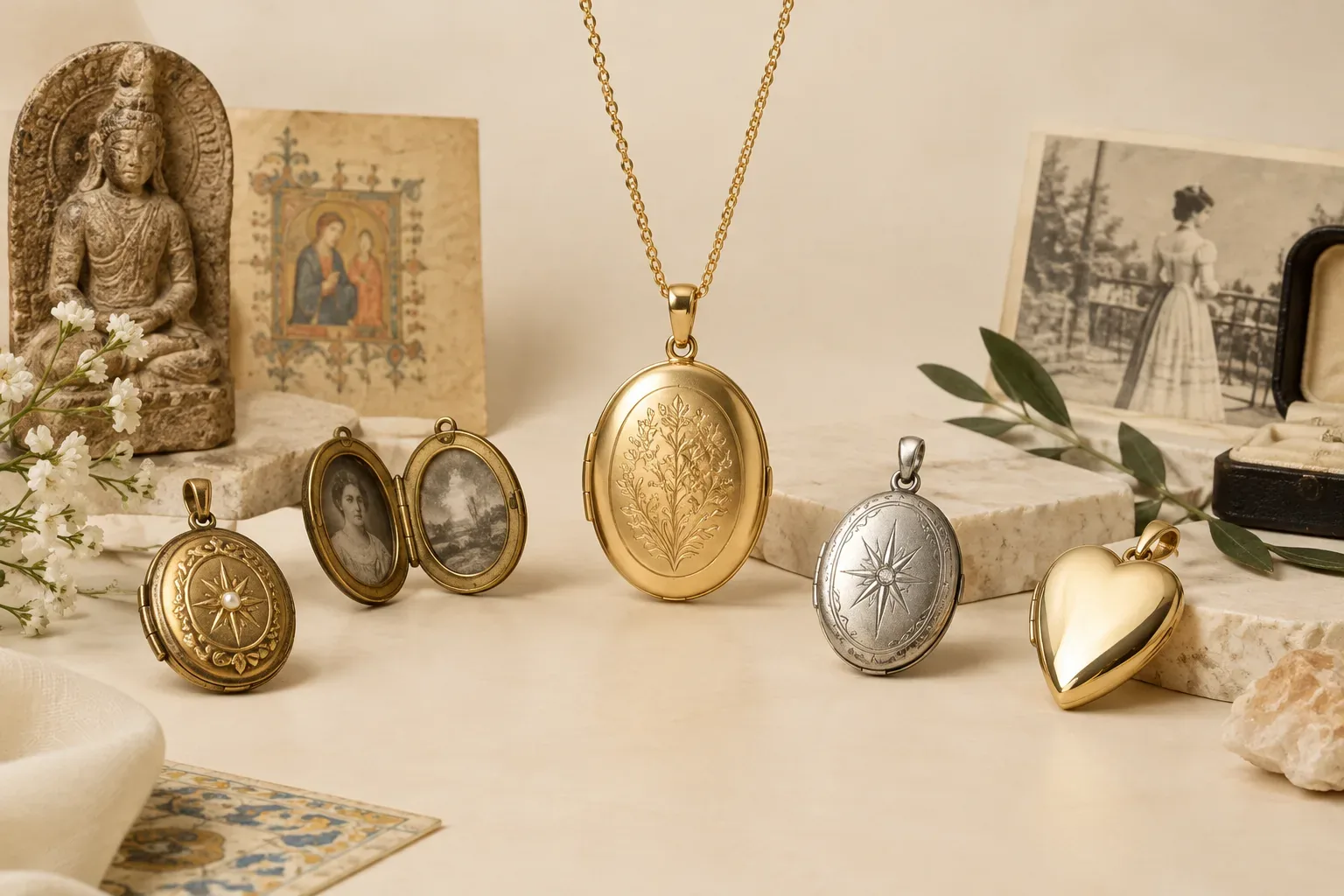
Motifs in lockets historically include portrait miniatures, clasped hands, locks of hair, mourning symbols such as black enamel or sombre inscriptions, and later decorative themes drawn from nature or religious iconography. Museums record these patterns as recurring design languages that carried social meaning in their periods (Victoria and Albert Museum).
Gemstones and pearls appear in lockets both as decorative accents and as focal points. The V&A’s A–Z of Gemstones explains how certain stones were historically prized for color, symbolic associations, or rarity, and how settings evolved to protect fragile stones in small, wearable objects (Victoria and Albert Museum). In modern pieces, gemstones may be natural, treated, or synthetic; the FTC recommends transparency from sellers about treatments, plating and imitations because those factors affect durability and value (Federal Trade Commission).
Traditions such as wearing a locket for mourning, to carry a portrait, or as a sentimental charm have persisted but changed in social meaning. Museums show that the social rituals surrounding lockets differed by time and place; assume that historical ritual meanings are culturally specific rather than universal.
Checklist: Construction (what to inspect)
Hinge and catch: Open and close the locket several times. The hinge should move smoothly without wobble, and the catch should secure firmly without needing excessive force. Loose, stiff, or misaligned action is a sign of weak construction or wear and may require future repair.
Joints and soldering: Examine the interior and exterior seams. Clean, even solder lines and no obvious gaps indicate careful assembly. Visible, crude solder blobs or open seams mean the piece may be prone to breakage at stress points.
Metal and plating: Know the base metal and whether the surface is solid precious metal or plated. Solid gold, sterling silver or well‑marked alloys generally age differently from plated base metal. Ask the seller about plating thickness and expected wear; the FTC recommends disclosure of treatments and plating so buyers understand longevity (Federal Trade Commission).
Bail and chain attachment: Check how the locket attaches to a chain. A small or rigid bail can pinch hair or restrict the way the pendant swings. If the bail is soldered securely and proportionate to the chain style, the locket will sit and move more comfortably.
Interior fittings: If the locket is designed to hold a photo, look at how the photo is set—whether there is a clear window, a bezel, or an adhesive mount. For lockets intended to hold hair or fragile items, a protective lining or a recessed compartment reduces abrasion to contents.
Gemstone settings and enamel: Inspect bezel and prong settings for evenness and secure seat. Check enamel for fine crazing, missing chips or unstable areas. Poorly set stones or unstable enamel increase risk of loss during wear.
Checklist: Comfort and wearability
Weight and balance: Hold the locket at the chain and wear it briefly to test balance. A heavy locket on a fine chain will pull and may open the chain clasp; a locket that tilts or spins frequently can be uncomfortable and wear the chain faster.
Edges and thickness: Smooth, rounded edges are more comfortable next to skin or under clothing than sharp or thick profiles. Check whether the locket rests flat against the chest or has a profile that interferes with clothing or movement.
Chain compatibility: Ensure the chain and clasp type match the locket’s weight. Stronger chains with secure clasps reduce the chance of accidental loss. Consider whether the receiver prefers a short or long length and whether clasp type is easy for them to open.
Hypoallergenic concerns: If the wearer has metal sensitivities, prefer lockets stamped with metal purity (for example, marks for sterling silver or gold karat where available) and ask about base metals under any plating to reduce allergic reactions.
Checklist: Durability and care
Assess likely wear: Identify which finishes are decorative and which protect structure. High‑contact finishes such as plating will show wear sooner than solid precious metal. Ask about gemstone treatments and whether stones are glued or mechanically set; treated or glued stones are more vulnerable to heat and cleaning methods (Federal Trade Commission).
Cleaning and maintenance needs: Some materials—pearls, certain enamel finishes and fragile stones—require gentle cleaning and specific storage. If the locket contains an organic insert or delicate enamel, factor in periodic conservation or careful cleaning, and consider professional servicing for hinge lubrication or stone tightening.
Repairability: Simple construction with accessible seams and a removable bail is easier to repair. Heavily ornamented pieces with hard-to-access settings may carry higher repair costs. If the locket has sentimental value, confirm that a reputable jeweler can perform restorations or re‑hinging without destroying original details.
Practical and respectful selection or gifting guidance
Match the piece to the wearer’s life and taste. A heavy, ornate mourning‑style locket documented in museum collections may be historically significant but impractical for daily wear by someone with an active lifestyle. Consider whether the recipient prefers discreet pieces or statement jewelry, and whether they will keep the locket close to the skin or wear it over clothing.
Research provenance and be transparent about condition. If buying vintage or antique lockets, provide accurate details about age, alterations, and any conservation work. Museums show that historical meanings are context-dependent; if the locket has mourning symbolism or cultural markers, mention that history so the recipient can decide how they feel about the association (Victoria and Albert Museum).
Respect cultural and religious symbols. If a locket contains specific iconography associated with a community or ritual, learn about that meaning before gifting. The historical record in museum collections can help identify culturally specific motifs; if uncertain, consult reliable sources or the recipient.
Personalize thoughtfully. Engraving a name or date, inserting a photocopy image or a small memento can create modern significance without misrepresenting historical context. When adapting older lockets, avoid irreversible modifications that would destroy provenance or museum‑worthy features.
Summary
A locket quality checklist focused on construction, comfort and durability helps you evaluate both the physical readiness of an object for everyday wear and the cultural history behind its motifs. Use museum documentation to understand historically recorded meanings and the FTC’s consumer guidance to ask about materials and treatments. Combine that evidence with careful inspection and respectful consideration of the recipient’s preferences to choose a locket that will be worn, treasured and understood.
Frequently asked questions
How can I tell if a locket hinge is high quality?
A high‑quality hinge moves smoothly without side‑to‑side play and secures the two halves so they align precisely. Test by opening and closing the locket several times; listen for scraping and check that the catch engages firmly. If the hinge feels loose or the locket doesn’t sit flush, plan for possible repair.
Is gold‑plated acceptable or should I choose solid gold?
Gold‑plated lockets can be attractive and economical, but plating will wear over time, especially on high‑contact areas. Solid precious metal (marked for purity) generally offers greater longevity and easier repair. Ask the seller to disclose plating type and thickness, following best practices for transparency about treatments (Federal Trade Commission).
What care do delicate finishes like enamel or pearls require?
Enamel and pearls are sensitive to abrasion, chemicals and heat. Avoid ultrasonic cleaners and harsh chemicals; clean gently with a soft, dry or slightly damp cloth. Store lockets with delicate finishes separately to prevent scratching, and consult a jeweler for any structural or conservation concerns.
Should I be concerned about historical symbolism when gifting an antique locket?
Yes; some motifs have specific historical meanings in certain cultures or periods. Museum records can help identify if a design is associated with mourning or a particular ritual (Victoria and Albert Museum). If a piece bears culturally specific iconography, mention that history to the recipient so they can decide how they feel about it.
Can lockets with gemstones be worn every day?
It depends on the stone, setting and activity level. Harder stones in secure mechanical settings are better suited to daily wear. Softer stones, glued settings or fragile enamel may require more cautious wear. Ask sellers about treatments and setting methods because those factors affect durability (Federal Trade Commission).
Sources and further reading
- Bedazzled: A History of Jewellery — Victoria and Albert Museum
- An A-Z of Gemstones — Victoria and Albert Museum
- Buying Gemstones, Diamonds, and Pearls — Federal Trade Commission