Meaning at a glance
This locket online shopping guide explains the documented history and changing contexts of the locket, separates cultural and historical evidence from modern personal meanings, and gives clear advice on photos, seller policies, and red flags to watch for when buying a locket online.
Documented historical evidence and cultural contexts
Museum documentation shows that lockets and small portrait or memory containers have appeared in multiple European contexts as part of changing jewellery practices rather than as a single universal symbol. The Victoria and Albert Museum frames the story of jewellery as one of shifting social uses and meanings over time, including personal portrait miniatures, tokens of affection, and accessories connected with mourning and memory.
In European contexts from the Renaissance onward, small hinged cases were used to carry portrait miniatures or written tokens and became integrated into necklaces, brooches, and bracelets; the V&A’s historical narrative locates these objects within broader changes in how people used jewellery to display identity and connection. During later periods, notably in the nineteenth century, jewellery associated with mourning or remembrance grew in popularity as part of broader social practices around grief and commemoration, a development documented by museum collections and exhibitions that trace the social contexts of jewellery use.
Outside Europe, forms that enclose personal or sacred items exist in varied cultural settings, but the specific shape and social meanings of the Western-style locket described in many online catalogues are best understood in relation to the documented European tradition recorded by museum scholarship. Treat each cultural reference carefully and check whether a maker or seller is describing an object’s provenance or using a generalized label.
Separate documented historical meanings from modern personal interpretations
Documented meanings are those observed or recorded in historical sources and museum documentation. For example, museums identify portrait-containing lockets as part of personal display and identity practices, and they record the use of lockets in mourning customs in particular periods. These are contextual claims about how objects were used and understood within specific societies and times, and they should be cited as such.
Modern personal interpretations, by contrast, are contemporary wearers’ and sellers’ attributions of meaning. Today a buyer might choose a heart-shaped locket because it symbolizes romantic love for them, or a family member might gift a locket as a private memorial. These are valid personal meanings but are not the same as historically documented cultural practices. When sellers market an object with a historical claim, ask for provenance or museum references; when friends or families use a locket to express individual feeling, treat that as a living, personal meaning.
How the motif, gemstones, and traditions appear in lockets
Motifs: Lockets commonly include motifs such as portrait frames, hearts, crosses, or simple geometric decoration, each integrated in different ways. The V&A’s historical coverage explains how form and decoration reflect social and aesthetic trends; for example, a compartment for a miniature or a lock of hair signals an object designed for intimate memory-keeping rather than purely display.
Gemstones and materials: Gemstones are often used as decorative bezels, in-set accents, or seals on lockets. The Victoria and Albert Museum’s A–Z of Gemstones provides context for how particular stones were identified and valued across periods, and how they were used in settings. Historically, gem choice and metalwork were influenced by fashion, availability, and symbolic conventions in particular places and times. In modern retail, gemstones may be natural, treated, synthetic, or simulated, and the visual role is usually as accent or framing rather than as the primary functional element of the locket.
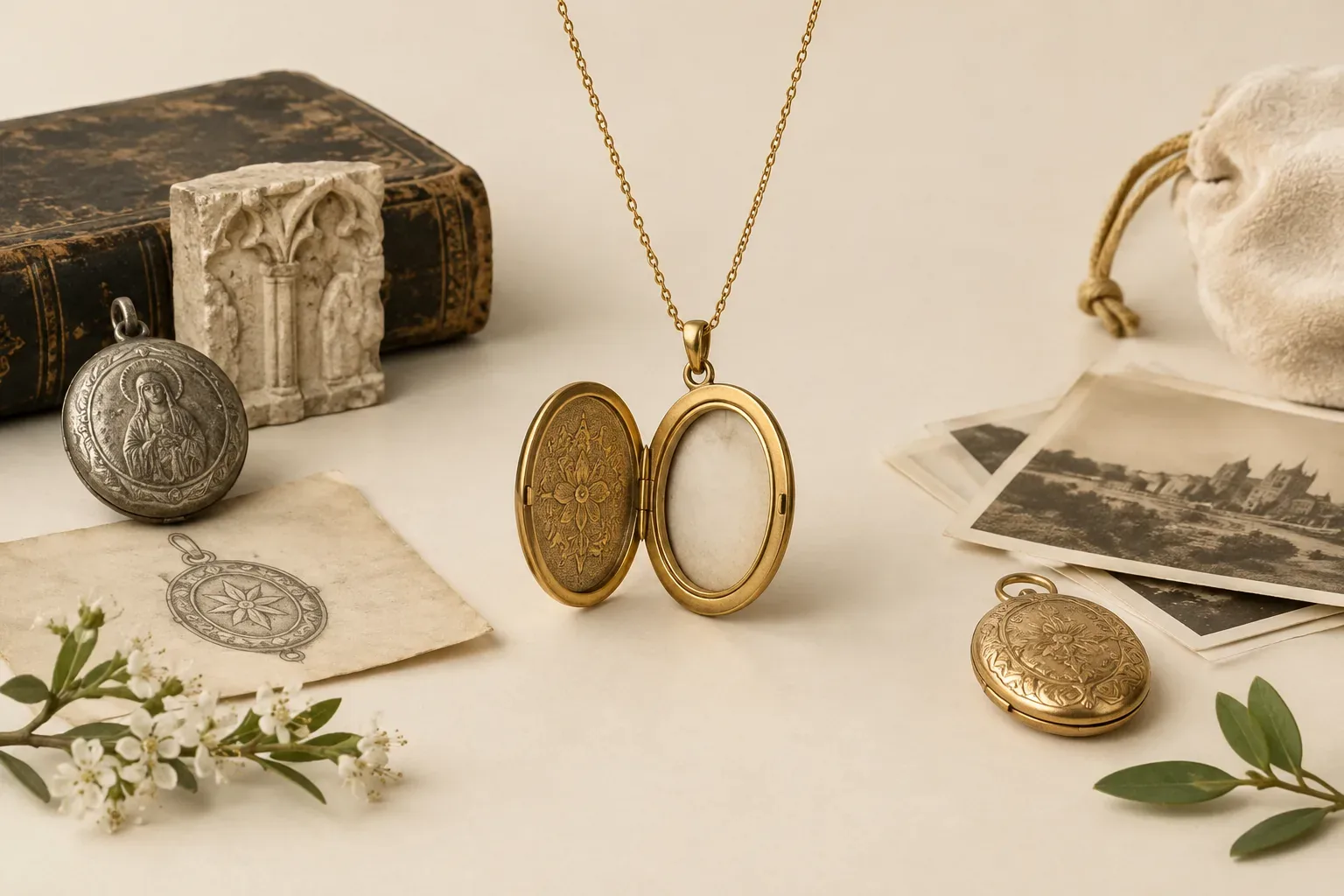
Construction and traditions: Lockets are made with a hinged compartment, a bezel or frame on the front, and often a small loop for a chain. The internal space might hold a painted miniature, a photograph, a lock of hair, or an inscription. Historical traditions emphasized craftsmanship, sometimes including enamel, inlay, or micro-portraiture; contemporary makers may replicate these features, reinterpret them, or produce them at scale. Recognize the technical difference between hand-made historic techniques and modern manufacturing methods when assessing authenticity and value.
Photos: what to request and inspect
Product photos are your primary tool when buying a locket online. Request multiple, high-resolution images that show the front, back, side profile, inside compartment, hinge area, any hallmarks or maker’s marks, and the locket on a scale reference such as a ruler or coin. Ask for close-ups of any gemstones, enamel work, or repairs.
Inspect the hinge and compartment photos carefully for signs of repair, gap wear, or soldering that may affect value or longevity. Verify that hallmarks are clear in photos and match the metal claim in the listing. If a seller uses stock images or photographs that appear inconsistent with the item you receive in past transaction photos, treat this as a red flag and request original, dated photos before purchase.
Policies: what must be clear before you buy
Return and refund policy: The seller should state a return window, condition requirements for returns, who pays return shipping, and how refunds are processed. A generous, explicit return policy reduces risk when buying vintage or fragile items.
Authenticity and treatment disclosure: The U.S. Federal Trade Commission advises that sellers disclose material treatments and imitations of gemstones and other materials. If a listing claims a gemstone is natural, ask for written confirmation of any known treatments. For higher-value gemstones or metals, request a professional appraisal or a lab report and verify that any promised report will be provided at the time of sale.
Shipping, insurance, and packaging: Confirm how the item will be shipped, whether tracking and insurance are included, and what packaging will be used to protect a delicate hinge or enamel. For international purchases, check customs duties and import restrictions in your country before buying.
Red flags to watch for
Vague or absent photos, vague measurements, and stock images without a promise to provide current photos are immediate red flags. Other serious warnings include no clearly stated return policy, inconsistent or missing hallmark or material information, and seller evasiveness when asked about provenance or condition.
Pricing that seems too good to be true for an item described as antique or museum-quality often is; confirm the maker’s mark and condition and seek independent verification if price and description are out of alignment. Sellers who refuse to disclose treatment status for gemstones or to supply close-up hallmark photos should be treated with caution. Finally, watch for listings that blur cultural provenance or appropriateness; sellers should be able to substantiate claims about cultural origin and not use cultural labels casually.
Practical and respectful selection and gifting guidance
Consider purpose and durability first. If the locket is intended for daily wear, choose a sturdy metal with a secure clasp and a solid hinge, and check the chain strength. For fragile antiques or enamel work, reserve daily wear for special occasions and ask about conservation or repair history.
If the locket will hold a photograph or small keepsake, confirm internal dimensions and whether a paper insert, mount, or glass is included. For engraved messages, use wording that respects the recipient’s privacy and cultural background; be cautious when using imagery or symbols with demonstrated cultural or religious significance unless you have clear permission or understanding.
When gifting a memorial locket, be sensitive to grief timing and the recipient’s preferences. A contemporary locket gifted as a personal token of affection need not claim historic mourning meanings, but you should be clear whether you intend a sentimental or commemorative purpose so the recipient can choose how to wear it.
Finally, if you value historical authenticity, request provenance and condition documentation and, where appropriate, a condition report from a qualified conservator or appraiser. If you prioritize aesthetic or sentimental value over strict historic authenticity, be explicit about that choice in your purchasing criteria.
Balancing historic context with personal meaning
Museum scholarship helps us understand how lockets functioned in particular societies and periods, but modern wearers bring new meanings and uses. Use historical information to inform respectful choices about motifs and provenance, and rely on transparent seller policies and good photos to protect your purchase.
For more on how to research jewelry symbols and the longer history of lockets, see related guides and museum resources that document jewellery history and gemstones. If you want practical next steps, request close-up, dated photos; confirm hallmarking and treatment disclosure; and buy from sellers with clear return and insurance policies.
Frequently asked questions
What photos should I request before buying a locket online?
Ask for high-resolution images of the front, back, side profile, inside compartment, hinge area, any hallmarks or maker’s marks, and close-ups of gemstones or enamel. Request a photo with a scale reference, such as a ruler or a coin, and ask for dated photos if the item is vintage to ensure current condition.
How can I verify a gemstone or metal claim in the listing?
Request written disclosure of any known treatments and ask for a lab report or appraisal for higher-value items. The Federal Trade Commission recommends sellers disclose material treatments and imitations, so insist on this information before you buy and consider an independent appraisal if the value warrants it.
What return and shipping policies are important for lockets?
Look for a clear return window, information on who covers return shipping, and the seller’s refund process. Confirm whether insurance and tracking are included in shipping and check international customs and import duties before purchasing from overseas sellers.
Are there red flags that mean I should not buy?
Yes. Major red flags include vague or missing photos, no stated return policy, unclear material claims, sellers who refuse to provide close-up photos of hallmarks, and prices that seem too low for an item advertised as antique or museum-quality.
How should I approach gifting a memorial or culturally significant locket?
Be sensitive to the recipient’s timing and cultural background, and confirm whether the symbol or tradition is appropriate. If the locket references a specific cultural or religious practice, ensure that provenance and context are correct and that the recipient welcomes such a gesture.
Sources and further reading
- Bedazzled: A History of Jewellery — Victoria and Albert Museum
- An A-Z of Gemstones — Victoria and Albert Museum
- Buying Gemstones, Diamonds, and Pearls — Federal Trade Commission