Meaning at a glance
This locket buying guide explains the documented history and changing contexts of lockets (citing museum research), separates cultural and historical meanings from modern personal interpretations, and gives practical guidance for choosing materials, assessing quality, and asking price and treatment questions when buying or gifting a locket.
Why documented history matters when buying a locket
Lockets carry meanings that have shifted over time and across cultures; knowing which layer you encounter helps separate a historically documented purpose from later or personal interpretations. The Victoria and Albert Museum frames jewellery as social and cultural material, noting how forms, techniques and uses change with fashion, technology and social practice. A locket described as a Victorian mourning piece may therefore have a different function and expected condition than a contemporary sentimental pendant, and that difference affects conservation, value and how you should care for or gift it.
What museums document about lockets: cultures and periods
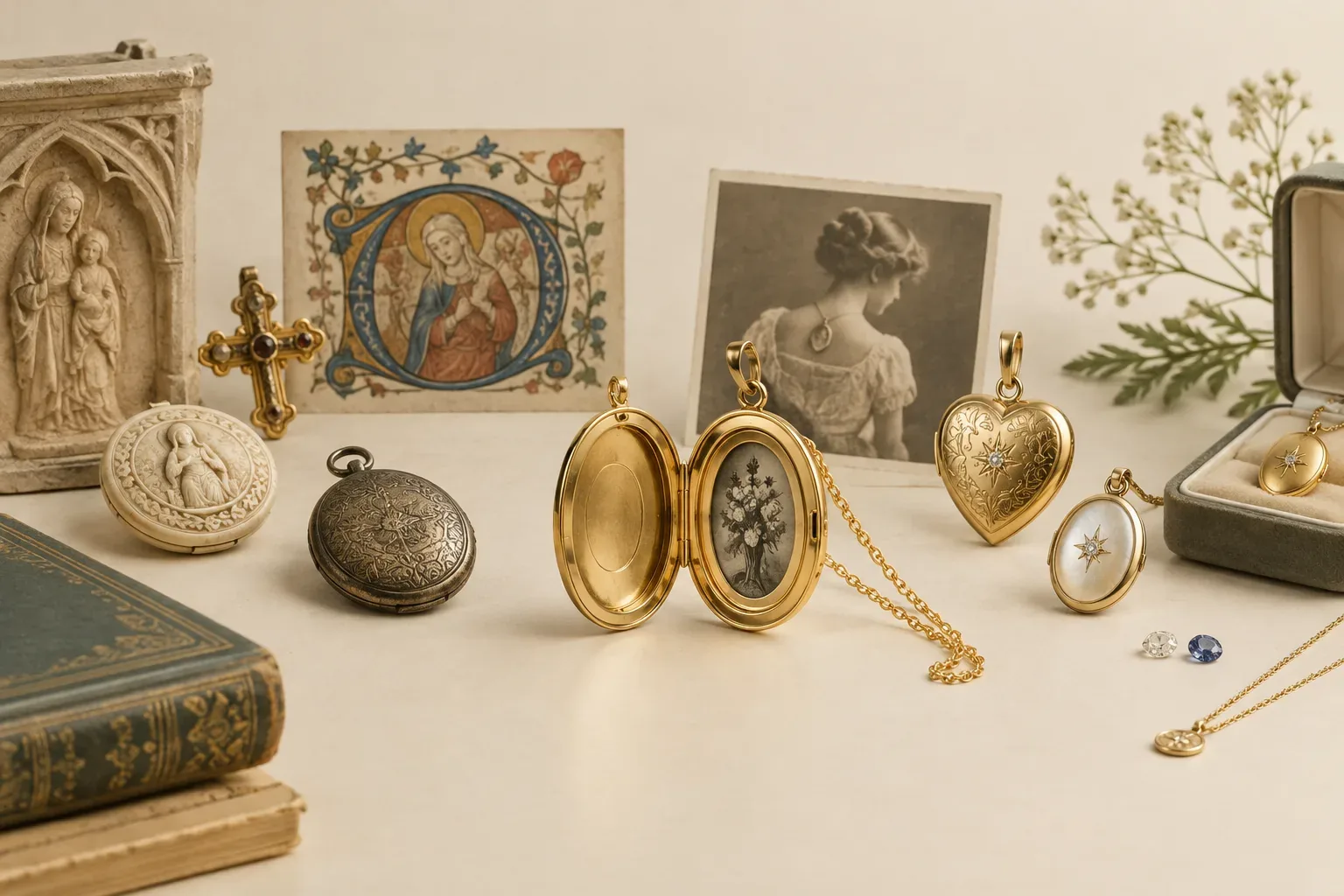
Museum surveys of jewellery identify several documented uses and moments where lockets were especially prominent. The V&A’s historical overview shows that small enclosed pendants were used in Europe from the early modern period as containers for miniatures, devotional images, or keepsakes, and that techniques such as enamel and miniature painting were important in these contexts. During the nineteenth century in Britain and parts of Europe, the locket became a widely used vessel for portrait miniatures and, later, hair mementos associated with mourning; the museum explains this as part of changing social practices around remembrance and sentiment.
Later approaches—twentieth century and contemporary—tend to emphasize sentimental and decorative use rather than strictly memorial functions, a development the V&A and other curatorial narratives identify as part of jewellery’s broader social evolution. These attributions come from descriptive museum scholarship and object interpretation rather than a single universal meaning, so each locket should be considered on its documented evidence and provenance.
Separating documented historical meanings from modern personal interpretations
Documented historical meanings are those established by object records, provenance, makers’ marks, and comparative museum research. For example, a nineteenth‑century locket containing woven hair with maker’s marks and period wear is reasonably interpreted within the Victorian mourning tradition, as described by museum collections. Modern personal interpretations—such as thinking a heart-shaped locket always symbolizes romantic love for every wearer—are contemporary readings that may reflect present fashions or individual sentiment rather than established historical use.
When assessing a locket, look for evidence: is there a maker’s mark or hallmark that can date and locate the piece? Does the design match documented types in museum catalogs? If provenance or documentation is absent, treat historical claims cautiously and focus on objective material information (metal content, construction, condition) and the personal meaning it may have for the wearer.
How motifs, gemstones, and traditions appear in locket jewelry
Motifs commonly found in lockets include portrait miniatures, hair compartments, engraved initials, hearts, flowers and symbolic shapes adapted across eras. Museums record that portrait miniatures were typically small painted images set inside lockets, while later mourning lockets often included a glass-covered compartment for a lock of hair. These motifs are visible on the exterior as engravings, enamel scenes or applied decoration and inside as compartments or frames.
Gemstones in lockets range from diamonds or seed pearls used as decorative highlights around a frame to colored stones set into the exterior. The V&A’s gemstone introductions explain that individual stones carry long histories of use and craftsmanship; in lockets they are generally ornamental rather than ritual objects, but their presence affects value and care. Be aware that stones may be mounted, glued, or set differently in historic versus modern pieces, and that treatments or imitations are possible, which consumer authorities advise sellers must disclose.
Materials and quality: how to assess what a locket is made of
Start with metal: look for hallmarks and metal stamps indicating gold, silver or platinum content and maker marks that can help date the piece. Solid precious metals will be stamped (for example, with standard marks in many jurisdictions) while plated and filled metals often bear different marks or none at all. Examine construction: a well-made locket has secure hinges, a properly aligned closure, and neatly finished interiors and edges; poor fit and visible glue can indicate lower quality.
Gemstones should be examined for secure settings and consistent color and cut. The Victoria and Albert Museum’s resources on gemstones provide historical context for common gems, but the Federal Trade Commission’s guidance is essential for buyers: the FTC requires disclosure of treatments, synthetics and imitations. Ask sellers explicitly whether stones are natural, treated, synthetic or simulants, and request documentation when available. For antique lockets, expect period repair work; good sellers will note restorations and any replaced parts.
Price questions: what affects a locket’s value
Price reflects metal content and purity, gemstone type and quality, craftsmanship, condition, maker reputation, provenance, and whether the piece is new, vintage or antique. Hand-painted miniatures, high-quality enamel, fine hallmarks, or a notable maker will raise value; similarly, intact original mechanisms and minimal restoration are favorable. Conversely, missing interior fittings, loose stones, heavy wear or non-original replacements reduce market value.
Because museum and dealer documentation can raise buyer confidence, provenance and condition reports influence price. The FTC’s materials guidance also matters here: undisclosed treatments or imitations can change perceived value, so asking about disclosure and obtaining receipts or certificates will protect you and help justify price differences.
Practical, respectful selection and gifting guidance
Choose a locket for its documented appropriateness to the wearer’s tastes and the occasion. If you intend a mourning or commemorative tone, check whether the piece’s design and materials historically align with that function; if the recipient prefers contemporary sentiment, a modern locket in a durable metal with a secure compartment for photos may be better. Respect cultural and personal differences: a motif meaningful in one community may be neutral or unfamiliar in another, so ask gently or select a neutral design if unsure.
When gifting, include practical details: if the locket contains fragile elements, mention care instructions and the nature of any historic materials. For valuable or antique pieces, consider recommending professional appraisal and insurance. For engraved or personalized lockets, think about permanence: engravings are effectively permanent, while removable inserts allow changing the personalization later.
Questions to ask sellers and steps before purchase
Ask about metal content and hallmarks, gemstone origin and treatments, provenance and any documented history, condition and restorations, and whether the piece has been appraised. Request close photographs of hinges, interior compartments and hallmarks, and ask for written confirmation of any claims about antinquity or maker. For gemstones, ask whether there are certificates or lab reports; according to the Federal Trade Commission, sellers should disclose treatments, synthetics and imitations.
If buying in person, inspect hinge operation and closure, test for loose settings, and ask to see the piece under magnification or bright light. For online purchases, buy from reputable dealers who provide clear return policies, documentation and condition reports. For high-value items, obtain an independent appraisal and consider having the item examined by a conservator if it is very old or delicate.
Care, cleaning and conservation basics
Care depends on materials: solid gold and platinum tolerate gentle cleaning better than some antiques with fragile enamel or painted miniatures. For lockets with painted interiors or hairwork, avoid submerging in water and consult a conservator for cleaning. For common maintenance of metal and stones, use non‑abrasive cloths and mild solutions recommended for the specific metal; when in doubt, ask a professional jeweler.
If you acquire a vintage or antique locket, store it in a stable, dry environment away from direct sunlight and avoid perfume or chemical exposure that can damage delicate surfaces. Document the condition at purchase with photographs so you have a reference for future conservation or insurance claims.
Where to read more and related guides
For broader context on jewellery history consult museum resources like the Victoria and Albert Museum’s exhibition and articles on jewellery and gemstones. For consumer protection and requirements around disclosure of gemstone treatments and imitations, refer to guidance from the Federal Trade Commission. For related practical guides on meaningful jewelry and the history of lockets on this site, see our parent and related guides listed below.
Frequently asked questions
How can I tell if a locket is real gold or gold plated?
Look for hallmarks or stamps indicating metal purity, ask the seller for documentation, and have a reputable jeweler test the metal if needed; sellers should disclose plating versus solid metal.
Do sellers have to disclose gemstone treatments?
Yes. The Federal Trade Commission advises that sellers must disclose common treatments, synthetics and imitations, so ask for written confirmation or lab reports when stone origin or treatment affects value.
Is a heart-shaped locket always a romantic symbol?
No. While heart shapes are often read as romantic today, motifs have different meanings in time and place; documented historical use may differ, and personal interpretation matters most for the wearer.
Can I put a photograph inside any locket?
Most lockets are designed to hold a small photo, but check interior dimensions and whether there is an original compartment or frame; for fragile antique interiors, avoid direct contact and consult a conservator.
What should I ask about condition when buying a vintage locket?
Ask about hinge and clasp operation, any restorations or replaced parts, condition of interior compartments and any loose stones, and request close photos or an in-person inspection.
Are engraved lockets a good choice for gifting?
Engraving is permanent, so choose engraving only if you are confident about the message; alternatively select a locket with a removable insert for future personalization.
How do I care for a delicate or antique locket?
Avoid harsh cleaners, keep the piece dry and out of sunlight, and seek a conservator for cleaning painted miniatures, fragile enamel or hairwork; routine polishing should be conservative and appropriate for the metal.
Should I get an appraisal for a valuable locket?
Yes. For high-value or antique pieces, an independent appraisal provides condition assessment, estimated value for insurance, and may note provenance useful for future care or resale.
Sources and further reading
- Bedazzled: A History of Jewellery — Victoria and Albert Museum
- An A-Z of Gemstones — Victoria and Albert Museum
- Buying Gemstones, Diamonds, and Pearls — Federal Trade Commission