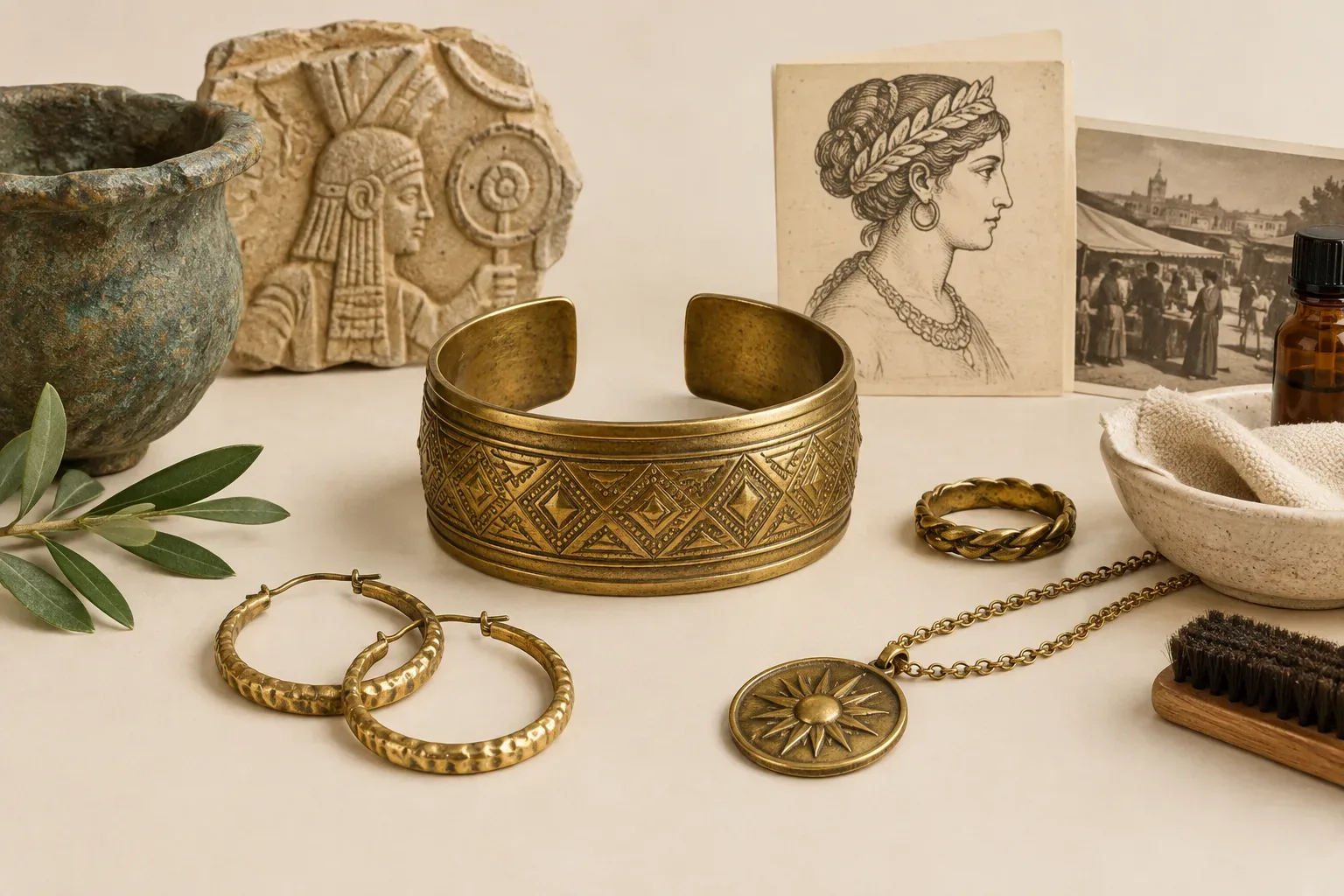
Meaning at a glance
Brass jewelry durability is a mixed but manageable quality: museums record how base metals played changing social roles in jewellery, and modern wear and tarnish can be minimized by informed selection and straightforward care; separate historical evidence about metals from later symbolic readings, and ask sellers about composition and treatments before you buy.
Direct answer: what to expect from brass jewelry durability
Brass jewelry durability can be summarized simply: brass is widely used because it is workable and affordable, and finished brass pieces will resist total disintegration under normal wear, but they commonly develop surface change (often called tarnish or patina) and show signs of wear over time. The balance between longevity and visible ageing depends on the manufacture, finish, and how the piece is worn and cared for.
What the historical record says — where and when base metals appear in jewellery
Modern museum interpretation emphasises that the materials used for personal ornament have changed meaning over time. The Victoria and Albert Museum’s exhibition and overview 'Bedazzled: A History of Jewellery' traces how different metals and stones have carried social, economic and stylistic messages in particular periods and places, and how costume or base-metal jewellery became prominent as jewellery moved from strictly elite display to broader personal and fashion expression.
The V&A's resources on jewellery and gemstones show that makers across many eras used a range of materials—from precious metals reserved for high status to more affordable metals used for everyday or fashion items—and that those choices reflect changing social contexts rather than a single, stable symbolism. Museums document the uses and styles; they do not endorse a single universal meaning for any metal.
Documented meanings versus modern personal interpretations
When we read historical labels and catalogues at museums, the evidence usually links material choices to status, fashion and technology: a material's use at a particular time can indicate economic accessibility or a fashionable taste rather than an intrinsic spiritual or moral quality. The V&A's presentation emphasises changing social context as the primary documented explanation for why certain metals were used.
In contrast, modern buyers and wearers sometimes layer personal or popular symbolic meanings onto brass—for example, calling brass 'durable' as a metaphor for resilience in relationships or using its warm colour to represent optimism. Those are contemporary and personal interpretations rather than claims grounded in the historical record. Treat such symbolic attributions as meaningful to the giver or wearer when chosen intentionally, but not as an established historical fact.
How the theme of durability appears in jewellery forms and settings
The idea of durability as a motif shows up in jewellery in a few different ways: through simple, solid forms such as plain bands or thick cuffs that emphasise mass and continuity; through hammered or forged textures that suggest handwork and long use; and through functional objects—locks, clasps and signet-style pieces—that historically signalled identity and continuity. Museums like the V&A document these forms and discuss how social meanings have shifted with fashion and technology.
Brass is also commonly used as a setting or mount for various stones and inlays. The V&A's 'An A–Z of Gemstones' provides context on how gems were set historically and how combinations of stones and base metals have been used for costume and everyday jewellery. In modern pieces, brass can be the visible metal, a base underneath a plating, or part of an assembled, mixed-metal design; each presentation will influence both how the piece ages and how people perceive its durability.
Tarnish, wear, and what to expect in everyday use
Tarnish and surface change are common outcomes for pieces made from non-precious metals. For brass jewellery this often appears as a darker surface layer or colour shift that some people call a patina. Whether that change is desirable depends on personal taste: some collectors and wearers value a patina as character, while others prefer to keep the original bright finish.
Wear is also a function of construction and finish. Solid, well-made brass objects will physically last a long time but will show scratches or surface loss of applied finishes (for example, lacquer or plating) if worn against hard surfaces or exposed to abrasive cleaning. The visible longevity of brass jewellery therefore depends on both the underlying metal and any protective coatings or surface treatments it carries.
Buying: disclosure, treatments, and questions to ask
When selecting brass jewellery, ask the seller about the piece's composition and any surface treatments. The Federal Trade Commission advises that accurate disclosure of materials, treatments and imitations is important for consumer protection; sellers should tell you whether a piece is solid brass, brass-plated, lacquered, or otherwise treated. Understanding these facts informs expectations about how the piece will wear and what care it needs.
If longevity of appearance is your priority, enquire whether a finish such as lacquer or plating is present and whether it is expected to wear off with time. If you prefer a piece to develop a patina, look for uncoated finishes or older pieces where the patina has already stabilised. Keep in mind that plating or coatings can change both the look and the maintenance needs of a piece, and that reputable sellers will provide truthful information about treatments.
Practical care advice to reduce tarnish and prolong appearance
Simple daily habits make a noticeable difference in how brass jewellery ages. Store items in a dry environment away from harsh sunlight, avoid wearing them while working with household chemicals, and remove jewellery for activities that involve repeated friction or exposure to water. These practices reduce the rate at which surface treatments fail and slow the development of visible change.
For regular upkeep, gently wiping a piece with a soft, dry cloth after wear removes oils and surface residues that accelerate change. Avoid abrasive cleaners or aggressive polishing on finished pieces because they can remove lacquer, plating or deliberate surface textures. If you are uncertain about how to clean a particular item, ask the maker or seller for recommended methods so you do not remove intended finishes.
Selection and gifting guidance, respectfully phrased
When choosing brass jewellery as a gift, think about the recipient’s taste regarding ageing: do they prefer a perpetually bright look or a piece that will mellow with time? If the recipient values a consistent bright finish, choose lacquered or plated items and confirm the expected durability of the finish with the seller. If they appreciate character and an evolving surface, choose simple uncoated brass or an older piece with an established patina.
Be mindful of allergies and skin sensitivity. While many people wear brass without issue, some individuals react to certain alloys or surface treatments. If you are unsure, favour sellers who provide clear material disclosure or consider choosing brass pieces with protective linings or coatings, and include the care guidance with the gift so the recipient can make informed decisions about wearing and maintaining the item.
Finally, align your gift with context: when the intention is symbolic—for example, to mark resilience or a long friendship—make that meaning explicit in a note rather than assuming a receiver will read that into the metal itself. Museums and historical studies show that meanings attached to materials shift over time and between cultures, so personal explanation makes your intent clear and respectful.
Putting history in context: why attribution matters
Museum scholarship, including work cited by the Victoria and Albert Museum, encourages readers to connect objects with their documented social contexts rather than to generalise a single symbolic meaning from material alone. Objects made of brass can tell different stories in different times and places: sometimes of economy and fashion, sometimes of technique and taste. Distinguishing the documented history of use from contemporary symbolic readings prevents attributing universal cultural meanings to a material that has had many roles.
In short, treat brass jewellery durability as both a material fact about how an object will behave with wear and as a social cue whose interpretation depends on the wearer, the maker and the occasion. Use clear disclosure, considered selection and simple care to manage both the physical longevity and the communicative impact of brass jewellery.
Frequently asked questions
Will brass jewellery permanently stain my skin?
Some people notice temporary skin colour change after wearing brass; this is usually a surface reaction from oils, sweat or coatings and can often be reduced by using a barrier layer such as a clear coating or by removing the piece for activities that cause heavy perspiration. If you have a known metal allergy, verify the alloy composition with the seller before purchase.
How quickly does brass tarnish and can I stop it?
The rate at which brass develops surface change depends on the finish, the environment and how often it is worn. Coated or lacquered pieces will show less immediate change than uncoated brass, while pieces worn in humid or chemical-rich environments may change more quickly. Regular gentle wiping and sensible storage slow visible change, but do not eliminate the natural tendency of base metals to evolve over time.
Is brass jewellery solid brass or a plated finish?
Sellers should disclose whether an item is solid brass, brass-plated, or contains other metal treatments. The Federal Trade Commission recommends that material and treatment information be made clear to consumers. Ask the retailer for composition details and whether the piece carries additional coatings that affect appearance and care.
Can I clean brass jewellery at home?
Basic maintenance—such as wiping jewellery with a soft, dry cloth after wear and storing it in a dry place—helps maintain appearance. Avoid aggressive or abrasive cleaning methods on coated or delicate pieces because you can remove intended finishes; if the item is valuable or you are unsure about its construction, ask the maker or seller for recommended cleaning procedures.
How should I choose brass as a gift for someone?
Consider the recipient's preference for ageing or consistent shine, check for metal sensitivities, and ask the seller about material disclosure and finish durability. If the symbolism of durability is part of your intention, explain that meaning in an accompanying note rather than assuming it will be read from the metal alone.
Sources and further reading
- Bedazzled: A History of Jewellery — Victoria and Albert Museum
- An A-Z of Gemstones — Victoria and Albert Museum
- Buying Gemstones, Diamonds, and Pearls — Federal Trade Commission