Meaning at a glance
Use museum-documented history to understand brass as a durable, historically widespread copper alloy used both as a decorative metal and as a gold substitute; distinguish those documented uses from later popular or personal meanings; and follow practical checks—weight, finish, plating disclosure, and care instructions—when choosing or gifting brass jewelry.
What the historical record shows
Museum surveys and exhibitions describe jewellery as a constantly changing set of practices tied to technology, fashion, and social meaning rather than fixed symbolism. The Victoria and Albert Museum presents this broad sweep in its histories of jewellery, noting that metals and alloys have been employed in different ways across antiquity, medieval and early modern periods, the Victorian era, and the rise of 20th-century costume jewellery and contemporary design. Those surveys document that alloys such as bronze and brass appear repeatedly as materials for ornament, both for their intrinsic properties and as economical substitutes for precious metals.
More specifically, the museum’s materials-focused writing and catalogues make clear that gemstones and settings have varied depending on available technology and taste. The Victoria and Albert Museum’s A–Z of Gemstones provides context for why particular stones were used in certain settings and how gem use evolved with cutting techniques and trade. Taken together, these museum resources show that the choice to use brass in jewellery is often practical (workability, color, cost) and aesthetic (warm golden tone), with meanings layered later by places and fashions rather than by a single universal symbolism.
Distinguishing documented meanings from modern interpretations
Documented meanings are those explicitly recorded by historical sources, museum catalogues, or contemporary makers. For example, records and museum interpretations often tie certain jewellery types to social status, mourning habits, or trade networks in particular periods. The V&A’s historical accounts frame jewellery objects in their social and technological contexts, not as identical carriers of the same belief across cultures.
Modern personal or popular interpretations are different. In recent decades, brass jewellery has been read as 'boho' or 'artisan' in many Western fashion contexts, and individuals may project personal symbolism—such as earthiness, affordability, or vintage style—onto brass pieces. Those contemporary associations are valid as personal meanings but are not the same as documented cultural or religious symbolism. When making a purchase intended to reference a particular cultural meaning, buyers should seek explicit provenance or maker statements rather than assume a metal itself carries a fixed symbolic message.
How brass and related traditions appear in jewellery
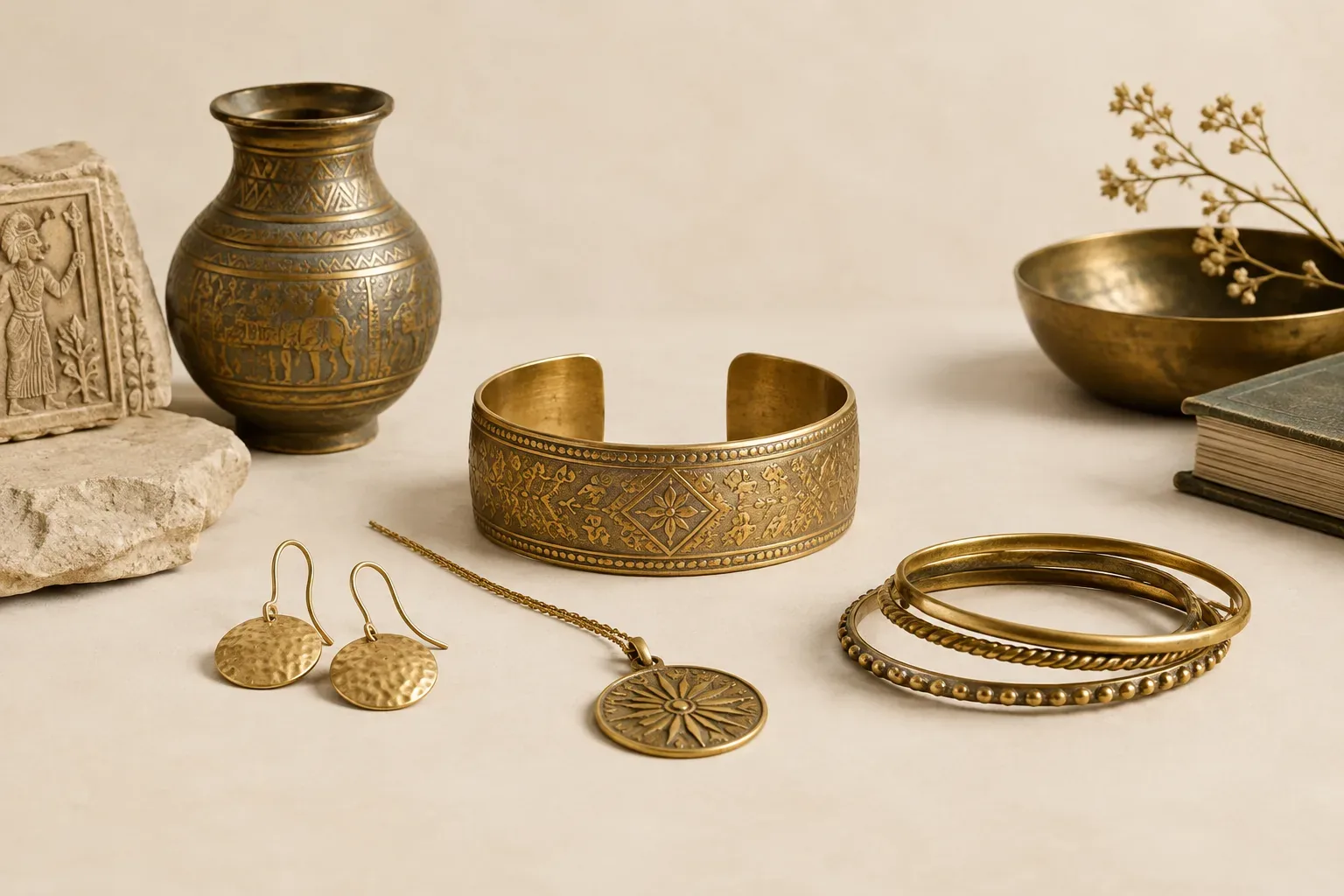
Brass appears in jewellery in several technical and aesthetic forms. It is used as cast or stamped components, formed into beads, filigree work, and larger statement pieces, and it is often chosen for its warm, gold-like color where solid gold would be impractical. Museum collections and exhibition catalogues show examples of copper alloys employed across periods, from delicate settings to robust tribal or costume pieces, indicating wide adaptability rather than a single stylistic context.
Brass is also commonly combined with gemstones and organic materials. Historical and modern examples show a range of practices: simple cabochons and beads set into non-precious metal bezels, decorative inset stones in costume jewellery, and contemporary settings where brass frames semiprecious stones. The Victoria and Albert Museum’s A–Z of Gemstones helps explain how different stones have been treated and presented historically; matching a stone’s hardness, color, and historical associations with a brass setting affects both durability and aesthetic harmony.
Practical quality checks when buying brass jewellery
Construction quality should be your first check. Look for secure joins, smooth edges, and consistent finishes. Solid brass components will feel heavier than plated base metals. Thin pieces that bend easily may be brass-plated base metal rather than solid brass; ask the seller whether components are solid brass, brass-filled, or simply brass-plated over another alloy.
Ask about finishes and protective coatings. Brass will naturally develop a patina from exposure to air and skin oils; some makers leave that patina to age, while others apply lacquer, oil, or modern clear coats to slow tarnish. If a bright, long-lasting finish is important, request details about coatings and their care. The Federal Trade Commission recommends that sellers disclose treatments and imitations for gems and materials; apply the same standard to brass: request clear information about plating, coatings, and alloy composition.
If gemstones are part of the piece, confirm how they are mounted and whether they are natural, treated, or imitations. The V&A’s resources on gemstones emphasize that historical and modern stones have often undergone treatments; for consumer clarity, ask the seller to describe stones and any stabilizing or color treatments.
Price expectations and value considerations
Brass jewellery typically costs less than equivalent gold or sterling-silver pieces because of material cost and market positioning. Price will reflect design complexity, maker reputation, and any stones or hand-finishing involved rather than brass alone. A handmade, intricately finished brass necklace by a known designer can command substantially more than mass-produced brass pieces because you are paying for workmanship and design as well as materials.
Avoid comparing brass prices to precious-metal equivalents on material value alone. Instead, think of brass as an intentional aesthetic and practical choice. For gifting, set a price range that matches the recipient’s style and the occasion: simple brass accessories suit everyday wear and casual gifting, while high-end artisanal brass can be appropriate for milestone presents when craftsmanship and presentation align with the occasion.
Care, wear, and sensitivity guidance
Expect brass to develop surface oxidation (tarnish) over time. Some buyers prize a warm patina as part of the piece’s character; others prefer to keep brass bright. Clean gently with a soft cloth and mild soap and water for routine upkeep, and consult the maker before using acids, abrasives, or strong metal polishes that might damage coatings or settings. If a protective lacquer is present, avoid harsh cleaning that can remove the coating.
Skin reactions are individual. Brass is primarily copper and zinc, and some people react to copper or to trace metals sometimes present in alloys. If the wearer has a known metal allergy, request alloy composition and any plating materials. For sensitive skin, consider brass pieces with a solid inner core of a known hypoallergenic metal or choose brass-plated fashion jewellery only if the plating covers all skin contact areas and is warranted by the maker.
Selection and gifting tips—practical and respectful
Match style to the recipient. Brass suits a broad range of aesthetics, from rustic and ethnic-inspired designs to clean, contemporary lines. If you are buying with symbolic intent—linking a piece to a cultural tradition or belief—confirm the maker’s stated provenance and avoid assuming a metal automatically carries a given meaning. If in doubt, choose a design that resonates visually and ask the maker for any cultural background they provide.
When gifting, include care instructions and any known materials information. Transparent sellers will provide details about finishes, coatings, and gemstone treatments; include that information with the gift so the recipient can make informed choices about wear and care. For heirloom intent, select sturdier construction over purely decorative plating and ask whether the piece can be repaired or re-finished by the maker in future.
When to choose brass and when to choose alternatives
Choose brass when you want a warm, gold-like look without the cost of gold, or when you appreciate the aging process and patina brass develops. Brass is also a good choice for bold, statement pieces where weight and color matter, and for pieces that deliberately evoke vintage or artisan aesthetics.
Choose alternatives—solid gold, gold-fill, or sterling silver—when alloy composition and hypoallergenic properties are central concerns, when you want clear market value as an investment, or when you need a material that will not oxidize in the same way. For pieces that will be worn daily and exposed to moisture (for example, wedding bands or rings worn in water), discuss long-term durability and maintenance with the maker before selecting brass.
Frequently asked questions
Will brass jewellery turn my skin green?
Brass can produce greenish oxidation on skin for some people because of copper content reacting with moisture and acids. The green color is not harmful but can stain the skin temporarily. If this is a concern, choose pieces with a protective coating, brass-plated pieces with durable plating that covers skin contact areas, or metals known to be less reactive for sensitive skin.
How can I tell if a piece is solid brass, plated, or filled?
Ask the seller for alloy composition and construction details. Solid brass parts feel heavier and will show consistent color where they are not plated. Plated pieces often show different metal at wear points, and makers should disclose plating, vermeil, or base-metal construction. For gemstones, ask whether stones are natural, treated, or synthetic.
How should I clean and care for brass jewellery?
For routine care, wipe brass with a soft, dry cloth after wear and avoid prolonged exposure to water and harsh chemicals. For more thorough cleaning, use mild soap and water, dry immediately, and consult the maker before using polishes or acidic cleaners that might remove protective coatings. If a piece is lacquered, avoid abrasive cleaning that could damage the coating.
Is brass a good choice for a gift intended as an heirloom?
Brass can make a meaningful gift, especially when craftsmanship and design are prioritized, but it oxidizes differently from precious metals. If you want an heirloom intended to retain material value, consider gold or silver. If the design and maker are the primary values, choose well-made brass with documented repair or re-finishing options from the maker.
What should I ask the seller before buying brass jewellery online?
Request clear information about alloy composition, whether pieces are solid brass or plated, any coatings or lacquers used, gemstone origin and treatments, repair policies, and recommended care. Transparent answers will help you assess quality, price, and long-term wearability.
Sources and further reading
- Bedazzled: A History of Jewellery — Victoria and Albert Museum
- An A-Z of Gemstones — Victoria and Albert Museum
- Buying Gemstones, Diamonds, and Pearls — Federal Trade Commission