Meaning at a glance
A gold filled jewelry buying guide should explain documented history and changing contexts, separate cultural or religious evidence from later popular interpretations, and give practical guidance for choosing and wearing these pieces today.
Quick answer
A gold filled jewelry buying guide explains documented history and changing contexts, separates cultural or religious evidence from later popular interpretations, and gives practical guidance for choosing and wearing these pieces today.
What to expect from the phrase and how sellers should disclose treatments
In contemporary buying situations you will encounter a range of terms describing how a gold surface is presented on jewelry. Whatever the label used, the Federal Trade Commission advises consumers to expect clear disclosure from sellers when a piece has been treated, plated, or otherwise altered rather than being sold as solid precious metal. When evaluating a purchase, ask the seller for a written description of the metal treatment, any karat marking, and the return or warranty terms; those disclosures are the most important factual anchors when deciding value and care needs.
Documented historical evidence: metals and surface treatments in context
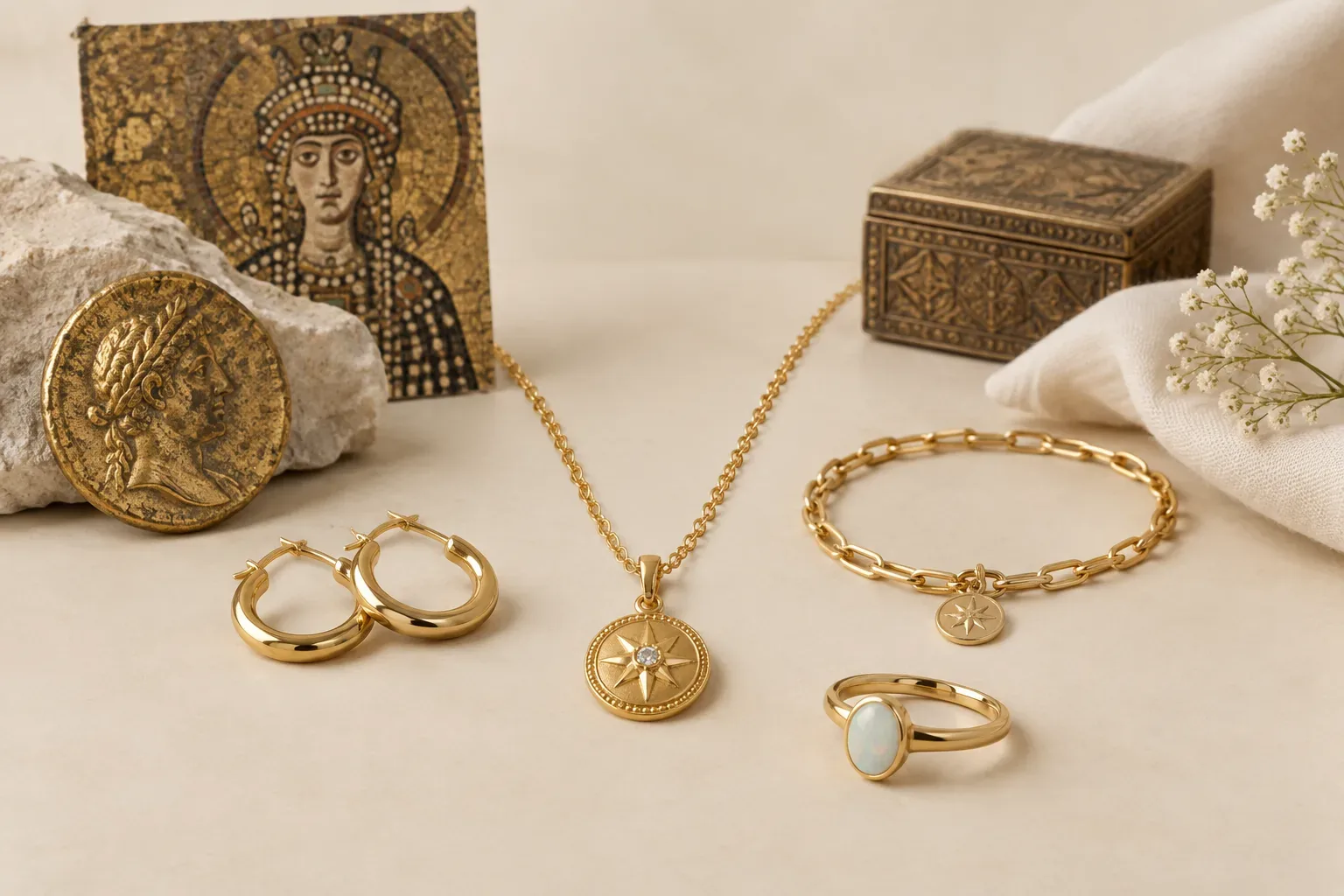
Techniques for using gold and creating the appearance of gold on jewelry have long histories that vary by place and period. Museums such as the Victoria and Albert Museum document how ancient and pre-modern societies prized goldwork and surface gilding for both status and ritual purposes. The V&A’s coverage of jewellery history traces goldsmithing and decorative gold techniques through ancient Egypt, the classical world, medieval Europe, and the modern period, showing shifting social meanings attached to metal and surface appearance.
Be precise: archaeological and museum records show that in ancient Egypt gold signified elite status and religious associations, while classical Greek and Roman goldwork emphasized personal display and technical virtuosity. Medieval European jewelry incorporated gold with religious symbolism and liturgical uses, and later periods—Georgian and Victorian eras—developed new sentimental forms such as mourning jewelry and lockets. These broad cultural and chronological patterns are documented by museum scholarship and help explain why gold-colored finishes carry layered meanings in different contexts.
Separating documented historical meanings from modern interpretations
Documented meanings observed in museum collections and scholarship tend to cluster around status, social role, religious or ritual function, and commemoration. The V&A’s historical surveys make clear that gold and gold ornament were often markers of wealth, office, or religious devotion in the cultures and periods they describe. Those are historical observations about how items were used and valued in particular societies.
Modern personal interpretations are distinct and varied. Today people choose gold-colored or gold-finish jewelry for reasons that include fashion, affordability, durability, sentimental value, or the desire to recall historical styles. These contemporary motives are individual and culturally diverse; they are not the same as the documented ritual or status meanings recorded by historians. Always treat modern symbolic readings as personal or community-specific rather than universal facts.
How gold-appearance treatments and gemstones appear in design
Jewelry that looks gold — whether by surface treatment or solid metal — appears across many types of objects: chains, bracelets, earrings, lockets, brooches, and settings for stones. Museum resources such as the V&A’s A–Z of Gemstones explain how stones have been combined with metalwork in different eras, and how materials and settings change the visual language of a piece. For example, warm gold tones have historically been paired with pearls, garnets, and warm-hued stones in sentimental or domestic pieces, while cooler or paler stones may be used to create contrast.
When assessing an item, note how the metal finish interacts with any gemstones or motifs. Settings and mounting styles affect wear and repairability, and the overall construction determines whether a piece is best for everyday wear, occasional wear, or display. If the seller provides gemstone identification or origin information, compare that to reputable museum descriptions for context; if the seller does not, request clarification before purchasing.
Practical selection guidance: quality checks and questions to ask
Start any purchase by confirming the seller’s written disclosure of materials and treatments. Ask whether the item carries a hallmark or maker’s mark, what karat or alloy information is given, and whether the seller will provide a receipt describing the metal treatment. The Federal Trade Commission emphasizes that consumers should receive truthful information about material treatments and imitations; insist on that transparency before you commit.
Examine construction: check clasps, jump rings, post and ear-wire attachments, and any soldered joins visually and, where possible, in hand. Ask about warranty, return policy, and expected durability under everyday conditions. If you have allergies or metal sensitivities, request specific information about the base metal under the gold finish or seek pieces explicitly labeled as hypoallergenic.
Consider intended use: choose simpler, well-made chains and studs for daily wear and more decorative or delicate pieces for occasional use. For gift purchases, err on the side of classic shapes and neutral stones if you are unsure of the recipient’s taste; detailed or historically specific motifs are meaningful when you know the recipient’s cultural or stylistic preferences.
Price expectations and comparing value
Price reflects a combination of metal content, workmanship, brand reputation, design complexity, and disclosure. Because treatment and construction matter as much as surface appearance, compare pieces not only by color but by the quality of joins, the security of settings, and seller transparency. Where possible, compare several reputable sellers to understand the market for similar pieces.
Remember that museum and consumer-protection perspectives both encourage buyers to prioritize information and documentation. A lower price may be appropriate for fashion-forward or short-term use, while higher outlays should be matched by clear information about materials, care, and remedy options if the piece fails to meet expectations.
Care, repair, and long-term use
All jewelry benefits from thoughtful handling. For pieces with a gold surface, basic careful practices—storing away from abrasive contact, removing jewelry during tasks that expose it to chemicals or heavy wear, and following any seller cleaning recommendations—will prolong appearance. When a piece requires repair, choose a jeweler who is willing to work with the stated metal construction and who documents any restorative work.
For heirloom aims, consider whether the piece’s construction and disclosure support long-term use and future repairability. If a piece is intended to mark a life event, making sure its documentation and care needs are clear helps preserve both the object and its sentimental meaning.
Respectful selection and gifting guidance
Gifts carry both material and social meaning. When giving gold-appearance jewelry, be mindful that different cultures and individuals attach different symbolic values to metal and motifs. If you are choosing a piece tied to cultural, religious, or historical symbolism, research its documented meaning through reputable sources such as museum scholarship and, when appropriate, consult community members to avoid misappropriation or misinterpretation.
For general gifting, pair a clear, written description of the item’s materials with an explanation of why you chose the piece. This gesture respects the recipient’s ability to care for and interpret the gift. If the recipient has known sensitivities or cultural preferences, prioritize pieces that meet those needs and explain your choices frankly.
Final considerations
A careful buyer combines historical awareness with consumer due diligence. Use museum resources like the Victoria and Albert Museum to understand historical meanings and craftsmanship contexts, and rely on consumer protection guidance such as the Federal Trade Commission’s advice to secure truthful disclosure about materials and treatments. That combination helps you judge whether a gold-appearance piece suits your aesthetic, budget, and long-term aims, and it keeps modern interpretations of meaning distinct from historically documented uses.
Frequently asked questions
How can I tell whether a seller has disclosed a gold treatment properly?
Ask the seller for a written description of the metal treatment, any karat or alloy information, and whether there is a hallmark or maker’s mark. The Federal Trade Commission recommends that consumers receive truthful disclosures about material treatments and imitations; insist on clear documentation and a return or warranty option before purchasing.
Are historical meanings of gold the same everywhere?
No. Museum scholarship shows that meanings attached to gold and gold ornament vary by culture and period. For example, certain societies used gold for religious or elite display, while others emphasized different material signifiers. Use reputable museum sources to learn documented meanings and treat modern symbolic readings as personal or community-specific.
What should I ask about gemstones set in gold-appearance jewelry?
Request any available gemstone identification, origin, or treatment information from the seller and compare that to museum descriptions for context when possible. If the seller cannot provide clear details, consider seeking an independent appraisal or choosing a piece with documented gemstone information.
Is gold-appearance jewelry appropriate as an heirloom?
It can be, if the piece’s construction, documentation, and potential for repair meet your long-term needs. For heirloom aims, prioritize well-made construction and clear disclosure so future owners understand materials and care requirements.
How should I care for jewelry with a gold finish?
Follow the seller’s care instructions, store items separately to avoid abrasion, and remove jewelry during activities that expose it to chemicals or heavy wear. For repairs, use a jeweler who will document any restorative work and who understands the piece’s construction.
What is the best approach when gifting a historically meaningful motif?
Research the motif’s documented meaning through reputable museum scholarship and, where appropriate, consult knowledgeable community members. If you are unsure, choose a neutral or classic design and include a note explaining why you selected the piece to show respect for the recipient’s cultural and personal context.
Sources and further reading
- Bedazzled: A History of Jewellery — Victoria and Albert Museum
- An A-Z of Gemstones — Victoria and Albert Museum
- Buying Gemstones, Diamonds, and Pearls — Federal Trade Commission