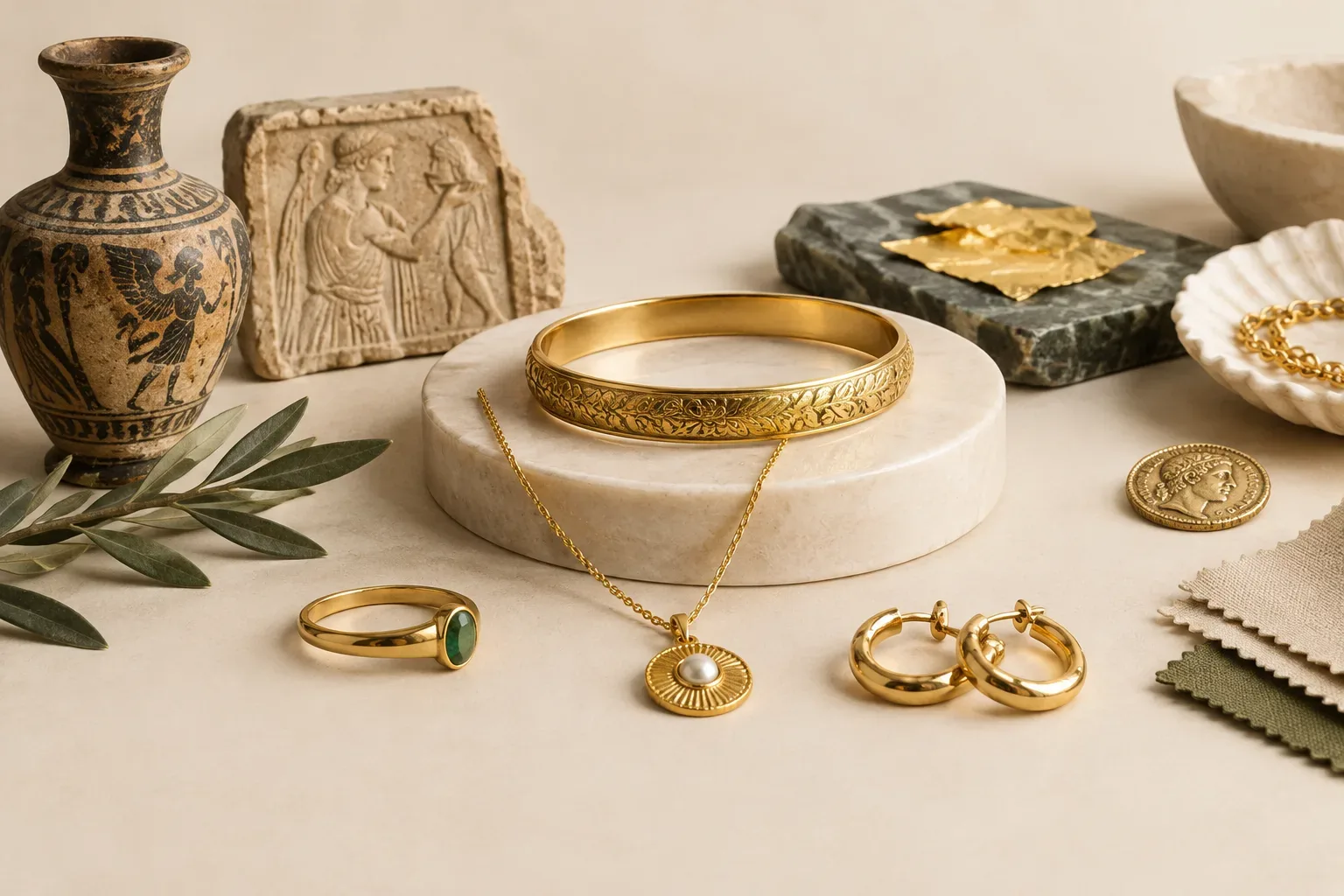
Meaning at a glance
Gold plated jewelry explained: plated pieces are made by bonding a thin layer of gold to a base metal; their historical and social roles are different from solid-gold objects, and sellers must disclose treatments—buyers should ask specific questions about method, base metal, and care before purchasing or gifting.
What gold plated jewelry is and how it’s made
The basic idea behind gold plated jewelry is simple: a surface layer of gold is applied to a different metal to give the look of gold while keeping cost and weight down. Makers can apply gold in different ways and to different base metals; modern industrial techniques commonly used include electrochemical plating and mechanical bonding, while historical techniques included gilding or leaf application as documented in museum accounts. The Victoria and Albert Museum describes how techniques and materials have changed over time as makers and consumers balanced cost, status, and appearance.
Because the gold layer is distinct from the underlying metal, plated items perform differently from solid-gold jewelry. Plating can achieve bright finishes and allow manufacturers and designers to imitate the aesthetic of higher-priced gold pieces, but wear, polishing, and exposure to chemicals will affect the exposed surface differently than a uniform precious-metal object. That difference is a key reason why clear disclosure of treatment and base metal matters for buyers.
Hallmarks, stamps, and seller disclosure
Hallmarks and stamps are used to communicate metal content or maker details, but they were developed to certify precious-metal content, not to guarantee surface treatments. For plated pieces you may see stamped identifiers such as maker’s marks, country marks, or trade abbreviations that describe a treatment, but the presence or absence of a hallmark does not automatically tell you the plating thickness or expected life of the finish.
The Federal Trade Commission recommends that sellers clearly disclose material treatments, imitations, and any non‑precious bases used beneath a precious-metal surface. That means reputable sellers should describe whether an item is plated, vermeil, gold-filled, or solid gold and should name the base metal when relevant. When a listing or label omits that information, ask the seller directly for written details before buying.
Historical evidence: where plating and gilding appear in the record
Historical sources in museum collections show a long history of creating gold-like surfaces by applying gold to other materials. The Victoria and Albert Museum outlines how across periods and cultures artisans used surface gold for decorative and symbolic effect, adapting techniques to local materials and social needs. For example, in many historical periods metalworkers used gilding to decorate functional objects, costume jewelry, and ecclesiastical items when solid gold was impractical.
Because the V&A treats jewelry as part of changing social and material culture, their work highlights that the use of surface gold is not a single global tradition but a set of related techniques employed for different reasons: to signal status at lower cost, to preserve a visual language of gold in ritual or court dress, or to experiment with new styles and technologies as tastes changed. The V&A places individual objects in chronological and cultural context rather than assigning a single meaning to the technique.
Documented meanings versus modern personal interpretation
Documented historical meanings are best drawn from the object’s documented context. Museum records (for example those noted by the Victoria and Albert Museum) will describe when a piece was made, where, and for what social purpose—status display, costume wear, or liturgical use. Those descriptions are evidence-based and tied to specific cultures and periods.
Modern meanings, by contrast, are often personal or commercially framed. Today people choose plated pieces for affordability, style, or to match a look without committing to higher cost. Contemporary symbolic readings—such as regarding a plated locket as a ‘family heirloom’ or a plated charm as a token of friendship—are valid at the personal level but are not the same as documented cultural symbolism. Keep those categories separate: documented history tells us how objects were used and understood in their original contexts, while modern meaning is what wearers and givers make of them now.
How motifs, gemstones, and traditions appear in plated jewelry
Motifs and gemstones commonly found in solid-gold pieces are frequently replicated in gold-plated work because plating gives designers the freedom to reproduce familiar forms affordably. The Victoria and Albert Museum’s guides to gemstones and jewelry history show that motifs such as flowers, hearts, or classical forms recur across centuries; plated jewelry often borrows those motifs and pairs them with simulated or genuine stones to achieve a historical or fashionable look.
Gemstones in plated settings may be natural, heat-treated, or synthetic. For identification and historical context the V&A’s A–Z of Gemstones explains how different stones have been used and valued in different periods. When a plated piece contains a gemstone, the important questions are whether the stone is natural or treated, whether it is securely set, and whether the seller discloses that information—factors that affect meaning, value, and care.
Practical guidance for selecting and gifting plated jewelry
When you’re shopping or choosing a plated piece as a gift, start by asking for clear disclosure. Request written information about whether the piece is plated, vermeil, or gold-filled, and ask what the base metal is. The Federal Trade Commission advises sellers to disclose treatments and imitations, so a candid vendor should provide those answers without prompting.
Consider the recipient’s lifestyle and sensitivities. If the wearer showers, swims frequently, or prefers low-maintenance pieces, know that plated finishes will behave differently than solid gold and may require touch-ups or replacement over time. If the recipient has metal allergies, ask about the base metal and whether the plating covers areas that touch skin, and consider alternatives labelled hypoallergenic or solid precious metals.
Match the aesthetic intent and the symbolic purpose. If your goal is sentimental durability—an item meant to be kept for decades—solid gold or well-documented gold-filled or vermeil pieces may be more appropriate. For trend-driven gifts, costume or plated jewelry may be an excellent, low-risk choice. When in doubt, choose a seller who provides clear written details about materials, care instructions, and repair options; that transparency helps the gift keep its intended meaning.
Care, repair, and resale considerations
Care for plated pieces depends on the base metal and the plating method. Generally, avoid abrasive cleaners and prolonged exposure to harsh chemicals; gently cleaning with a soft cloth and storing pieces separately will slow wear to the surface. If plating fades or scratches, some jewelers offer re-plating services—ask the seller whether re-plating is possible, who performs the work, and what the cost will be.
When reselling or passing on plated jewelry, disclose the original material and any repairs or re-plating performed. Clear provenance and honest descriptions preserve trust and help the next owner appreciate both the piece’s appearance and its material history.
Where to read more in this site
For broader context about choosing meaningful jewelry, see our guide How to Choose Meaningful Jewelry: A Practical Gift Guide, which covers matching symbolism to the wearer’s values and context.
To understand how specific sentimental forms developed, such as lockets and mourning jewelry, consult our History of Lockets: Portraits, Memory, and Sentimental Jewelry. For more technical or comparative shopping advice, our Jewelry Guides category gathers practical articles on materials and care.
Closing summary
Gold plated jewelry explained simply: it is a cost-conscious way to achieve a gold look by applying a layer of gold to another metal. Museum scholarship (for example the Victoria and Albert Museum) shows that surface-gilding techniques have long been used for decorative and social reasons, while modern regulation (as articulated by the Federal Trade Commission) focuses on transparent disclosure so consumers know what they are buying. When selecting or gifting plated jewelry, ask clear questions about method, base metal, gemstone treatments, and care so the piece will meet both your aesthetic and symbolic intentions.
Frequently asked questions
Is gold plated jewelry real gold?
Gold plated jewelry has a genuine layer of gold on its surface, but the total gold content is small compared with solid-gold pieces; whether it is the right choice depends on your priorities for cost, durability, and symbolism. Ask the seller for written details about the plating method and base metal.
How is plated jewelry different from vermeil or gold-filled?
Vermeil and gold-filled are related but distinct terms that describe different methods and standards for applying gold to a base material. The Federal Trade Commission advises sellers to disclose the specific treatment used so buyers can compare durability and value; ask the seller to explain any labeling and to name the base metal.
Will plating wear off, and can it be restored?
Plating can wear over time depending on how the piece is worn and cared for. Some jewelers offer re-plating or repair services; ask the seller about repair options, expected costs, and any care instructions to prolong the finish.
Are there hallmarks that prove a piece is plated?
Traditional hallmarking systems certify precious-metal content and may not indicate a surface treatment. Reputable sellers will disclose whether an item is plated and use terms or stamps that identify the treatment; if a listing is unclear, request written confirmation of materials.
How should I care for plated pieces and stones set in them?
Care typically means avoiding abrasive cleaners and harsh chemicals, cleaning gently with a soft cloth, and storing plated pieces separately to reduce friction. For gemstones, verify whether they are natural or treated and follow any specific care guidance for that stone, as described in gemstone references such as those from the Victoria and Albert Museum.
Sources and further reading
- Bedazzled: A History of Jewellery — Victoria and Albert Museum
- An A-Z of Gemstones — Victoria and Albert Museum
- Buying Gemstones, Diamonds, and Pearls — Federal Trade Commission