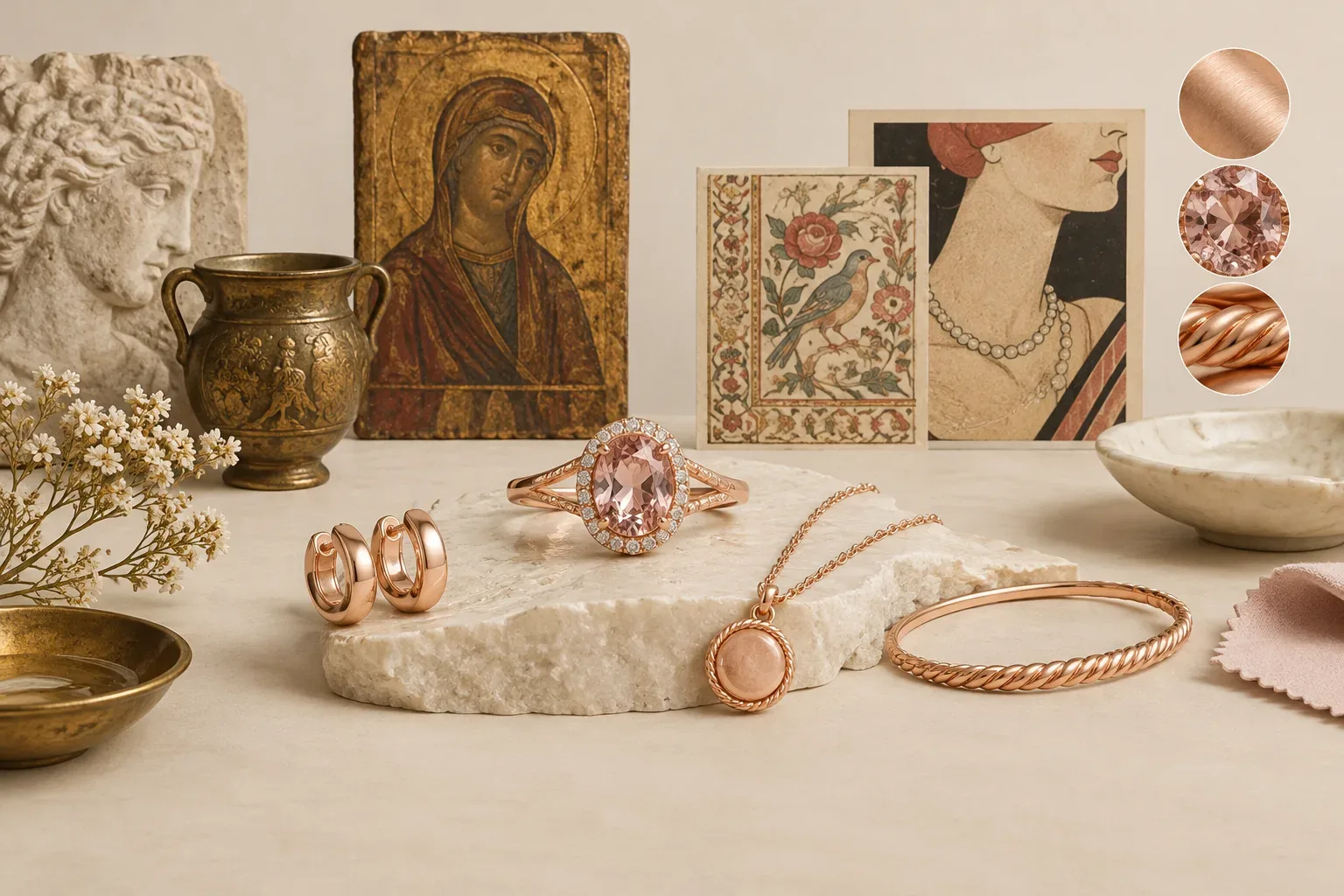
Meaning at a glance
Rose gold jewelry durability depends on the alloy mix, the finish or plating, and how the piece is worn and maintained; museum research shows colored gold alloys have been used and interpreted differently across periods, while modern meanings are largely personal or commercial—ask sellers about composition and treatments and follow basic care to minimise tarnish and wear.
Short answer
Rose gold jewelry durability is primarily determined by the metal alloy used, any surface finishes or plating, and the wearer’s habits; documented museum research shows that makers have adjusted metal mixes and finishes across periods to change colour and performance, while modern symbolic meanings are largely personal or marketing-driven. For practical purposes, ask a seller for the piece’s composition and any treatments, and follow basic cleaning and storage practices to reduce tarnish and wear.
What the historical record shows
The Victoria and Albert Museum’s published materials on jewellery history describe how metals and surface treatments have changed through time to meet fashion, technology, and social needs. Museum collections and curatorial interpretation record the use of coloured gold alloys and a variety of metalworking techniques, showing that the appearance and technical behaviour of gold jewellery have been subject to changing tastes and manufacturing methods rather than a single, constant meaning. The V&A’s overview emphasises shifting social contexts and workmanship rather than asserting a single historical symbolism for any specific gold colour.
Separating documented history from modern interpretation
Documentation in museum catalogs and exhibitions tends to focus on materials, craftsmanship, and the cultural context in which an item was made and worn. The V&A’s work highlights how different periods reused and reinterpreted metal colours and finishes, which means historical assignments of meaning to a colour like pink or red gold are context-specific and often ambiguous. By contrast, many contemporary meanings ascribed to rose gold—romance, warmth, or vintage-chic—are modern or commercial interpretations rather than continuous historical symbols. When researching a piece, treat historical evidence about materials and context differently from later marketing or personal associations.
How rose, pink, or red gold appears in jewellery
Museum documentation and jewellery guides explain that jewellers achieve warmer or reddish gold tones by mixing pure gold with other metals and by choosing particular surface finishes; these visual choices are what people commonly refer to as rose, pink, or red gold. In objects on display and in collections, museums note variations in hue, surface polish, patina, and decorative treatments that affect how a piece ages and how it resists surface wear or tarnish. The same visual results are produced today by alloy selection, plating or surface finishing, and by the craftsmanship of settings and joins, so identifying a piece’s construction and finish is an important first step for assessing durability.
Materials, disclosure, and what to ask a seller
The Federal Trade Commission advises consumers to ask for clear information about materials, treatments, and any plating or surface processes when buying jewelry. For rose-coloured gold items, request written details about the metal composition, whether the colour is produced by an alloy or by plating, and any subsequent treatments that could affect long-term wear. When a seller provides transparent information you can better anticipate how a piece will behave in daily use and what maintenance it will require. Clear disclosure protects buyers from confusion about whether a warm pink tone is inherent to the alloy or the result of a thin surface layer that can be worn away.
Practical guidance for choosing and gifting
If you are choosing or gifting rose-coloured jewellery with durability in mind, begin by deciding how the recipient will likely wear the piece: daily, occasionally, or only for special events. For everyday wear, prioritise pieces where the pink tone comes from a stable alloy and where settings and joins are well made; ask about the metal mix and about reinforcement around stones and clasps. If the colour is produced by plating, accept that the finish may need periodic restoration. Consider the recipient’s skin chemistry and lifestyle—frequent contact with water, chemicals, or abrasive surfaces will increase surface wear—and choose a style and construction appropriate to that use.
Care, cleaning, and long-term maintenance
Basic storage and cleaning reduce the rate at which any metal surface will show wear or tarnish. Keep a rose-coloured piece in a soft pouch or separate compartment to avoid contact with harder metals and abrasive surfaces, and remove jewellery before heavy physical work or prolonged exposure to household chemicals. For cleaning, use mild, manufacturer-recommended methods and avoid aggressive abrasives or harsh chemicals that could remove thin finishes. When a surface colour is produced by plating, anticipate that professional restoration may be needed eventually; when possible, choose reputable makers who disclose re-plating recommendations.
When to consult a professional
If a piece shows unusual wear, an uneven patina, loose settings, or if you are unsure about its construction, consult a qualified jeweller or conservator. Museums and experienced retailers can offer condition assessments and advice about safe cleaning and repair. For heirloom items or pieces with historical value, professional conservation preserves both appearance and provenance; for modern fashion pieces, a reputable jeweller can advise about re-plating, re-setting, or reinforcing elements to extend practical longevity.
Final takeaway
Rose-coloured gold jewellery durability is not a single fixed quality but the outcome of alloy choices, surface treatments, wear patterns, and care. Museum research underscores that makers have long altered metals to achieve colour and performance, and the FTC’s guidance reminds buyers to seek full disclosure about materials and treatments. Treat historical evidence about materials as distinct from later symbolic interpretations, ask clear questions when purchasing or gifting, and adopt straightforward storage and maintenance to keep a rose-toned piece looking its best over time.
Frequently asked questions
Will rose gold tarnish?
All metals and alloys can change appearance over time. Whether a rose-coloured piece develops visible surface change depends on how its colour is produced, the exact alloy and finish used, and how it is worn. Ask the seller about composition and any surface treatments to understand how a piece is likely to age.
Is rose gold suitable for daily wear?
Rose-coloured jewellery can be suitable for everyday wear, but suitability depends on construction quality, the method used to create the colour, and the wearer’s activities. For daily wear choose well-made settings and confirm whether the colour is inherent to the alloy or applied as a surface finish.
How should I clean rose gold jewellery?
Use mild, manufacturer-recommended cleaning methods and avoid harsh chemicals or abrasive polishes that could remove thin finishes. If in doubt, consult a professional jeweller for advice tailored to the piece’s materials.
Can plated rose gold be restored?
Yes, plated finishes can usually be professionally restored, but restoration frequency depends on the original plating thickness and the extent of wear. Ask the seller or a qualified jeweller about re-plating options and expected longevity.
How do I verify what metal is used in a rose-coloured piece?
Request written disclosure from the seller about the piece’s metal composition, any plating or treatments, and any relevant hallmarks. The Federal Trade Commission recommends clear information about materials and treatments for jewellery purchases.
Do historical rose-coloured pieces hold different meanings?
Museum documentation shows that meanings attached to metal colours vary by period and cultural context. Historical evidence tends to describe use and context rather than universal symbolism, and many modern symbolic associations with rose-coloured gold are recent or commercial in origin.
Sources and further reading
- Bedazzled: A History of Jewellery — Victoria and Albert Museum
- An A-Z of Gemstones — Victoria and Albert Museum
- Buying Gemstones, Diamonds, and Pearls — Federal Trade Commission