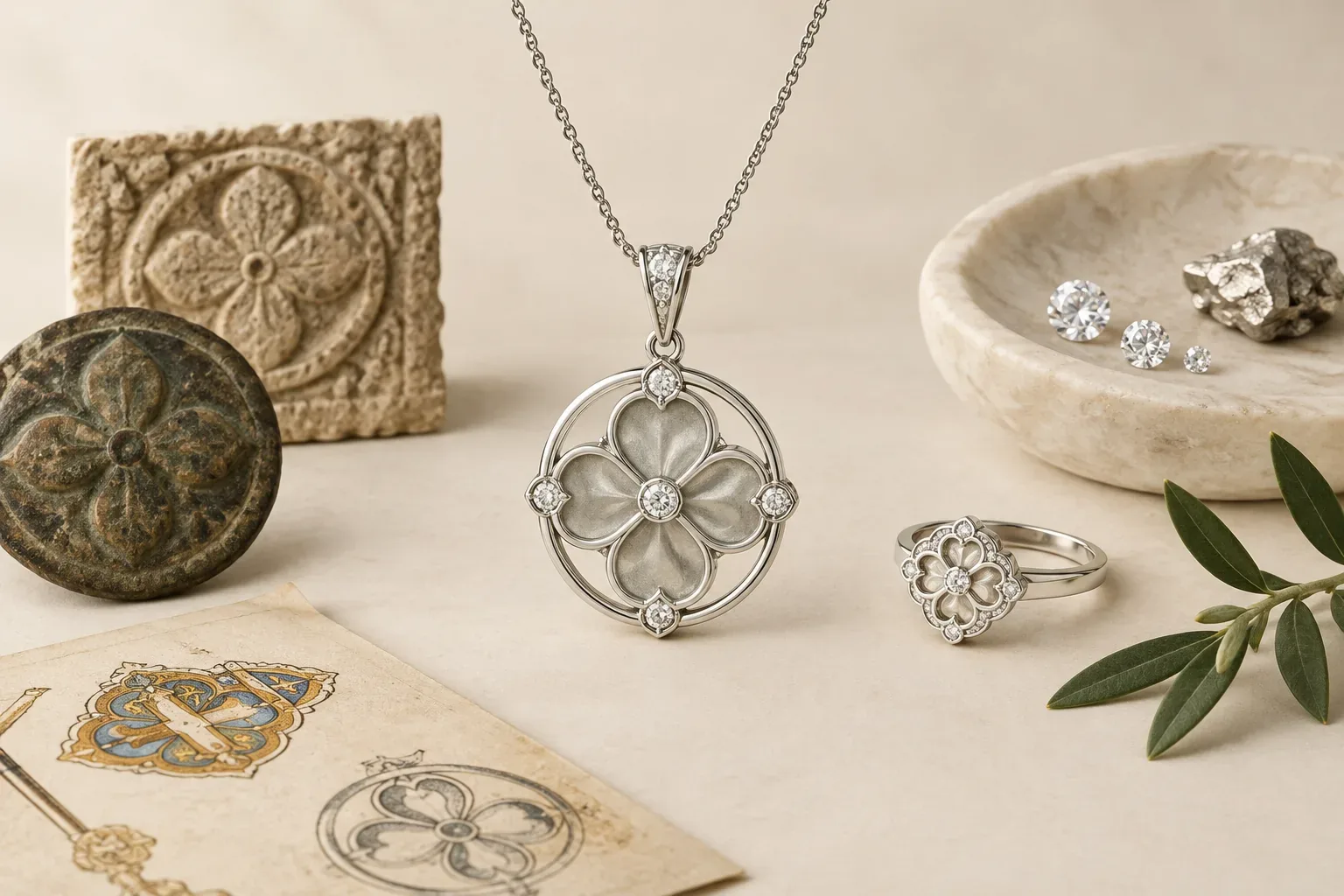
Meaning at a glance
Palladium jewelry explained: documented historical evidence shows that hallmarking and the social meanings of white metals changed over centuries (Victoria and Albert Museum). Palladium itself is a relatively modern choice in jewelry; sellers must clearly disclose metal composition, treatments, and imitations (Federal Trade Commission). This article separates historical documentation from later popular interpretations and gives practical selection and gifting guidance.
What the historical record actually says
The long view of jewellery recorded by institutions such as the Victoria and Albert Museum shows that metals and their meanings have changed through distinct periods and cultures. The V&A presents object histories from medieval Europe, through the early modern and Victorian eras, to twentieth-century and contemporary jewellery, and highlights that techniques like hallmarking and the social functions of jewellery—status, identity, commemoration—shifted over time rather than remaining fixed.
That museum evidence documents hallmarks and makers’ marks across historical periods in Europe and elsewhere as developing responses to social and economic needs: to certify metal content, to regulate trade, and to signal authorship or workshop. These practices are part of the wider documented history of jewellery rather than proof of any single, continuous symbolic meaning for a given metal.
Palladium as a metal used in commercial jewellery is not singled out in long-established cultural symbol systems the way some gemstones or older metals may be. The absence of an extended historical tradition for palladium means that, unlike signets, mourning lockets, or talismanic gems whose associations can be traced through periods, palladium’s role is largely a modern technical and stylistic choice in jewellery-making.
Documented historical meanings versus modern interpretations
Documented historical meanings are tied to specific objects and periods. The V&A’s work illustrates, for example, how certain forms—lockets, mourning jewellery, signet rings—held social or ritual meaning in specific centuries and cultures because of recorded use and contemporary commentary. Those are examples where historical evidence ties a form or material to a social practice.
Modern interpretations about palladium, by contrast, are contemporary responses to its physical and market qualities. Today people may describe palladium as an alternative to other white metals, praise it for being lighter or more affordable than alternatives, or use it as a symbol of modernity and minimalism. Those associations are contemporary personal or marketing-driven readings and should not be presented as historical facts.
When discussing 'meaning' for a metal like palladium, separate what is documented in the historical record from what individuals or brands say today. Where there is no documented cultural or religious use, modern symbolic claims are personal, situational, or commercial rather than verifiable historical tradition.
How palladium appears in jewellery and how to read it
In contemporary jewellery the way a metal appears is both technical and aesthetic. Palladium is used by jewellers as the body of rings, wedding bands, settings for gemstones, and as part of mixed-metal designs. The visible cues for palladium are the same kinds of cues used for other white precious metals: a pale, silvery finish and a surface designed for daily wear in settings and shanks.
To understand what you are buying, check the piece for marks and seller statements. Historical hallmarking evolved to help buyers know what they were getting; museums like the V&A document that hallmarking and maker’s marks were established practices in many cultures to indicate metal content, origin, and quality. In modern commerce you should expect a clear indication of the metal type and a fineness or purity marking, together with seller disclosure about treatments and any alloys used in the piece.
If a piece carries gemstones, the trade and museum literature remind buyers to consider how stones are set, whether any historical techniques are being referenced, and whether the design is drawing on cultural forms. For palladium settings, the metal’s color and strength influence design choices and how a gem’s color performs next to the mounting.
Hallmarks, marks, and seller disclosure: what to look for
Hallmarks and makers’ marks have long served to communicate metal content and authorship. Museums that study historic jewellery show how these marks developed in response to consumer need and regulation, and today the expectation is the same: an honest statement about composition. That expectation is reinforced by modern consumer-protection guidance that requires sellers not to misrepresent materials, treatments, or imitations.
When evaluating a palladium piece, look for a stamp or mark that identifies the metal and gives an indication of purity or fineness, and ask the seller for written confirmation if the mark is absent or unclear. Also ask about any surface plating, alloy content, or special treatments because those materially change properties and care. The Federal Trade Commission advises buyers to get clear information about gemstones and metal content and to be wary of ambiguous or unsupported claims.
Choosing and gifting palladium jewellery respectfully and practically
Start by clarifying why you want palladium. If the choice is practical—weight, color, or budget—say so to the recipient or, if buying as a surprise, select a style aligned with their existing wardrobe and metal preferences. If the choice is symbolic, frame that symbolism as your personal or contemporary interpretation rather than as a long-standing cultural meaning unless you have clear historical evidence tying the metal to that meaning.
Ask sellers for clear documentation: what the metal is, any fineness mark, whether the piece is alloyed or plated, and the care recommendations. Request a written description before purchase so you and the recipient understand any maintenance needs and how the piece will age. When gifting across cultures, avoid asserting that palladium has a traditional cultural or religious meaning unless you have clear, culture-specific documentation; instead present the gift with an explanation of why you chose it now.
For daily-wear pieces such as wedding bands, consider the recipient’s skin reactions and lifestyle. If the recipient has known metal sensitivities, ask specifically about alloys and any nickel content. Also consider repairability and resale documentation; palladium pieces should come with clear maker information to simplify future servicing.
Caring for and confirming authenticity
Care instructions for a palladium piece will depend on whether it is a near-pure metal, an alloy, or plated. Obtain clear vendor guidance and retain any paperwork. Museums’ conservation literature shows that different metals and treatments often require distinct cleaning methods, so don’t assume the same care used for older traditional metals will be right for modern alloys.
To confirm authenticity, rely on the combination of physical marks, written seller disclosure, and, when necessary, an independent appraisal. Consumer-protection guidance recommends getting significant claims in writing and, for high-value purchases, seeking professional verification if you suspect a misrepresentation or if the marks are missing.
Final considerations
Palladium jewelry explained in one line: it is a modern choice within a long history of metal use and hallmarking, and its meanings are contemporary rather than rooted in long-documented cultural traditions. Use the practices the museum record shows were effective—check marks, ask questions about origin and treatment, and be wary of broad historical claims—and follow present-day consumer-protection guidance to ensure honest disclosure and appropriate care.
Frequently asked questions
Is palladium a historically symbolic metal?
No long-standing cultural symbolism for palladium is documented in the major museum record; institutions that study jewellery history show how meanings attach to specific forms and older metals over time, but palladium’s associations are predominantly modern and personal rather than historical.
How can I be sure a piece is actually palladium?
Look for clear marks or stamps on the piece and ask the seller for written disclosure of metal content and any alloys or treatments. For high-value items or when marks are absent, obtain an independent appraisal; the Federal Trade Commission advises buyers to request clear, written information about materials and treatments.
Are there hallmarks I should expect on palladium jewellery?
Expect a maker’s mark and an indication of metal type or fineness in jurisdictions where hallmarking is standard; museums document hallmarking as a longstanding practice for communicating metal content. If a piece lacks clear marks, request seller documentation before purchase.
Does palladium cause allergic reactions?
Skin reactions depend on the full alloy, not the base metal alone. If you or the recipient have metal sensitivities, ask the seller about alloy composition and any trace metals used in the piece, and consider a trial or testing under the guidance of a jeweller or medical professional.
How should I clean and care for palladium jewellery?
Care instructions depend on whether the piece is a pure metal, an alloy, or plated. Request vendor care advice and any written recommendations. Museums’ conservation practice shows that different metals and treatments require different cleaning methods, so follow the seller’s guidance and avoid aggressive household cleaners unless confirmed safe.
Can I gift palladium as a meaningful cultural item?
You can gift palladium with a contemporary personal meaning, but avoid presenting the metal as having a long-standing cultural or religious significance unless you can cite specific, culture-bound evidence. Explain your personal reasons for the choice to keep the gesture respectful and accurate.
Sources and further reading
- Bedazzled: A History of Jewellery — Victoria and Albert Museum
- An A-Z of Gemstones — Victoria and Albert Museum
- Buying Gemstones, Diamonds, and Pearls — Federal Trade Commission