Meaning at a glance
This platinum jewelry buying guide explains the documented historical record and changing cultural contexts for platinum in jewelry, separates museum-supported historical meanings from later popular or personal interpretations, and gives practical, actionable advice on how to evaluate quality, price, best uses, and gifting considerations.
Quick answer
This platinum jewelry buying guide presents museum-documented history and changing contexts for platinum in jewelry, clearly separates what is recorded from modern personal interpretations, and gives practical advice on choosing, assessing quality, price considerations, and appropriate uses or gifts.
Platinum in jewelry: what the historical record shows
The Victoria and Albert Museum documents the long, changing history of jewellery and how makers and wearers have adopted different metals and techniques as social needs, technology, and taste evolved. According to the V&A, jewellery history is best read as a sequence of technical developments and shifting contexts rather than a single, unchanging symbolism.
Within that broad narrative, platinum emerges as a relatively modern choice in the history of Western jewellery because its use required metallurgical advances and reliable working techniques. The V&A places platinum alongside other metals and gemstones that gained popularity when tools and markets made them practicable for decorative use. Museums and curators therefore treat platinum’s rise as a material and technological story as much as a cultural one.
Separating documented historical meanings from modern interpretations
When museums such as the V&A discuss jewellery meanings, they distinguish concrete historical functions—such as display of status, technological novelty, or practical durability—from later personal or commercial narratives. For platinum, the documented evidence in museum collections and catalogues emphasizes its adoption as a jewellers’ metal tied to properties and technique rather than to an ancient or religious symbolism recorded across different cultures.
Modern interpretations—for example the idea that platinum is a universal symbol of eternal love or that it carries religious significance—are contemporary associations that rose with marketing, the prominence of platinum in wedding bands, and personal preference. Those contemporary meanings can be meaningful to individuals, but they are not the same as historical documentation. The V&A framing shows how meaning can shift: a metal chosen for technical reasons may acquire sentimental value later, and those later meanings should be presented as modern, culturally specific interpretations, not as universal or ancient facts.
How platinum appears in jewellery: motifs, settings, and combinations
In practice, platinum is most often used as the structural and visible metal of rings, settings, chains, and mountings. Museum documentation demonstrates how metals serve both decorative and technical roles, and the V&A notes that jewellers select metals like platinum for specific tasks in a piece’s construction. In contemporary jewellery this usually means platinum is used where a hard-wearing, secure setting is desirable, for fine chains and for settings that require a low profile so gemstones are shown off cleanly.
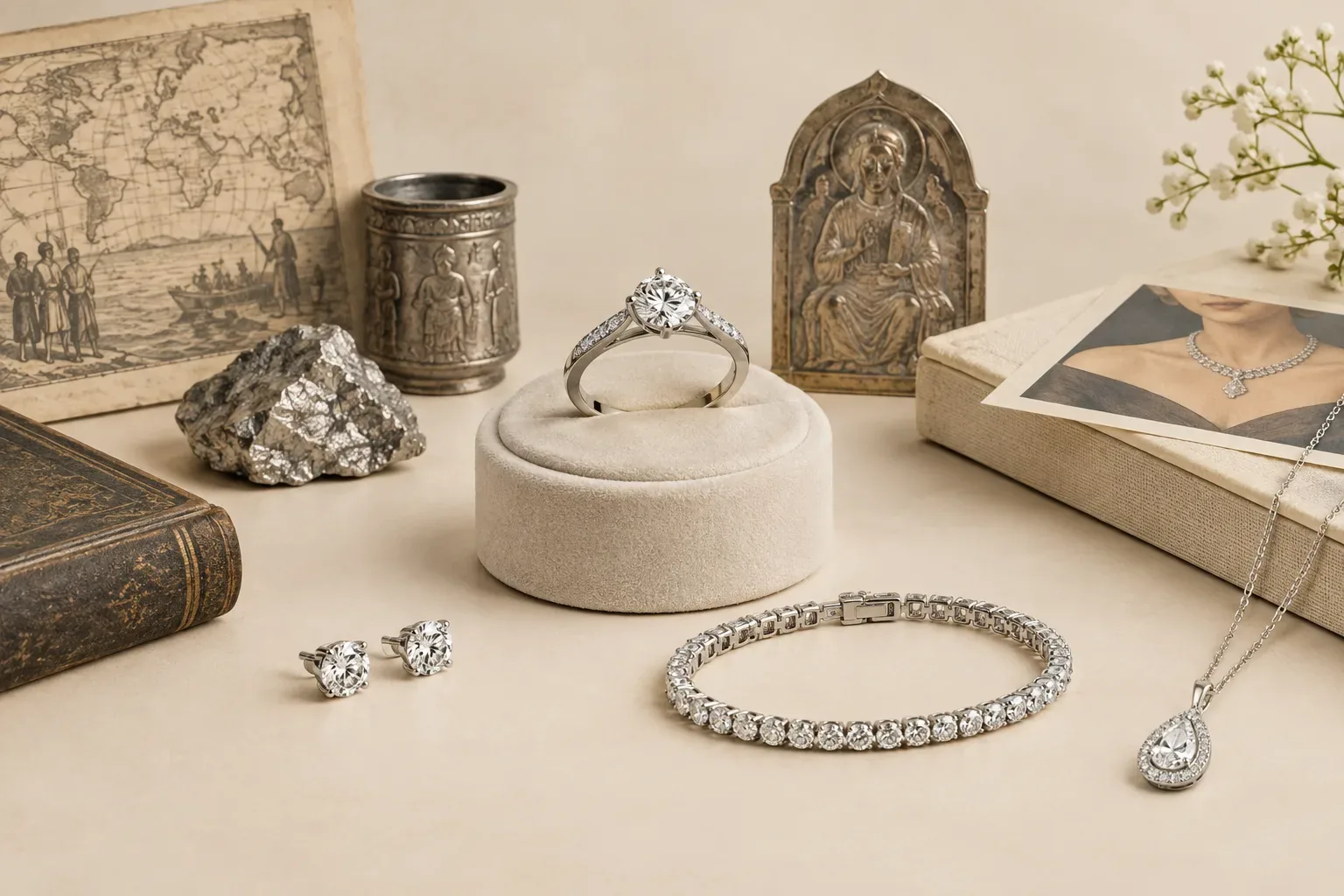
Platinum is commonly paired with diamonds and colorless gemstones because its pale, silvery surface offers a neutral backdrop that does not introduce warm tones. It also appears alongside colored stones when designers want a crisp, modern contrast. Motifs run the gamut from classic solitaires and simple bands to modern sculptural forms; the defining factor for platinum pieces in museum and market descriptions is the material’s role in construction and presentation rather than a single symbolic motif across cultures.
Quality and price: what to check before you buy
Quality assessment of any precious-metal jewellery begins with clear markings and transparent seller information. The Federal Trade Commission advises that sellers must disclose treatments, significant material alterations, and whether a gemstone is natural, treated, or synthetic. Ask for documentation and read hallmarks and certification details carefully.
Look for recognised hallmarks or metal content stamps on the piece and ask the retailer to explain them. In addition to the mark, request written information about any plating, surface treatments, or proprietary finishes. For gemstones set in platinum, ask for lab reports or vendor disclosures stating whether stones are treated or laboratory-grown; the FTC guidance makes clear that accurate disclosure of treatments and imitations is a consumer right.
Price reflects several factors: metal weight, craftsmanship, the rarity and provenance of any gemstones, and brand or designer premium. Because museums and curators frame platinum as a material chosen for technical properties and prestige in modern contexts, expect finished pieces in platinum to cost more than comparable pieces in lower-cost metals chiefly because of craftsmanship and metal density rather than symbolic value alone.
Best uses and occasions for platinum jewellery
Platinum is particularly well suited to pieces that will see frequent wear and where secure, low-profile settings are important, such as engagement rings and wedding bands. Museum discussions of material choices underline the practical reasons makers select particular metals; choose platinum when you prioritise durability, a neutral white metal appearance, and strong settings for valuable stones.
For statement jewellery—necklaces, cuffs, and brooches—the choice of platinum often reflects a stylistic preference for cool, polished metal paired with high-quality stones or refined design. For heirloom pieces intended to be worn over decades, platinum’s place in jewellery collections and museum narratives supports its reputation for longevity in construction, though personal and cultural preferences will always influence whether it is the right choice for a particular wearer.
Practical selection and gifting guidance
When selecting or gifting platinum jewellery, start by clarifying the recipient’s style and any metal sensitivities. Many people prefer platinum for rings that are worn daily; others favour its feel and colour. Presenting a gift with a clear explanation of the metal’s practical advantages and any symbolic intent helps avoid miscommunication about meaning versus material.
Ask the seller for clear written disclosures: hallmark or assay marks, descriptions of any plating or alloying, and documentation for gemstones. The FTC recommends that buyers get clear information about treatments and imitations; apply this by requesting lab reports when buying high-value stones set in platinum. If you are buying vintage or antique platinum pieces, consult the seller about repairs and provenance and consider an independent appraisal.
Finally, be respectful of cultural preferences. Platinum may be prized in some markets and less familiar in others. If you are gifting across cultural lines, check whether the recipient has specific metal preferences, occasions for meaningful jewellery, or religious considerations. If in doubt, choose versatile designs and include a receipt and care information so the recipient can make informed decisions about wear or resizing.
Care, maintenance, and resale considerations
Museum collections and jewellery conservators stress that all jewellery benefits from appropriate care and honest appraisal. For platinum, ask the jeweller about recommended cleaning, polish cycles, and how the metal responds to wear; if a piece has rhodium or other surface treatments, confirm whether they will require reapplication.
If resale or future appraisal is a concern, retain purchase receipts, any hallmark or assay information, and gemstone reports. The FTC guidance on accurate disclosure means that clear documentation will support both future value and ethical resale. For antiques or historically significant pieces, consult a qualified appraiser or museum specialist for conservation advice rather than attempting aggressive cleaning or repair on your own.
Final takeaway
This platinum jewelry buying guide aims to ground buyers and gifters in documented history and practical realities. Museums like the Victoria and Albert Museum frame platinum’s role as a material and technological choice in jewellery history, while the Federal Trade Commission’s consumer guidance highlights the importance of transparent disclosure about material treatments and gemstones. Use those two perspectives together: respect the documented context, recognize modern personal meanings, and demand clear, written information when you buy.
Frequently asked questions
How can I verify that a piece is genuine platinum?
Look for recognised hallmarks or assay marks on the piece and ask the seller to explain them. Request written documentation from the retailer or an independent assay office if available. For high-value purchases, a professional appraisal or assay provides additional assurance.
Does the FTC require sellers to disclose treatments on gemstones set in platinum?
Yes. The Federal Trade Commission advises that sellers must disclose material treatments, enhancements, and whether a gemstone is natural, treated, or synthetic. Ask the seller for lab reports or written disclosure regarding any treatments or synthetic origins.
Is platinum always the best choice for an engagement ring?
Not always. Platinum is often chosen for its use in secure, durable settings and for a cool, white metal look, which suits many engagement rings. However, personal taste, budget, and the ring’s design are important; some buyers prefer other metals for colour, cost, or ease of resizing.
How should I care for platinum jewellery?
Follow the maker’s or retailer’s care guidance. Avoid aggressive cleaning that could damage gemstones or finishes, and ask whether the piece has any plating or surface treatments that need periodic attention. For vintage pieces, consult a qualified conservator or appraiser before undertaking repairs.
What affects the price of platinum jewellery?
Price is affected by the metal weight, the labour and craftsmanship involved, any gemstones’ quality and provenance, and brand or designer premiums. Documentation and certification can also influence value at purchase and resale.
How do I choose a platinum piece as a respectful cross-cultural gift?
Check the recipient’s metal preferences, cultural norms about gifting, and any religious considerations. When gifting across cultural lines, pick versatile designs, include documentation and care information, and explain whether you are emphasizing practical qualities or personal symbolism.
Sources and further reading
- Bedazzled: A History of Jewellery — Victoria and Albert Museum
- An A-Z of Gemstones — Victoria and Albert Museum
- Buying Gemstones, Diamonds, and Pearls — Federal Trade Commission