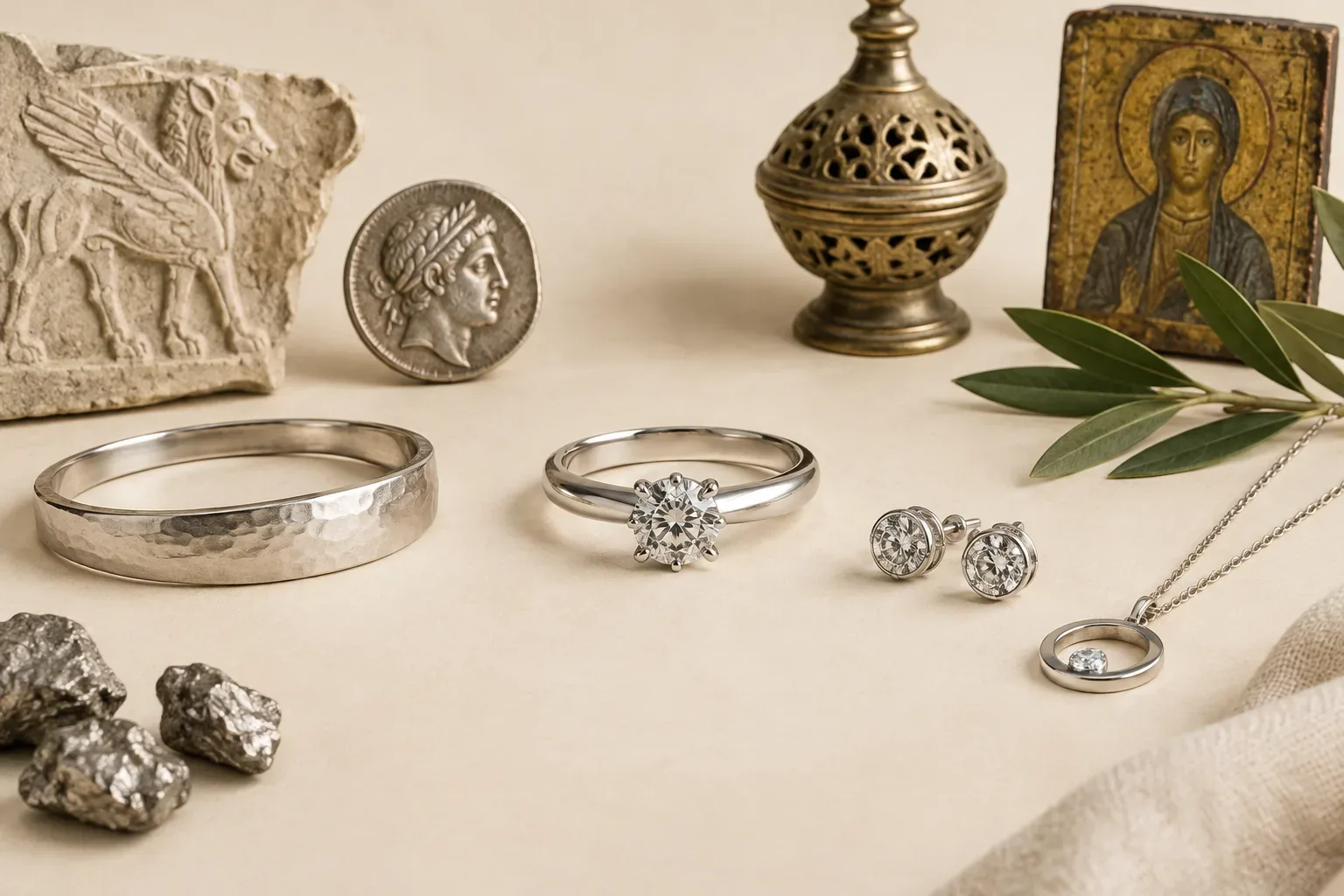
Meaning at a glance
Historically, durability has been a valued quality in metals used for jewelry; museums show materials and meanings have changed over time. Palladium's role as a modern jewelry metal is a recent development and is often discussed alongside other white metals. When choosing or gifting palladium, confirm disclosures and treatments, match the metal to the recipient's lifestyle and aesthetics, and follow conservative care—regular inspection, gentle cleaning, and professional servicing when needed.
What the historical record shows (and where that evidence comes from)
The history of jewelry — and the ways different cultures valued materials for durability, color, and social meaning — is documented and presented by major museum collections. The Victoria and Albert Museum’s surveys and exhibitions of jewelry trace how materials and meanings changed across periods and places, from ancient civilizations through Renaissance and modern Europe. Those resources show that different metals and gems were chosen for reasons that combined practical durability with status, ritual, or fashion, rather than for any single universal symbolic meaning.
When historians and curators catalogue jewelry, they separate technical factors (how a metal wears, how a gemstone is set) from the social contexts that give objects meaning. The V&A materials emphasize that a ring, brooch, or necklace can serve simultaneous roles: practical, decorative, commemorative, and symbolic, and that the relative importance of those roles shifts over time and across cultures.
The V&A’s work on gemstones also documents how particular stones and settings entered jewelry practice and how collectors and wearers interpreted them historically. That contextual approach is the right model when you ask about a modern metal such as palladium: instead of assuming an ancient lineage for the metal itself, place it within the broader patterns the museum identifies — changes in technology, taste, and social signaling.
Documented historical meanings versus modern interpretation
Documented historical meanings are those the museum record supports: for example, certain metals and gems functioned as markers of rank, as trade goods, or as part of devotional practice. The V&A frames these meanings according to period and culture rather than presenting them as universal symbols.
By contrast, the idea that a particular modern metal embodies a single, stable meaning — for example, that palladium alone symbolizes lifelong durability in the way some people read a wedding band — is a contemporary interpretation. Modern jewelers, designers, and buyers may ascribe personal or marketing-driven meanings to palladium (for instance, favoring it as a low-maintenance alternative to other white metals), but those are contemporary layers of meaning rather than long-documented cultural symbols in older records.
Put simply: historical sources document how and why groups used materials at specific times and places; modern personal and marketing interpretations about palladium’s symbolism are valid for individuals now, but they are not the same kind of historically documented meaning that museums record for older artifacts.
How the durability motif appears in jewelry forms and settings
When jewelers and buyers emphasize durability, that emphasis shows up in choices of metal, construction, and setting. In modern practice this can include using a denser or harder white metal for everyday rings, simpler settings that protect gemstones, or finishes that mask scratches. Museum surveys described by the V&A show similar patterns historically: makers chose thicker forms, protective bezels, and durable alloys when longevity was important to the object’s function.
Durability concerns also affect how gemstones are selected and set. The V&A’s A–Z of Gemstones highlights that gem species have differing toughness and wear characteristics, and that historically jewelers matched gem and setting to the intended use. Today, those same principles guide combinations with palladium: if a design prioritizes daily wear, the maker may choose secure prongs, bezel settings, or harder gem varieties to reduce risk of damage.
In terms of motifs, durability is not usually a visual symbol like a heart or knot; it is a design principle shaping form, proportion, and finish. A heavy, low-profile wedding band, for example, communicates an intention that the piece be worn continuously and withstand daily activity in a way that some delicate filigree pieces do not.
Selecting and gifting palladium: respectful, practical guidance
Start by separating symbolism from metallurgy. If you and the recipient want the metal to carry a particular meaning (durability, modernity, hypoallergenic qualities), discuss that explicitly rather than assuming the metal already carries that meaning historically.
Ask the maker for clear information. The Federal Trade Commission advises consumers to seek disclosure about treatments, alloy composition, and any enhancements for gemstones. For palladium, request the alloy specification or hallmark, information about surface treatments or plating, and whether the piece has been combined with other metals that could affect weight, color, or allergy risk.
Consider lifestyle and wear patterns. A person who works with their hands or prefers low-maintenance jewelry may appreciate a lower-profile, sturdier setting and a clean, unplated finish rather than delicate openwork. Conversely, if the recipient values heirloom aesthetics or particular surface finishes, match the design to their taste rather than assuming durability should be the top priority.
Match gemstones thoughtfully. Use the V&A’s guidance on gemstones to select stones that suit daily wear when durability matters. Harder, tougher gems and secure settings will make a piece more suitable for continuous wear.
Respect cultural and personal values. If the jewelry is intended to carry cultural or religious meaning for the recipient, research those traditions carefully. Museums like the V&A show how meanings vary widely by time and place; when in doubt, choose neutral language and ask the recipient or their close contacts about any important sensitivities.
Get written terms and service options. When buying a contemporary metal that may be less familiar to some buyers, retain the purchase paperwork, ask about resizing policies, warranty and repair services, and whether the retailer documents alloy content and any surface treatments.
Care and maintenance: conservative, practical practices
Because public documentation treats material claims as important commercial information, the safest approach to care is conservative and verifiable: inspect jewelry regularly for loose stones or worn prongs, keep pieces stored separately to avoid scratches, and clean with a soft cloth and mild, soapy water when needed. For stubborn soiling, use a soft brush and gentle detergents rather than abrasive agents.
Avoid exposing jewelry to harsh chemicals and environments that accelerate wear unless a maker has explicitly stated such exposure is safe for the specific piece. If the metal in a piece is an alloy rather than pure palladium, different alloys can behave differently; when you buy, ask the maker whether any household chemicals, pools, or hot tubs should be avoided.
For significant repairs or polishing, use a reputable jeweler who documents their work. Museums and responsible conservators distinguish between routine cleaning and invasive treatments; for modern wearable jewelry, minimally invasive maintenance preserves finish and structural integrity while professional repair addresses more serious issues.
If the piece includes gemstones, follow gemstone-specific care recommendations. The V&A’s gemstone guidance explains that some gems are more sensitive to heat, chemical exposure, or abrasion than others, and that the combination of metal and gem determines long-term wearability.
Putting history to work for modern choices
Use museum-based perspectives as a checklist rather than a prescription. The Victoria and Albert Museum’s work helps you to ask the right questions about durability, social meaning, and technical choices: who made the piece, what materials were chosen and why, and how the object’s intended use shaped its form.
Combine that historical perspective with practical consumer protections. The Federal Trade Commission’s guidance on buying gemstones, diamonds, and pearls underlines the importance of disclosure and clear information from sellers — a principle that applies equally to contemporary metals and alloys such as palladium.
Finally, treat the symbolism of durability as a living, personal layer of meaning. Whether you choose palladium for its marketed wear qualities, for aesthetic reasons, or because it matches the recipient’s values, document the metal content and care instructions and communicate the intention behind the gift so the object can be used and kept as intended.
Frequently asked questions
Does palladium tarnish?
Contemporary sellers commonly describe palladium and similar white metals as low-tarnish, but claims vary by alloy and finish. Treat statements about tarnish resistance as product-specific and ask the maker for alloy information and care guidance; the Federal Trade Commission recommends that buyers request clear disclosure about treatments and composition.
Is palladium hypoallergenic?
Whether a palladium piece is hypoallergenic depends on its alloying metals and any surface treatments. If allergies are a concern, request written details about the metal composition or a hallmark from the seller, and consider trying the metal in a wearable sample before committing to a daily-wear piece.
How should I clean and maintain palladium jewelry?
For routine cleaning, use a soft cloth and warm, soapy water and rinse thoroughly. Inspect settings periodically and seek professional jeweler servicing for polishing or repairs. Avoid harsh chemicals and abrasive treatments unless the maker states they are safe for the specific alloy and any gemstones present.
Is palladium more durable than other white metals?
Durability comparisons depend on the specific alloys, finishes, and design of a piece rather than the metal name alone. If comparative durability matters, ask the seller for alloy specifications, wear tests, or warranty information and consider the intended daily activities of the wearer when choosing a metal and setting.
What should I ask the retailer before buying palladium jewelry?
Ask for alloy composition or hallmark details, any surface treatments or plating, documentation of gemstone treatments, warranty and resizing policies, and recommended care. The Federal Trade Commission emphasizes that sellers should disclose material treatments and enhancements, and buyers should get clear information in writing.
Sources and further reading
- Bedazzled: A History of Jewellery — Victoria and Albert Museum
- An A-Z of Gemstones — Victoria and Albert Museum
- Buying Gemstones, Diamonds, and Pearls — Federal Trade Commission