Meaning at a glance
Agate is a patterned chalcedony material used in ornament for millennia; varieties, dyes, and trade names matter more to buying than universal spiritual claims, while normal quartz-family care is practical.
Quick answer
Agate jewelry meaning: Agate is a patterned form of chalcedony that has been used in personal ornament for centuries; historically it appears in many cultures as carved and set hardstone, but documented uses are material and decorative rather than universal spiritual prescriptions. For shoppers and gifters, the most important practical details are which variety or trade name you are buying, whether the stone has been dyed or treated, and how the piece is set and finished; for care, treat agate like other quartz-family gems with gentle cleaning and careful storage.
What agate is and why 'varieties' matter
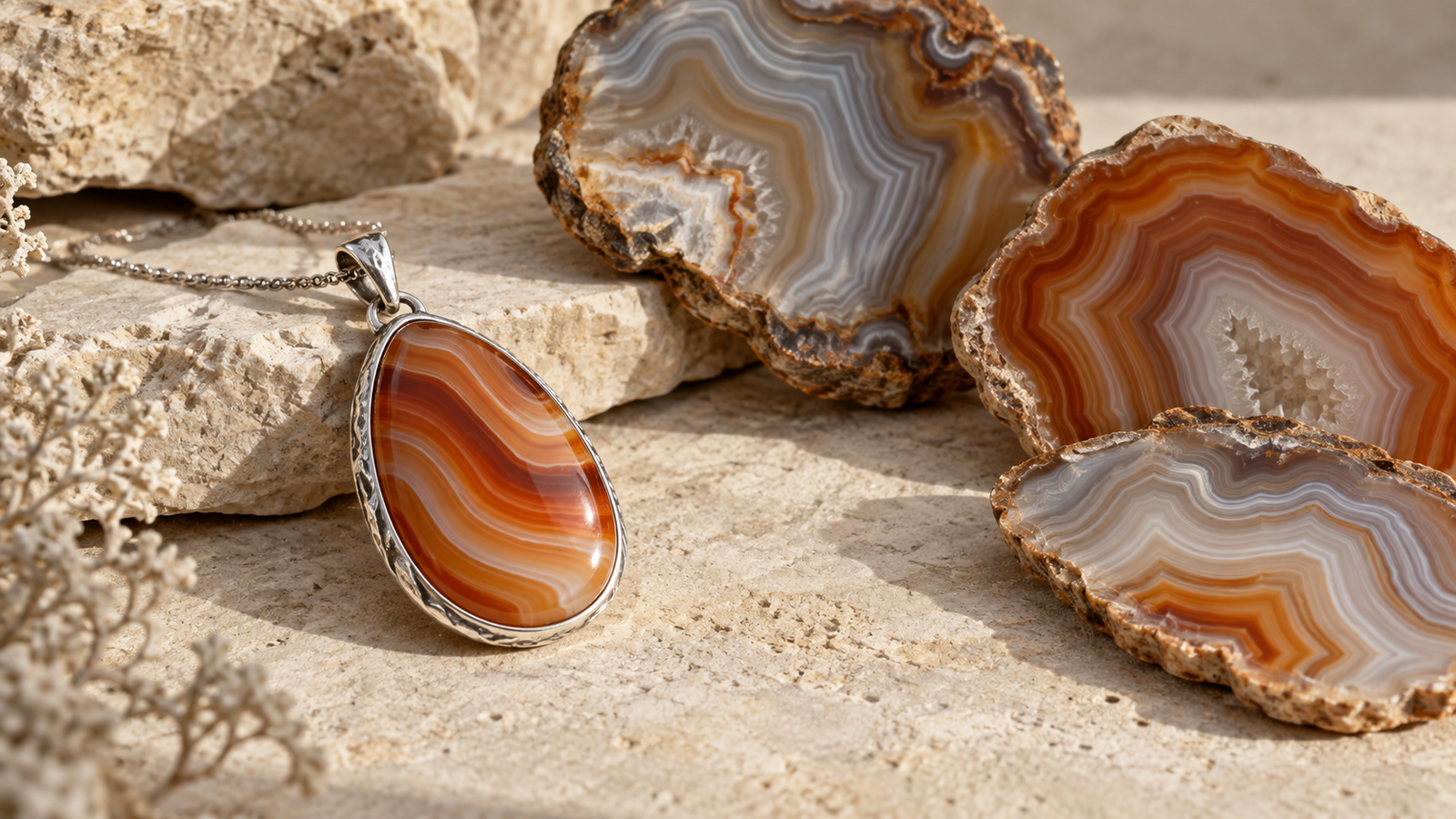
Agate is a patterned chalcedony, which is a microcrystalline form of quartz. The descriptive term covers a wide range of banding, veining, and inclusion patterns that collectors and jewelers distinguish by appearance and sometimes by trade names. Those visual differences—banding, dendritic or moss-like inclusions, translucent areas, and color distribution—are what people refer to as varieties. Because much of a stone's appeal comes from its pattern, understanding those variations matters when choosing or valuing agate jewelry.
In the retail context, trade names and treatments are important. As the Gemological Institute of America explains in its overview of early gemstone treatments, agates have a long history of being dyed or otherwise treated to enhance or standardize color, and transparency about those processes affects value and suitability for a buyer.
Documented historical use: what the museum record shows
Museum scholarship records widespread use of patterned chalcedony in ancient jewelry. The Metropolitan Museum of Art describes agate and other hardstones in Hellenistic jewelry contexts as durable, patterned materials used for carved gems, intaglios, and set ornament; these works show agate was valued for its natural banding and polish rather than for a single uniform symbolic meaning. The Met's Hellenistic Jewelry essay places such uses squarely in the ancient Mediterranean world and links the material's appeal to its visual qualities.
The Met also documents Chinese hardstone carving traditions that used similar silica-based materials for pendants, small carvings, and inlay, demonstrating that patterned hardstones were appreciated in different regions for their carving potential and surface qualities. These museum essays show continuity of agate-like materials in personal ornament across cultures, with local carving styles and uses differing by region and period.
Historical meanings versus modern personal interpretations
What is documented in museum and academic sources are the ways agate and other hardstones were used: as carved decorations, set gems, and signet or intaglio surfaces. Those records describe materials, techniques, and contexts rather than a single, universal metaphysical meaning. The Met's essays, for example, record how hardstones were crafted and worn in specific cultural settings without asserting a homogeneous spiritual attribute for the stone itself.
Modern meaning-making—personal spiritual beliefs, crystal-healing claims, and contemporary symbolic interpretations—are largely personal or community-based and not a continuation of a single documented ancient doctrine. Many people today find personal significance in agate's patterns or colors; that modern significance is valid as personal interpretation but should be distinguished from the documented historical record.
How agate appears in jewelry and ornament
In surviving antiquities and in modern practice, agate appears in several familiar forms. Museums show examples of carved hardstone gems: engraved intaglios and low-relief cameos set into rings and brooches during the Hellenistic period, and small carved pendants in Chinese hardstone traditions. Across time, jewelers and carvers have favored agate for cabochons that display banding, for beads, and for thin slices set into metal as inlays.
Modern artisans expand on these forms with polished pendants, bezel-set cabochons, carved focal beads, and faceted or tumble-polished pieces that highlight the stone's pattern. Whether an agate is used as a strung bead, a focal pendant, or an intaglio seal, the material is chosen mainly for its visual pattern, hardness suitable for carving and polishing, and the contrast of its bands and inclusions.
Buying agate: what to look for and what to ask
Because agates vary so widely by pattern and treatment, informed buying starts with three questions: what variety or appearance do you want, has the stone been treated or dyed, and how transparent is the seller about source and treatment? The Gemological Institute of America stresses that treatments and trade names have long been part of the market history for chalcedony materials, so clear disclosure is a key sign of reputable selling.
Examine photographs and, when possible, the piece in hand to see how the pattern reads against the setting. Fine agate jewelry shows interesting internal patterning without obvious surface flaws, and settings that protect thin slices or carved areas will keep the piece looking its best. Ask the seller if the agate has been dyed, stabilized, heat-treated, or otherwise enhanced. If provenance or historic use matters to you, request any available documentation about where the stone was sourced or when the piece was made.
Selection and gifting guidance with respect
Choose for the recipient's aesthetic and cultural context rather than relying on broad spiritual claims. If you are gifting to someone who values tradition or cultural meanings, take a moment to ask or learn whether a particular motif or carving style has a local or familial resonance. Museum essays show that similar materials have different cultural treatments and symbolic systems; respect those distinctions when selecting pieces that draw on specific cultural styles.
When gifting, be candid about treatments and trade names. A buyer or gift recipient who understands whether a stone is natural, dyed, or a trade-named variant can more fully appreciate the piece and avoid disappointment. For heirloom-style gifts, choose well-set stones in durable metal and consider an appraisal or written care instructions to accompany the gift.
Care and maintenance: practical guidance
Treat agate like other members of the quartz family: clean with a soft cloth and mild soap and water, rinse thoroughly, and dry before storing. Because agates are valued for surface polish and pattern, avoid harsh household chemicals or abrasive cleaners that can dull the surface or affect any surface treatments. Gentle, regular cleaning keeps the stone bright and helps reveal its pattern.
Store agate jewelry separately from harder gems or metal that could scratch its surface, and remove jewelry for heavy manual work. If a piece is visibly porous or if the seller discloses dyeing or stabilization, ask about cleaning limitations; some treatments can be affected by solvents or elevated temperatures. For valuable or historic items, seek professional conservation or advice from a jeweler experienced with hardstone pieces.
Summary
Agate is a patterned chalcedony used in jewelry and carving across many cultures and periods. Museum research documents its long use as a durable, decorative hardstone rather than a single universal symbol, and gemological sources highlight the market importance of trade names and treatments. When buying or gifting, prioritize disclosed information about treatments and the stone's appearance, and care for agate with the same gentle cleaning and thoughtful storage you would use for other quartz-family gems.
Frequently asked questions
Is agate the same as onyx or carnelian?
Agate is a patterned form of chalcedony and shares a quartz-family relationship with other silica minerals; trade names and regional naming practices vary, so ask the seller for specifics about how they are using a name.
Do agates need special cleaning methods?
No specialized cleaning is required: gentle soap, water, and a soft cloth are appropriate. Avoid harsh chemicals and abrasive cleaners, and follow any seller guidance if the piece is dyed or treated.
How can I tell if an agate has been dyed?
Clear disclosure from a reputable seller is the best indicator. Visually, dye can sometimes concentrate along fractures or voids and may look unnaturally uniform; if in doubt, ask for treatment disclosure or a professional opinion.
Are there historical spiritual meanings tied to agate?
Historical records preserved and discussed by museum scholarship describe agate-like hardstones as valued materials for carving and setting, but they do not support a single universal spiritual meaning; modern spiritual interpretations are personal or community-based rather than a uniform historical inheritance.
What should I ask when buying agate jewelry?
Ask about the stone's treatment or dye history, the trade name used, whether the piece is stabilized, the origin if known, and any return or authenticity policies; clear answers help ensure you get a piece that matches your expectations.
Sources and further reading
- The Early History of Gemstone Treatments — Gemological Institute of America
- Chinese Hardstone Carvings — The Metropolitan Museum of Art
- Hellenistic Jewelry — The Metropolitan Museum of Art