Meaning at a glance
Moonstone is a feldspar gem valued for adularescence; its historical and modern associations should be distinguished from its observable optical properties, buying factors, and care needs.
What moonstone is, and why it looks the way it does
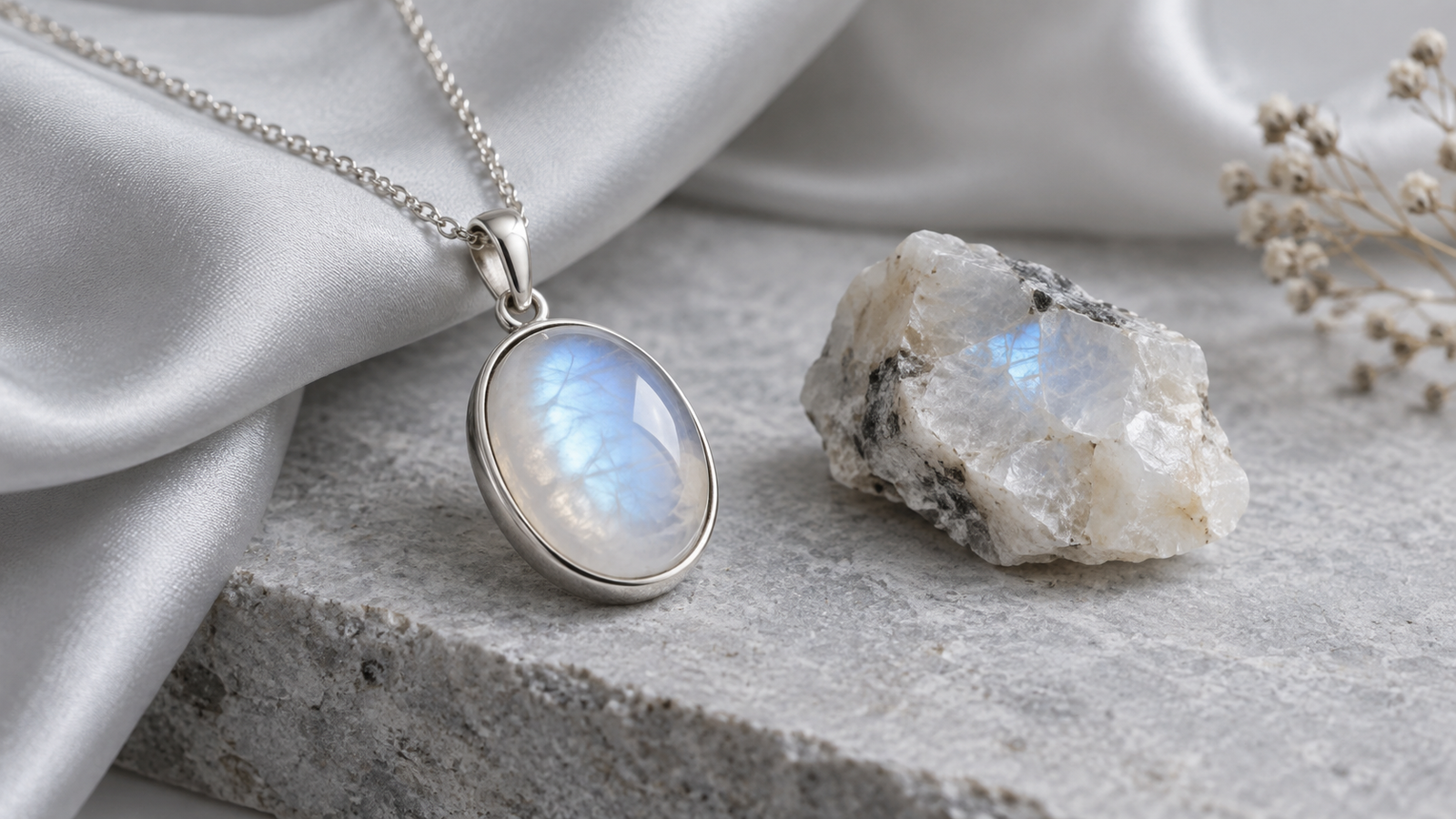
Moonstone is part of the feldspar mineral family. Its most recognizable visual effect—commonly called adularescence—is an optical phenomenon produced by light scattering between stacked layers within the mineral. The Gemological Institute of America (GIA) describes moonstone’s adularescence as an effect best shown in cabochon cuts and attributes the phenomenon to the stone’s internal structure.
The Smithsonian National Museum of Natural History also treats moonstone as a feldspar specimen with distinctive optical qualities and includes moonstone material in its mineral collections for study and display. Museum and gemological descriptions focus on composition, optical behavior, and provenance rather than on unverified spiritual claims, which helps ground practical identification and care recommendations.
Documented historical evidence and where moonstone appears in the record
Records held by museums and summarized by professional gemological authorities show that moonstone has been valued as a gem and used in jewelry over a broad geographic area. The Smithsonian National Museum of Natural History includes moonstone specimens and provenance records as part of its collections, and the Gemological Institute of America documents moonstone’s presence in historical and modern jewelry contexts.
Those institutional records identify several recurring contexts rather than a single, universal origin story. For example, gemological literature and museum collections reference South Asian sources for gem-quality feldspar—particularly material from Sri Lanka and nearby regions—as important suppliers of moonstone for both local use and export. Separately, European jewelry designers and houses included moonstone in decorative work during periods such as the late 19th and early 20th centuries; the GIA notes the stone’s prominence in certain historic design movements where its surface shimmer suited romantic and natural motifs.
Institutions such as the Smithsonian and GIA document provenance, stylistic appearances, and collecting histories, but they do not endorse particular symbolic meanings. Use, trade, and decorative preference appear in museum and gemological records; when specific cultural beliefs are recorded, those accounts come from historical texts, oral histories, or later collectors’ notes, and should be evaluated as separate from the stone’s physical properties.
Distinguishing documented historical meanings from modern personal interpretations
Historical documentation from museums and gemological bodies concentrates on where moonstone was mined, how it was cut, and how collectors and jewelers used it in different eras. Those sources emphasize material and stylistic information rather than universal symbolism.
Modern personal interpretations—such as ideas about moonstone’s association with emotion, intuition, or cyclical rhythms—are contemporary meanings that many wearers and sellers adopt. These interpretations are culturally and individually variable and are not supported by gemological evidence. Treat modern metaphysical claims as personal or community beliefs; they can be meaningful to wearers but should not be stated as inherent properties of the mineral itself.
How moonstone and moon motifs appear in jewelry
Because adularescence is best shown when light can move across a dome of polished surface, many gem cutters fashion moonstone into a cabochon rather than a faceted stone. The Gemological Institute of America’s moonstone buying guide explains that cabochon cuts maximize the visible adularescence and are commonly used in pendants, rings, and brooches.
Designers historically and today combine moonstone with motifs that evoke the night sky, for example crescent moons, full moon discs, and star patterns, but such motifs are design choices rather than documented symbolic mandates. Jewelry makers may choose silver, white gold, or platinum settings to complement the stone’s cool shimmer, and protective bezel settings or surrounded halo settings are often used to protect the relatively soft gem while showing its optical effect.
Practical guidance for selecting or gifting moonstone jewelry
When selecting moonstone, prioritize visible adularescence because that optical effect is the primary reason most people choose this gem. Look for a clean, well-centered shimmer that appears to glide under the surface when the stone moves under light. The GIA’s buyer guidance notes that cut and orientation affect how well adularescence is displayed, so examine how the stone looks in the intended setting and in different light angles.
Consider the recipient’s lifestyle and preferences. Moonstone tends to be used in more delicate or romantic styles and may not suit someone who needs highly durable daily-wear jewelry without protective settings. Choose secure settings such as bezels or elevated protective prongs if you expect the piece to get heavy wear. If gifting for cultural or symbolic reasons, ask the recipient or their close acquaintances about any cultural meanings attached to moonstone to ensure the gift is respectful and appropriate.
Ask your seller about treatments and origin. Reputable sellers and gemological reports can note whether the stone has been heat-treated or otherwise altered; the GIA advises buyers to request relevant disclosures. Finally, when purchasing a larger or high-value piece, consider asking for a written assessment or lab report that details the gem’s characteristics and any treatments.
Care and maintenance
Moonstone requires mindful care because the feldspar group includes relatively softer minerals compared with many traditional jewelry gemstones. The GIA moonstone buying guide advises general precautions: avoid exposure to harsh chemicals, prolonged heat, and abrasive cleaners which can damage the surface or affect the stone’s polish.
Routine cleaning can be done with a soft cloth and mild soap and water; rinse and dry gently. The GIA specifically cautions against using steam or ultrasonic cleaners for many moonstone jewelry pieces because those methods can stress the gem or the setting. When storing, keep moonstone pieces separate from harder stones to prevent scratches and consider storing in a small padded pouch or compartmentalized jewelry box.
If repair or repolishing is needed, seek a jeweler experienced with feldspar gemstones so that the cut and dome that produce adularescence are preserved. For heirloom pieces or items with historical or sentimental value, document provenance and any repairs to maintain long-term value and context.
Summary
Moonstone jewelry meaning begins with its geology and optical character: it is a feldspar-valued for adularescence, and that observable property explains much of its appeal. Museums such as the Smithsonian and professional gemological organizations such as the GIA document how moonstone has been used and traded, and those records should be kept separate from the modern personal or metaphysical meanings people may apply today. Practical buying choices favor strong adularescence, appropriate cuts and settings, and clear care instructions; treating moonstone with basic caution will help keep its luminous shimmer visible for years.
Frequently asked questions
What is adularescence and how does it affect moonstone jewelry meaning?
Adularescence is the optical effect—described by gemological authorities—that causes a soft, floating light beneath the stone’s surface. It is a physical property of moonstone and the primary reason people prize the gem visually; cultural or personal meanings are separate and derive from how wearers interpret that shimmer.
How should I clean and store moonstone jewelry?
Clean moonstone with a soft cloth and mild soap and water, rinse gently, and dry. Avoid steam and ultrasonic cleaners and stay away from harsh chemicals and prolonged heat. Store moonstone pieces separately from harder stones to prevent scratches and use padded compartments or pouches.
Is moonstone suitable for everyday wear?
Moonstone can be worn regularly if set and treated with care, but it is generally softer than many traditional everyday gems. Choose protective settings such as bezels for rings or pieces that will see frequent wear and be mindful of impacts and abrasive contact.
How do I choose a quality moonstone?
Select a moonstone with a strong, well-centered adularescence, good polish, and a cut—often a cabochon—that presents the effect clearly. Ask the seller about any treatments, provenance, and whether the stone comes with documentation for larger purchases. Viewing the piece in hand and under different lighting will help you assess the shimmer.
Are the symbolic meanings I see online historically documented?
Institutional sources like museums and the GIA focus on material, provenance, and stylistic history and do not endorse universal symbolic meanings. Many symbolic claims are modern or cultural interpretations; they may be meaningful to individuals or communities but are not inherent to the mineral itself according to gemological records.
Sources and further reading
- Moonstone — Gemological Institute of America
- Moonstone Buying Guide — Gemological Institute of America
- Moonstone — Smithsonian National Museum of Natural History