Meaning at a glance
Documented histories of gem cutting and setting show how social uses shaped styles; for tanzanite specifically, choose cuts and protective settings that highlight its color while limiting exposure to knocks and abrasion, and always ask sellers about treatments and disclosure.
What the historical record actually shows
Evidence collected by museum research describes how gem cuts and mounting styles have continually adapted to technology, taste, and social use. The Victoria and Albert Museum's exhibition material and articles explain that cutting techniques, from cabochon to brilliant, and setting choices, from closed mountings to open prongs, evolved in response to tools, fashion, and the social functions of jewelry.
For example, when brighter cutting and faceting methods became widespread, jewelers used open settings to let light into transparent stones; in periods where jewelry was more about durability or discreet display, closed settings and protective mountings were used. These broad shifts are documented as changes in jewellery production and use rather than fixed symbolic meanings tied to any single gemstone.
Separating documented historical meanings from modern interpretation
Documented meanings in the historical record tend to relate to the social use of jewelry—mourning rings, tokens of rank, or religious badges—rather than intrinsic symbolic properties of a specific modern gemstone. The Victoria and Albert Museum curates and interprets many such pieces and their contexts, showing how meaning derived from how an item was used, displayed, or regulated.
Modern interpretations that assign particular emotional or spiritual qualities to tanzanite—for example, describing the color as inherently calming or spiritually revealing—are contemporary personal or marketing readings. These modern associations can be meaningful to individuals, but they are not the same as the documented social or ritual uses that museums record for older jewelry forms.
How the motif appears in contemporary jewelry
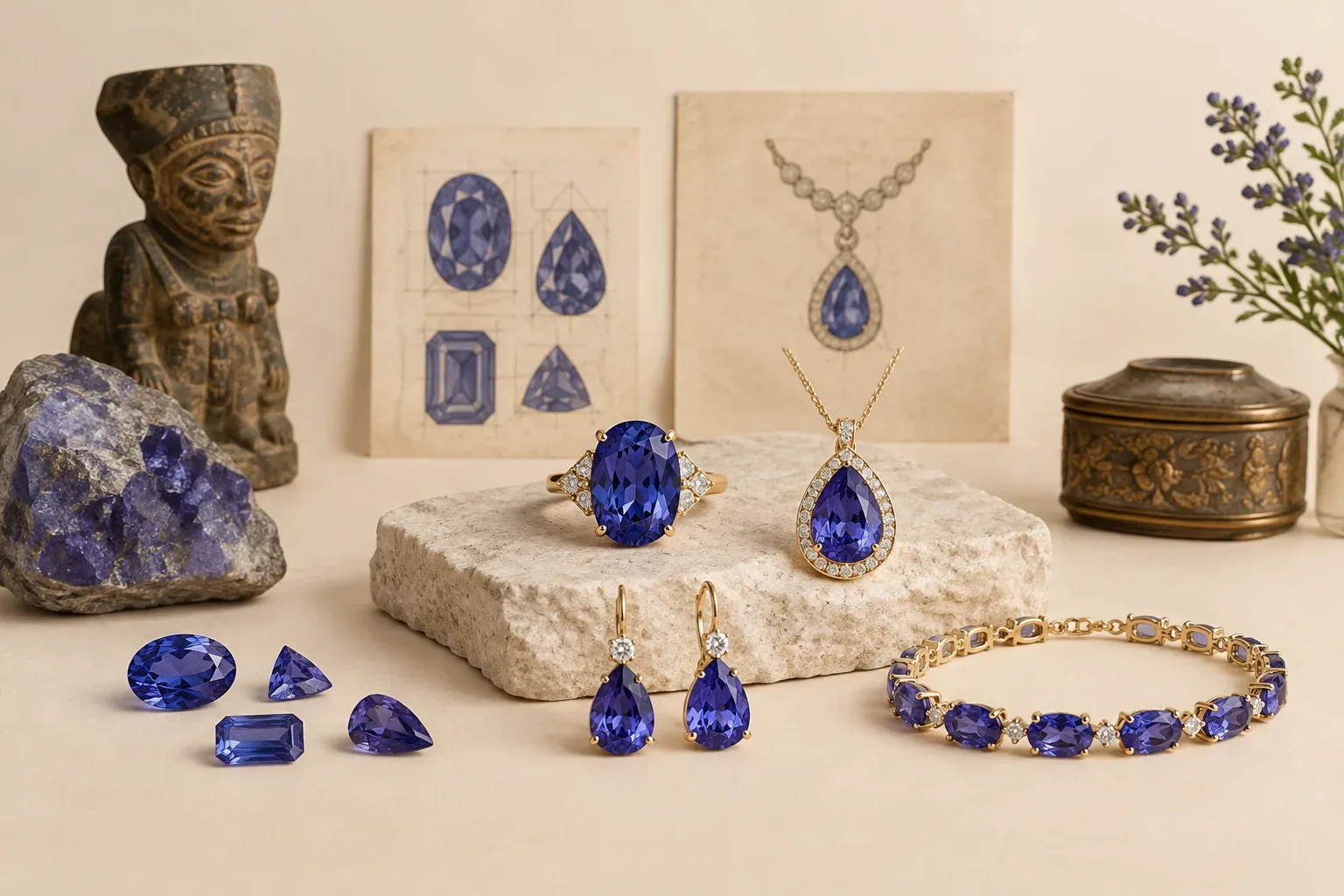
In modern jewelry, tanzanite usually appears as the central colored stone in rings, pendants, earrings, and bracelets. Designers choose cuts to emphasize either color or brilliance: deep blue–violet tones benefit from step cuts and cushions that show color depth, while mixed and brilliant cuts increase apparent sparkle under light.
Settings vary from classic solitaires in prongs that maximize light, to bezels and halo mountings that protect the stone and visually enlarge it. Designers sometimes combine small accent diamonds or gemstones to temper the vivid color and add scintillation. The way a modern piece is cut and set therefore communicates both aesthetic choices and practical intentions—whether the piece is designed primarily for occasional display or daily wear.
Practical guidance: choosing cuts for beauty and durability
Decide first how you will wear the piece. If you plan to wear a tanzanite ring daily, favor cuts and settings that reduce exposure to knocks and abrasion. Shallow or open prong settings can leave shoulders exposed; bezel or low-profile halo mountings and settings with protective metal shoulders are better for active wear.
For appearance, choose a step cut, cushion, or emerald cut to deepen and even out the stone’s color, or choose a round brilliant or mixed cut if you prefer more scintillation. Remember that deeper pavilion proportions concentrate color but can make the stone appear smaller face-up; shallow cuts may increase face-up size but can diminish color intensity. Balance color saturation with face-up size according to the look you want.
Practical guidance: choosing settings for longevity
Protective settings are a sensible default for gemstones that will see regular wear. A bezel setting wraps metal around the girdle and shields the edges from chips. Low-profile halos and partial bezels can offer protection while keeping the stone visually prominent. Prong settings give the most light entry but check that prongs are robust and that the crown is not excessively exposed.
Consider the mounting metal and construction. Heavier metal at the shoulders reduces the chance of the stone being knocked loose; secure, well-soldered settings and regularly checked prongs are essential for long-term durability. If the piece is an heirloom or will see heavy use, consult a reputable jeweler about reinforcement options.
Disclosure, treatments, and what to ask the seller
Federal Trade Commission guidance on buying gemstones emphasizes clear disclosure of treatments and whether stones are synthetic or imitation. Before buying, ask the seller to state in writing any known treatments, enhancements, or stabilizing procedures the stone has undergone and whether those changes are permanent.
Also ask about the stone’s provenance and any accompanying lab reports or return policy. If a seller cites a laboratory report, confirm which lab issued it and whether the report addresses treatments, cutting, and setting integrity. Good sellers expect these questions and will provide documentation or direct you to independent gemological testing if needed.
Gifting guidance: respectful and practical advice
When gifting tanzanite, consider the recipient’s lifestyle. For someone who is active with their hands, select a pendant, earrings, or a ring with a protective setting rather than a high-prong ring. If you are uncertain of taste, a small to medium stone set in a classic bezel or halo is a safe choice that balances beauty and practicality.
Be explicit about care expectations in a gentle way. Including a short note about recommended care—avoid rough wear, remove for household chores, and have settings checked periodically—helps the recipient protect the gift. If symbolism matters to you or the recipient, explain whether the meaning you assign is a personal interpretation rather than a historically documented attribute.
Care, repair, and long-term considerations
Plan for maintenance: have prongs and settings inspected by a professional jeweler at least once a year, or more often if the piece is worn daily. Regular inspection catches loose stones before they are lost. For cleaning, follow the jeweler’s advice; some treatments and inclusions can make aggressive cleaning or ultrasonic baths inappropriate.
If a stone is chipped or a setting damaged, seek experienced repair so that any re-cutting, re-setting, or reinforcement is done by a professional who understands both the gem’s properties and the piece’s design. Proper repair preserves both beauty and value over time.
Final note
Historical documentation, as interpreted by museum scholarship, shows that cuts and settings have always been shaped by a mix of technology, taste, and intended use. For modern gemstones like tanzanite, apply that same practical logic: favor cuts that achieve the look you want, and choose secure, appropriate settings for the way the jewelry will be worn. Confirm treatments and get written seller disclosures so your choice combines beauty with durability and transparency.
Frequently asked questions
What setting is best if I want a tanzanite ring for everyday wear?
For everyday wear choose a protective setting such as a bezel, low-profile halo, or sturdy prong work with reinforced shoulders; these designs limit the crown’s exposure to knocks and help prevent edge chipping.
Which cuts make tanzanite look more colorful?
Step cuts and cushions tend to concentrate and display color more evenly, while brilliant and mixed cuts increase sparkle; the best choice depends on whether you prefer depth of color or lively brilliance.
Should I ask about treatments when buying tanzanite?
Yes. Follow FTC guidance: ask the seller to disclose any known treatments, enhancements, or lab reports in writing before purchase so you understand what has been done to the stone.
Can tanzanite be cleaned in an ultrasonic or steam cleaner?
Cleaning recommendations depend on any treatments and the stone’s mounting; aggressive methods like ultrasonic or steam cleaning may be inappropriate for some gemstones or settings, so check with a jeweler first.
Is there a setting to avoid for tanzanite?
Avoid very high, thin-prong settings if you expect heavy daily wear, because they leave the stone exposed to impact; instead prefer secure mountings and protective metalwork.
Sources and further reading
- Bedazzled: A History of Jewellery — Victoria and Albert Museum
- An A-Z of Gemstones — Victoria and Albert Museum
- Buying Gemstones, Diamonds, and Pearls — Federal Trade Commission