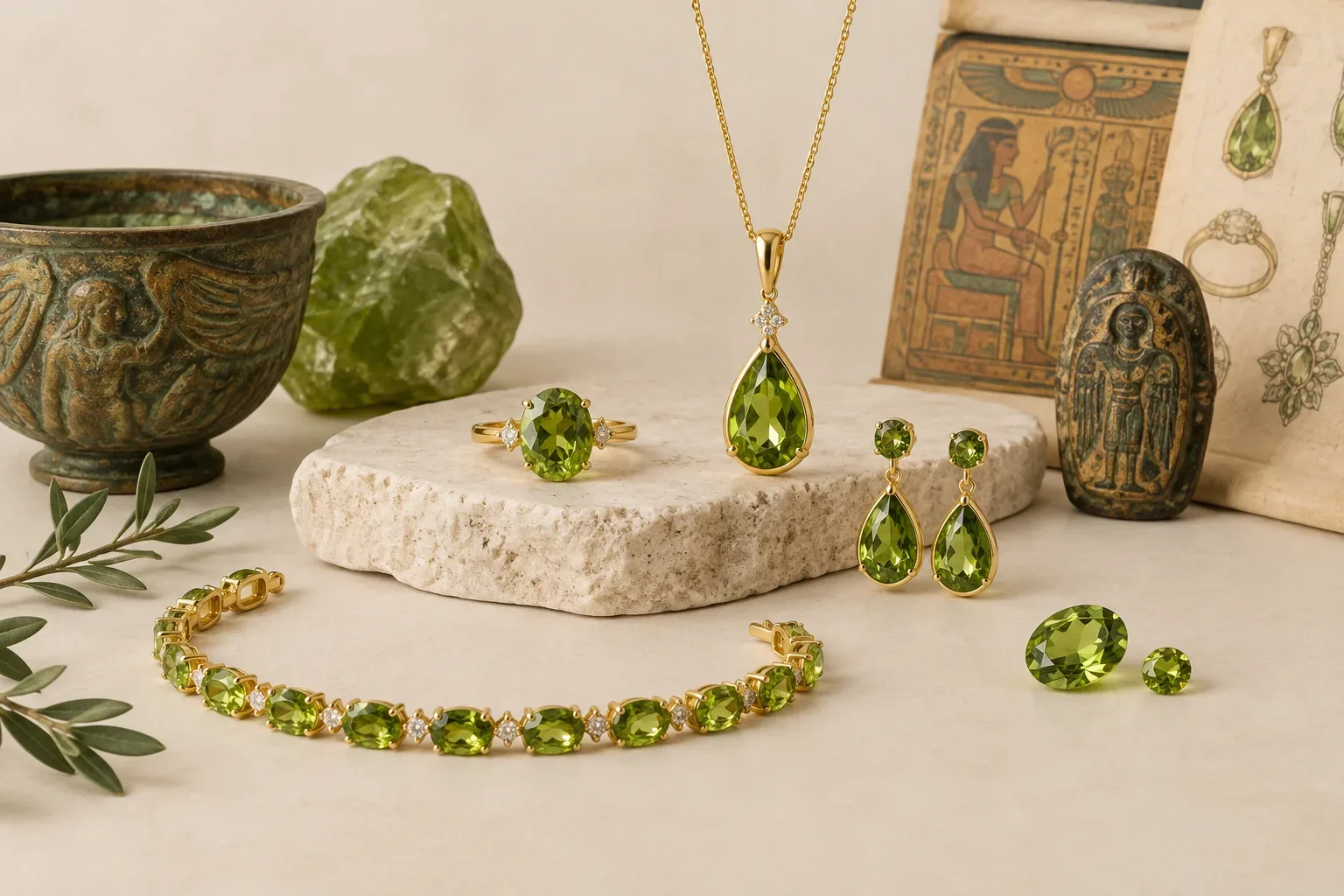
Meaning at a glance
Peridot can be cut and set in many ways that balance its lively green color with its mid-range durability; historical use is documented across several cultures by the Victoria and Albert Museum, while modern symbolic meanings often reflect contemporary tastes rather than continuous tradition. Choose cuts and protective settings that suit how the piece will be worn, and confirm treatments and disclosure when buying.
What the historical evidence shows (and where it comes from)
Museum documentation indicates that peridot has a long material history but varied cultural visibility. The Victoria and Albert Museum records peridot among the gemstones used in ancient and historic jewelry collections, noting its use in objects from ancient civilizations through later European jewellery traditions. These museum records focus on trade, craftsmanship, and changing fashions rather than a single, continuous symbolic meaning.
Specifically, the V&A describes peridot as appearing in jewelry associated with ancient Egypt and later in medieval and post-medieval European pieces displayed and studied by curators. The V&A’s broad surveys of jewellery history place peridot alongside other colored gemstones that entered and re-entered fashion across periods as tastes, technologies, and trade routes shifted. Where historic makers or owners assigned meanings, those associations are recorded by curators; where no clear intent is recorded, the V&A treats surviving jewellery primarily as material and social evidence rather than proof of a universal symbolic language.
Documented historical meanings versus modern interpretations
The surviving museum record offers intermittent, location-specific meanings rather than a single continuous symbolism for peridot. The Victoria and Albert Museum’s articles and collection notes make clear that in many periods peridot was valued for its color and availability and often documented as a fashionable or prestigious material rather than as a bearer of a single symbolic message. When museums can identify a deliberate symbolic use, they attribute it to a particular context and maker rather than to a universal tradition.
Modern personal and commercial interpretations—such as claims that peridot universally symbolizes calm, healing, or spiritual protection—are largely contemporary associations rather than direct continuations of a documented, specific historical symbolism. These modern meanings may be meaningful to wearers today, but they should be presented as personal or contemporary cultural interpretations rather than as established historical fact. Where you want to emphasize historical authenticity, rely on museum-cited contexts and avoid asserting universal ancient meanings that the evidence does not support.
How peridot appears in jewelry: cuts, settings and motifs
Peridot has been fashioned into a range of cuts and finishes to show off its green color. Historically and today, lapidaries use both faceted cuts and smooth cabochons to emphasize different qualities: faceting increases brilliance and can hide small inclusions, while cabochons emphasize pure color and a softer surface. Jewellery from different eras shows peridot in singular stones and in multi-stone arrangements, reflecting available cutting practices and stylistic trends documented in museum collections.
Settings used with peridot reflect the need to display color while sometimes offering protection. Prong settings leave more of the stone visible and maximize light return; bezel settings enclose the girdle and offer more protection to edges; cluster and halo arrangements place smaller stones around a center peridot to increase apparent size and security. Museum examples and modern makers also show peridot mounted in mixed-metal designs and in combination with contrasting stones to heighten the green hue. For pieces intended for frequent wear, museum-conserved examples and modern craft discussions favor settings that reduce direct exposure to impact and abrasion.
Practical guidance: choosing a cut and setting for durability and beauty
Decide how and how often the piece will be worn before choosing the cut and setting. For an everyday ring or bracelet, prioritize protective settings such as partial or full bezels, low-profile prongs, or halo designs that shield edges and faces from impact. For earrings and pendants that see less abrasion, more open prong settings can emphasize sparkle and light return. This approach balances the peridot’s attractive color with a practical assessment of likely wear.
Choose a cut that fits both the color you prefer and the setting style. Faceted cuts (round, oval, cushion, or step-like cuts) commonly enhance brilliance and conceal some internal features; cabochons suit larger, more intensely colored stones or antique-style pieces. When clarity is a concern, inspect stones under good light or ask to see magnified images; the right cut can minimize the visibility of inclusions while preserving color.
Ask dealers about provenance, treatments, and any enhancements before purchase. The Federal Trade Commission advises buyers to seek clear disclosure of treatments, synthetic stones, and imitations. Sellers should disclose whether a stone has been subjected to heat, coating, or any other treatment that affects appearance or durability. Documentation helps you understand long-term care needs and resale implications.
Consider metal choice and repairability. Settings in harder metals and with secure mountings are easier to maintain; fine chains and delicate prongs may require more frequent inspection. If you are commissioning a custom setting, work with a jeweller experienced in mounting semi-precious colored stones so that the final piece balances aesthetic goals with structural security.
Factor in insurance and maintenance for pieces you will wear often. Routine checks by a jeweller to assess prong wear, bezel integrity, and clasp condition will extend the life of the piece and keep the peridot secure.
Respectful selection and gifting guidance
When giving peridot as a gift, be explicit about the source of any historical or symbolic claim. If you link the stone to a historical story or cultural practice, identify that connection as a modern interpretation or as a museum-documented context where appropriate. Using references from trusted institutions—such as the Victoria and Albert Museum—helps receivers understand whether an association is historically recorded or a contemporary personal meaning.
Consider the recipient’s lifestyle and preferences as the primary guide. Someone active with frequent hand use will appreciate a low-profile, protective setting; someone who values display and occasional wear may prefer a more open, light-maximizing cut and setting. Fit the design to the wearer’s metal preferences and daily needs rather than relying solely on symbolism.
Provide care instructions and, where possible, receipts or disclosure statements about treatments. This practical information supports long-term enjoyment and helps the recipient make informed decisions about maintenance and insurance. If you are presenting the piece as a meaningful token, explain your reasoning in your own words rather than asserting unverified historical claims.
Design trends and conservational notes from museum practice
Museum collections and exhibitions, as presented by the Victoria and Albert Museum, demonstrate how changing fashions, technologies, and trade routes have affected the appearance and use of colored gemstones like peridot. Curators focus on material, craftsmanship, and social context, which can suggest why certain cuts or settings were popular in particular periods. Using museum catalogues and articles can inform historically inspired designs without attributing anachronistic meanings.
Conservators also note that different settings and cuts affect long-term preservation. Objects intended for display have sometimes been adapted or restrained from daily wear; modern owners planning to wear peridot regularly should heed maintenance practices to avoid chipping, abrasion, or loss.
Final considerations
Peridot is a lively green gemstone with a documented presence in jewelry histories recorded by institutions such as the Victoria and Albert Museum. Choosing peridot cuts and settings is therefore primarily a matter of balancing color, clarity, and the likely wear scenario, and of making informed buying decisions that account for treatments and disclosure as advised by the Federal Trade Commission. Keep historical references precise and context-based, and present modern symbolic meanings as contemporary personal or cultural interpretations rather than as universal historical fact.
Frequently asked questions
Is peridot suitable for everyday wear?
Peridot can be worn every day if you choose protective cuts and settings and commit to routine care. For frequently worn rings and bracelets, prefer low-profile bezels or protective halos and inspect mountings regularly. Museum practice and contemporary jewellers both treat peridot as a semi-precious stone that benefits from sensible protection rather than constant exposure to knocks.
Which settings best protect a peridot?
Bezel settings and halo designs offer more protection to girdles and edges than high, open prong settings. Low-profile prongs or partial bezels reduce the chance of accidental impact. The Victoria and Albert Museum’s catalogues and conservation notes show that both historical and modern mountings are chosen with consideration for a stone’s exposure and fragility.
How can I be sure a peridot is natural and untreated?
Ask the seller for clear disclosure and any available documentation. The Federal Trade Commission advises buyers to request information about treatments, enhancements, or imitations. Reputable dealers will disclose heat treatments, coatings, or the presence of synthetics and should provide receipts or certificates when available.
Are there historical symbolic meanings I should mention when gifting peridot?
Museum documentation shows intermittent, context-specific uses of peridot across periods rather than a single universal symbolic meaning. If you wish to reference history when gifting, cite a specific documented context from a trusted source such as the Victoria and Albert Museum and explain whether you are using that context as inspiration or asserting a continuous tradition.
What cut will best hide inclusions in peridot?
Faceted cuts that enhance brilliance—such as oval, cushion, or mixed cuts—often help minimize the appearance of small inclusions compared with flat-top cuts. When clarity is a concern, ask to view the stone in good light or under magnification; the right cut and careful selection can reduce the visual impact of inclusions while preserving color.
Sources and further reading
- Bedazzled: A History of Jewellery — Victoria and Albert Museum
- An A-Z of Gemstones — Victoria and Albert Museum
- Buying Gemstones, Diamonds, and Pearls — Federal Trade Commission