Meaning at a glance
Peridot is historically a widely used, usually untreated gemstone; modern buyers should ask sellers about natural origin, any treatments or imitations, lab reports, testing methods, and return policy to make an informed purchase.
Short answer: what buyers need to know
Peridot is traditionally a naturally occurring green gemstone that, unlike many popular gems, has not been commonly subjected to the kinds of enhancement treatments used on sapphires or emeralds; however imitations and look-alike materials have long circulated and continue today. Ask whether the stone is natural, whether it has been treated or stabilized, whether it is a simulant or synthetic, what testing or certification the seller can provide, and what recourse you have if the piece is misdescribed.
Documented historical evidence and where it appears
Museum research and public interpretation at the Victoria and Albert Museum trace the use of gemstones across many periods and cultures, from antiquity through the medieval and modern eras, and they place individual gems in changing social and decorative contexts. The V&A's resources on jewellery history and its A–Z of gemstones explain how different societies prized colored stones for status, color symbolism, and ornamentation rather than for uniform, universal meanings. Those same V&A materials are the primary museum-backed sources for understanding how gemstones, including green stones like peridot, appear in the archaeological and decorative record.
Separating documented meanings from modern personal interpretations
Documented historical meanings for gemstones tend to come from written records, inventories, and museum interpretation that link specific stones to uses such as religious ornament, courtly display, or trade goods. The Victoria and Albert Museum emphasizes how meanings shift with context: a stone used in a religious object in one period might be chosen primarily for its color or availability in another.
Modern, personal meanings—such as assigning specific emotional properties, astrological effects, or fixed symbolic associations to peridot—are contemporary interpretations and vary by individual, culture, and retail narrative. Such personal or marketing-driven meanings are not universal and should be distinguished from the descriptive, provenance-focused claims that museums and scholars document.
How peridot shows up in jewelry (historical and modern contexts)
In both historical collections and modern design, green stones have been used for their color, brilliance, and fashionability. Museum-level discussions at institutions such as the V&A show that gem choices reflect supply, technology, and taste: gems appear in crowns, religious items, personal brooches, and later in mass-produced jewelry when cutting and setting technologies made them widely available.
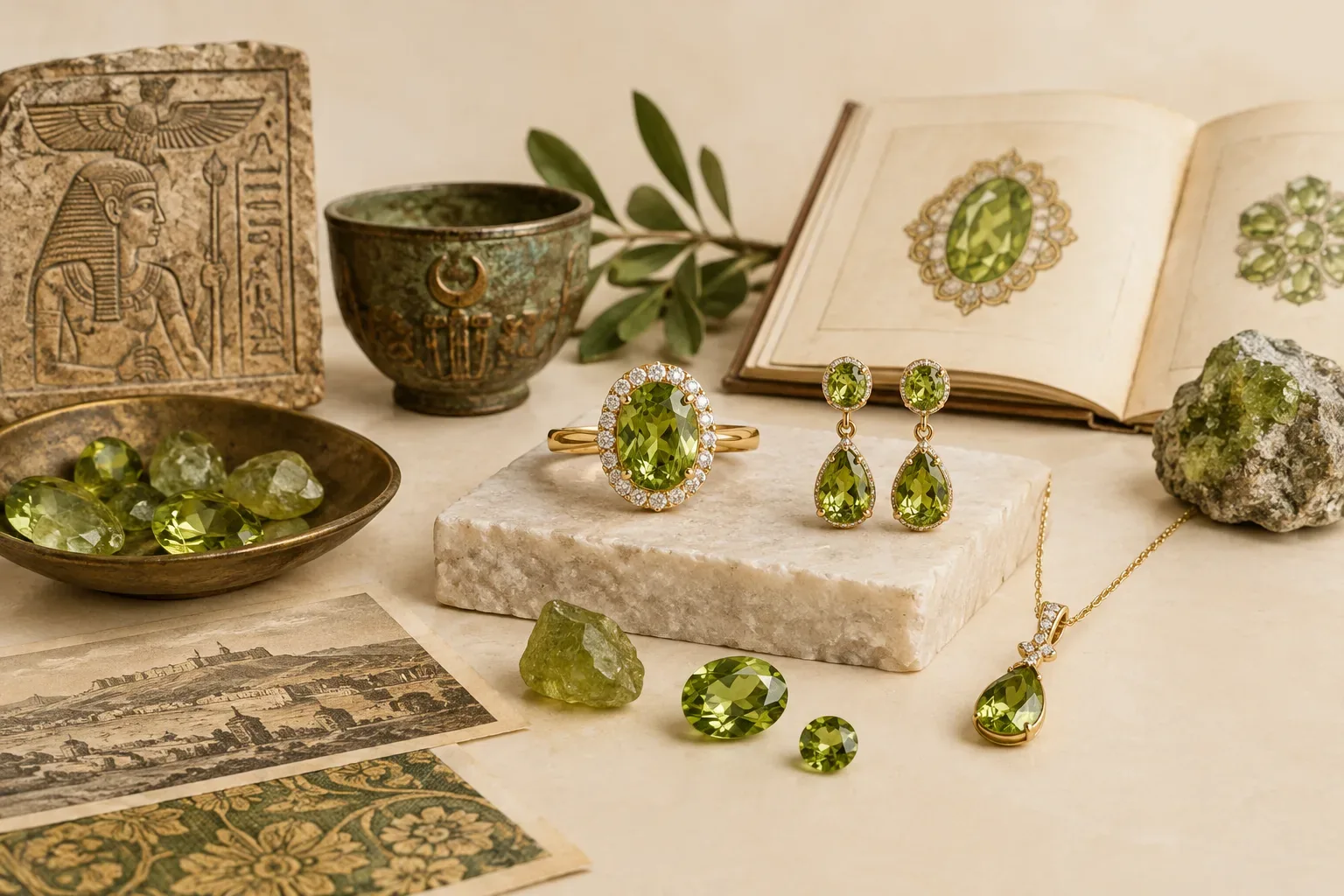
Today peridot appears in a wide range of jewelry forms—rings, earrings, pendants, and more—often set to display its green hue. Jewelry makers choose peridot for color contrasts, for seasonal collections, and for customers who prefer a bright, yellow-green tone that differs from darker greens like emerald.
Treatments, imitations, and what that means for buyers
Peridot is generally not a gem that is heavily or commonly treated in the way other stones are, but imitations and simulants—materials sold to resemble peridot—have been used historically and in contemporary markets. The Federal Trade Commission's guidance on buying gemstones, diamonds, and pearls stresses that sellers must disclose treatments, synthetics, and imitations and that buyers should be vigilant about accurate descriptions and labelling.
Common imitations in the wider green-gem market have included green glass and other green-colored simulants, which can look similar at a glance but differ materially. Synthetic gems and some treated materials can also be presented as lower-cost alternatives. Because visual similarity can be deceptive, written disclosure and, when appropriate, independent testing are the most reliable ways to confirm whether a stone is a natural peridot, an enhanced peridot, a synthetic, or a simulant.
Practical questions to ask a seller
Ask these concise questions before buying: Is the stone natural peridot? If so, has it undergone any treatment or stabilization? If it is not natural, is it a synthetic or a simulant? Can you show documentation, a lab report, or a written disclosure that confirms the stone’s identity and any treatments? What testing method did you use to identify the stone? What is your return policy if an independent lab report contradicts the description? Who performed the appraisal or identification and can you share credentials?
For higher-value peridot purchases, request a report from a recognized gemological laboratory. For more modest purchases, a reputable seller should still provide clear, written statements about the stone and let you see the piece in good light. The FTC guidance makes clear that disclosure is the buyer’s right and the seller’s responsibility.
Selection and gifting guidance (practical and respectful)
When selecting or gifting peridot, start with the recipient’s tastes—color preference, metal choice, and style over status-driven claims about universal symbolism. If you want the stone to carry a particular meaning, make that intention explicit in the gift note rather than relying on broad cultural claims. This respects both the historical record (which is often complex and place-specific) and the recipient’s personal associations.
Balance aesthetics with verification: if the piece is an investment or has sentimental importance, insist on documentation about the stone’s identity and any treatments. For everyday fashion jewelry, prioritize a reputable seller, clear return terms, and a price that reflects the lack of costly certification. Finally, respect cultural contexts: when repurposing historical motifs or sacred forms, research and, when appropriate, acknowledge their origins; the V&A’s writing on jewellery history highlights how context determines meaning.
Quick care and post-purchase steps
After purchase, keep documentation together with the jewelry and consider having high-value pieces photographed and appraised for insurance. General care—storing jewelry separately, protecting gems from sharp knocks, and following the seller’s cleaning guidance—helps preserve peridot and other stones. If you ever doubt a stone’s identity, an independent gemological lab or a reputable jeweler can perform confirmatory tests and provide a written report.
Frequently asked questions
Is peridot usually treated or enhanced?
Peridot is generally not as commonly treated as some other gemstones; however, treatments or stabilizing processes can occur in the trade, and sellers must disclose any such treatments. Ask the seller directly and request written disclosure or a lab report for high-value pieces.
How can I tell if a green stone is a natural peridot or an imitation?
Visual inspection alone can be misleading. Request written identification from the seller, ask whether the stone is natural, synthetic, or a simulant, and for important purchases obtain a lab report from a recognized gemological laboratory. The Federal Trade Commission advises buyers to require disclosure about origin, treatments, and imitations.
What should I ask a jeweler before buying peridot jewelry?
Ask whether the stone is natural peridot, whether it has been treated, whether any enhancements are permanent or reversible, what documentation or lab testing supports the claim, who performed the identification, and what the store’s return policy is if independent testing contradicts the seller’s description.
Is a lab report necessary for all peridot purchases?
Not for every piece. For lower-cost fashion jewelry, clear seller disclosure and a good return policy may suffice. For higher-value items, a lab report from a reputable gemological laboratory provides reliable confirmation of identity and any treatments and is recommended.
Will museums or historical sources tell me how peridot was used in the past?
Yes—museum resources such as the Victoria and Albert Museum document how gemstones have been used across different periods and cultures and emphasize that context matters. Those resources help separate historically attested uses from modern or personal interpretations.
Sources and further reading
- Bedazzled: A History of Jewellery — Victoria and Albert Museum
- An A-Z of Gemstones — Victoria and Albert Museum
- Buying Gemstones, Diamonds, and Pearls — Federal Trade Commission