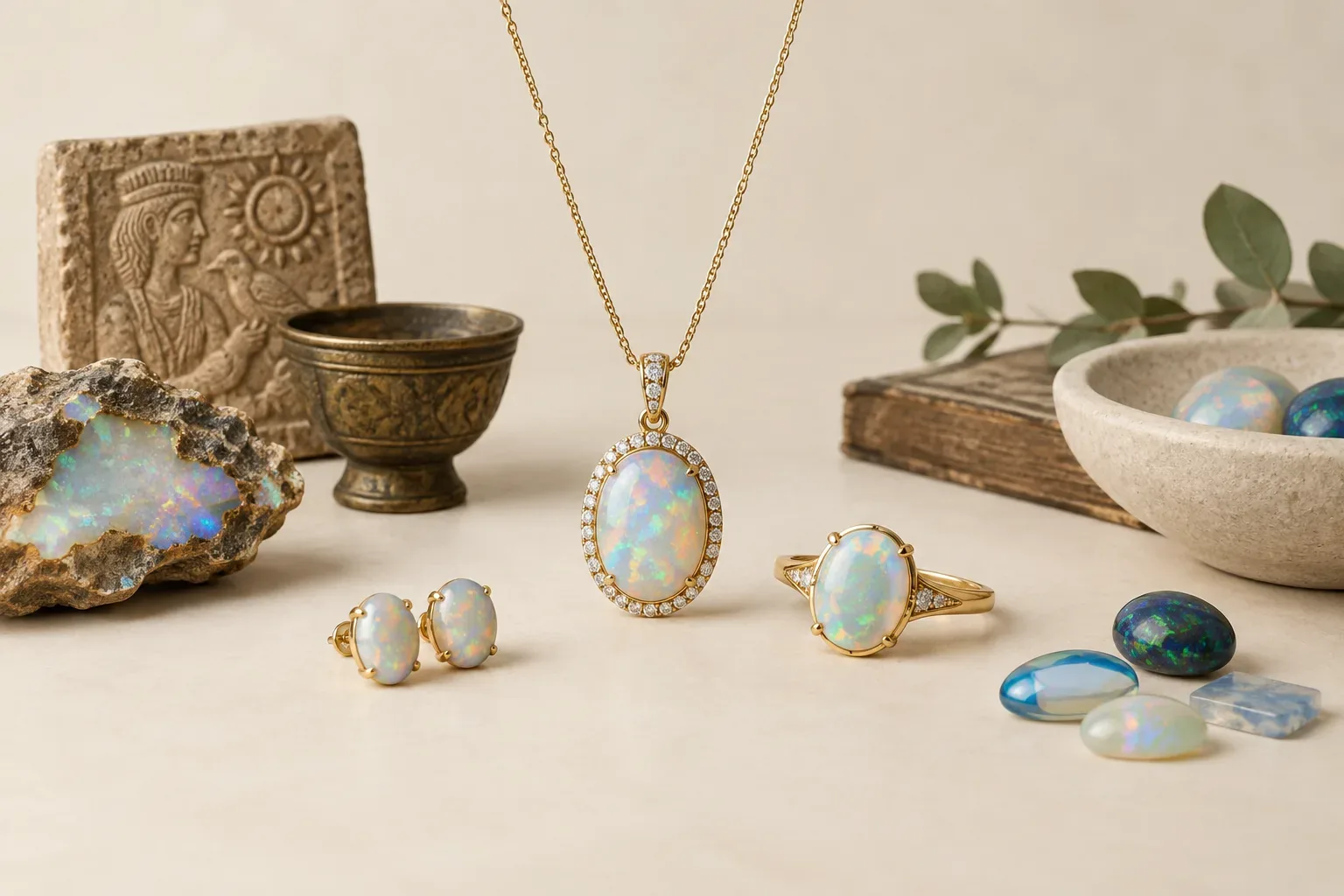
Meaning at a glance
Explain the documented history and changing contexts of the opal treatments and imitations motif, separate cultural or religious evidence from later popular interpretations, and give practical guidance for choosing and wearing the motif in modern jewelry.
What we mean by treatments and imitations
In jewelry trade language, "treatments" are intentional processes applied to a natural gem to change or stabilize its appearance, and "imitations" or "simulants" are materials made or assembled to look like a natural gemstone. "Synthetic" stones are laboratory-grown materials with the same chemistry and crystal structure as the natural gem. For opals, these categories can include enhanced natural material, assembled stones made to show play-of-color, lab-created opal, and manufactured substitutes. The Federal Trade Commission advises consumers to expect accurate disclosure from sellers about whether a gem has been treated or is an imitation or synthetic, and to ask for documentation when a purchase carries significant value.
Documented historical evidence and changing contexts
Museum research and curatorial writing show that how people made, used, and valued gemstones has changed repeatedly over long histories. The Victoria and Albert Museum's materials on jewellery history and gem identification describe these shifts in social context and technology and how new manufacturing techniques and global trade affected what was worn and sold. The V&A's Bedazzled exhibition and its A–Z of gemstones emphasize that the contexts for wearing gems—from courtly display to mass-market fashion—shape what counts as desirable or acceptable in a given period.
Historically, the appearance and availability of opal changed with mining, cutting, and mounting practices. Curators at the V&A note that as jewellery fashions and technologies evolved across periods such as the Victorian era, Art Nouveau, and into the 20th century, makers altered how opal was cut, set, and sometimes combined with other materials to achieve different effects. These are documented shifts in jewellers' practice, not single universal meanings attached to the stone.
Separating documented historical meanings from modern interpretations
The V&A’s work illustrates documented changes in how gems were used and valued, but that evidence is about practice and taste rather than fixed, universal symbolism. Historical associations attributed to opal in a particular place or era should be described as the beliefs of that time and culture, not as global or eternal truths. When museums and curators discuss symbolism, they link meanings to specific social contexts—such as mourning jewellery practices, fashionable aesthetics, or technological novelty—rather than claim a single, consistent religious meaning across cultures.
Modern personal or popular interpretations of opal—such as assigning specific metaphysical properties or universal emotional messages—are usually contemporary readings or individual beliefs. These personal meanings are valid for the wearer but are not the same as documentary historical evidence. If you choose opal for a symbolic reason, make clear whether the meaning is a historically documented association from a named culture or a modern personal sentiment you intend to convey.
How treatments and imitations appear in jewelry
Opal has been set in a wide range of jewellery styles and techniques, from delicate Victorian brooches and Art Nouveau pendants (objects discussed by museum curators at the V&A) to modern rings and mass-market pieces. Treatments and imitations appear in finished jewellery in ways that affect durability, appearance, and value. For example, some opals are presented as single, solid stones; others are assembled by makers to enhance play-of-color or to protect a thin slice of opal by backing or capping it with other materials. Laboratory-made opals and manufactured substitutes can also be set into metalwork that resembles historical or contemporary designs.
Visible differences in how a stone sits in a setting, its thickness, or how the color changes at the edge may be cues a trained seller or gem lab can confirm. Museum documentation emphasizes that changes in technique—such as mounting thin material to make it wearable—are features of jewellery history rather than inherently deceptive practices, but modern retail norms require clear disclosure when a stone is assembled, treated, or synthetic.
Questions to ask sellers — practical, respectful, and effective
Ask plainly whether the opal is natural, treated, assembled, or synthetic, and request that the seller explain any treatment or assembly in writing. For significant purchases, ask whether a trusted independent laboratory report is available or recommended. The Federal Trade Commission recommends that sellers disclose treatments and imitations; buyers have the right to clear information before purchase. Asking for origin, care instructions, and the seller's return policy are also reasonable and practical.
Use neutral language and avoid implying bad faith. Most reputable dealers welcome questions about treatments and disclosure because transparency builds trust. If a piece is intended as a meaningful gift, explain why the origin or construction matters to you so the seller can suggest alternatives that match the recipient’s taste and expectations.
Selection and gifting guidance
If you value natural, solid opal for durability and long-term value, request documentation and prioritise reputable vendors who provide lab reports for higher-value items. If you want the visual effect at a lower price or for everyday wear, consider assembled pieces or synthetic opals—but make sure these are clearly labelled and that you understand any special care needs. For heirloom or sentimental gifts, consider how the recipient will wear and care for the piece and whether they prefer something historically authentic or visually striking regardless of construction.
Respect the recipient’s taste: if the gift’s meaning depends on historical or cultural associations, be precise about the source of that association. If the meaning is personal—an inside story, a memory, or a contemporary sentiment—say so; personal meanings are often more important to the recipient than technical purity. Finally, ask about setting choices that protect thin or delicate opal, and make sure the piece comes with clear care guidance and a reasonable return period if expectations are not met.
Care and long-term considerations
Different types of opal constructions have different care profiles. Sellers should explain how to avoid sudden temperature changes, prolonged exposure to water or solvents, or abrasive contact, and whether routine maintenance is recommended. Because assembled or treated stones can behave differently from solid natural opal, full disclosure helps buyers plan for repair and conservation. Museums such as the V&A document how different mounting and material choices were historically used to make fragile materials wearable, and modern consumers should similarly expect practical information from sellers.
Final practical checklist
Before you buy, ask whether the opal is natural, treated, assembled, or synthetic and request written disclosure. For higher-value purchases, ask for an independent laboratory report that describes the stone and any treatments. Ask about origin, care, return policy, and whether the setting is appropriate for everyday wear. If the jewel is a gift with symbolic meaning, clarify whether that meaning is a documented cultural association or a modern personal sentiment and communicate that clearly when giving. Sellers who provide clear, courteous answers and documentation are more likely to offer pieces that meet your aesthetic and practical expectations.
Frequently asked questions
What should I ask first when a seller shows me an opal?
Start by asking whether the opal is natural, treated, assembled (for example backed or capped), or synthetic. Request a clear verbal explanation and written disclosure. For higher-value items, ask whether an independent laboratory report is available or recommended.
Are assembled opals (doublets or triplets) less valuable than solid opal?
In the market, assembled stones are generally regarded as different in value from solid natural opal because they combine materials to enhance durability or appearance. Whether that matters depends on your priorities for appearance, budget, and longevity; either option can be appropriate if the seller discloses the construction.
How do I know if an opal has been treated or stabilized?
The most reliable approach is to ask the seller for a description and any documentation and, for significant purchases, to obtain an independent gem laboratory report. Sellers should be able to describe treatments and care needs; the Federal Trade Commission advises that such information be disclosed to buyers.
Do synthetic opals look different from natural ones?
Lab-grown opals can show the same chemistry and play-of-color as natural opal, but they are manufactured. Appearance alone can be misleading, so disclosure and, for expensive pieces, laboratory certification are the practical ways to confirm whether a stone is synthetic or natural.
What care considerations should I know before buying opal jewelry?
Ask about the stone’s construction and any special care guidance. Some opal constructions are more sensitive to heat, chemicals, or impact than others. A reputable seller will explain appropriate cleaning methods, advise on everyday wear, and recommend preventive care to avoid damage.
Sources and further reading
- Bedazzled: A History of Jewellery — Victoria and Albert Museum
- An A-Z of Gemstones — Victoria and Albert Museum
- Buying Gemstones, Diamonds, and Pearls — Federal Trade Commission