Meaning at a glance
Documented museum sources show that amethyst has been cut and set in diverse ways across periods and cultures as cutting technology and social uses changed; separate those historical records from later personal or spiritual interpretations, and choose cuts and settings that balance color display with secure mounting and clear disclosure about any treatments.
Quick answer
Amethyst cuts and settings have shifted with cutting technology, fashion and social meaning; museum documentation shows this long history, while modern personal or spiritual interpretations are contemporary and subjective. When choosing or gifting amethyst today, prioritize a cut that flatters the stone’s color, a setting that protects the gem in intended wear, and clear seller disclosure about treatments or imitations.
What the historical record shows
Museums that collect jewelry and gemstones, notably the Victoria and Albert Museum, trace amethyst’s presence in objects from antiquity through medieval and later European material culture and into modern decorative jewellery. These collections and interpretive materials show that both the way stones were cut and the ways they were set evolved as lapidary skills and tastes changed.
The V&A’s overviews describe how earlier jewellery often used polished or modestly shaped stones mounted in settings that emphasized form and function, while advances in cutting and faceting from the late medieval into the modern period made new optical effects possible and encouraged different fashions in mounting. The same V&A material explains that the social meanings attached to particular gems and colors changed with time and place, so a stone’s role in a courtly, ecclesiastical, or sentimental object cannot be assumed to mean the same thing in another culture or era.
Documented historical meanings versus modern interpretations
Documented meanings: museum interpretation, as represented by the Victoria and Albert Museum, links gemstones and their colours to specific historical contexts—for example, jewellery worn in court or church could signal rank, status, or function within those institutions. Those are contextual readings rooted in material and archival evidence rather than universal symbolism.
Modern personal interpretations: many people today read contemporary personal, aesthetic or spiritual meanings into amethyst—such as ideas about calm, intuition or personal transformation. Those modern meanings are valid as personal or cultural practices, but they are not the same as the historically documented uses and meanings shown in museum records. It is important to distinguish between what is evidenced in historical objects and what is a recent or individual interpretation.
How amethyst cuts and settings appear in jewelry
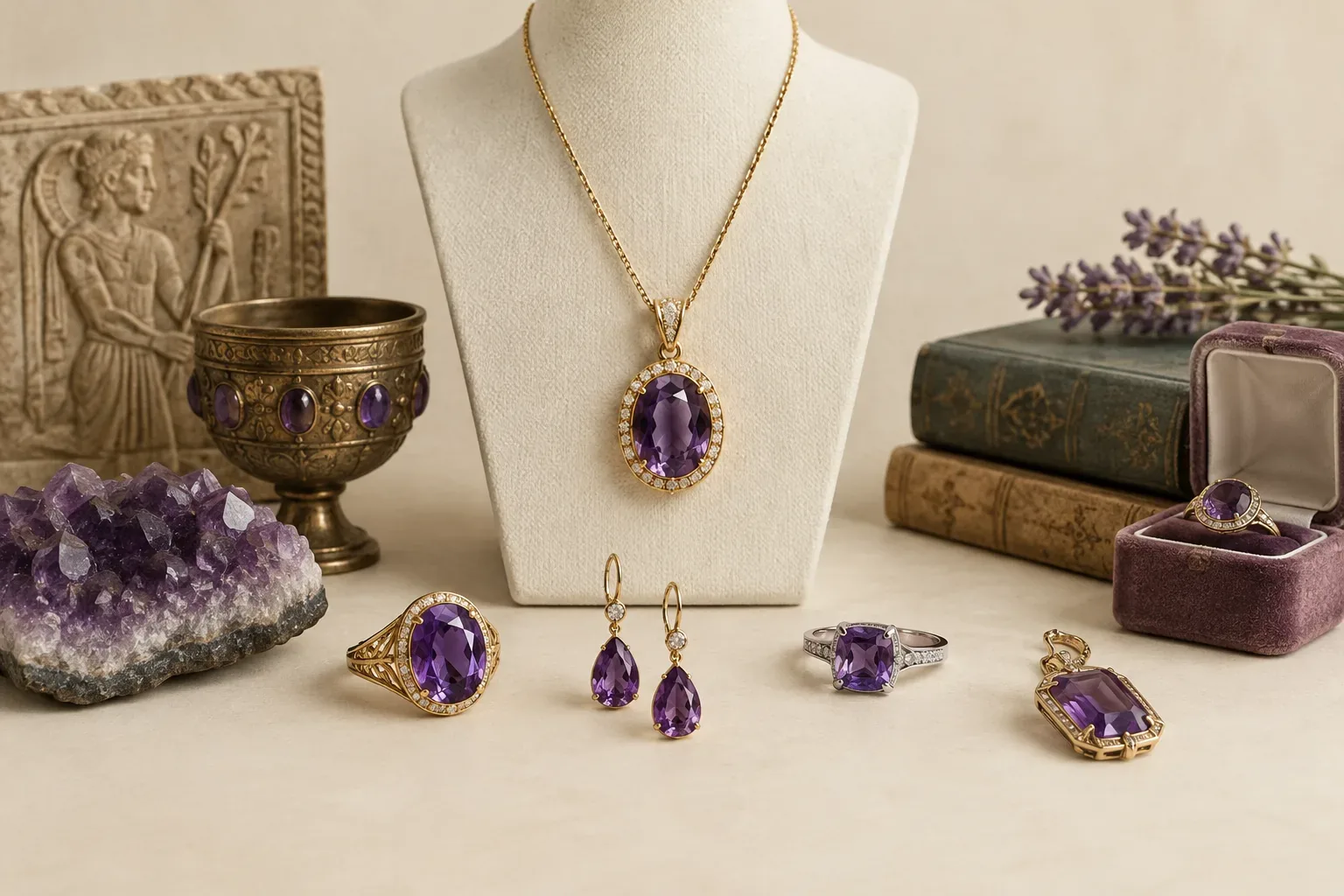
Cuts: Amethyst appears in a range of cuts intended either to emphasize color depth or to maximize sparkle. Faceted cuts that include mixed, brilliant and step faceting are commonly used to bring out brightness and fire, while cabochon and rose-cut styles emphasize smooth colour fields and a softer silhouette. Antique and vintage pieces may show older cutting styles or lower facet counts than modern precision-cut stones.
Settings: Jewelers use different settings depending on how a piece will be worn and the effect desired. Prong settings expose more of the stone to light and show color vividly but require secure prongs for durability. Bezel and collet settings surround the stone and offer extra protection, which is practical for rings and everyday pieces. Halo and cluster settings set amethysts among smaller stones to increase perceived size and contrast color. Historical mounts in museum collections often combine decorative metalwork with practical holding methods appropriate to the piece’s use and era.
Choosing for beauty and durability: practical guidance
Match the cut to the colour you want to show. If you prize deep, saturated purple, choose cuts and proportions that present broad colour planes rather than small, highly faceted faces that may disperse light and appear lighter. If you prefer sparkle and a lively look, opt for well-cut faceting that maximizes brilliance.
Balance exposure and protection. Rings and bracelets are subject to knocks; a bezel or low-profile setting protects the stone better than high prongs. For pendants and earrings, prong or open settings can make the amethyst appear larger and brighter because more light reaches the gem, but consider the wearer’s lifestyle before choosing an exposed mount.
Ask about treatments and imitations. The U.S. Federal Trade Commission advises buyers to ask sellers whether gemstones have been treated, enhanced or imitated and to expect clear, truthful disclosure. Ask specifically about common treatments that affect amethyst and whether any color enhancements or stabilizing processes have been used. If authenticity or provenance matters to you, request documentation or a grading report from a reputable laboratory.
Consider size, proportion and metal. Larger amethysts can be impressive, but proportion matters: a very large shallow stone may appear pale, while a well-proportioned stone of modest size can show richer colour. Metal tone changes perception of colour: warm gold tends to deepen purple, while white metals can make colour read cooler. Think about the recipient’s existing jewellery and personal style when choosing metal and design.
Respect historical and cultural contexts. If you are choosing or gifting a vintage or historically styled amethyst piece because its past use appeals to you, inform the recipient about that context and how museums like the Victoria and Albert Museum interpret such objects. Avoid claiming that historical associations prove a universal or unchanging symbolism; instead present historical meanings as linked to time, place and social function.
Maintenance and long-term wear
Routine care extends a stone’s attractive life. Clean amethyst jewellery gently and inspect settings periodically for loose prongs or wear; a jeweler can re-seat or repair settings to avoid stone loss. Store amethyst separately from harder gems to avoid scratches and consider removing rings for heavy manual tasks.
When in doubt about a cleaning product or method, consult a trusted jeweler. If the piece has historical value, seek a conservator or professional experienced with antique jewellery rather than attempting aggressive cleaning or repair that could damage original materials or finishes.
Final thoughts
Amethyst cuts and settings carry layers of meaning: the physical choices made by lapidaries and smiths, the social functions objects served in their historical moments, and the personal meanings worn by individuals today. Use documented museum evidence to understand the history and context of a particular object, rely on transparent seller disclosure when buying, and select designs that fit the recipient’s lifestyle and aesthetic so the piece can be enjoyed with confidence.
Frequently asked questions
What amethyst cuts make the colour look best?
Cuts that present broad colour faces—such as certain step cuts or well-proportioned mixed cuts—tend to show saturation clearly, while high-facet brilliant-style cuts emphasize sparkle and brightness. Choose a cut according to whether you prize deep colour or lively brilliance.
Is amethyst suitable for rings and daily wear?
Amethyst is commonly used in rings, pendants and earrings, but the suitability for daily wear depends on the setting and the wearer’s activities. Protective settings such as bezels reduce the risk of chipping; if the piece will be worn during manual tasks, choose a low-profile, secure mount.
How can I be sure an amethyst is real and not treated or imitated?
Ask the seller about treatments, enhancements and imitations and expect full disclosure as advised by the U.S. Federal Trade Commission. For high-value purchases, request documentation or a report from a reputable gemological laboratory.
Are historic meanings of amethyst the same everywhere?
No. Museum research shows that meanings attached to gemstones are context-specific and vary by time, place and social role. Historical associations should not be assumed to be universal.
How should I care for amethyst jewellery?
Clean amethyst jewellery gently, avoid harsh chemicals and store pieces separately to prevent scratches. Inspect settings periodically and consult a jeweler for repairs or for cleaning piece with historic or sentimental value.
Sources and further reading
- Bedazzled: A History of Jewellery — Victoria and Albert Museum
- An A-Z of Gemstones — Victoria and Albert Museum
- Buying Gemstones, Diamonds, and Pearls — Federal Trade Commission