Meaning at a glance
Rooted in Norse tradition as figures tied to battle and the taking of the slain to Valhalla, valkyrie imagery in jewelry today commonly symbolizes courage, selection, and feminine agency while archaeological depictions remain open to interpretation.
What the historical evidence actually shows
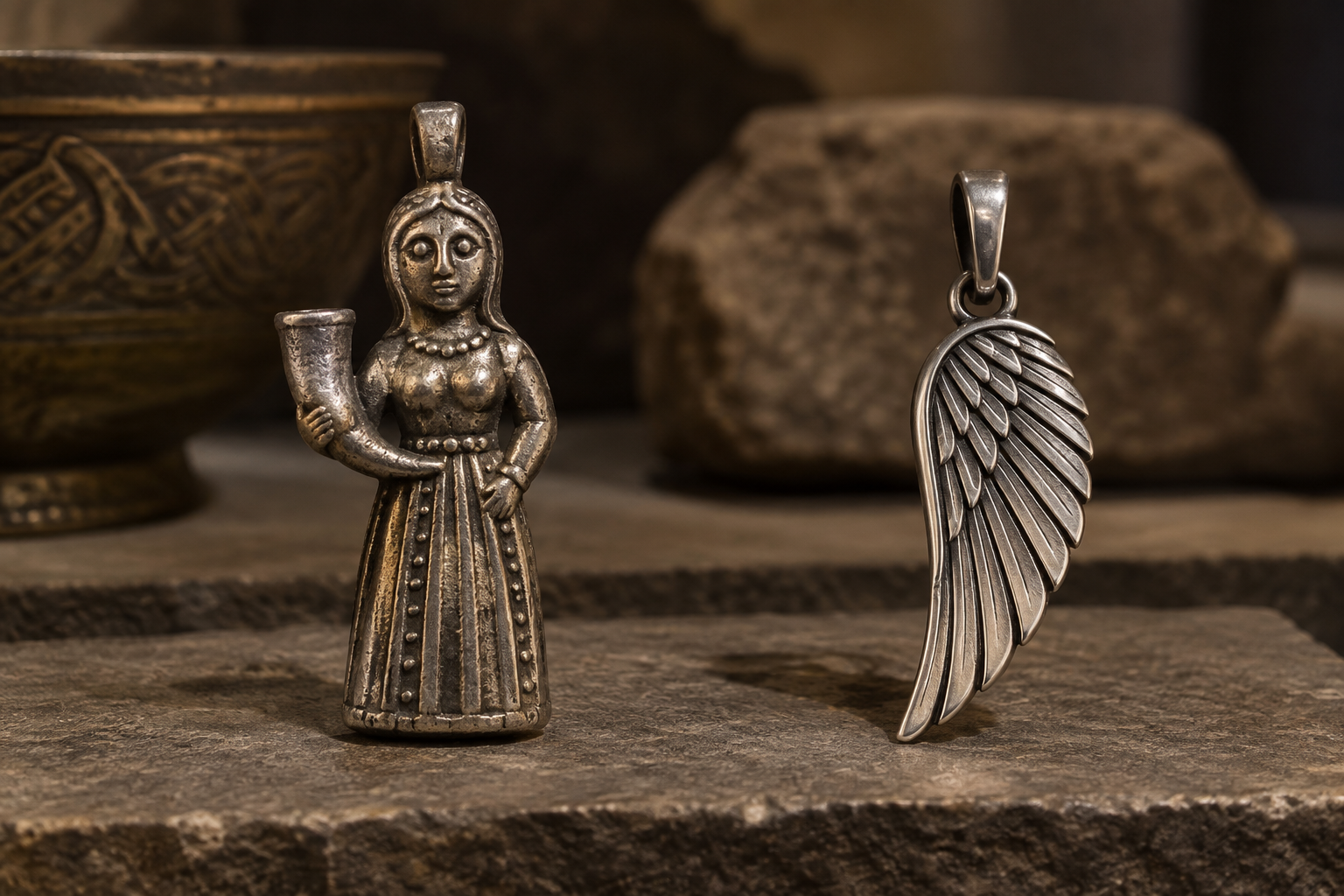
When tracing a historical basis for valkyrie imagery we rely on a mix of written sources and material culture. Museum curators and catalogues summarize the archaeological record cautiously. The Swedish History Museum describes valkyries in the Norse worldview as figures who welcomed the fallen to Valhalla and notes that small female figures appear in Viking Age material, including some that may depict women with drinking horns.
The British Museum, when presenting Anglo-Scandinavian and earlier early medieval finds (including the Sutton Hoo context), also records small female figures and other compact representations in artifacts from the period, and links the cultural idea of supernatural women to practices and beliefs about the battle-slain and afterlife.
The National Museum of Denmark frames the Viking gods and related supernatural beings, including valkyries, within a broader set of rituals and beliefs about death, magic, and ritual action, and it cautions that modern symbolic meanings are interpretations rather than direct continuations of a documented single ancient belief system.
Putting these statements together: museums specializing in Viking Age material confirm a consistent association in later Norse tradition between valkyries and battle/Valhalla, and archaeologists recover small female figures in northern European finds that may relate to those traditions, but the precise identification of every figure and the scope of historical meanings are matters of interpretation rather than established fact.
Separating documented historical meanings from modern interpretation
Documented historical meanings: Museum scholarship attributes to valkyries a role in selecting or receiving the slain and conveying them to Valhalla, an idea reflected in medieval Norse literature and summarized in museum displays such as those by the Swedish History Museum and the British Museum. The archaeological presence of small female figures in Viking Age contexts is documented by those institutions, but the museums stop short of assigning a single, uniform meaning to each figure.
Modern personal interpretations: Contemporary jewelers, wearers, and popular culture commonly reinterpret valkyrie imagery in ways not attested in the archaeological record. Modern symbolism often emphasizes attributes such as personal courage, female empowerment, protection, and the notion of being chosen or guiding others. These are legitimate personal or cultural readings for modern use, but they should be distinguished from the narrower statement that valkyries were associated with battle and the fate of the dead in Norse tradition.
How the valkyrie motif and related traditions appear in jewelry
Motif: The valkyrie appears in contemporary jewelry as stylized female figures, winged helmets, spears, horse motifs, and abstracted runic or knotwork frames that evoke Norse art styles. Designers may combine a female silhouette with battle accoutrements or with elements that suggest travel or guidance to allude to the valkyrie’s reputed role in escorting the fallen.
Gemstones and materials: There is no single historic gemstone tied to valkyries. Modern pieces often use strong, high-contrast stones such as garnet, onyx, or moonstone for dramatic effect, or silver and bronze finishes to evoke Viking Age metalwork. Some makers choose materials with cultural resonance—silver for its historical use in northern Europe, or dark gemstones to suggest the grave and the otherworld—but these choices are contemporary aesthetic or symbolic decisions rather than archaeologically documented associations.
Styles and traditions: Jewelry ranges from historically inspired reproductions that echo Viking-age ornament styles to explicitly modern, romanticized designs that mix fantasy elements and contemporary aesthetics. Small pendants or brooches that reference drinking horns, female figures, or equine imagery recall motifs documented in museum collections, while larger sculptural pieces tend toward modern narrative symbolism.
Choosing, wearing, and gifting valkyrie jewelry respectfully
Consider the distinction between historical and personal meanings when you choose a piece. If you wish to honor the cultural origins of the motif, select jewelry that cites historical inspiration or is made with design elements recognizably derived from Viking-Age art. Museum-informed reproductions or pieces created by makers who note their historic sources can be appropriate for that intent.
If the gift is meant as encouragement or recognition of personal qualities—courage before a challenge, guidance through change, or celebration of a woman’s strength—be explicit about that intent when you give the piece. A short note explaining the modern symbolism you attach to the design makes the gesture clearer and more respectful of the motif’s cultural background.
Avoid treating historical motifs as costume or caricature. Wearing valkyrie imagery in professional or ceremonial contexts may be appropriate when done tastefully and with awareness of its Norse associations. If the recipient has a known cultural or ancestral relationship to Norse history, consider consulting them about design preferences and sensitivities.
Practical advice about materials and longevity: For everyday wear choose durable metals such as sterling silver or gold vermeil and secure settings for gemstones. If the piece is marketed as a reproduction of Viking metalwork, confirm the maker’s techniques and whether finishes are sealed to resist tarnish. For heirloom intent, opt for higher-quality metals and documented maker marks so the piece can be cared for and appreciated across generations.
Short closing guidance
Valkyrie jewelry carries layered meanings. Museums document the association of valkyries with battle and Valhalla and the archaeological presence of small female figures in the Viking Age, but modern uses often expand the motif into personal symbols of courage, selection, and feminine power. Choose designs and gifts with an awareness of that history and with respect for the distinction between historical evidence and contemporary interpretation.
Frequently asked questions
What does 'valkyrie jewelry' mean historically?
Historically, museums summarize valkyries as figures associated with battle and the taking of the slain to Valhalla; archaeological finds include small female figures that may relate to those ideas, but exact identifications vary by object and context.
Are the small female figures in Viking finds definitely valkyries?
No single archaeological convention identifies every small female figure as a valkyrie; museums note that such figures appear in Viking Age material and that some may show women with drinking horns, but identification is interpretive rather than categorical.
Is it respectful to wear or gift valkyrie-themed jewelry?
Yes, when worn or gifted with thoughtfulness. Distinguish between honoring historical inspiration and using modern personal symbolism, and make your intent clear when gifting to respect cultural origins.
Which gemstones or metals are historically linked to valkyries?
There is no archaeological evidence tying specific gemstones to valkyries. Modern makers frequently use silver, garnet, onyx, or moonstone for aesthetic or symbolic reasons, but those are contemporary choices.
How can I choose a valkyrie piece that reflects historical awareness?
Look for pieces that cite museum or archaeological inspiration, use historically resonant metals and motifs, and come from makers who explain their design sources rather than purely fantasy-driven descriptions.
Sources and further reading
- The Valkyries welcomed the fallen to Valhalla — Swedish History Museum
- Large Print Guide – Room 41 Sutton Hoo and Europe — British Museum
- The Viking gods — National Museum of Denmark