Meaning at a glance
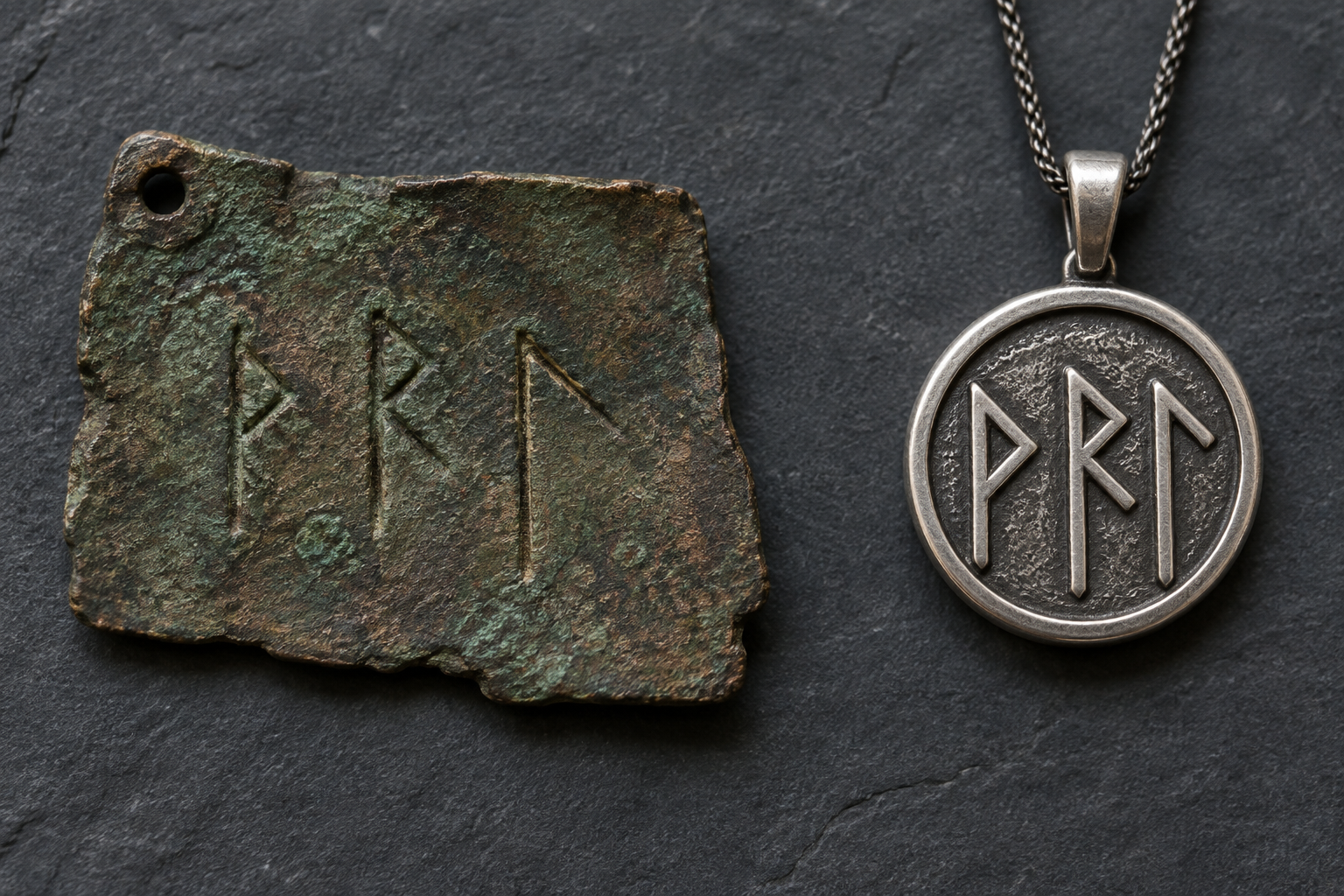
Historical bind runes join two or more runic characters within an inscription, while many intention-based bind-rune pendants are modern designs; both can be meaningful when their origin and reading are described honestly.
What the historical evidence shows
Archaeological and museum records indicate that runic letters were sometimes combined into single, compact signs in inscriptions from the Viking Age in Scandinavia. The Swedish History Museum documents an object in which runic characters are joined within a single inscription, showing that the practice of combining characters — what scholars call bind runes — occurs in historic material culture (Swedish History Museum).
The National Museum of Denmark provides context for runic inscriptions from the Viking Age and emphasizes that surviving sources require careful interpretation. Museum scholarship warns against assuming modern intentions or modern appearance for every contemporary item that uses runic imagery; in other words, a modern pendant marked as a ‘Viking’ bind rune is not automatically a direct copy of a documented Viking-Age amulet (National Museum of Denmark).
Both the Swedish History Museum and the National Museum of Denmark note that readings of bind runes in historical inscriptions can be uncertain. Compact or fused runic signs may be deliberately artistic abbreviations, idiosyncratic spellings, or result from damage and wear, and so scholarly readings often include uncertainty. That uncertainty is important when determining whether a particular historic bind rune carried a clear, single 'meaning' in its original context.
Which cultures and periods produced bind runes
The direct archaeological evidence cited by the approved museum sources comes from the Viking Age in Scandinavia. Museums catalogue and interpret inscribed objects — amulets, stones, and small metal objects — from this geographic and chronological context that include fused runic characters. The evidence available for this article is limited to material documented by those institutions; outside of Scandinavian Viking-Age contexts you would need separate, primary archaeological or textual support to claim similar practices in other cultures or periods.
Because the museum sources emphasize the Viking Age material, this article treats bind runes primarily as a feature visible in runic inscriptions from that era and region. That does not mean runic or ligature-like signs never occur elsewhere, but it does mean that any cross-cultural claim should be verified in the relevant specialized literature or museum records.
Documented historical meanings versus modern interpretations
Documented historical meanings for bind runes are often limited or ambiguous. Museums report the presence of combined characters and caution that specific readings can be uncertain (Swedish History Museum; National Museum of Denmark). Where a historical inscription can be read confidently, its meaning depends on the full inscription and archaeological context: the object’s find-spot, associated artifacts, and contemporaneous writing practices.
Modern bind-rune jewelry frequently follows a different logic. Contemporary designers and buyers often intend bind runes to be compact visual talismans that represent a short phrase, a name, or an intention such as ‘protection’ or ‘prosperity.’ Those design choices reflect present-day symbolic uses rather than direct continuations of any single documented Viking-Age practice. The National Museum of Denmark explicitly points out that modern intention-based designs are not automatically Viking-Age artefacts or accurate reproductions.
It is therefore important to separate two claims: the historical claim that runic letters were sometimes combined in inscriptions (documented by museums), and the interpretive claim that any modern bind-rune pendant carries the same cultural meaning as a historical object. The former is supported by the archaeological record; the latter is a modern personal or commercial practice that may draw inspiration from history but does not substitute for documentary evidence.
How the motif and tradition appear in jewelry today
Contemporary jewelry makers adapt bind-rune motifs in several ways. Some reproduce historical inscriptions or combine historically attested runic shapes to create a compact symbol. Others design new symbols that visually echo runic letterforms but encode a modern intention, name, or phrase. Designers choose metals such as silver, bronze, or gold, and they may set stones that have symbolic value today (for example, garnet or onyx) or purely aesthetic appeal.
Historically, the closest parallels appear on inscribed amulets and small metal objects that may have been worn or carried; the Swedish History Museum documents an inscribed item where runic characters are combined on an amulet-like object. Modern craft and jewelry expand this practice with pendants, rings, and engraved surfaces, often accompanied by packaging or labels that state the intended modern meaning—an important difference from the typically sparse literal explanations found on archaeological objects.
Because historical readings can be uncertain, some makers choose designs that clearly document their modern origin: they provide an explanation of the intended runes and the phrase encoded, or they label pieces as a modern ‘inspired-by’ design. Others present items as reproductions of historical motifs; when that is claimed, buyers should look for transparent sourcing and evidence from recognized museum or academic publications.
Practical and respectful selection or gifting guidance
Decide what matters most to the wearer: historical authenticity, visual appeal, or personal meaning. If historical authenticity is important, ask the seller for documentation showing the design is based on a specific, published object or inscription and verify the source. If the wearer prefers a modern piece with a clear personal meaning, choose a designer who will explain what runes are represented and how they are read.
Be honest about origin and intention when gifting. State whether a pendant is a modern design inspired by Viking Age inscriptions or a reproduction of a specific artifact. Presenting a contemporary piece as a genuine archaeological object risks misleading the recipient and can be disrespectful to the cultures and institutions that steward historical materials.
Respect cultural context. If the recipient is from a region where runes are part of living cultural heritage, ask whether such a gift is welcome. Some people appreciate historical motifs while others prefer not to wear symbols associated with a particular cultural or ethnic history. When in doubt, choose a neutral design, or consult the recipient beforehand.
Prefer makers and vendors who document their work. Reputable designers will explain which runes they used, why, and how they are to be read, or will clearly label a design as a modern artistic creation. For pieces that claim to replicate a historical artifact, seek confirmation from museum catalogues or published sources. Linking to trusted institutional pages can help the gift feel informed rather than merely decorative.
Treat gemstones and metal choices as part of the message. Modern meanings attached to particular stones are contemporary conventions; if you plan to use gemstone symbolism (for example, choosing a stone thought to mean ‘protection’), make sure the chosen symbolism is explained to the recipient and not presented as an ancient or universal truth.
Reading and wearing bind runes responsibly
If you want to decode a historical bind rune, consult scholarly descriptions and museum catalogues rather than relying solely on product descriptions. Museums such as the Swedish History Museum and the National Museum of Denmark publish object records and summaries that can clarify how scholars read particular inscriptions and why some readings remain tentative.
When wearing a modern bind-rune design, be prepared to explain whether the symbol is a historically attested inscription, a modern creation inspired by historical practice, or a personalized cipher. That transparency respects both the historical record and the sensibilities of those who might see the symbol and reasonably ask about it.
Conclusion
Bind runes are a documented feature of some medieval Scandinavian inscriptions: runic letters were sometimes fused or combined, as recorded in museum collections. Modern jewelry borrows the motif for readable, compact symbols that carry personal or marketed meanings. Both historical and contemporary forms can be meaningful, provided sellers and wearers are honest about origin and interpretation, and respectful of cultural context.
Frequently asked questions
Are bind rune pendants authentic Viking artefacts?
Not necessarily. Museums document that runic letters were sometimes combined in Viking-Age inscriptions, but most modern bind-rune pendants are contemporary designs inspired by that practice. If a seller claims archaeological authenticity, ask for clear museum or academic sourcing.
What does a bind rune actually mean?
Historically, meanings depend on the full inscription, context, and scholarly reading; many historical bind-rune readings are tentative. Modern bind-rune jewelry usually encodes a designer’s chosen message or intention, which should be explained by the maker.
How can I tell if a bind rune design is historically based or modern?
Look for documentation from the seller: a citation of the museum object, a published inscription, or a statement that the design is modern and inspired by historical forms. Transparent sellers will indicate whether the design is a reproduction or a new composition.
Is it offensive to wear bind rune jewelry?
Wearing runic motifs is not inherently offensive, but sensitivity depends on context and the wearer’s background. Ask recipients if they are comfortable with cultural symbols, avoid presenting modern designs as ancient artefacts, and favor makers who explain their sources responsibly.
How should I gift a bind rune piece?
When gifting, state whether the item is a modern design or a reproduction of a specific artifact, explain the intended meaning of the runes, and consider the recipient’s cultural background and preferences to ensure the gift is respectful and welcome.
Sources and further reading
- Rune sheet 120571_HST — Swedish History Museum
- Sources of the Viking Age — National Museum of Denmark