Meaning at a glance
Howlite is a porous white calcium borosilicate commonly dyed to imitate turquoise or other materials; honest disclosure, identification limits, durability, and care should be clear before discussing modern calm symbolism.
What howlite is: mineral identity and context
Howlite is a mineral with a white to gray appearance and a porous texture that readily accepts dyes and coatings. In the context of gem and mineral education, the Smithsonian National Museum of Natural History describes how museums and educators categorize minerals like howlite for their geological and material properties rather than for long-standing cultural symbolism.
That geological context explains why howlite is often used in jewelry: its porosity takes color well, it can be cut and polished into beads and cabochons, and it presents a white veined matrix that is visually appealing whether left natural or treated.
Historical evidence and cultural claims — what is documented
There is no widely documented, ancient cultural tradition recorded in the approved museum and gemological sources that assigns a historical symbolic meaning to howlite similar to those for gemstones like jade or turquoise. The Smithsonian source used here situates howlite as a mineral within natural-history collections and educational material; it does not provide evidence of long-running ritual or cultural uses tied to howlite specifically.
Because the available, approved references focus on mineral identity and gem-treatment context rather than ethnographic histories, any historical or cultural meaning beyond that material context should be treated as unverified unless supported by direct cultural or historical documentation.
Documented gem treatment and consumer-disclosure context
Professional gemological guidance emphasizes that treatments and imitations must be disclosed. The Gemological Institute of America outlines common gem treatments and explains why industry transparency matters: dyed stones, surface coatings, and other modifications change appearance and may affect care and value.
At the consumer-protection level, the U.S. Federal Trade Commission sets expectations for sellers to use clear terminology when describing natural, treated, lab-grown, or imitation gem materials. The FTC guidance helps buyers know whether they are purchasing natural white howlite, dyed howlite intended to imitate turquoise, or a bona fide turquoise product.
Separating documented meanings from modern interpretations
Because the historical record for howlite as a culturally symbolic stone is limited in the referenced sources, most of the 'meaning' attached to howlite in the market today arises from contemporary metaphysical, wellness, and marketing conversations rather than from a continuous cultural tradition.
Modern sellers, artisans, and wearers often describe howlite as promoting calm, patience, or mental clarity. Those associations are modern personal interpretations. They can be meaningful to individuals and communities, but they are not equivalent to a documented historical or cross-cultural symbolism supported by the cited museum or gemological references.
How howlite appears in jewelry
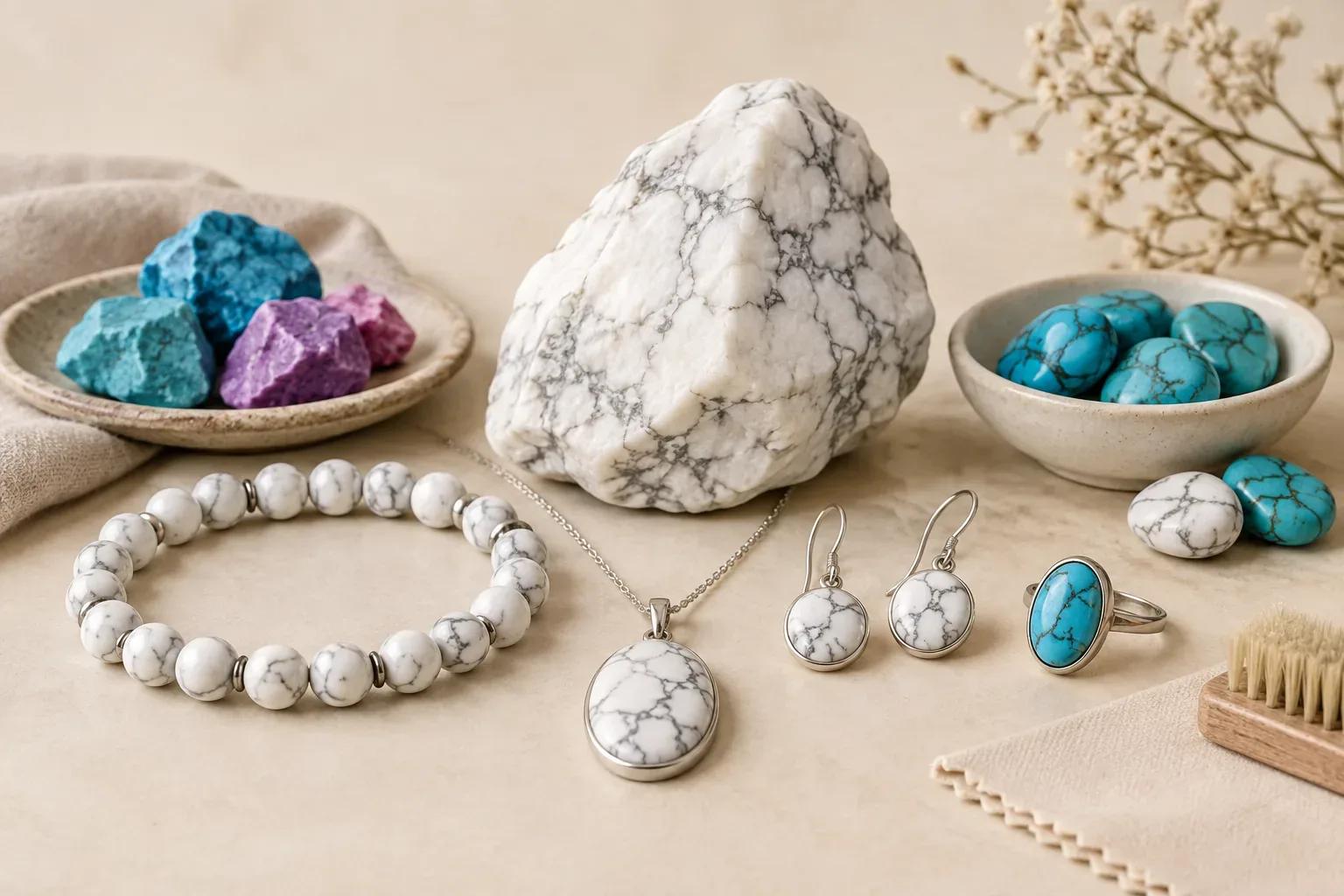
In jewelry, howlite commonly appears in two broad forms: as natural white stone showing a gray veined matrix, and as dyed howlite where the porous material has been colored to imitate turquoise or other blue-green stones. Jewelers use howlite for beads, cabochons, inlays, and carved components because it polishes well and takes on surface treatments effectively.
Because howlite is relatively soft and porous compared with many gem-quality minerals, jewelers often set it in protective bezels, use it in beads for necklaces and bracelets, or combine it with metals and other stones in fashion and artisan jewelry. Its visual similarity to dyed stones has made it a popular, lower-cost alternative in designs that reference turquoise aesthetics.
Buying guidance: identification, disclosure, and expectations
When buying howlite or howlite-looking jewelry, ask sellers directly whether the material is natural white howlite, dyed howlite, or an imitation of another stone. The Gemological Institute of America and the Federal Trade Commission encourage transparent disclosure of treatments and imitation status because appearance alone can be misleading.
Expect a reputable seller to label dyed howlite as ‘dyed howlite’ or ‘howlite treated to resemble turquoise’ rather than simply calling it turquoise. If value, collectibility, or long-term color stability matters to you, consider requesting written confirmation of material identity or a purchase receipt that states treatment status.
Care and durability — practical tips
Because howlite is porous and often dyed, avoid prolonged soaking, aggressive chemical cleaners, and prolonged direct sunlight that can fade surface color. Clean most howlite jewelry with a soft cloth and a mild soap solution, rinse briefly, dry thoroughly, and store away from harder stones and metal abrasions.
Professional gemological resources that discuss treatments warn that dyes and coatings have limits. If a piece is dyed, expect that its color may lighten over time or with exposure to cleaning agents. For higher-risk pieces, such as large cabochons or inlay work, consider occasional professional inspection and ask the seller for any care instructions specific to the finish used.
Selection and gifting: respectful, practical guidance
When selecting howlite as a gift, be explicit about the material and any treatments so the recipient and giver share the same expectations. If the symbolic meaning is important to you or the person you are gifting, explain whether the meaning is personal or culturally rooted; avoid asserting universal spiritual or historical claims.
Choose howlite pieces that match the recipient’s lifestyle. For someone who needs low-maintenance jewelry, a small bead bracelet or pendant set in a protective setting may be sensible. For collectors who care about natural materials, prioritize pieces labeled as natural white howlite and consider asking for a statement of authenticity or treatment disclosure.
Final notes
Howlite can be an attractive, affordable material in many jewelry designs, whether shown in its natural white form or dyed to imitate more expensive stones. Its contemporary association with calm and patience reflects modern symbolic practice rather than a longstanding documented cultural tradition in the cited museum and gemological sources.
Understanding the material facts—identity, porosity, common treatments, and the need for seller disclosure—lets you appreciate howlite jewelry for both its aesthetic and its potential personal meaning without overstating historical or cultural claims. For further reading about gemstones, jewelry care, and choosing meaningful pieces, see our Gemstones category and related guides on choosing meaningful jewelry and color care.
Frequently asked questions
Is howlite a real gemstone or an imitation?
Howlite is a real mineral and a legitimate material for jewelry, but it is often dyed to imitate stones like turquoise. Sellers should disclose whether a piece is natural white howlite, dyed howlite, or an imitation of another gem.
Does howlite have historical cultural meanings?
The museum and gemological sources cited here do not document long-standing cultural or ritual meanings for howlite; most symbolic associations in the modern market arise from contemporary personal or metaphysical interpretation rather than a documented historical tradition.
How should I clean and care for howlite jewelry?
Clean howlite gently with a soft cloth and mild soap, rinse briefly, and dry thoroughly. Avoid prolonged soaking, harsh chemicals, and extended sunlight exposure for dyed pieces, since dyes and coatings can fade or wash out.
How can I be sure a seller is being honest about dyed howlite?
Ask the seller directly whether the item is dyed or treated and request that treatment be stated on the receipt or product label. The FTC and gemological guidelines recommend clear disclosure of treatments and imitations.
Is dyed howlite as valuable as turquoise?
Value depends on material identity and market demand. Dyed howlite is typically less expensive than natural turquoise; accurate disclosure of material and treatment helps set appropriate price expectations.
Sources and further reading
- Gems and Minerals: Beauties and Building Blocks — Smithsonian National Museum of Natural History
- An Introduction to Gem Treatments — Gemological Institute of America
- Buying Gemstones, Diamonds, and Pearls — Federal Trade Commission