Meaning at a glance
Tungsten carbide jewelry is a modern, engineered material used in contemporary jewellery that carries no long‑standing cultural or religious meanings recorded in historical museum accounts; understand it as a material choice rather than an inherited symbol, check seller disclosure and maker marks (not traditional hallmarks), and select or gift it by confirming the exact composition, finish, and care requirements with the seller.
Quick answer
Tungsten carbide jewelry explained in brief: it is a contemporary, engineered material used in modern jewellery design rather than a historically established symbolic material. There is no documented cultural or religious meaning attached to the material in the museum histories of jewellery; instead its significance today is practical and stylistic. When buying or gifting, confirm how the maker identifies the piece, request written disclosure of composition and any treatments, and treat maker stamps and seller statements as the primary marks to rely on rather than traditional precious‑metal hallmarks.
Composition and why sellers use the term
Manufacturers and retailers use the label 'tungsten carbide' to describe a modern, engineered jewellery material prized for its hardness and finish. In consumer descriptions you will commonly see that label used to explain the look, weight and performance of a piece. Because the material is a contemporary industrial product, it entered jewellery through modern manufacturing and fashion trends rather than through the long chains of craft and trade that produced historic precious‑metal jewellery.
When evaluating seller claims, pay attention to the precise language used. Sellers will often describe an item with short phrases such as 'tungsten carbide,' 'tungsten,' or 'hard metal.' Those terms are commercial descriptions. The Federal Trade Commission advises that sellers must not misrepresent what a product is, and that consumers should be given accurate information about material, treatments and imitation. Ask the seller to confirm the exact name they use for the material and any additional coatings or inlays.
What the historical record shows — and what it does not
Museum scholarship on jewellery emphasizes that meanings change when materials change. The Victoria and Albert Museum's work on the history of jewellery stresses that clothes, contexts and materials shape how jewellery is used and understood. Materials such as gold, silver, gemstones and enamel have layered histories in particular cultures because they were available and valuable across long periods, and museums can trace how those meanings evolved.
By contrast, because tungsten carbide is a modern, engineered material, it does not appear in the long historical sequences that museums document for traditional materials. That means there is no museum‑documented cultural or religious symbolism attached to the material from earlier periods. If you are seeking a piece with an inherited, historically documented meaning, museum sources show you will generally need a material or motif that existed and was recorded within the relevant culture or period.
Documented history versus modern personal or popular meanings
Separate two types of meaning when you encounter 'tungsten carbide' pieces: documented historical meanings and contemporary personal or popular meanings. Documented historical meanings are those that appear in museum records, archival sources and specialist studies; because tungsten carbide is modern, it lacks that category of meaning. The Victoria and Albert Museum's surveys of jewellery history illustrate how those documented meanings attach to older materials and motifs over centuries.
Modern personal and popular meanings arise quickly and locally. People choose tungsten carbide for reasons such as appearance, perceived durability, a contemporary or industrial look, or budget. Those are legitimate and meaningful to the wearer, but they are modern personal interpretations rather than long‑established cultural symbols. Be explicit about which kind of meaning matters to you: inherited symbolism requires an historically attested material or motif, while a modern ring can carry whatever personal meaning the giver and recipient assign to it.
How tungsten carbide typically appears in jewellery
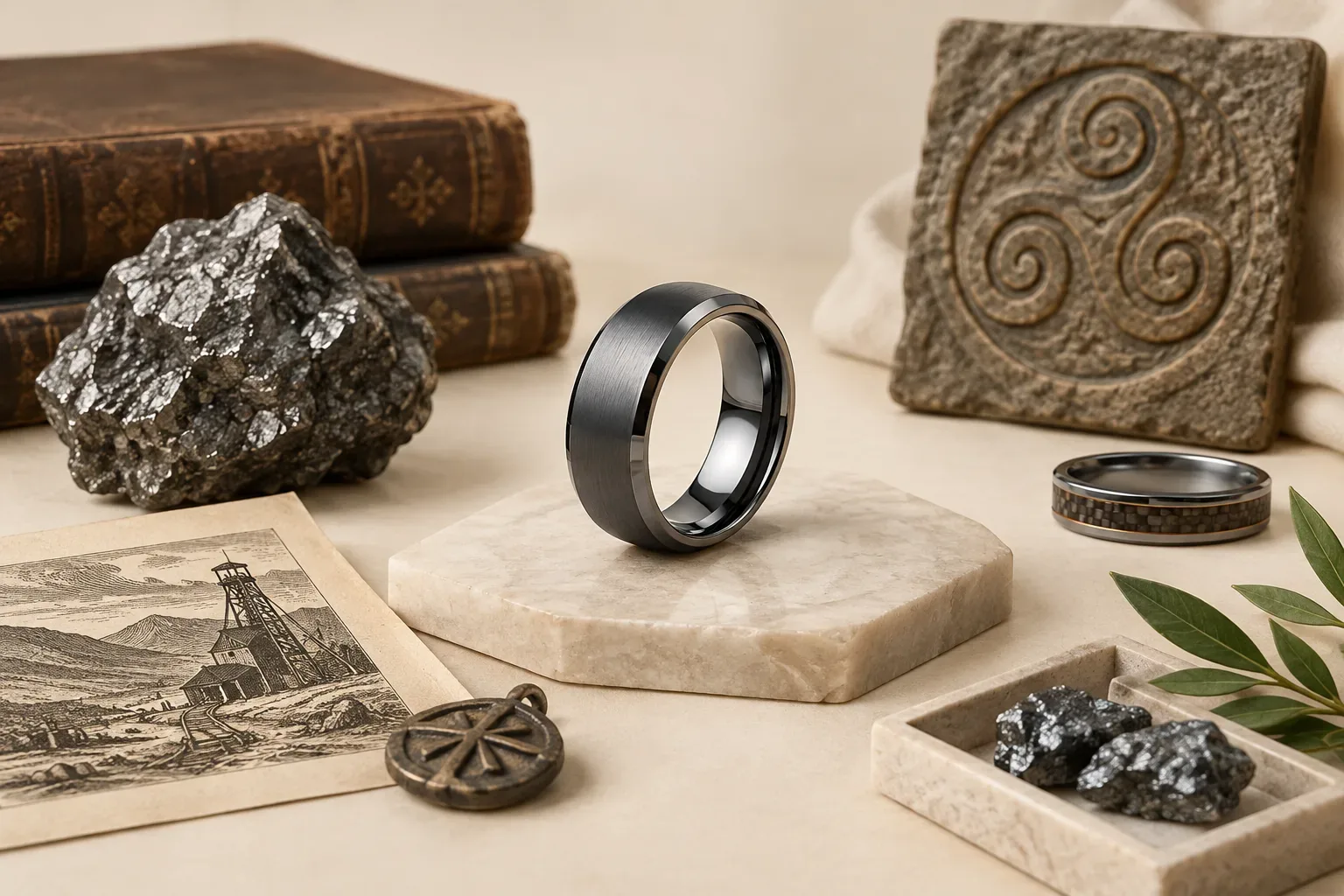
In contemporary jewellery the material typically appears where designers want a dark, gunmetal or bright polished finish and a durable surface. You will most often encounter it in rings and bands, sometimes with contrasting inlays, surface finishes, or embedded gemstones. It is used in both plain and decorated pieces and is popular for styles that aim for a modern, industrial or masculine aesthetic.
Because the material is introduced through modern manufacturing, it is also used in combination with traditional materials such as gold or gemstones in mixed‑material designs. Where gemstones are present, the gemstones bring their own heritage of meaning; for guidance on gemstone contexts and identification, museum resources such as the Victoria and Albert Museum's A–Z of Gemstones explain how stones have been used and understood across cultures and periods.
Hallmarks, maker marks and disclosure: what to look for
Traditional hallmarks are formal stamps applied under national hallmarking systems to certify the content of recognized precious metals such as gold, silver and platinum. Because tungsten carbide is not a traditional precious metal, you should not expect to see those hallmark symbols applied. Instead look for maker marks, brand stamps, or a clear written description from the seller stating the composition and any coatings or treatments.
The Federal Trade Commission's guidance emphasises accurate disclosure about material, treatments and imitation. If a seller describes a ring as 'tungsten carbide' but applies a plated coating, dye, or inlay, that should be disclosed in the product information. Ask the seller for written confirmation of the composition, and for details about any surface finishes or coatings and how they may age with wear. If the piece includes precious gemstones set alongside the material, request separate information about those stones and any relevant identification or treatment disclosures.
Practical guidance for choosing and gifting
Decide what matters most: appearance, durability, historical meaning, or ease of future alteration. If you prize an inherited or culturally documented meaning, choose a material or motif with that historical record. If you prize a modern look and practical wear, tungsten carbide can be appropriate — but confirm the exact construction and finish with the seller.
Before you buy or gift, ask practical questions and insist on written answers. Confirm the seller's exact name for the material, whether the surface has a plating or coating, whether the piece can be resized or repaired locally, and what warranty or return policy applies. If you are buying a ring for a commitment such as engagement or wedding use, discuss resizing and long‑term care; many manufacturers and retailers note that some modern hard metals require special tools or cannot be resized without cutting and rejoining, so knowing the seller's policy in advance avoids surprises.
When gifting, respect the recipient's preferences and any cultural contexts. If the recipient values traditional, historic symbolism, explain that the material itself does not carry a museum‑documented cultural meaning and that any significance will be personal. If the recipient favors contemporary fashion and practical durability, present the piece with information about composition and care so they can assess suitability.
Final thoughts
Tungsten carbide jewelry explained effectively comes down to recognizing it as a modern material choice. It offers contemporary looks and specific performance characteristics that many buyers appreciate, but it is not a carrier of long‑term historical symbolism in the way that older metals and gemstones are. Use museum resources when you want historically documented meaning, and use seller disclosures and maker marks when you need certainty about composition and treatments. Insist on clear, written information and align your purchase with the kind of meaning—historical or personal—that matters to you.
Frequently asked questions
Is tungsten carbide a traditional or historical jewellery material?
No. Tungsten carbide is a modern engineered material and does not have the long‑term, museum‑documented cultural or religious meanings that older materials do; museum histories show that such meanings develop over extended historic use of materials and motifs.
Will tungsten carbide jewellery have traditional hallmarks?
You should not expect traditional precious metal hallmarks on tungsten carbide. Instead look for maker marks, brand stamps and clear seller disclosures; the Federal Trade Commission advises consumers to insist on accurate written information about material and treatments.
How can I be sure a seller is truthful about a tungsten carbide piece?
Ask for written confirmation of the exact material name, details of any coatings or inlays, the seller's return and repair policy, and any warranty. If precious gemstones are present, request separate information about their identity and any treatments. The FTC recommends clear disclosure to avoid misrepresentation.
Can tungsten carbide rings be resized?
Resizing policies vary by manufacturer. Many sellers note that some modern hard metals are difficult or impractical to resize; before purchase ask whether the specific item can be resized and what the seller's options are for adjustment or exchange.
Does tungsten carbide have symbolic meaning I should consider when gifting?
Tungsten carbide has no long‑established symbolic meaning recorded in museum accounts, so any symbolism will be contemporary and personal. If you want historical symbolism, choose a material or motif with a documented history; if you want a modern aesthetic or perceived durability, tungsten carbide can be appropriate—just explain the material and care to the recipient.
Sources and further reading
- Bedazzled: A History of Jewellery — Victoria and Albert Museum
- An A-Z of Gemstones — Victoria and Albert Museum
- Buying Gemstones, Diamonds, and Pearls — Federal Trade Commission