Meaning at a glance
A tennis bracelet quality checklist focuses first on secure construction (settings, links, and clasp), then on comfort (fit, weight, edge finishing) and durability (metal, gemstone hardness, and maintenance). Historic museum research shows line bracelets evolved across many cultures; modern meanings are personal rather than universal. Use clear inspection steps, ask about gemstone treatments, and choose certified pieces for gifting.
Direct answer — the checklist in one line
A compact tennis bracelet quality checklist starts with construction: secure settings (well-formed prongs or bezels), continuous engineered links or soldered joints, and a locking safety clasp; then comfort: correct circumference, balanced weight, and smooth edges; lastly durability: suitable metal grade, gemstone hardness and setting protection, and a documented maintenance plan. Follow those three pillars—construction, comfort, durability—when inspecting or gifting a bracelet.
What the historical record shows (and how museums describe it)
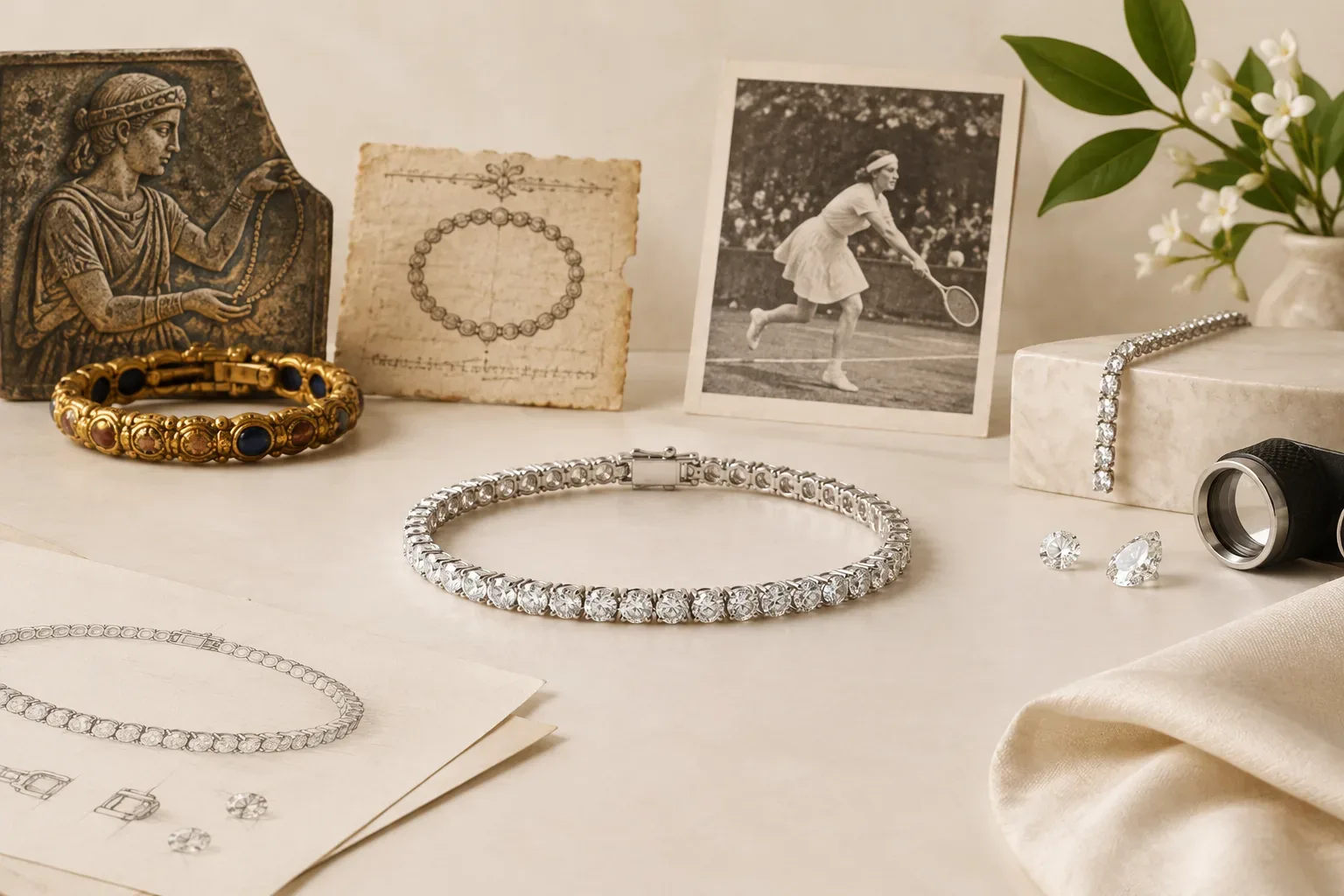
The Victoria and Albert Museum frames jewellery as an object type whose forms and uses change across time and place, and their material traces allow historians to map those changes. Bracelets — including line-style bracelets made from linked stones or metal segments — appear in multiple periods and regions, each with distinct construction techniques and social meanings (Victoria and Albert Museum).
Historically documented bracelets range from rigid metal bangles and armlets to articulated bracelets with hinged links. The V&A’s surveys and exhibitions discuss how technical developments in metalwork and stone cutting influenced bracelet forms from ancient and classical periods through early modern European courts to later industrial-era production (Victoria and Albert Museum). These shifts explain why construction details are crucial to long-term performance.
Separating documented historical meanings from modern interpretations
Documented historical meanings normally come from provenance, inscriptions, iconography, or contemporary texts. Museums such as the V&A rely on those sources to attribute religious, social, or status meanings to specific bracelets in their collections. Those documented meanings are specific to a culture and time: for example, a bracelet worn as a status emblem in a particular court does not imply the same function elsewhere (Victoria and Albert Museum).
Modern interpretations—what people personally feel when they give or wear a tennis-style bracelet—are often sentimental and varied. Contemporary buyers commonly ascribe friendship, commitment, or fashion signals to a line-diamond bracelet, but those are personal attributions rather than universal historical facts. Make a clear distinction between what is documented about an object’s past and what modern wearers choose to mean by it.
How the motif, gemstone, and tradition appear in jewelry
The motif commonly labeled a “tennis bracelet” in modern retail is a continuous line of similarly sized stones set edge-to-edge or linked closely to form an unbroken band. The motif emphasizes repetition, symmetry, and the visual effect of a continuous gemstone line. Those design choices are variations on long-standing bracelet constructions recorded in museum collections (Victoria and Albert Museum).
Gemstones in these bracelets are typically cuts that maximize sparkle and allow tight setting: brilliant-cut diamonds are a modern favorite for line bracelets because their facet pattern concentrates light. The V&A’s guide to gemstones explains how different gems have been used historically and how their physical properties affect how they are cut and set (Victoria and Albert Museum). Those properties—hardness, cleavage, and toughness—directly influence how a stone performs in an articulated bracelet.
Practical checklist: construction, comfort, durability (what to inspect)
Construction: Inspect the settings, links, and clasp as a coordinated system. Settings should seat each stone securely with even, clean prongs or a continuous bezel. Links between settings should move freely but have no visible gaps where a finger could catch, and critical joints should be soldered rather than only friction-fitted. The clasp should be a locking design—usually a box clasp with a safety latch or a double-safety system—so a single failure won’t allow the bracelet to fall off.
Comfort: Try the bracelet on for both relaxed fit and movement. It should sit beside the wrist bone without riding up onto the hand when you move. Weight should be comfortable for regular wear; overly heavy bracelets are more likely to be left unworn or to cause strain at the clasp. Examine edges and the inside surfaces for smooth finishing to prevent skin irritation or snagging on clothing.
Durability: Consider metal grade and gemstone suitability. Hard metals such as 14k or 18k gold alloys and platinum are common; higher purity gold is softer and requires thicker construction to resist bending. For gemstones, use the stone’s toughness and hardness to judge risk: harder stones resist surface wear, but stones with cleavage or low toughness need protective settings. Ask whether links are reinforced and how easy they are to repair if a setting fails.
Questions to ask the seller (documentation and disclosures)
Ask for documentation of metal content (hallmarks) and any gemstone grading reports for diamonds or colored stones. If a diamond grading report is available, check which laboratory issued it and whether the report lists treatments or enhancements. The Federal Trade Commission requires truthful disclosure about treatments, imitations, and synthetic stones, so ask specifically whether any gems have been treated, filled, or are lab-grown (Federal Trade Commission).
Also inquire about repair history or warranties, the availability of replacement stones, and recommended maintenance intervals. Request a return or repair policy in writing so you are not relying only on oral assurances.
Selection and gifting guidance (practical and respectful)
Match the bracelet’s intended use to its construction. For daily wear, prioritize a robust locked clasp, thicker links, and stones set to minimize exposure. For occasional or formal wear, you can choose finer settings that emphasize appearance over heavy-duty protection. When gifting, ask the recipient’s preferred metal color, and consider a removable sizing option or gift receipt to allow adjustment.
Be culturally respectful when gifting. If the bracelet carries a design that is culturally specific—based on a motif from a distinct tradition—present the piece with context and, where appropriate, acknowledge its origin. Remember that the contemporary label “tennis bracelet” is a retail name for a style and not a historical cultural category; avoid implying universal meanings.
Care, maintenance, and long-term durability
Routine maintenance includes checking clasps and prongs regularly, having a jeweler clean and inspect the bracelet annually if worn often, and storing the bracelet separately to prevent abrasion. For stone-specific care, follow guidance that reflects each gem’s physical properties because some stones are more prone to chipping or chemical damage.
Keep receipts, grading reports, and any treatment disclosures together with the bracelet. These records help with future repairs, insurance, and resale, and they also preserve the traceable history that museums rely on to document objects.
Final note on meaning, context, and the checklist’s role
Use this tennis bracelet quality checklist as a practical inspection and gifting tool grounded in the object’s technical needs and the buyer’s intentions. Historical sources like the V&A remind us that bracelet forms and social meanings change across time and culture, while modern regulatory guidance such as the FTC’s consumer advisories help protect buyers against undisclosed treatments or imitations (Victoria and Albert Museum; Federal Trade Commission).
Ultimately, whether a bracelet is bought for fashion, sentiment, or symbolism, prioritize secure construction, comfortable wear, and clear documentation to preserve both the piece and its story.
Frequently asked questions
How tight should a tennis bracelet fit?
A tennis bracelet should sit beside the wrist bone and move slightly without sliding over the hand when you bend the wrist. It should not be so tight that it restricts movement or so loose that it can easily fall off; try it on and test movement to judge a comfortable fit.
What clasp is best for long-term security?
A locking box clasp with an additional safety latch or a double-safety system is preferred. The locking mechanism should engage firmly and be checked regularly because a single-point failure is the most common cause of accidental loss.
Can all gemstones be used in a tennis bracelet?
Not all gemstones are equally suitable. Choose stones whose hardness and toughness match the anticipated wear. Hard stones like diamonds resist surface wear, while softer or cleavage-prone stones need protective settings or may be better for occasional wear.
Should I ask about treatments or lab-grown stones?
Yes. Ask the seller whether any stones have been heat-treated, fracture-filled, irradiated, or are lab-grown. The Federal Trade Commission requires sellers to disclose such treatments and whether a gem is synthetic or an imitation.
How often should a tennis bracelet be inspected or serviced?
If worn frequently, have the bracelet inspected and cleaned by a professional jeweler at least once a year. More frequent checks are prudent if the bracelet is worn during activities that risk impact or catch on clothing.
What documentation should I keep with the bracelet?
Keep purchase receipts, any metal hallmark information, gemstone grading reports, and written disclosures of treatments or repairs. These documents support insurance, resale, and future conservation.
Sources and further reading
- Bedazzled: A History of Jewellery — Victoria and Albert Museum
- An A-Z of Gemstones — Victoria and Albert Museum
- Buying Gemstones, Diamonds, and Pearls — Federal Trade Commission