Meaning at a glance
Documented museum evidence shows that flexible, gem-set line bracelets are a long-standing jewelry form; when shopping for a modern tennis bracelet online, confirm identifying photos and hallmarks, ask about gemstone treatments and reports, and choose sellers with clear return, shipping, and authentication policies while keeping historical symbolism distinct from personal or contemporary meanings.
What the historical record actually shows
The Victoria and Albert Museum (V&A) and its exhibition materials describe bracelets and gem use across a long span of cultures and periods, including ancient Egypt, classical Greece and Rome, medieval Europe, the Renaissance, and the decorative styles of the 18th and 19th centuries. The museum's collection and commentary place bracelets within changing social contexts—status, fashion, ceremony and personal adornment—rather than assigning one universal meaning to a particular bracelet form.
The V&A's overview of gemstones also records that gem cutting, mounting techniques, and the decorative use of repeated stones evolved over time. Advances in cutting and setting technology made uniform, closely matched rows of stones more achievable, and that technical history underlies the appearance of modern linear gemstone bracelets.
Distinguishing documented historical meanings from modern interpretations
Documented historical meanings come from museum records, inventories, devotional or burial contexts and period writings. For example, the V&A demonstrates how jewelry functioned as status display, gift, or amulet in specific places and periods. Those citations are context-specific: a gem's function and symbolism in medieval Europe differs from its use in ancient Egypt or a courtly 18th‑century setting.
Modern interpretations—what people today call the symbolism of a tennis bracelet, or personal meanings assigned to a linear diamond bracelet—are contemporary layers added by wearers, marketers and popular culture. These modern meanings can be valuable and sincere, but they are not the same as the historically documented uses recorded by museums. Treat historical claims about symbolism with attention to the specific time and culture cited rather than as universal fact.
How the motif and gemstones appear in jewelry
The motif associated with a tennis or line bracelet is a narrow, continuous row of similar gemstones set in a flexible chain. In practice this motif appears in a range of settings and metalwork: stones can be set by prongs, bezels, or in channels, and linkwork between stones can be designed for flexibility or for a more rigid look. The V&A's materials on gem types and historical mounting techniques explain how cutting and setting choices affect sparkle, fit and the bracelet's overall character.
Different gemstones produce different visual and cultural effects. Clear stones such as diamonds emphasize continuous brilliance; colored gems create a line of color that can be symbolic or merely aesthetic. The V&A's A–Z of Gemstones summarizes how individual gems were historically valued, worked, and exchanged, which helps explain why particular stones became popular for linear bracelets at different times.
Photos and product images you should expect
Online listings should show multiple, high-resolution images: a clear close-up of the stones and setting, a photo of the clasp and any hallmarks or stamps, a full-length view of the bracelet laid flat, and at least one image showing how the piece looks on a wrist or with a measuring scale. Close-ups let you inspect stone matching and setting security; hallmark images support verification of metal type.
If the listing does not include hallmarks or the seller refuses to provide a close-up on request, treat that as a concern. Ask for a short video showing the bracelet moving; videos reveal whether stones rattle or whether links move smoothly. For higher-value stones or diamonds, request a copy of any grading or treatment reports the seller possesses.
Key policy and disclosure checks
The U.S. Federal Trade Commission's guidance on buying gemstones, diamonds, and pearls emphasizes disclosure of material facts: treatments, whether a stone is natural or synthetic, and any imitations. Sellers should clearly describe whether stones have been heat-treated, clarity-enhanced, irradiated, or otherwise altered, and should disclose if a diamond is lab-grown.
Beyond material disclosures, review the seller's written return policy, shipping and insurance options, authentication or certification promises, and warranty or repair terms. A reputable seller offers a clear, written return window and a secure payment mechanism. For expensive or sentimental purchases, choose insured shipping and confirm who is responsible for customs or import duties if purchasing internationally.
Common red flags when buying online
Use the V&A's historical perspective and the FTC's consumer guidance as a lens: ambiguous or missing information about treatments, origin, metal content or hallmarks is a primary red flag. Other signs of risk include listings with only one low-resolution photo, inconsistent photos across similar listings, stock images that do not match the item, sellers who refuse to provide close-ups or videos, and an absence of a clear return or refund policy.
Be wary if the seller makes sweeping historical or cultural claims about a bracelet's symbolism without citing a source. Personal or modern sentiments about gifts and symbolism are legitimate, but claims of 'traditional' or 'ancient' meaning should be tied to a named culture or period and, where possible, to museum or archival evidence.
Practical selection and respectful gifting guidance
Think about the intended wearer’s lifestyle when choosing a bracelet: a slim line of small stones suits daily wear and layering; larger stones or elaborate settings may feel special‑occasion only. When selecting a metal, consider both skin sensitivity and long‑term wear—white metals and yellow gold age differently and require different maintenance.
When gifting, respect cultural and personal meanings. Ask gently if the recipient has metal allergies, prong preferences, or a desire for ethically sourced stones. If the bracelet is meant to mark an occasion, attach your own written note explaining the personal meaning you intend; contemporary personal meanings often matter more to recipients than historical claims.
Final checklist before you click buy
Confirm the item’s full description (metal type and weight, stone type and total carat weight, setting type), ask for close-up photos of hallmarks, request any grading or treatment reports, check the written return policy and shipping insurance, and verify secure payment methods and seller contact details. If any single critical piece of information is missing and the seller will not supply it, consider walking away.
Treat documented museum history and gemstone reference material as background context that can inform appreciation of a bracelet; let the modern, personal meaning be something you or the recipient create through wear and care.
Frequently asked questions
What exactly is a tennis bracelet?
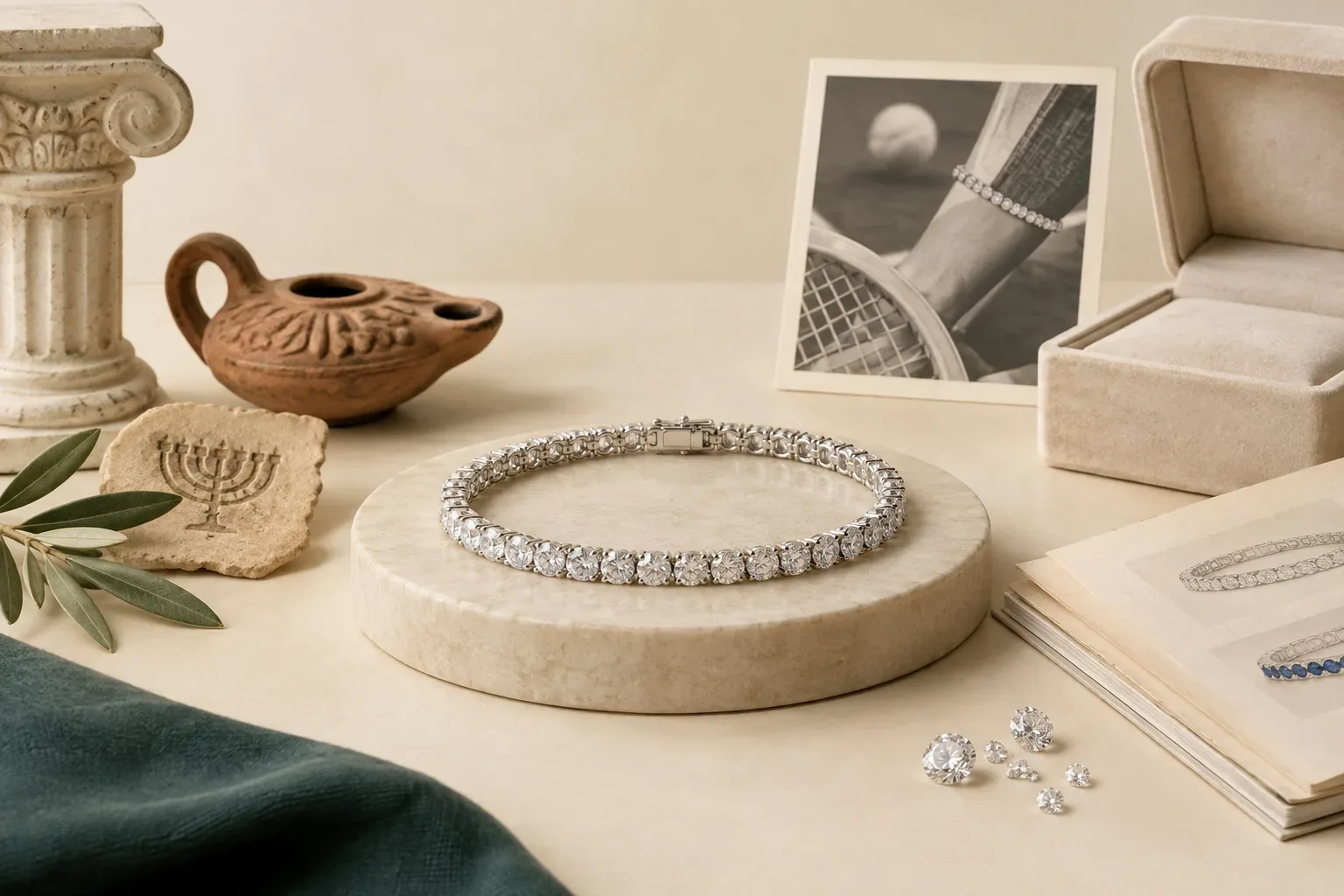
A tennis or line bracelet is a flexible bracelet composed of a continuous row of similar gemstones set in metal. The term is a contemporary label for that motif; museums document that linear gem arrangements and flexible bracelet constructions have long historical precedents, but modern names and meanings are contemporary.
What photos should an honest seller include in an online listing?
High-resolution close-ups of the stones and settings, a photo of the clasp and any hallmarks or stamps, a full-length image of the bracelet laid flat, and at least one wrist or scale photo. Request a short video if anything about the listing is unclear.
Should I ask for a grading or treatment report?
Yes: for diamonds or higher-value colored stones, request any available grading or treatment reports. The FTC advises sellers to disclose treatments, imitations, and whether gems are lab-grown, so documentation helps verify those claims.
What are the biggest red flags when buying a bracelet online?
Missing or vague material disclosures, only low-resolution or stock photos, refusal to provide hallmark or close-up images, no clear return policy, and a seller who cannot or will not answer questions about treatments or certifications.
How should a bracelet fit?
Fit is personal: some prefer a snug line that sits above the wrist bone, others like a looser drape. Ask the seller for the bracelet’s inner length and compare it to a well-fitting bracelet you already own, or request a wrist photo with a scale for better comparison.
Can I trust online price differences between similar bracelets?
Price differences can reflect metal weight, stone size and quality, treatments, craftsmanship, brand, and whether stones are natural or lab-grown. Verify descriptions, ask for documentation, and compare total carat weight and metal content before assuming a lower price represents a better deal.
Sources and further reading
- Bedazzled: A History of Jewellery — Victoria and Albert Museum
- An A-Z of Gemstones — Victoria and Albert Museum
- Buying Gemstones, Diamonds, and Pearls — Federal Trade Commission