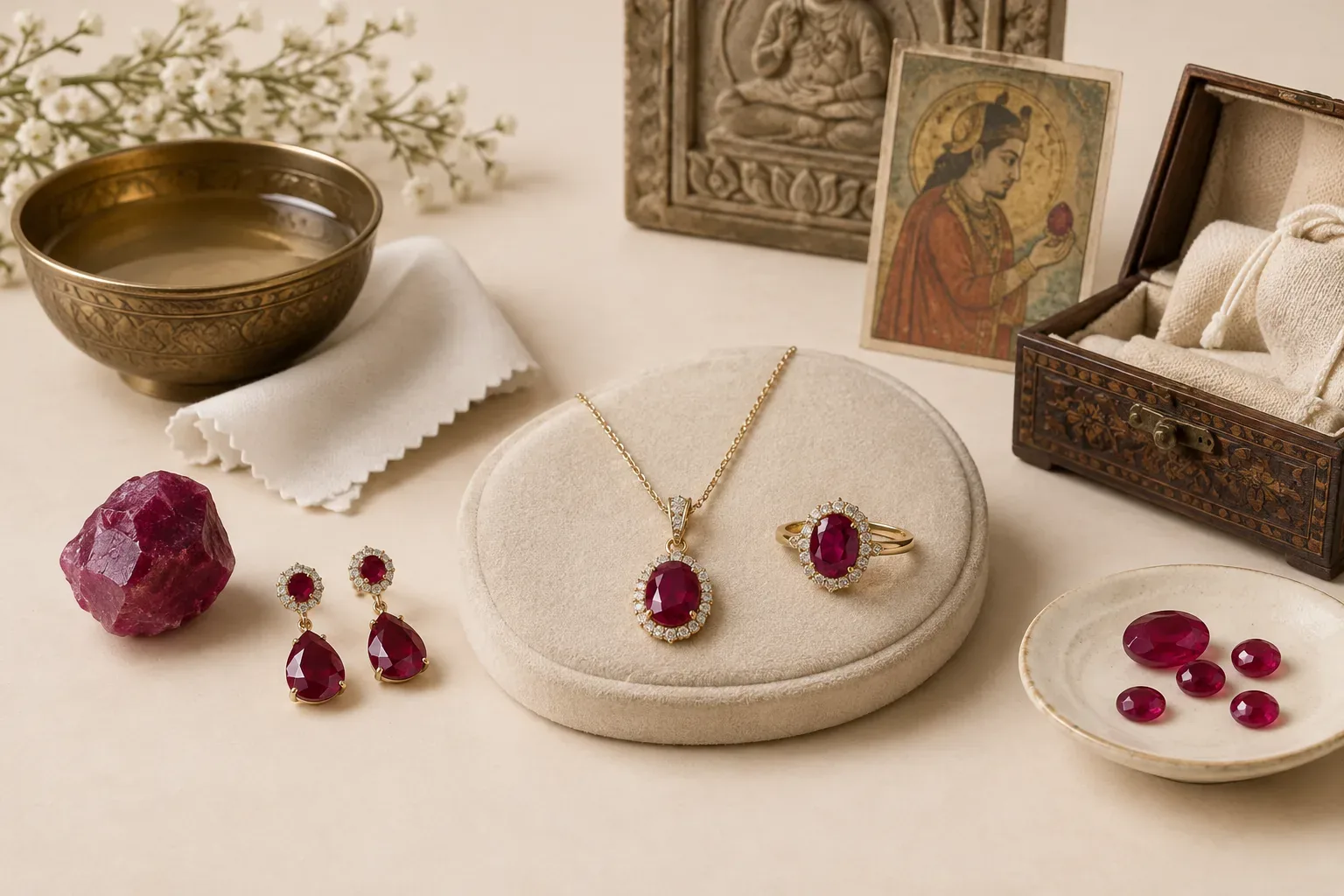
Meaning at a glance
This article explains documented historical context for rubies and the changing meanings attached to them, separates those histories from modern personal interpretations, and gives practical, cautious guidance on safe cleaning, storage, and selection so you can care for ruby jewelry responsibly.
Clear, direct answer
Keep ruby jewelry clean with gentle, low‑risk methods and store pieces separately in soft, dry conditions; confirm any treatments or imitations with the seller before cleaning and, when in doubt, consult a professional jeweller. Historically, rubies have been prized across cultures for their color and rarity, but documented meanings and uses vary by period and place and should not be treated as universal.
What the historical evidence shows — cultures and periods
Museum documentation places rubies within many changing contexts rather than a single continuous meaning. The Victoria and Albert Museum, in its survey of jewellery history, shows that gemstones including rubies were used for decorative, social and monetary purposes from antiquity through the modern period, with fashions and symbolic associations shifting over time. Different cultures emphasized different qualities: for example, in certain South and Southeast Asian courts rubies were highly prized for their deep red as status symbols, while in various European periods gemstones featured in court and ecclesiastical jewellery as markers of wealth and rank. These are historic patterns reported by the Victoria and Albert Museum; they reflect social use rather than a single, universal significance.
Documented historical meanings versus modern interpretation
Documented meanings in the historical record are specific to time and place. Museum records show that rubies have often served as markers of wealth, dynastic status, or decorative emphasis within a particular style or court. Those documented associations are rooted in the social and economic contexts of the time, for example the display of gemstones in royal regalia or personal ornaments recorded in museum collections and exhibits.
Modern personal interpretations, by contrast, are varied and subjective. Contemporary wearers attribute personal significance to rubies—passion, protection, anniversary gifts and so on—but those modern associations are personal or culturally recent and should be treated separately from the documented historical evidence. The Victoria and Albert Museum’s historical surveys are useful for understanding how usage has changed; they do not, on their own, establish any single timeless meaning.
How the ruby appears in jewellery and motifs
Rubies appear in jewellery both as single focal stones and as accent gems within complex designs. Across periods recorded by museums, rubies have been set in rings, brooches, necklaces, earrings, and crown jewels; they have been used in combination with diamonds and other coloured stones to create contrast and emphasis. The V&A’s material on gemstones illustrates how jewelers selected cut, setting and metalwork according to prevailing styles and technical possibilities. In some historic pieces the colour and placement of rubies were chosen to complement symbolic motifs such as floral elements or heraldic designs, while later jewellery might use rubies for bold colour blocks or pavé settings.
Safe cleaning: recommended approaches and common mistakes
Approach cleaning with caution and with knowledge of any treatments your ruby may have received. The Federal Trade Commission advises buyers to ask sellers about treatments and imitations before purchase; knowing whether a stone has been heat-treated, filled or is an imitation helps determine appropriate care. When you do clean a ruby piece at home, use low‑risk, reversible actions and avoid anything that could react with the metal or any filling.
A prudent home routine is to remove loose dirt and oils using a soft cloth and, if needed, a gentle cleansing method that does not involve harsh chemicals or prolonged soaking in unknown solutions. Avoid abrasive cleaners and rough brushes that could scratch metal settings or damage joined work. If a stone has visible fracture‑filling or if the setting is fragile, do not attempt aggressive cleaning; instead, seek a professional jeweller who can inspect and recommend a safe method.
Common mistakes include using unidentified household chemicals, applying excessive heat, and assuming all commercial cleaners are safe for every gem. Because some rubies are treated or mounted in delicate jewellery, aggressive cleaning risks altering the appearance or finishes. If your piece has sentimental or financial value, professional cleaning and inspection will reduce the chance of accidental damage.
Proper storage: methods and pitfalls to avoid
Store ruby jewellery in dry, moderate conditions away from extreme temperature swings. Keep each piece separate or wrapped in soft material to prevent rubbing against other gems or metal that could cause scratches to settings or polish. For long-term storage, soft pouches or lined boxes protect surfaces and reduce the risk of tangling or abrasion.
Avoid storing ruby pieces loose in a shared box with harder materials that might chip or scratch settings. Do not store jewellery in places with chemicals present (for example, near cosmetic containers) where accidental contact could leave residues. Regularly inspect stored pieces for tarnish, loose stones or degraded settings so you can address issues before they lead to loss.
Selecting and gifting ruby jewellery — respectful and practical guidance
When choosing or gifting ruby jewellery, consider provenance, treatment disclosure, durability and the recipient’s style. The FTC recommends buyers ask about treatments and imitations; request written confirmation from the seller for significant purchases. A reputable source will disclose whether stones are natural, heat‑treated, filled, synthetic or imitations. That information affects both price and care.
Match the design to the recipient’s preferences and lifestyle. For everyday wearers, choose secure settings and sturdier mounting that protect the stone and reduce the need for frequent handling. For heirloom or display pieces, provenance and craftsmanship may be the priority; for daily pieces, practicality should guide metal choice and setting style. When gifting, include care notes and a recommendation that the recipient have the piece inspected periodically by a jeweller, so they can maintain both appearance and security.
Summary and final recommendations
Rubies have a long and varied recorded history as decorative and status gems, with meanings that shifted by culture and period as documented in museum studies. Modern personal meanings are valid as personal expression but are not historical certainties. For cleaning and storage, take low‑risk, conservative actions, confirm any treatments or imitations with the seller in line with FTC guidance, and consult a professional jeweller for valuable or treated pieces. Careful selection, clear communication about treatments, and gentle, separate storage will keep ruby jewellery attractive and intact for years to come.
Frequently asked questions
How often should I clean ruby jewelry?
Clean ruby jewelry as needed when you see dirt or residue; for frequently worn pieces, a gentle wipe after use and occasional low‑risk cleaning is reasonable. For valuable or treated stones, ask a professional jeweller for a recommended schedule.
Can I clean a ruby at home myself?
You can use cautious, gentle methods at home for many rubies, but first confirm any treatments with the seller. If the stone is fracture‑filled, has an unclear setting, or is particularly valuable, professional cleaning is safer.
Should I be concerned about treatments like heating or filling?
Yes. The Federal Trade Commission advises buyers to ask sellers about treatments and imitations before purchase because treatments can affect both value and care requirements. Request written disclosure for significant purchases.
Is ultrasonic or steam cleaning safe for ruby jewelry?
Whether ultrasonic or steam cleaning is appropriate depends on the stone’s treatment and the setting. If you do not have full disclosure of treatments or if the setting is delicate, consult a professional jeweller rather than using ultrasonic or steam methods at home.
How should I store ruby pieces to avoid damage?
Store each piece separately in a soft pouch or lined box in a dry environment, away from chemicals and extreme temperatures. Regularly inspect stored items for loose stones or tarnish so issues can be addressed quickly.
What should I ask a seller when buying ruby jewelry as a gift?
Ask whether the stone is natural or synthetic, and whether it has been heat‑treated, filled, or otherwise altered. Request any available certification or written disclosure and choose a setting appropriate to the recipient’s lifestyle.
Sources and further reading
- Bedazzled: A History of Jewellery — Victoria and Albert Museum
- An A-Z of Gemstones — Victoria and Albert Museum
- Buying Gemstones, Diamonds, and Pearls — Federal Trade Commission