Meaning at a glance
A good promise ring quality checklist evaluates how a ring is built, how it fits and wears, and how long it will last, while taking into account documented historical contexts for tokens and gemstones and separating those from later personal or popular readings.
Quick answer
A compact promise ring quality checklist focuses on three pillars: construction (metal, joinery, and setting security), comfort (fit, profile, and edge finishing), and durability (material choice, gemstone permanence, and maintenance). Apply those technical checks alongside an awareness of the motif’s documented history and changing contexts; that means recognizing what museum and consumer-protection sources actually document about jewelry and gemstones, and keeping modern personal meanings distinct from historical evidence.
What the historical record actually shows
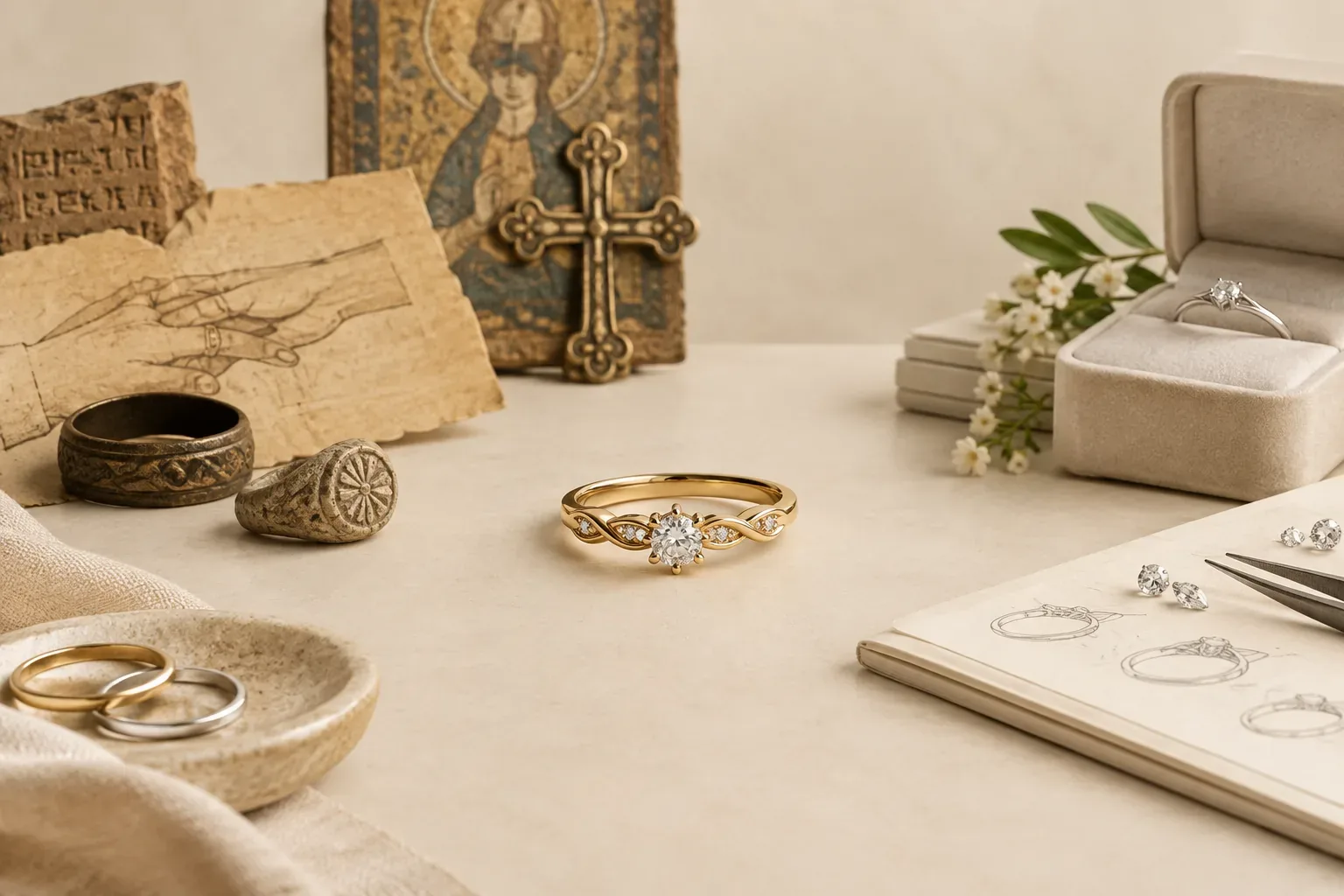
Museum scholarship demonstrates that jewelry has served different social functions across places and centuries rather than carrying a single, universal meaning. The Victoria and Albert Museum (V&A) presents jewelry history as a series of changing social contexts: pieces have been used to display status, mark identity, hold memories, or signal commitments in different periods and cultures. Use the V&A's historical framing to remember that a ring’s function and accepted meanings are historically contingent and may shift over time.
When you read museum descriptions, look for precise attributions: which society or era a piece comes from, whether it was associated with a religious ritual, a legal contract, or private sentiment, and how that context shaped design choices. The V&A emphasizes that form, material, and decorative motif all respond to cultural practices and the available technology of the period. That is why a small ring from one era might serve as a token of engagement in one culture and as a mourning token or status object in another.
Separating documented historical meanings from modern personal interpretations
Documented historical meanings come from museum records, archaeological reports, and contemporary written evidence. The V&A’s collections and commentary show how meanings can be specific to the time and place of manufacture and use. For example, museum documentation might identify a ring as a betrothal token in a particular region because of surviving legal or literary references tied to that culture.
Modern personal interpretations, including the contemporary ‘promise ring’ as a pre-engagement or friendship token, arise in recent popular culture and private practice and are not automatically the same as earlier uses. Distinguish carefully: just because rings were used for commitments in some historical contexts does not mean the modern promise ring has the same legal, religious, or social connotations everywhere. Treat historical evidence as context, not prescription.
How motifs, gemstones, and traditions appear in jewelry
Motifs and symbols are repeated across jewelry because they carry recognizable shapes rather than fixed meanings. A knot, heart, or clasp motif appears because the form can be executed in metal and carries associations—such as unity, affection, or fidelity—that are layered by culture and period. Museum collections described by the V&A show how motifs move between functions and styles depending on fashion, technology, and cultural interpretation.
Gemstones appear in two related ways: as material choices that affect durability and as symbolic elements that may be read differently over time. The V&A’s guide to gemstones provides practical identification and historical context, explaining how certain stones were valued or used in jewelry across periods. For anyone assessing a promise ring, treat the gemstone both as a physical object that must be set and cared for and as an optional symbolic choice whose meaning may be modern rather than historical.
Checklist: construction — what to inspect
Metal and alloy: Prefer a solid metal band of a known karat or alloy rather than heavily plated base metal if longevity matters. Check that the maker discloses the metal content and any plating; durable cores and properly applied plating will reduce rapid wear-through.
Joints, soldering, and shanks: Examine where the band has been soldered or joined. A continuous, well-finished shank without visible weak points indicates good construction. Ask the maker about techniques used, especially on ornate designs where thin sections are more prone to breakage.
Stone setting and security: For set stones, assess the type of setting (bezel, prong, flush) and whether the setting fully secures the stone. A bezel or well-formed clinched prong is preferable for daily wear because it offers better protection against knocks and snagging.
Finish and details: Smooth interior surfaces, rounded edges, and consistent finishing are small signs of careful workmanship that increase comfort and reduce wear on adjacent fingers and fabric.
Checklist: comfort — what affects daily wear
Fit and sizing: Comfort is a function of accurate sizing and ring profile. A ring worn daily should neither cut circulation nor spin too freely. Profiles with tapered inner surfaces or a comfort-fit interior are easier to wear for long periods.
Profile and width: Narrow bands can be more comfortable but are less visible; wide bands distribute pressure differently and can feel tighter. Consider the recipient’s existing jewelry habits and whether they prefer a low-profile ring that won’t catch on clothing.
Edge work and weight: Sharp edges or heavy, unbalanced designs can cause irritation. A quality ring will have polished edges and an even weight distribution so it sits naturally on the finger.
Checklist: durability — materials, gemstones, and long-term care
Choosing materials for longevity: Precious metals (gold, platinum, sterling silver) perform differently. Platinum is dense and wears slowly but can develop a satin patina; gold in higher karats is softer and shows scratches more readily. The V&A’s materials context helps explain why societies selected particular metals historically, but for durability choose the metal that matches the wearer’s lifestyle and your maintenance willingness.
Gemstone hardness and care: Gemstone choice directly affects durability. Harder stones resist scratching and abrasion; softer or porous stones need protective settings and more careful wear. Use the V&A’s gemstone reference to understand historical and physical characteristics of specific stones when selecting a gem for everyday wear.
Disclosure about treatments and imitations: The United States Federal Trade Commission requires sellers to disclose treatments, enhancements, and synthetic or imitation materials. Ask for written disclosure of any treatments, stabilizations, or simulated stones and for an explanation of what those mean for appearance and care. Full disclosure protects you from misunderstandings about a ring’s expected longevity and value.
Practical selection and gifting guidance
Start with intent and conversation: Clarify what the ring will represent for giver and receiver. If the gesture is private and personal, select materials and a motif that suit daily wear and hold private meaning. If you want a public commitment with cultural or legal implications, discuss expectations openly so symbolism is shared rather than assumed.
Match materials to lifestyle: Choose metals and settings that match the recipient’s daily activities. For someone physically active or who uses their hands frequently, prioritize low-profile settings and durable metals and stones. For infrequent wear, more delicate work or higher-karat gold can be appropriate.
Ask (and keep) documentation: Request written information about metal content, gemstone identification, and any treatments or enhancements. Documentation simplifies future repairs, resizing, or resale and honors the FTC’s guidance on transparency.
Consider future resizing and maintenance: Rings that will likely be resized should avoid continuous patterns or tension-style shanks that complicate later adjustments. Discuss warranties, resizing policies, and recommended cleaning and inspection intervals with the seller.
Respect cultural meanings and personal boundaries: If you are choosing a motif drawn from a particular cultural or religious tradition, learn whether the symbol has specific ritual or communal significance. Museum contexts, such as those the V&A provides, can help you understand the original cultural uses; when in doubt, ask respectfully or choose a neutral motif to avoid misappropriation.
Maintenance, repair, and longevity
Regular inspection is the most reliable way to preserve a ring’s durability. Check prongs and settings for looseness, watch for thinning in shanks, and keep documentation handy for repairs. Well-made rings are serviceable: they can be tightened, re-plated, or re-polished by a qualified jeweler when needed.
When a gemstone has been treated, follow the seller’s care instructions. Some treatments require avoidance of ultrasonic cleaners or high heat. The FTC’s guidance supports asking for full details about treatments so you know which maintenance steps will protect the stone and setting.
Closing guidance
A promise ring quality checklist functions best when technical checks about construction, comfort, and durability are combined with an informed respect for historical context and a clear personal intention. Use museum resources such as the Victoria and Albert Museum to ground your understanding of how motifs and materials have been used historically, and consult consumer-protection resources such as the FTC when evaluating material disclosure and gemstone treatments. That combination produces choices that are durable, comfortable, and respectful of the ring’s cultural and personal meanings.
Frequently asked questions
What are the most important construction checks for a promise ring?
Inspect the metal content and whether it is solid or plated, examine solder points and the continuousness of the shank, and check the security of any stone settings. Look for smooth interior finishing and rounded edges for comfort.
How should I think about gemstone choice for daily wear?
Choose a gemstone whose physical hardness and toughness suit everyday use; harder stones resist scratching. Consult the V&A’s gemstone guidance for historical and physical characteristics and ask the seller about any treatments, which the FTC advises must be disclosed.
Does a promise ring have the same cultural meaning everywhere?
No. Museum documentation shows that rings and tokens have carried different meanings across cultures and periods. Modern promise ring meanings are contemporary practices and may not correspond to historical functions identified in museum records.
What documentation should I ask for when buying a promise ring?
Request written details of metal content, gemstone identification, and any treatments or enhancements. Retain receipts, warranties, and any gemstone reports so future repairs or resales are clearer.
Can a promise ring be resized later?
Often yes, but rings with continuous patterns, tension settings, or certain delicate constructions may be difficult or costly to resize. Ask the maker about resizing policies before purchase to avoid surprises.
How often should a promise ring be inspected for safety?
Have a jeweler inspect prongs, settings, and shanks at least annually if the ring is worn daily, and sooner if you notice looseness, catching, or visible wear. Regular checks extend the ring’s functional life.
Sources and further reading
- Bedazzled: A History of Jewellery — Victoria and Albert Museum
- An A-Z of Gemstones — Victoria and Albert Museum
- Buying Gemstones, Diamonds, and Pearls — Federal Trade Commission