Meaning at a glance
Documented evidence links the pocket watch motif to changing social uses—practical timekeeping, status display, and sentimental/mourning contexts—while later popular meanings emphasize themes of time, memory, and identity; choose pieces with attention to provenance, movement condition, materials disclosure, and the recipient's tastes.
What the historical evidence shows (and who recorded it)
Museum scholarship places the pocket watch within a history of jewellery that links technological change, fashion, and social signaling. The Victoria and Albert Museum describes how jewellery’s functions and meanings shift as objects move between everyday use, status display, and personal commemoration. In that same interpretive framework, watches and watch-cases entered dress culture as both practical items and visible signs of wealth or occupation within particular social groups, and watch-cases and fobs were adapted into decorative jewellery as tastes changed.
Different cultures and periods used watch-related items in distinctive ways. European dress traditions made the watch a wearable object—attached to waistcoats, belts, or chatelaines—in contexts where visible timepieces signalled punctuality, professional role, or economic status. Separately, jewellery forms associated with mourning and remembrance—lockets and other keepsakes—were clearly used to hold images or small mementos; museums such as the V&A document these shifting forms and contexts. These accounts emphasize social practice and material culture rather than a single symbolic meaning applied across times and places.
Documented historical meanings versus later interpretations
Documented meanings focus on function and social context. Historical records and museum interpretation show that pocket watches and their cases were initially prized for timekeeping, craftsmanship, and the social signals those things carried. Watch-cases, chains, and fobs could be highly decorated, indicating wealth or taste, and in some contexts adapted into personal keepsakes.
Later and modern meanings—such as seeing pocket-watch motifs primarily as memento mori (reminders of mortality), a symbol of ‘time running out,’ or a general emblem of nostalgia—are largely interpretive layers that individuals, designers, and subcultures have placed on the motif. While some 19th-century mourning jewellery used time-related iconography, museum accounts treat such symbolic readings as one of several possible meanings rather than a single or universal significance. In short: historical evidence shows multifaceted social uses; modern symbolic readings are often personal or stylistic rather than universally documented.
How the pocket watch motif appears in jewellery
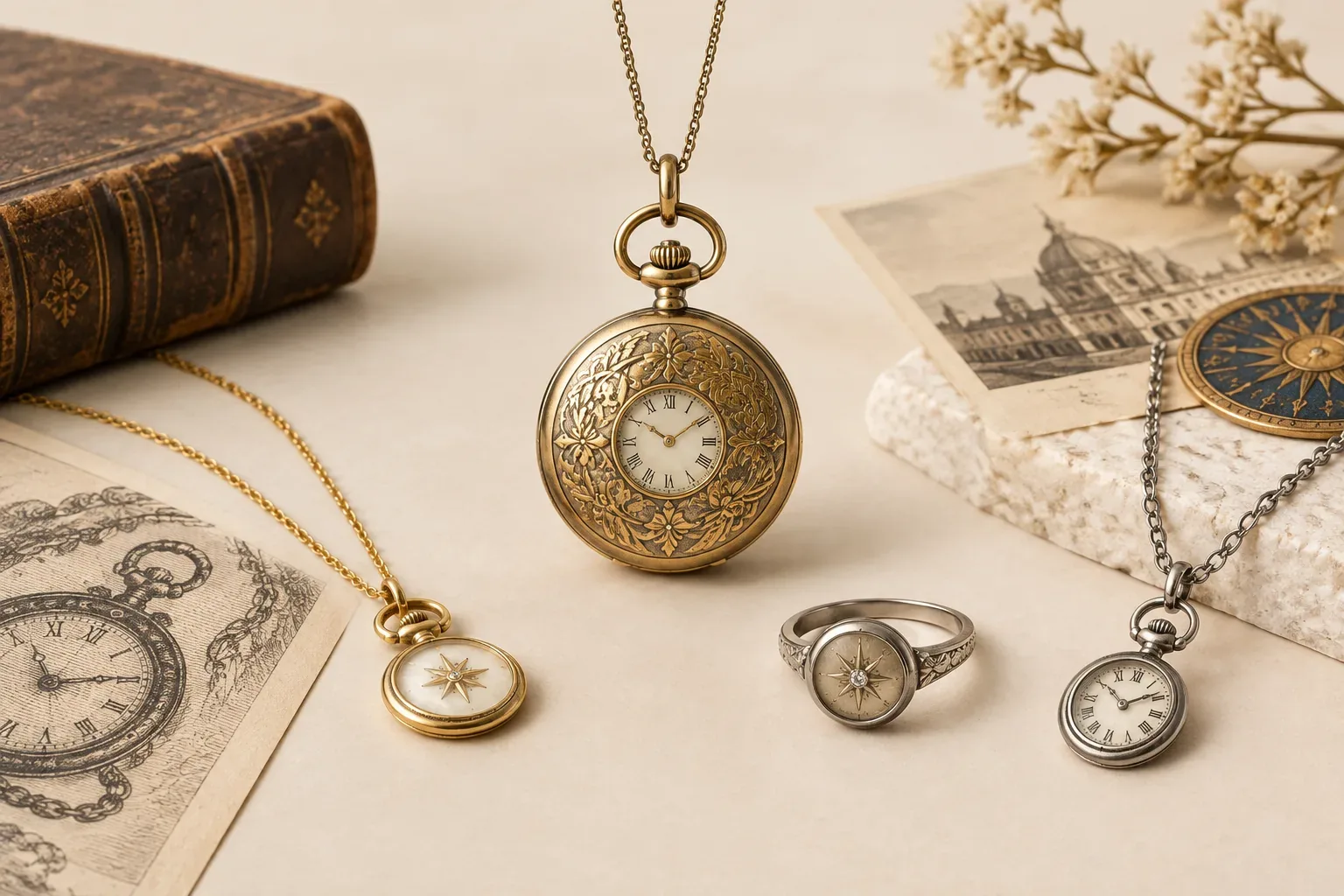
The motif appears in jewellery in several technical and decorative forms. Working pocket watches survive as wearable timepieces: full cases with movements that can be clipped or fitted to chains, or converted into pendants. Decorative motifs inspired by pocket watches appear as miniature non-working pendants, cast charms, engraved medallions, and as motifs worked into lockets or brooches.
Gemstones and decorative techniques have historically been used to embellish watch-cases and watch-related jewellery. Museum resources that catalog gemstones note how stones were selected and set to complement metalwork and surface decoration. In modern pieces the pocket watch motif may be combined with cabochons, seed pearls, enamel, or faceted stones depending on style; the Victoria and Albert Museum’s materials overview explains the historical context for such choices and how gem materials contributed to jewellery’s visual language.
Designers today also borrow the silhouette of the pocket watch—round face, hinged cover, attached loop—to create necklaces, charms, cufflinks, and rings that reference the original object without containing a working movement. These non-functional motifs foreground symbolism or aesthetic rather than horological utility.
Practical guidance for selecting or gifting pocket-watch jewellery
Start by separating what you want the object to mean from what the recipient may expect. If you intend the piece to carry a specific sentiment—remembrance, celebration of punctuality, or family continuity—consider how the recipient understands those themes. An heirloom working pocket watch tends to read as a serious, personal gift; a stylized pendant may feel like fashion or costume jewellery.
If you are buying a vintage or working pocket watch, pay attention to the movement and condition. A running movement adds practical value and requires service; a non-running watch may be best treated as decorative unless you plan to restore it. For vintage stones, settings, or repairs, provenance affects both meaning and value, and museums stress the importance of context when interpreting historical objects.
Have clear expectations about materials and disclosure. The Federal Trade Commission advises that sellers must not misrepresent gemstones, treatments, or imitations. Ask for written information about whether stones are natural, treated, lab-grown, or simulants, and whether metal karat or plating is accurately described. For high-value purchases, request documentation from a reputable grader or a written condition report.
Consider wearability and safety. Pocket watches and heavy fobs are substantial; ensure chains, clasps, and attachments are appropriate for the recipient’s wardrobe. If the piece is to be worn daily, select durable metals and secure settings. If engraving is part of the gift, choose wording that suits the relationship and allows future owners to reinterpret the piece if provenance changes.
Caring, repairs, and ethical considerations
Treat working movements as precision instruments. Regular servicing by a qualified watchmaker will preserve function; for decorative pieces that contain historic movements, consult a conservator if the object has museum-level value. For gem-set pieces, follow standard care for the specific stones—museum guides on gemstones provide a useful overview of how hardness and treatments affect handling.
When buying from sellers—whether vintage dealers, auction houses, or contemporary makers—insist on accurate descriptions. The FTC guidance stresses disclosure of treatments and imitations to avoid misunderstandings about value. For gifts that invoke family history, document the piece’s provenance when possible so future owners understand its story.
Frequently asked questions
Does a pocket watch motif always mean 'memento mori' or mourning?
No. While time-related imagery appears in some mourning jewellery, museum documentation treats such symbolism as one possible interpretation among many. Historically pocket watches and cases functioned as timekeepers and status objects, and later personal or design-driven meanings—such as memento mori—were added by individuals and designers.
Should I buy a vintage working pocket watch or a decorative pendant?
Choose based on intended use. A working pocket watch has horological value and requires servicing; a decorative pendant prioritizes aesthetics and ease of wear. If you value provenance and mechanical function, verify movement condition and seek a condition report; if you want wearable fashion, focus on materials, weight, and how the piece complements the recipient’s style.
How can I check if gemstones or metals are authentic or treated?
Ask the seller for written disclosure about whether stones are natural, treated, lab-grown, or simulants, and whether metals are solid or plated. The Federal Trade Commission recommends clear disclosure of treatments and imitations. For high-value items, request third-party grading or an independent appraisal.
Is engraving a good idea for a gift pocket watch?
Engraving personalizes a gift and can increase sentimental value, but think about future ownership. Choose wording that suits your relationship and leaves room for reinterpretation by later owners if the piece becomes an heirloom.
How do I care for a pocket-watch pendant or charm?
Care depends on materials. Keep mechanical watches serviced by a qualified watchmaker. For gem-set pieces follow standard care for the specific stones—avoid harsh chemicals for softer or treated stones and clean according to the gem’s hardness and setting. Museum guidance on gemstones offers a useful overview of how materials affect care.
Sources and further reading
- Bedazzled: A History of Jewellery — Victoria and Albert Museum
- An A-Z of Gemstones — Victoria and Albert Museum
- Buying Gemstones, Diamonds, and Pearls — Federal Trade Commission