Meaning at a glance
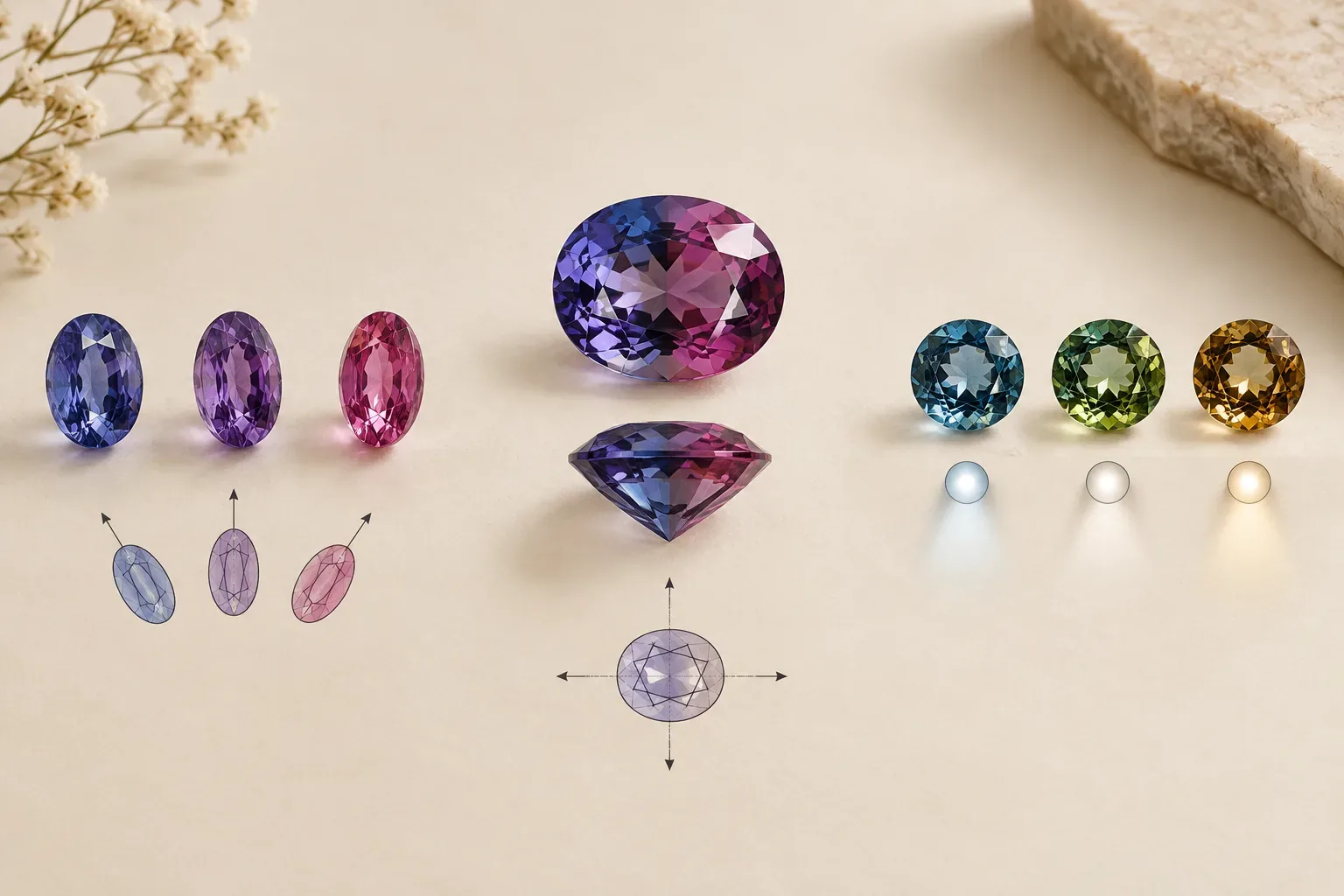
Pleochroism is a direction-dependent color effect caused by anisotropic absorption; it is different from light-source color change, and gem cutters orient pleochroic stones to present the preferred face-up color.
Quick answer
Pleochroism in gemstones is an optical property of many anisotropic minerals where the stone shows different colors when viewed from different directions through the crystal. This is distinct from a gem that appears to change color with the light source; cutters and lapidaries intentionally orient pleochroic gems so the most attractive color faces up in jewelry.
What pleochroism is, technically, and how it differs from color-change
Pleochroism is caused by the way anisotropic crystals absorb light differently along different crystallographic axes. When you look down one direction you may see one hue or tone, while looking from a different direction or through a different plane you may see another. This is a direction-dependent absorption phenomenon inherent to the crystal structure.
Contrast this with a light-source color change, which depends on the spectral power distribution of the illumination. A classic example is alexandrite, which is often described as 'color-change' because it looks green in daylight and red in incandescent light. The Gemological Institute of America (GIA) explicitly distinguishes alexandrite-style color change, which is caused by selective absorption under different light sources, from pleochroism, which depends on viewing direction rather than the type of light (GIA, "Alexandrite Description").
In practice a single stone can show both effects if it is pleochroic and also has absorption bands that cause color change under different illuminants, but the two causes are different and have different implications for cutting, display, and valuation.
Documented historical evidence and cultural context
Historical notes about specific pleochroic gems are limited in ancient literary sources, but recorded modern history for particular stones is available in gemological literature. For example, the GIA's description of alexandrite explains its discovery and how it has been valued for its dramatic color-change behavior rather than pleochroism alone (GIA, "Alexandrite Description").
Scientific recognition of direction-dependent optical effects developed as mineralogy and gemology became formalized. Documentary emphasis in modern gemology—such as the GIA's work—focuses on measurement and the practical implications of pleochroism for cutting and valuation rather than on cultural symbolism (GIA, "Colored Gemstone Value Factors"; GIA, "Factors in Colored Stones that Interact to Affect Value").
Where cultures have assigned meanings to particular gems, those associations are often recorded separately from technical descriptions. Gemological sources like the GIA prioritize observable optical properties in their descriptions and valuation guidance, and do not claim that a given optical effect carried the same symbolic meanings across different cultures and eras.
Separating documented historical meanings from modern interpretations
Documented historical meanings attributed to particular gemstones usually come from historical texts, inventories, or cultural records. Gemological resources such as GIA catalog the physical and optical properties that informed those valuations but generally treat symbolic meaning as distinct from optical description. For instance, GIA descriptions explain alexandrite's appearance and market history rather than asserting a universal traditional meaning (GIA, "Alexandrite Description").
Modern personal interpretations often adapt optical phenomena to contemporary symbolism. People today may use pleochroic stones as metaphors for duality, change, or versatility because the color appears to shift with motion or tilt. Those are meaningful personal readings, but they are not the same as documented historical or cultural uses unless supported by primary historical evidence.
How pleochroism appears in jewelry and how cutters handle it
In finished jewelry pleochroism is most obvious when the stone is tilted, rotated, or viewed from different angles. Designers who work with pleochroic gems and cutters who shape them must consider how orientation will affect the visible color once the gem is set. Gemological guidance explains that cut and orientation are among the factors that interact to affect a colored stone's appearance and value (GIA, "Factors in Colored Stones that Interact to Affect Value").
Cutters commonly orient pleochroic rough to maximize the preferred color when the gem is face-up in a typical mounting. That can mean sacrificing some weight or changing the faceting scheme so that the axis showing the best color is perpendicular to the table. The GIA's guidance on colored gemstone value factors notes that cut and color uniformity are central to appearance and market worth (GIA, "Colored Gemstone Value Factors").
In settings that allow movement, such as pendants or certain ring mounts, pleochroism can become a dynamic visual feature. Photographers and retailers also must manage lighting and camera angle carefully because how a stone photographs under a given light source can influence buyer expectations; the GIA's gem photography guidance explains how lighting temperature and diffusion affect apparent color (GIA, "How to Photograph Gems and Jewelry").
Practical selection and gifting guidance
When selecting a pleochroic gemstone for jewelry, examine the stone in person and in multiple orientations. Tilt and rotate the rough or the finished gem under both daylight and warm indoor light to observe both direction-dependent color changes and any color-change behavior caused by different light sources. Ask the seller to show the stone mounted the way it would appear in the finished piece, because a change in orientation during mounting can noticeably alter the face-up color.
Request clear, written information about the stone. The Federal Trade Commission recommends that buyers ask about treatments, whether a gem is natural, lab-grown, or an imitation, and expect truthful disclosure about those facts (FTC, "Buying Gemstones, Diamonds, and Pearls"). For pleochroic stones, also ask whether the cutter oriented the stone to display a particular color and whether weight (carat) was sacrificed to achieve that orientation. A reputable seller should be able to explain the trade-offs and provide a professional description.
If giving a pleochroic gem as a gift, consider the recipient's habits and style. If the person tends to wear jewelry in one orientation or prefers a consistent look, choose a stone cut and mounted to show the desired color in that posture. If the recipient enjoys playful or variable effects, a mounting that lets the stone move and reveal different hues can be especially appealing. In all cases, supply care instructions and, when available, a gem report or seller's statement about treatments and origin so the recipient has accurate information.
Summary and practical takeaways
Pleochroism is a direction-dependent optical phenomenon distinct from color-change caused by different light sources. Professional gemological guidance emphasizes that the cutter's decisions about orientation and cut materially affect how pleochroic gems look when set in jewelry (GIA, "Factors in Colored Stones that Interact to Affect Value"; GIA, "Colored Gemstone Value Factors").
For buyers and gifters: inspect the stone in multiple orientations and lighting conditions, ask for disclosure about treatments and cutting orientation, and choose a mounting that matches the wearer’s preferences. Reliable sellers will show and document these factors so you can make an informed choice (FTC, "Buying Gemstones, Diamonds, and Pearls").
Frequently asked questions
Is pleochroism the same as color-change?
No. Pleochroism is direction-dependent: the gem shows different colors when viewed along different crystallographic axes. Color-change depends on the light source and how the gem's absorption bands interact with that light. A stone can show both effects, but they have different causes.
How can I tell if a stone is pleochroic before buying?
Ask to inspect the stone in person and tilt or rotate it under normal daylight and indoor light. A pleochroic stone will show different colors or tones as you change the viewing angle. Ask the seller whether the cutter oriented the rough to favor a particular face-up color.
Do cutters lose weight to display the best color?
Often yes. To present the most desirable color face-up, cutters may orient the table so the axis with the preferred color faces upward, which can require removing more rough. Reputable sellers should explain any trade-offs between color presentation and carat weight.
Will pleochroism affect a gemstone's value?
Pleochroism can affect value because it influences how consistently attractive a stone appears when worn. Gemological guidance lists cut, color uniformity, and optical effects as interacting factors that determine a colored gemstone's appearance and market value (GIA, "Factors in Colored Stones that Interact to Affect Value").
Should I worry about treatments or lab-grown stones when buying pleochroic gems?
You should ask for full disclosure. The Federal Trade Commission advises buyers to request information about treatments, origin, and whether a gem is natural, lab-grown, or an imitation. Clear documentation helps ensure you understand what you are buying (FTC, "Buying Gemstones, Diamonds, and Pearls").
Sources and further reading
- Colored Gemstone Value Factors — Gemological Institute of America
- Factors in Colored Stones that Interact to Affect Value — Gemological Institute of America
- How to Photograph Gems and Jewelry — Gemological Institute of America
- Alexandrite Description — Gemological Institute of America
- GIA Diamond Research — Gemological Institute of America
- Buying Gemstones, Diamonds, and Pearls — Federal Trade Commission